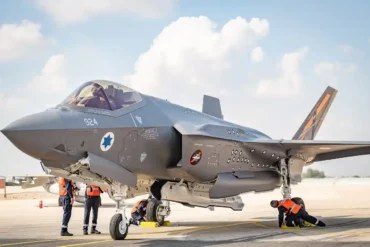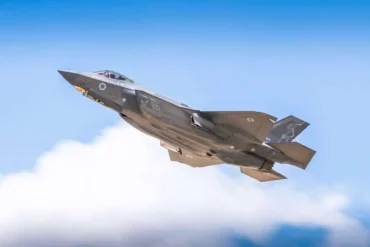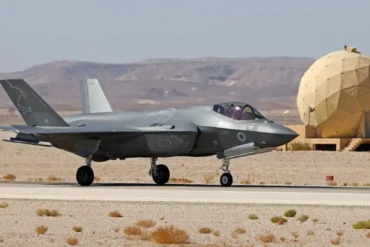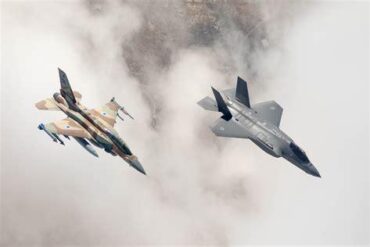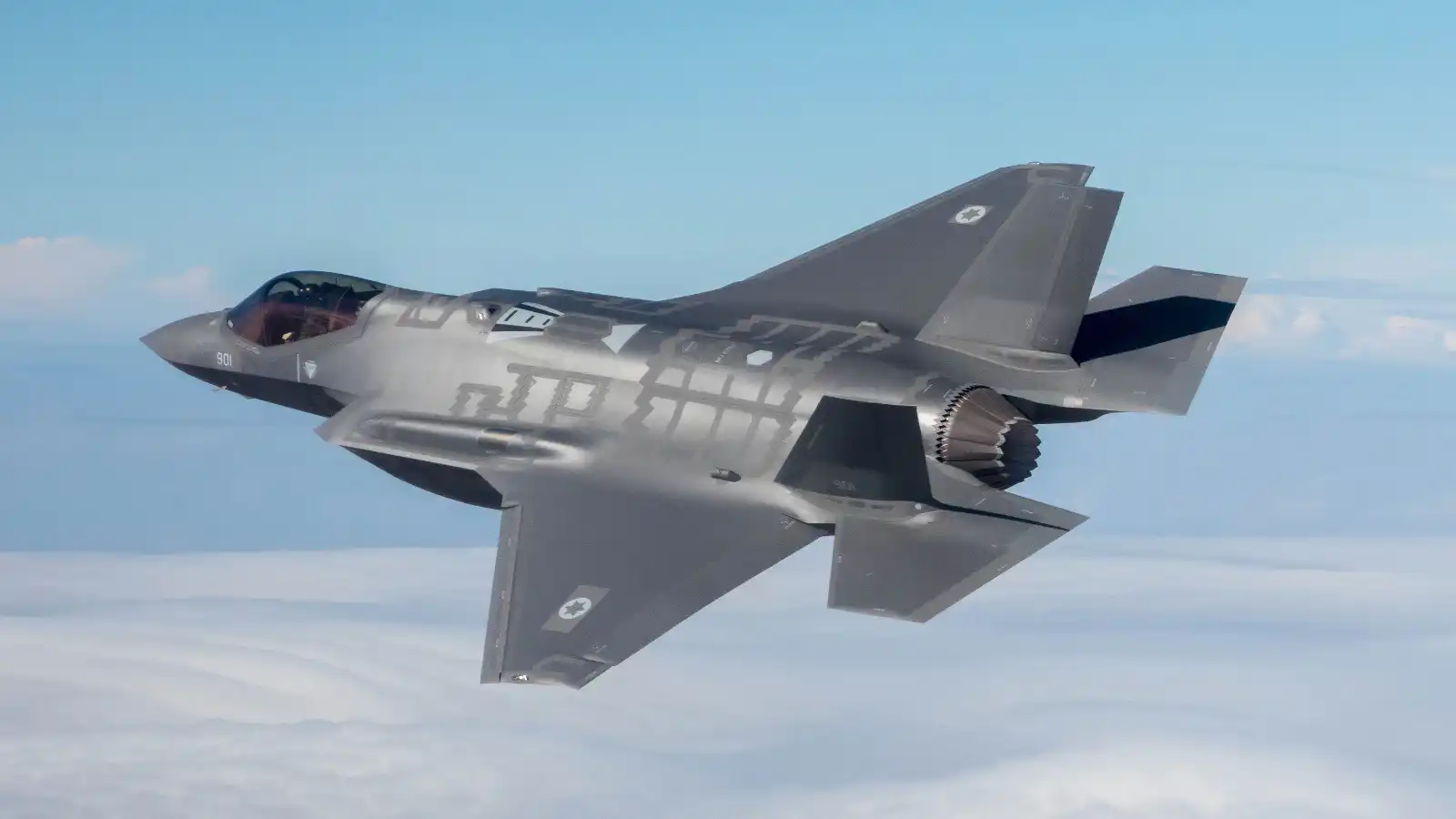
The F-35I “Adir”—Israel’s custom variant of the fifth-generation Lockheed Martin F-35 Lightning II—represents a transformational leap in Israel’s airpower projection and national defense capabilities. As the first country outside the United States to deploy the F-35 operationally, Israel has strategically positioned itself as a regional air supremacy leader. The F-35I program integrates both U.S. stealth technology and Israeli innovation, culminating in a platform that not only fulfills its original stealth and strike roles but also extends its effectiveness across surveillance, air defense, and offensive dominance in Middle Eastern conflict zones.
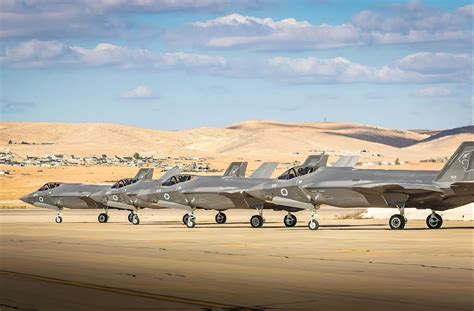
By 2025, Israel had received 39 of the 75 F-35I units it ordered, with the remainder scheduled for delivery by 2028. The country’s embrace of this platform goes beyond procurement; Israel has embedded its own software, command infrastructure, and weapons systems into the aircraft—modifications that the U.S. has rarely permitted for foreign operators.
Israel’s Customization of the F-35 Platform
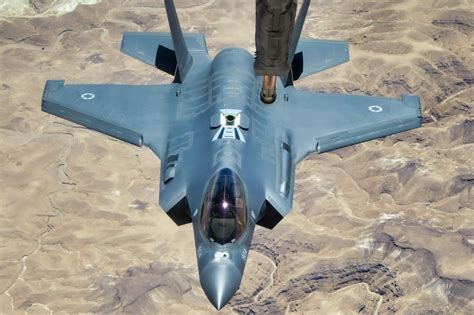
Unlike other F-35 operators that rely entirely on U.S.-locked configurations, Israel negotiated for—and received—sovereign rights to adapt both the hardware and software of its fleet. The F-35I “Adir” is a testament to Israel’s insistence on operational independence and battlefield versatility.
The customization begins with C4I (Command, Control, Communications, Computers, and Intelligence) systems developed by Israeli defense contractors. These systems are seamlessly integrated into the F-35I’s sensor suite, allowing real-time battlefield intelligence sharing with other Israeli platforms such as IAF F-15s, UAVs, and ground-based missile systems. This enables a network-centric warfare capability unmatched in the region.
Israeli engineers also adapted the aircraft to carry indigenous munitions. Notably, the SPICE-2000 precision-guided bomb, developed by Rafael Advanced Defense Systems, and the Python-5, an advanced short-range air-to-air missile, have both been fully integrated into the aircraft’s fire-control system. These customizations ensure that the F-35I can execute missions that align directly with Israel’s evolving threat landscape.
Moreover, external fuel tanks and software modifications have been employed to extend the jet’s combat radius, critical for long-distance missions targeting deep Iranian territory without compromising mission objectives through aerial refueling dependencies.

First to Strike: Combat Use and Operational Impact
Israel’s combat use of the F-35I has redefined modern aerial warfare. In May 2018, the IAF became the first air force in the world to utilize the F-35 in a combat strike mission, targeting Iranian Quds Force infrastructure in Syria. This operation validated not only the aircraft’s stealth and targeting precision but also its ability to evade Russian-deployed S-300 and S-400 air defense systems active in the region.
In the 2024 Iran-Israel conflict, F-35Is played a pivotal defensive role, intercepting hostile drones and missile barrages. The aircraft’s sensor fusion capabilities allowed Israeli command centers to track and neutralize threats at previously impossible speeds. The integration with Israel’s Iron Dome and David’s Sling systems formed a multi-tiered shield, where the F-35I acted as a flying sensor and early-response platform.
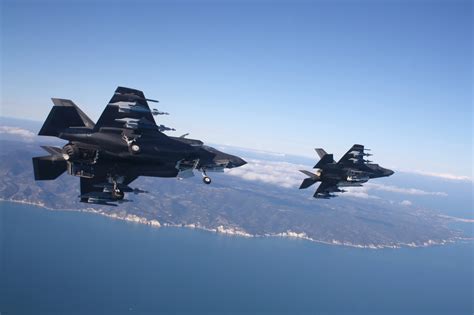
The concept of “Beast Mode”, implemented in early 2025, added yet another dimension. In this configuration, the F-35I operates with external weapons pylons, sacrificing stealth in favor of payload for mass air-to-ground strikes. This mode is reserved for low-threat environments where stealth is less critical than sheer destructive output. Israel confirmed using this configuration during intense operations in southern Syria targeting missile depots and training camps.
Strategic Focus: Countering Iranian Threats
The F-35I is not merely a platform—it is a tool designed explicitly for Israel’s security doctrine, particularly regarding Iran. As Tehran advances its nuclear capabilities, Israel has prioritized the capacity to preemptively strike hardened, long-range targets. The F-35I’s range-extending modifications and precision-guided Israeli armaments have made it the centerpiece of potential strategic operations against Iranian nuclear facilities in Natanz, Fordow, and Arak.
In parallel, Israeli pilots have undertaken joint simulation exercises from 2022 to 2024, most notably in the “Chariots of Fire” war games, which drilled deep-penetration bombing runs into simulated Iranian airspace. These exercises were not abstract—they rehearsed realistic, synchronized multi-front attacks on Iranian infrastructure, command centers, and air defenses.
Logistical Innovation and Operational Efficiency
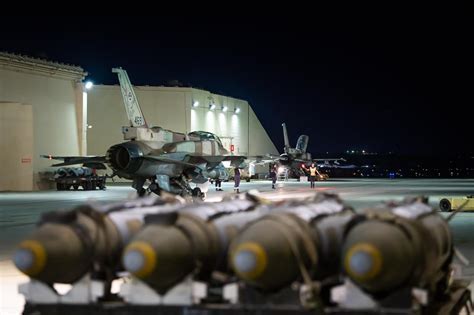
The operating cost of the F-35I is significant, averaging $44,000 per flight hour. However, Israel has mitigated these expenses through local logistics infrastructure, dramatically increasing efficiency. Unlike other nations dependent on U.S. contractors for repair and diagnostics, Israel has established its own maintenance depots and autonomous support software, reducing mission turnaround time by up to 40%.
This localized infrastructure includes automated diagnostic stations, real-time telemetry relays to ground analysts, and on-site spare parts depots. These innovations ensure the F-35Is are mission-ready in rapid succession, critical during multi-day operations or sustained conflicts.
Regional Dominance and Geopolitical Messaging
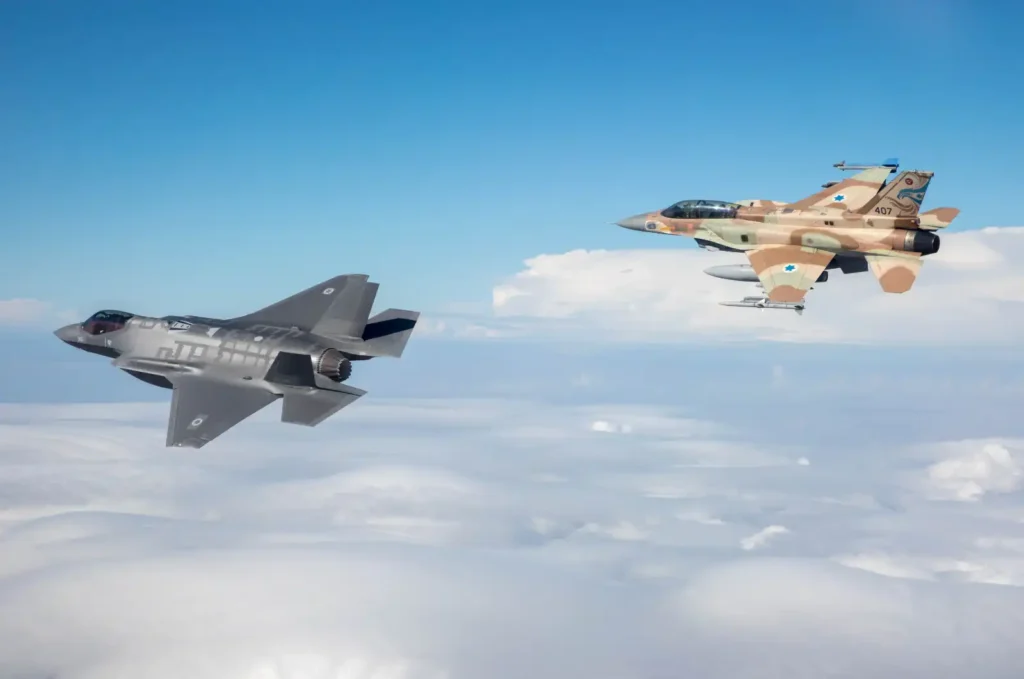
Possessing the F-35I gives Israel an unparalleled qualitative military edge in the Middle East. No other regional actor—be it Iran, Syria, or Hezbollah—possesses a fifth-generation aircraft with similar capabilities. The deterrence effect alone reshapes adversary planning cycles, discouraging preemptive attacks or escalation.
The strategic relationship between Israel and the United States has been a cornerstone of this capability. The F-35 program epitomizes Washington’s trust in Tel Aviv, marked by the unprecedented decision to allow software-level access and national customizations. This cooperation strengthens diplomatic ties, assures continued regional military balance in favor of Israel, and signals to adversaries that Western technological superiority is firmly aligned with Israeli defense doctrine.
Future Outlook: Expanding Air Superiority
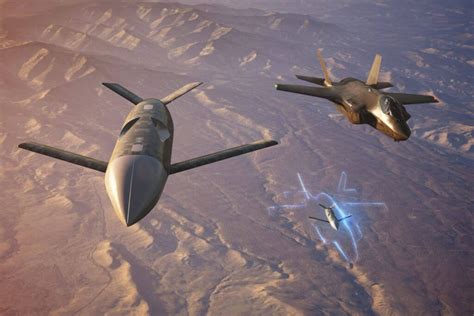
As of 2025, Israel is preparing to activate a third squadron of F-35Is by 2030, completing the 75-jet order and potentially expanding beyond. Discussions have also emerged around integrating AI-based autonomous mission planning tools and loyal wingman drone systems, in which unmanned platforms accompany piloted F-35Is during operations.
Israeli defense officials have emphasized that future enhancements will focus on electronic warfare dominance, cyber-shielding of avionics, and multi-spectrum camouflage. These upgrades are expected to maintain Israel’s F-35 fleet as a generation-ahead platform, far beyond mere stealth superiority.
Frequently Asked Questions
What makes the F-35I different from the standard F-35?
The F-35I “Adir” is a uniquely customized variant of the F-35A, equipped with Israeli-developed C4I systems, indigenous weaponry, and the ability to modify internal software and hardware—rights not granted to other nations. These changes give Israel unmatched flexibility and localized superiority.
Has Israel used the F-35I in actual combat?
Yes. Israel was the first country in the world to use the F-35 in a combat mission, striking Iranian positions in Syria in 2018. Since then, the F-35I has been involved in multiple offensive and defensive operations, particularly in countering Iranian missile threats and proxy deployments.
How does the F-35I contribute to Israel’s deterrence against Iran?
The F-35I’s range, stealth, and precision strike capability are optimized for deep-penetration attacks on Iranian nuclear and military infrastructure. Its ability to operate independently, with custom weapons and real-time battlefield integration, positions it as the cornerstone of Israeli deterrence strategy.