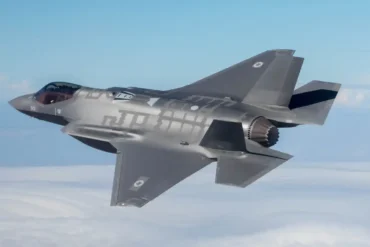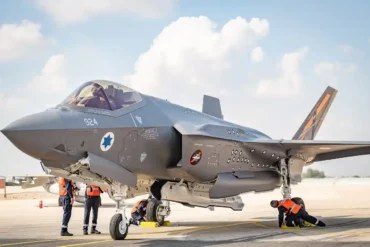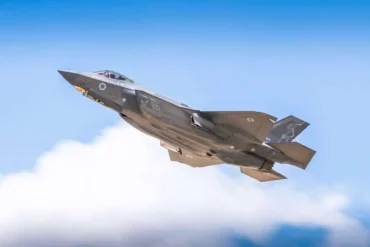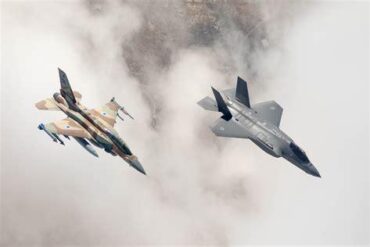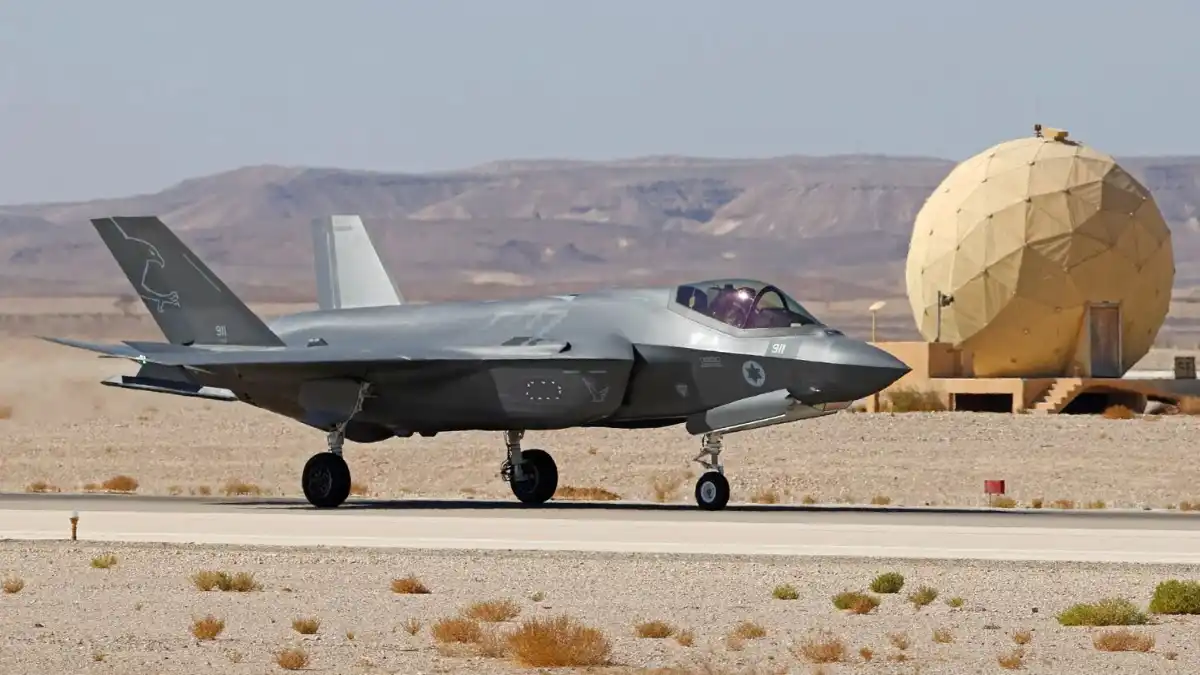
The Israeli Air Force’s deployment of the F-35I “Adir” during operations in the Gaza Strip has introduced a paradigm shift in how fifth-generation stealth fighters are used in asymmetric warfare environments. Through unprecedented tactical flexibility, technological innovation, and high-stakes strategic choices, Israel has expanded the operational role of the F-35 far beyond its originally envisioned air superiority and deep-strike missions. The Gaza operations serve as a unique case study for evaluating the fifth-generation aircraft’s applicability in environments where stealth is not always a necessity, but payload and precision are paramount.
“Beast Mode”: A New Era for F-35 Combat Applications
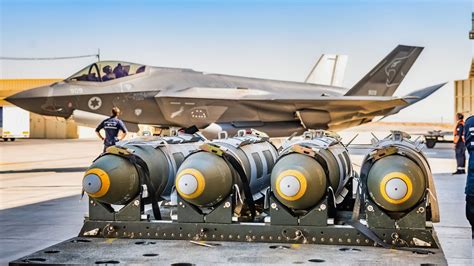
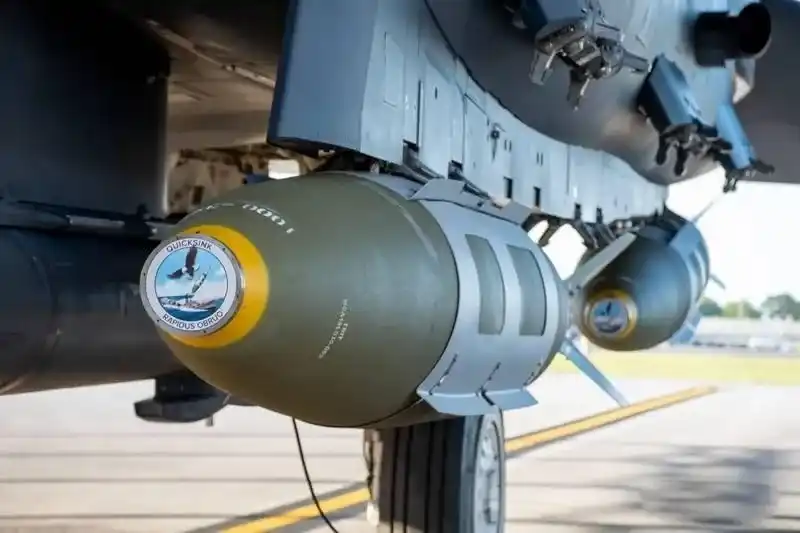
For the first time globally, Israel activated the “Beast Mode” configuration of the F-35 in active combat. Traditionally optimized for stealth, the F-35’s low-observable design relies on internal weapons bays to minimize radar cross-section. However, in “Beast Mode,” the F-35I carries a significantly larger external payload, sacrificing some stealth to gain overwhelming firepower.
In Gaza, the F-35I carried:
- Four 2,000-pound GBU-31 JDAMs
- AIM-120 AMRAAM air-to-air missiles on external pylons
This configuration allowed a single aircraft to conduct multiple strike missions with minimal refueling and turnaround time. The increased ordnance capacity significantly boosted lethality, particularly against fixed, high-value targets such as tunnel networks and fortified rocket launch sites. Given Hamas’ limited air defense capabilities, stealth was a trade-off that Israeli planners were willing to make in favor of maximized payload and rapid deployment.
Precision Strike and Electronic Warfare Integration
The operational spectrum of the F-35I in Gaza extended well beyond kinetic strikes. Equipped with Israel’s customized ALQ-239 electronic warfare suite, the fighter conducted suppression of enemy air defenses (SEAD) by jamming radar installations, disrupting enemy communication, and neutralizing infrared tracking systems.
F-35Is executed:
- Precision-guided strikes on strategic command centers, often embedded within civilian infrastructure or subterranean networks
- Close coordination with UAVs, notably the Hermes 900 and Heron TP, to extend battlefield visibility and guide munitions using real-time data feeds
These missions required a high level of coordination across platforms, a feat enabled by the F-35’s advanced data fusion systems, allowing it to act as both a sensor and shooter. It functioned as a battlefield quarterback, disseminating information to ground command centers and unmanned systems in the air.

Stealth Compromise and Tactical Adaptability
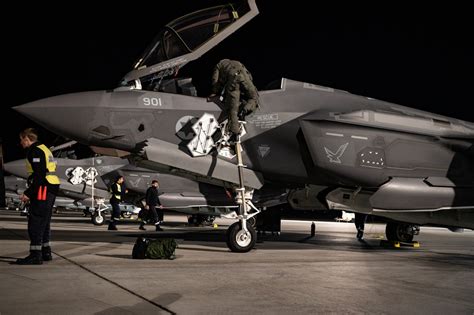
Deploying in “Beast Mode” necessitated a fundamental shift in stealth doctrine. External pylons and larger radar cross-sections challenged the platform’s low-observability, but the Israeli Air Force mitigated this by employing adaptive mission profiles.
- During ingress phases near sensitive zones, the F-35I operated in stealth mode with limited or concealed payloads.
- Upon reaching permissive airspace, such as over Gaza, it would transition into strike configuration, exposing external munitions for delivery.
Furthermore, Israel utilized low-observable pylons with faceted diamond-shaped cross-sections and radar-absorbing materials to limit RCS amplification. Internal studies estimate that, even in full “Beast Mode,” the radar signature remains an order of magnitude smaller than legacy fourth-generation aircraft like the F-15 or F-16.
This dynamic modulation of stealth status offered a strategic edge in regions where air superiority is unchallenged, but efficiency and rapid firepower delivery are crucial.
Maintenance Challenges and Logistical Streamlining
Operating in high-tempo cycles, the F-35I faces intensified wear and tear, especially under heavy payload configurations. Israel’s Air Force reported that major overhaul cycles have been shortened from 6,000 hours to approximately 4,500 flight hours, largely due to structural fatigue from external payload-induced stress.
To counterbalance this operational toll, Israeli engineers implemented several domestic modifications:
- Streamlined rearming protocols for external weapon racks, cutting re-sortie time by 40%
- Pre-flight diagnostics using AI-assisted ground support systems to anticipate system failures
- Enhanced cooling and electronics maintenance modules, tailored for harsh desert environments
However, the cost of operation remains high, averaging $35,000 per flight hour, making sustained deployment economically strenuous. Despite these figures, the operational gains during short-term conflict scenarios have so far justified the expense.
Strategic and Regional Ramifications
The use of the F-35I in Gaza reflects not only tactical decisions but also broader regional signaling. Israel’s willingness to employ a fifth-generation stealth fighter in counter-insurgency roles underscores both confidence in the platform and a shift in how military power is projected in the Middle East.
Technological Edge or Strategic Risk?
Transforming the F-35I into a “bomb truck” trades survivability for effectiveness in low-threat environments. While suitable for Gaza, where Hamas lacks integrated air defense systems, this approach is not transferrable to high-intensity theatres where adversaries might deploy systems like Russia’s S-400 Triumf or China’s HQ-9B.
This tactical adaptation may reduce long-term platform survivability in contested airspaces, raising concerns over whether such a doctrine erodes the F-35’s original strategic design focus.
Regional Arms Race Intensifies
Israel’s high-profile F-35I operations have triggered ripple effects across the Gulf:
- United Arab Emirates and Saudi Arabia are accelerating procurement efforts for next-gen fighters
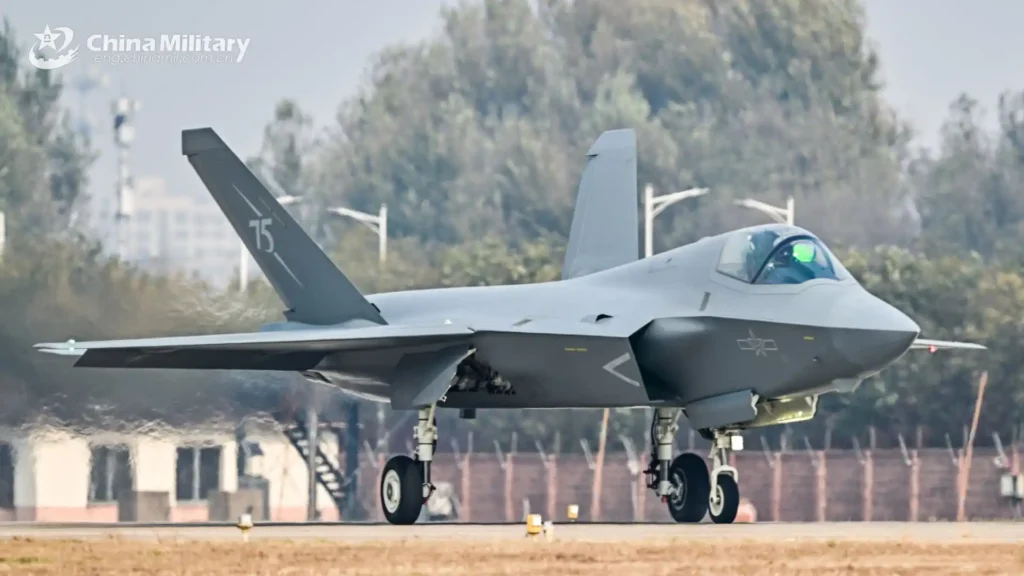
- Some nations are exploring alternative partnerships, notably with China for the J-35 Gyrfalcon, reflecting shifting geopolitical alliances
This contributes to a multi-tiered arms competition, where fifth-generation platforms become as much tools of diplomacy and deterrence as instruments of war.
The F-35 as a Symbol of Western Military Dominance
The F-35I’s operational success in Gaza has been co-opted into broader narratives by defense contractors and military officials in the United States. It is now frequently cited as proof of concept for fifth-gen multirole fighters in urban and asymmetric conflicts. This further cements the aircraft’s strategic branding as a versatile force multiplier for allies aligned with Western defense ecosystems.
Concluding Analysis
Israel’s employment of the F-35I Adir in Gaza represents a case of doctrinal flexibility, where a platform designed for peer conflict was successfully adapted for low-intensity, high-precision warfare. The introduction of “Beast Mode,” integration with electronic warfare, and streamlined logistics reflect a comprehensive understanding of operational requirements in asymmetric theatres.
However, this doctrine reveals limitations when scaled beyond Gaza. Its success is contingent on air dominance, limited anti-air threats, and logistical superiority—conditions unlikely to exist in engagements with near-peer adversaries. Still, the Gaza deployment offers valuable insights for the future design and adaptation of stealth aircraft, particularly in how modularity, payload-flexibility, and electronic warfare capabilities can compensate for changes in stealth prioritization.
FAQ
Why did Israel use the F-35I “Beast Mode” in Gaza instead of prioritizing stealth?
Israel judged that Hamas’s lack of advanced radar systems negated the need for full stealth. Instead, the larger payload offered by “Beast Mode” allowed for more efficient and powerful strikes, particularly against hardened underground targets, which outweighed the minor increase in radar visibility.
How does the F-35I differ from the standard F-35A?
The F-35I Adir is a customized variant for Israel, featuring:
- Indigenous electronic warfare systems
- Unique mission computers and software
- Modified weapon integration systems to support Israeli munitions and adapt to regional threats
These enhancements enable superior interoperability with Israel’s defense systems and give the IAF strategic autonomy in customizing missions.
Can the F-35I’s Gaza operational model be used against high-threat nations?
No. The Gaza model relies on air superiority and minimal air defenses. In high-threat environments with advanced systems like S-400s or integrated IADS, operating in “Beast Mode” would expose the aircraft to considerable risk. The F-35’s stealth and survivability are critical in such scenarios, and a full payload configuration would likely be unsuitable.