The Role of F-22 in NATO’s Strategy Near Ukraine
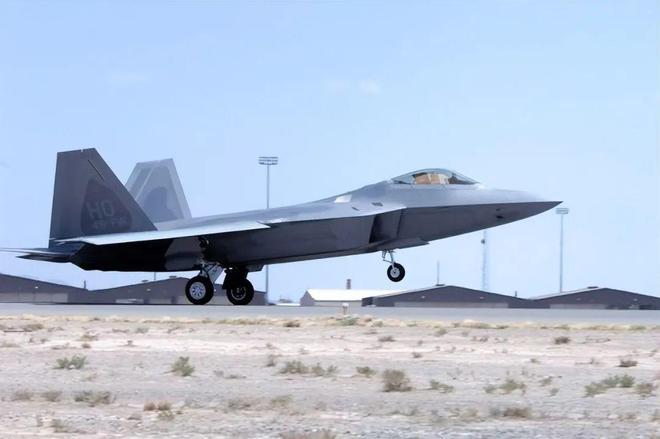
Since the onset of the Russian invasion of Ukraine in 2022, the United States has strategically deployed advanced military assets to bolster NATO’s presence in Eastern Europe. A key asset in these efforts has been the F-22 Raptor, one of the most advanced and capable fighter jets in the world. Deployed to Poland, an essential NATO member close to Ukraine’s borders, the F-22 plays a critical role in reinforcing NATO’s air defense capabilities and deterring further Russian aggression.
The U.S. has repeatedly sent F-22 jets to Poland for joint exercises and air policing missions, including deployments in August 2022 and March 2023, with the jets stationed at the Łask Air Base. These deployments, although officially conducted under the NATO Air Shielding mission, provide a clear strategic advantage by positioning the F-22 close to Ukraine’s airspace, making rapid intervention possible in the event of a Russian escalation.
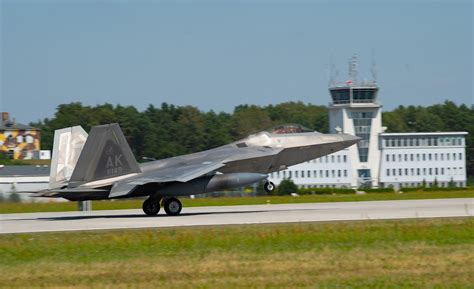
The presence of F-22s near Ukraine serves a dual purpose. First, it provides NATO with an immediate tactical advantage over the Russian Federation, especially in terms of intelligence collection and air superiority. Second, the jets serve as a deterrent to Russian forces, signaling the alliance’s readiness to respond to any military aggression against NATO countries.
F-22’s Technological Superiority and Battlefield Impact
The F-22 Raptor is renowned for its cutting-edge stealth technology, making it nearly invisible to most radar systems. This stealth capability is further complemented by its supersonic cruise speed of 1.6 Mach, allowing the aircraft to cover vast distances quickly while maintaining a high level of survivability. The F-22’s radar cross-section is incredibly small—only about 0.01 square meters, making it an almost undetectable target in enemy airspace.
This invisibility gives the F-22 an edge over adversaries, allowing it to perform tactical strikes without fear of immediate retaliation from surface-to-air missiles (SAMs) or enemy fighter jets. In the context of the Ukraine conflict, the F-22’s stealth allows it to conduct reconnaissance missions near Russia’s border, gather intelligence, and suppress enemy radar systems—all without risking detection or interception.
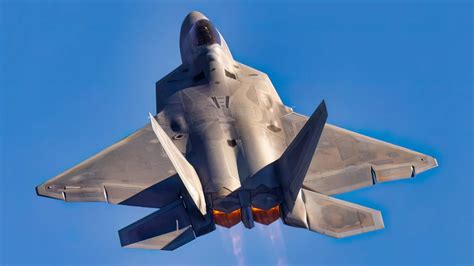
In electronic warfare, the F-22’s advanced avionics and sensor suite make it a key asset for NATO forces in Ukraine. The jet is equipped with Electronic Warfare (EW) systems, which can be used to jam enemy radars and disrupt communications. One of its most potent capabilities is the AGM-88 HARM missile, a high-speed anti-radiation missile designed to target and disable enemy radar systems. The F-22’s ability to deliver such precision strikes from beyond enemy detection range significantly enhances NATO’s tactical flexibility in the region.
Indirect Evidence of F-22 Support in the Ukraine Conflict
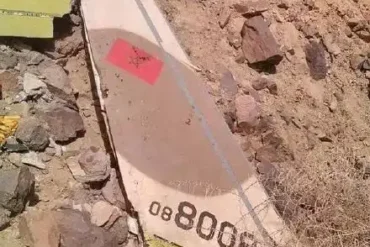
While the F-22 has not directly engaged in combat over Ukraine, there are several indicators suggesting its indirect involvement. In August 2022, remnants of an AGM-88 HARM missile were found in Ukraine. These missiles, supplied by the United States, are typically launched from aircraft such as the F-22, although the exact platform remains unconfirmed.
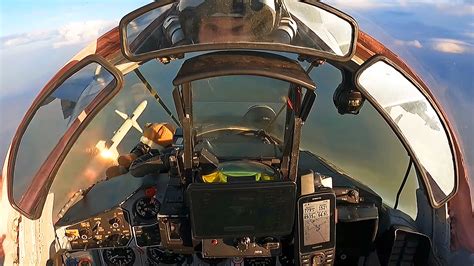
Although the U.S. government has not publicly confirmed that the F-22s from Poland launched these missiles, Russian media outlets have speculated that the F-22 could have conducted these missions from its forward-deployed base in Poland, providing long-range support to the Ukrainian forces. Such operations align with NATO’s strategy of providing indirect support to Ukraine without directly engaging in conflict.
Moreover, in 2024, joint U.S.-Ukrainian testing of fiber-optic controlled FPV drones demonstrated the increasing infiltration of NATO technology into Ukrainian forces. This includes advanced systems capable of countering Russian air defenses, further hinting at the sophisticated capabilities provided to Ukrainian forces by NATO, possibly including F-22 integration into electronic warfare operations.
Upgrades and the Future of F-22 in Ukraine’s Airspace
As of 2025, the F-22 is undergoing modernization upgrades aimed at maintaining its technological superiority on the battlefield. These upgrades include improvements to its avionics systems, the integration of infrared search and track (IRST) systems, and the enhancement of its networked warfare capabilities.
These upgrades are crucial, especially in light of the increasing sophistication of Russian military assets, such as the Su-57 stealth fighter and advanced electronic warfare systems. The F-22’s enhanced sensors and data-sharing capabilities will allow it to operate effectively in complex, multi-domain environments, coordinating with NATO forces in real time.
In the future, the F-22’s role in the Ukraine conflict may evolve, especially if the war persists for an extended period. As the situation develops, the F-22’s advanced stealth and multi-role capabilities will likely play an even more pivotal role in ensuring NATO’s strategic dominance in the region.
The Strategic and Political Implications of F-22 Deployments
The deployment of F-22s to Poland and their potential role in Ukraine raises several important strategic and political questions. First, the United States has been careful not to directly acknowledge the involvement of its most advanced jets in combat operations over Ukraine. This cautious approach seeks to avoid provoking direct military confrontation with Russia, thereby maintaining the fragile balance of power.
Russia, for its part, has warned that the presence of U.S. fighter jets near Ukraine could lead to a “fundamental shift” in the dynamics of the conflict. Moscow has suggested that any direct involvement by NATO forces could escalate the situation into a broader global confrontation, a scenario both the U.S. and Russia wish to avoid.
China has also voiced concerns about the growing military presence of NATO near Ukraine’s borders, suggesting that the U.S. strategy may be aimed at exhausting Russian resources and prolonging the conflict. Beijing’s criticisms focus on the potential for the conflict to spill over beyond Ukraine’s borders, drawing in other nations and regions.
Conclusion: F-22 as a Critical Asset in NATO’s Strategic Toolkit
The F-22 Raptor remains one of NATO’s most crucial assets in the ongoing Ukraine conflict, not necessarily for direct combat, but for its ability to provide strategic deterrence, electronic warfare support, and tactical flexibility. Deployed at the heart of NATO’s eastern defense, in Poland, the F-22’s stealth capabilities and advanced technology continue to serve as an effective countermeasure to Russian aggression.
While direct evidence of F-22 combat operations in Ukrainian airspace remains elusive, the aircraft’s upgrades, role in electronic warfare, and strategic positioning make it a critical tool in maintaining NATO’s air dominance and supporting Ukraine’s fight against Russian forces. As the conflict continues, the F-22 will likely play an increasingly important role in shaping the outcome of the war, particularly through its ability to conduct multi-domain operations and provide real-time intelligence and strike capabilities.
FAQ
1. How does the F-22 contribute to NATO’s defense strategy in Eastern Europe?
The F-22’s stealth and advanced sensor systems provide NATO with a distinct advantage in intelligence gathering, air superiority, and electronic warfare. Deployed in Poland, it can quickly respond to threats from Russia, offering NATO forces an unparalleled ability to suppress enemy air defenses and collect critical data.
2. Has the F-22 been directly involved in combat over Ukraine?
There is no confirmed evidence that the F-22 has directly participated in combat operations over Ukraine. However, remnants of AGM-88 HARM missiles discovered in Ukraine suggest the possibility of F-22s providing indirect support, especially in suppressing Russian air defenses from bases in Poland.
3. What are the future upgrades planned for the F-22, and how will they affect its role in the Ukraine conflict?
The F-22 is undergoing significant upgrades, including improvements to its avionics, infrared search and track systems, and networked warfare capabilities. These upgrades will enhance the aircraft’s ability to conduct multi-domain operations, further solidifying its role in strategic deterrence and tactical support for NATO forces in Ukraine.