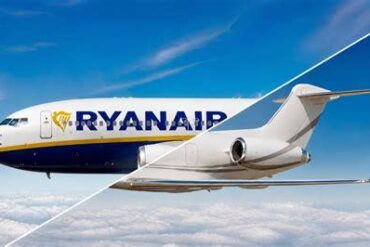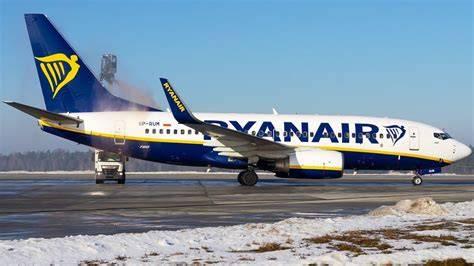
Ryanair’s all-Boeing 737 fleet is not a matter of brand loyalty, aesthetics, or a sentimental attachment to Seattle. It is a cost-engineering decision that reaches into every corner of the airline’s operation, from the simulator bay in Dublin to the parts warehouse that keeps 647 aircraft turning across more than 95 bases. Since 1995 the airline has flown nothing but Boeings, and for almost all of that time nothing but 737s. The real reason is brutally simple: a single aircraft family collapses training, maintenance, dispatch, and purchasing into a handful of predictable, negotiable, and repeatable processes, and those savings are what fund the €19.99 fares. Peer airlines that tried to keep an all-Boeing promise discovered how fragile it is once mergers, delays, and supply chains intervene. Ryanair, by contrast, has spent three decades deepening its dependence on one airframe and one manufacturer, deliberately trading flexibility for scale, and betting the company’s 2030s cost structure on a variant of the 737 that has not yet entered service.
How Alaska Airlines and Breeze Airways Lost Fleet Purity
Fleet commonality looks elegant in a strategy meeting and falls apart in the real world. Alaska Airlines spent years branding itself “Proudly all Boeing,” a slogan plastered across its 737 hulls, yet the mergers with Virgin America and Hawaiian Airlines brought large Airbus fleets that could not be rationalised away. The introduction of long-haul flying under the Alaska brand made a single-type fleet impossible, and the motto quietly disappeared. Breeze Airways, originally conceived as Moxy Airways under the MOXY call sign, planned to launch with an all-Airbus A220 fleet when the type was still marketed as the Bombardier CS100. Program delays forced an interim pivot to the Embraer E190 to capture early demand amid a wider supply-chain bottleneck, and true commonality slipped further from reach. Both cases show that single-fleet purity depends on factors outside an airline’s control: merger partners, OEM delivery performance, and supply chain shocks. Ryanair has kept its version of the doctrine only because it designed an entire operating model around it, and because it has been willing to absorb the pain of Boeing’s delays rather than diversify.
Ryanair’s 737 Fleet: 647 Aircraft and One Exception
Ryanair’s published fleet stands at 647 aircraft, consisting of 411 Boeing 737 Next Generation airframes, 210 Boeing 737 MAX 8s, and a firm order for 300 Boeing 737 MAX 10s yet to be delivered. Within the NG population, 54 aircraft fly with the Polish subsidiary Buzz and 134 with Malta Air, spreading the same type across multiple operating certificates without spreading the engineering burden. The only deviation is the 26 Airbus A320s operated under Lauda Europe, a wet-lease arrangement targeted solely at the Vienna market, a niche operation rather than a philosophical shift. Before the first 737 arrived, Ryanair flew BAC One-Elevens and Aerospatiale ATR 42-600 turboprops, both phased out in the pursuit of uniformity. The hundreds of 737NGs and MAX 8s logged across Europe represent thousands of daily cycles, every one of them dependent on Boeing delivering aircraft on schedule and supporting them consistently. Any disruption to that delivery timeline directly constrains Ryanair’s ability to add millions of seats per year, depresses its yield strategy, and forces it to reshuffle capacity across its network.
Why the 300-Aircraft 737 MAX 10 Order Is the Backbone of Ryanair’s 2030s Costs
The 300 MAX 10s on firm order are not merely future growth; they are the backbone of Ryanair’s 2030s cost structure, designed to unlock lower fuel burn, higher seat density, and tighter turnaround efficiency while replacing ageing NGs and adding close to 50 percent more capacity. The MAX 10 shares the same parts, engineering, and engine family as the MAX 8, so introducing it costs far less than introducing a new type, and Ryanair stays inside a single supply chain. The trade-off is a reduced range profile relative to its siblings: the MAX 8 offers about 3,550 nautical miles and typically seats 162 to 178 passengers, making it the most versatile family member for longer thin routes, while the MAX 10 seats 188 to 204 but gives up range at roughly 3,100 nautical miles because of its extra weight and higher fuel burn. For Ryanair, that sacrifice is irrelevant on short-to-medium sectors, and the extra seats let it compete more directly with easyJet and Wizz Air and their A321 fleets. The variant has been notoriously delayed, with first delivery tentatively set for 2027, meaning Ryanair’s growth is now hostage to a schedule it does not control but has chosen to accept because the alternative, a mixed fleet, is more expensive.
Fleet Commonality Economics: Training, Simulators, and One Type Rating
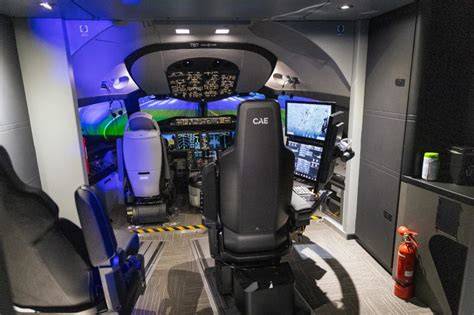
The economics of a single fleet start with people. Ryanair trains pilots on one aircraft type and maintains one simulator configuration, a selection that includes 3 CAE SIM 21s, 1 CAE Classic, 2 CAE 5000 series, 5 CAE 7000XR series, 2 CAE 7000XR MAX series, and an MPS FTD2/FNPT2 fixed-base device. Full-service carriers with mixed fleets such as Lufthansa must operate and fund several aircraft types, and every software version loaded into a simulator is an additional expense. Ryanair pays for the 737 family only. The variants differ in practice, with varied centre of gravity location, tail-down force characteristics, and landing ground roll distance, yet pilots need only one type rating for all 737 variants under European Aviation Safety Agency rules. That single rating also simplifies crew scheduling: when a delay occurs, any legal, on-reserve pilot can be called for any aircraft, giving the airline a frictionless path to consistent delivery of its notoriously punctual and notoriously spartan passenger experience.
Simplified Maintenance: One Supply Chain, Fewer Vendors
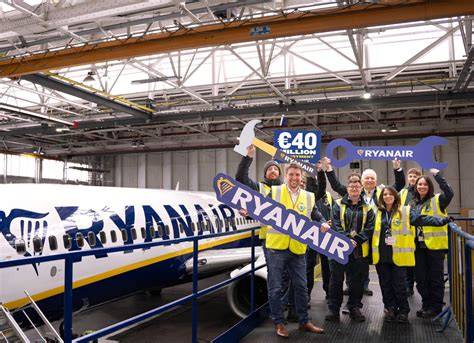
Maintenance costs fall fastest where the supply chain is narrow. Airframe families live inside one unified supply chain, and engines follow the same logic. Ryanair’s material coordinators are relieved of a complex web of vendors and instead nurture relationships with a select handful under contract or fixed pricing. The airline describes its materials team as overseeing all aspects of material and part usage across the network and its approved repair shops, from sourcing new parts to managing the repair and overhaul of a multi-million-euro pool of spares and the logistics of supporting over 600 aircraft across more than 95 bases. On the hangar floor, an Airframe and Powerplant mechanic who has spent years on a single airframe and engine model turns heavy maintenance checks into routine, predictable events. Material requests are filled faster, a familiar vendor network is already in place, and mechanics gain fluency in Illustrated Parts Catalogs, Component Maintenance Manuals, Aircraft Maintenance Manuals, and proprietary documentation. That fluency compounds into faster turnarounds and fewer surprises.
Less Chaos for Dispatchers and Crew Schedulers
Dispatch is where fleet uniformity pays off most visibly on the day of operations. When a delay requires an aircraft swap, substituting one 737 for another is simple and predictable, with capacity and range the main variables between, say, a 737-800 and a MAX 10. Compare that with United Airlines, where dispatchers juggle many types with different performance profiles and loading procedures. Similar cabin layouts, loading procedures, and performance envelopes shorten every scheduling calculation and improve punctuality and utilisation. Standardisation also adds a margin of safety, because crews and planners work with familiar, consistent performance data rather than relearning a type on a bad day. Combined with the single type rating, this gives Ryanair an unusually wide pool of crew who can be called on short notice, which is precisely what a high-density, high-utilisation, low-cost schedule demands.
A Uniform Passenger Experience Built on Predictable Cabins
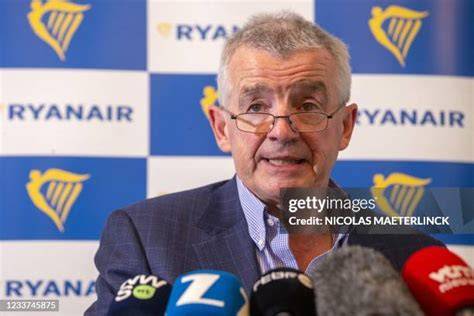
Uniformity shapes the customer experience as much as the balance sheet. Passengers on Ryanair know what to expect from booking onward, thanks to a strong brand and a deliberately combative social media presence, and the cabin is consistent across the fleet apart from the subsidiaries. Ryanair’s marketing department exploits that predictability: the cabin layout is so familiar that seat 11A, a window seat on the 737-800 that has no window, became an internet phenomenon. CEO Michael O’Leary’s blunt public persona reinforces the same consistency, with remarks such as “Are we going to say sorry for our lack of customer service? Absolutely not,” as reported by The Guardian. That tone would be harder to sustain across a fragmented fleet with different cabins, seats, and legroom stories, because the brand promise depends on there being nothing to explain.
The Real Reason: A Deliberate Strategic Bet on One Airframe
The reason Ryanair still flies only 737s is that uniformity is the cheapest operating system an airline can build. One training syllabus, one type rating, one simulator suite, one spare parts pool, one set of maintenance manuals, one dispatch logic, and one fleet of negotiating partners compound into a cost base rivals cannot easily match, and that cost base is what makes ultra-low fares possible. The Lauda A320s exist because Vienna needs a wet-lease solution, not because Ryanair’s philosophy is shifting, and Alaska Airlines and Breeze Airways both illustrate how quickly an all-one-type hope dies when mergers or delivery delays intrude. Ryanair accepts the flip side of that bet openly: it has no second supplier to fall back on, its growth depends on Boeing’s delivery timeline, and its 2030s expansion rides on a MAX 10 that has yet to be delivered. For a carrier whose entire proposition is low cost at enormous scale, the potential of lower unit costs from a single, familiar airframe is worth more than the flexibility a mixed fleet would bring. The 737-only fleet is not a habit; it is the strategy, and it is the reason Ryanair’s cost structure keeps widening the gap on the airlines that chose variety.