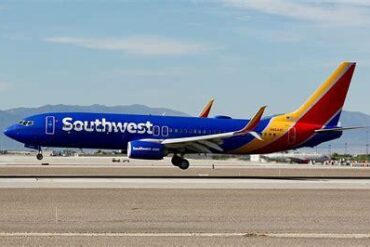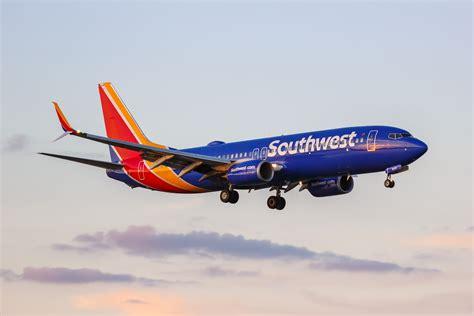
Southwest Airlines has spent years building a business model around simplicity, high aircraft utilization, and dense Boeing 737 configurations. That formula helped the carrier become one of the most recognizable airlines in the United States, but it creates a surprisingly complicated problem as Southwest moves toward a more premium-focused strategy: adding a genuine first class cabin would require changing much more than the seats.
The airline has already started moving away from its traditional all-economy approach. Extra legroom seating is now available throughout its fleet, giving passengers a more comfortable option while allowing Southwest to generate additional revenue from seats that already exist. The carrier is also investing in airport lounges, premium credit-card opportunities, larger overhead bins, and other upgrades designed to attract travelers who might otherwise choose a legacy airline.
Yet a true domestic first class cabin is a different proposition. American Airlines, Delta Air Lines, and United Airlines have long operated dedicated premium cabins on their Boeing 737s, typically using wider recliner-style seats in the first few rows. Southwest’s aircraft, however, were designed around a different philosophy. Its cabins prioritize seat count and operational simplicity, while its galleys were not configured around the kind of meal service traditionally associated with first class.
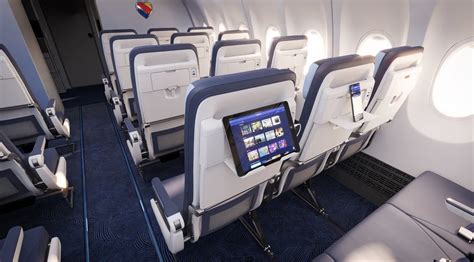
That means the difficult part is not simply removing a few economy seats and installing larger chairs. Southwest would potentially have to redesign the interior architecture of its Boeing 737 fleet, including galleys, service equipment, seat pitch, cabin capacity, and possibly even the way flight attendants deliver service. Every change affects another part of the equation.
Southwest Airlines Has More Than Seats to Change
The economic case for premium cabins is straightforward. Airlines can generally charge substantially more for a premium seat than for a comparable economy seat, particularly when corporate travelers and frequent flyers are willing to pay for additional space, better service, and greater flexibility. For Southwest, which has historically operated an all-economy cabin, this represents an important source of potential incremental revenue.
The airline has already introduced extra legroom seating across its fleet, but that product is fundamentally different from first class. It monetizes additional space without requiring Southwest to create an entirely separate service environment. A passenger can pay more for a better seat while the aircraft retains essentially the same basic cabin structure.
A dedicated first class section changes the calculation. A traditional domestic first class cabin requires larger seats, more space per passenger, greater service expectations, and often additional equipment. Even if Southwest selected a relatively simple recliner seat rather than a lie-flat product, the aircraft would lose seats compared with its current high-density configurations.
That matters enormously for Southwest because its Boeing 737 fleet has historically been optimized around a large number of economy seats. The company’s Boeing 737-800 and 737 MAX 8 aircraft, for example, can carry 175 passengers in Southwest’s current configuration. United and American operate comparable aircraft with roughly 166 and 172 seats respectively, while also reserving space for dedicated first class.
The difference is not merely a number on a seating chart. Every seat removed represents potential revenue, while every square foot allocated to premium space must generate enough additional revenue to compensate for the lost economy capacity.
The Boeing 737 Galley Problem Is Even Bigger
The most interesting obstacle may be hiding at the front of the aircraft.
Southwest’s Boeing 737 interiors were not configured around the full-service galley arrangements found on many legacy-carrier aircraft. The airline historically offered beverages and snacks rather than the kind of substantial meal service expected in a premium cabin.
That becomes important because a first class product creates an expectation of more comprehensive onboard service. Even if Southwest does not offer elaborate meals, it would need additional storage, preparation, and service capability to support a meaningful distinction between premium and economy passengers.
Ovens are relatively easy to understand as an equipment problem. Galleys are a cabin-layout problem.
Southwest’s Boeing 737-700 aircraft have small rear galleys, while its Boeing 737-800 and 737 MAX 8 aircraft have full-size rear galleys. The airline has also avoided installing full-size forward galleys on these aircraft. That approach creates additional cabin space for passengers, allowing Southwest to maximize seating capacity.
Installing a larger forward galley would therefore take space away from the passenger cabin. The airline could potentially need to remove multiple seats simply to accommodate the larger service area, before even accounting for the space needed by first class seats themselves.
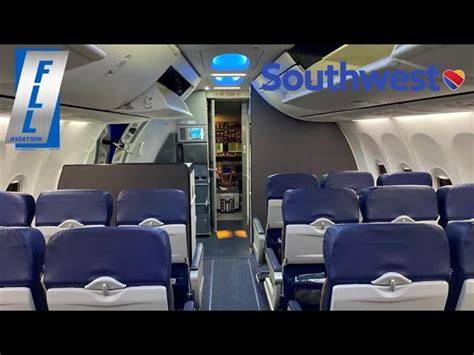
This is why the question of first class cannot be separated from the question of galley design. If Southwest wants to provide a premium meal and beverage service, the aircraft needs the equipment and storage capacity to make that service practical. Flight attendants also need sufficient workspace to prepare and distribute the products without turning the forward cabin into an operational bottleneck.
The result could be a cascading redesign. A larger galley removes seats. Fewer seats increase the importance of each remaining seat’s revenue. Larger premium seats remove additional capacity. And once the cabin loses enough seats, Southwest’s traditional cost advantage begins to change.
Southwest’s High-Density 737 Cabins Create a Difficult Trade-Off
Southwest’s current Boeing 737 configurations illustrate why the airline faces a different challenge from legacy carriers.
Its Boeing 737-700 seats 137 passengers, while its Boeing 737-800 and MAX 8 configurations seat 175 passengers. United’s comparable aircraft, by contrast, have traditionally included dedicated first class sections and fewer total passengers.
The difference allows legacy carriers to sacrifice economy seats in exchange for premium revenue. Southwest has historically taken the opposite approach, using the cabin to maximize the number of passengers carried on each flight.
This strategy has another advantage: lower costs per available seat. Spreading operating expenses across more seats helps support Southwest’s traditional low-cost model. Removing seats therefore has a cost beyond the physical loss of passenger capacity.
Southwest could potentially preserve some of its existing extra legroom proposition, but a new first class cabin could force the airline to rethink seat spacing throughout the aircraft. If premium seats occupy significantly more floor space, the airline may have to reduce the amount of room allocated to its extra-legroom economy product or remove enough seats elsewhere to accommodate the new layout.
That would create an interesting product hierarchy. Southwest would need to determine exactly how much separation customers should perceive between its most expensive economy seats and its new first class product.
Lie-Flat Seats Would Make the Problem Much Bigger
There is an even more ambitious possibility: lie-flat seats.
Southwest CEO Bob Jordan has discussed the possibility of a true domestic first class product and has not completely ruled out lie-flat seating. That does not mean Southwest has committed to installing such seats, but the concept demonstrates how dramatically the cabin could change if the airline chose to pursue it.
A narrowbody Boeing 737 can technically accommodate specialized lie-flat seats. The problem is that these seats are significantly larger and heavier than conventional domestic first class recliners. They require substantially more cabin space, reducing the number of economy seats that can remain on the aircraft.
The service requirements would also become more demanding. Passengers paying for a lie-flat experience would reasonably expect a more comprehensive meal, beverage, and amenity offering. That would increase the importance of the galley issue rather than solve it.
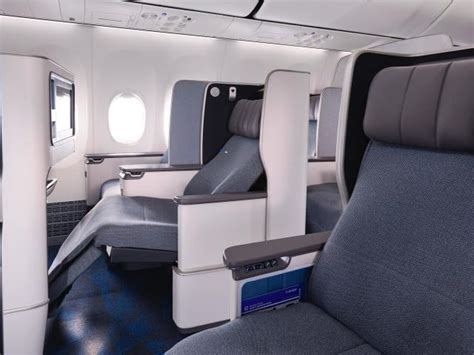
There is also a network question. Lie-flat domestic products generally make the most economic sense on routes where customers are willing to pay a significant premium for comfort, particularly long transcontinental services connecting major business markets.
Southwest’s network has not historically been built around the same corporate-heavy transcontinental strategy as the largest legacy carriers. That makes a fleetwide lie-flat configuration difficult to justify. A premium seat that makes excellent economic sense on a small number of high-value routes may be less attractive when installed throughout an entire fleet.
Southwest Could Follow the European Business Class Model
There is another possibility that would allow Southwest to introduce a premium product without undertaking such a radical redesign.
European airlines frequently operate short-haul business class using essentially the same physical seat as economy. The difference is created through seat blocking, additional space, and enhanced service. The middle seat may remain empty, allowing passengers to receive more personal space without requiring a completely different aircraft seat.
A similar philosophy is already appearing in the United States. Frontier’s UpFront Plus product, for example, provides seats near the front of the aircraft with additional space and an empty middle seat.
For Southwest, this approach could be particularly attractive because it would reduce the amount of physical modification required. Instead of replacing an entire section with large domestic first class recliners, the airline could designate a smaller premium zone using existing seat architecture.
The drawback is equally obvious: customers would receive a product that is not as spacious as conventional domestic first class.
That distinction matters because Southwest is attempting to reposition itself toward premium travelers. If the airline charges legacy-carrier-level fares for a product that looks like an economy seat with an empty middle seat, passengers could question the value.
The First Class Decision Is Connected to Southwest’s Lounges
The cabin transformation is also occurring alongside changes on the ground.
Southwest has been developing airport lounge plans at several locations, including Honolulu, Nashville, Denver, Dallas Love Field, and Austin. The airline has secured substantial lounge space in some of these markets, signaling that its premium strategy extends beyond the aircraft cabin.

That creates an important connection between first class and loyalty economics. A premium cabin can generate more than seat revenue. It can help airlines sell higher-value loyalty products, encourage customers to concentrate their flying with one carrier, and support premium credit-card spending.
Southwest’s Rapid Rewards ecosystem has historically been a major component of its customer relationship. A higher-end credit card with lounge access could create another revenue stream while making the airline’s premium proposition more attractive.
If Southwest eventually combines first class, lounges, premium credit cards, and upgraded loyalty benefits, the company would have a much broader premium ecosystem than simply putting larger seats at the front of a 737.
Why Southwest May Prefer Recliner-Style First Class
The most practical long-term solution may therefore be a conventional domestic first class cabin rather than lie-flat seating.
A recliner-style product would provide a clear physical distinction from economy while requiring substantially less space than a bed. Southwest could install a limited number of larger seats at the front, add an enhanced meal and beverage service, and accept some reduction in total capacity.
That would still require significant interior changes, particularly around the forward galley. But it would allow Southwest to create a recognizable first class product without fundamentally rebuilding its entire network around premium transcontinental flying.
The airline would also have greater flexibility in determining how many first class seats to install. A relatively modest cabin could preserve more economy capacity, while a larger premium section could be introduced on aircraft or routes where demand supports it.
The challenge is finding the right balance between premium revenue and lost seat capacity.
Southwest’s 737 Transformation Could Change the Airline’s Economics
The broader significance of Southwest’s first class plans is that they represent more than a new seat.
For decades, the airline’s Boeing 737 cabin was built around a straightforward principle: keep the aircraft relatively simple, maximize useful passenger capacity, and offer a consistent economy experience. That model is becoming harder to reconcile with an aviation market in which premium travel has become increasingly important.
Southwest can add extra legroom without completely changing its aircraft. It can build lounges without altering a single 737. It can sell more expensive fares without physically changing the cabin. First class is different because it forces the airline to make permanent decisions about space.
A larger galley means fewer seats. Larger seats mean fewer seats. More service equipment means more weight and less flexibility. A more elaborate premium cabin can improve revenue per passenger while simultaneously increasing the cost and complexity of operating each aircraft.
That is the central reason Southwest’s Boeing 737s make a first class cabin so difficult to build. The airline is not starting with an empty aircraft and choosing where to put luxury seats. It is starting with an established cabin optimized around a different economic philosophy.
Southwest can certainly change that philosophy. The company has already demonstrated that it is willing to evolve its product, pricing structure, loyalty strategy, and airport experience. But a genuine first class cabin would force those changes into the aircraft itself, where every additional inch of premium space has a measurable cost.
The eventual answer may be a conventional recliner-style first class cabin, a more space-efficient European-style premium product, or something more ambitious. Whatever Southwest chooses, the hardest part will not be finding a first class seat that fits inside a Boeing 737. The harder task will be making that seat financially worthwhile after the airline gives up the capacity, galley space, and simplicity that have defined its 737 operation for decades.