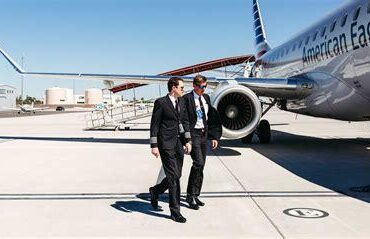
Every year, hundreds of naval aviators trade the gray hull of a carrier for the polished flight deck of a Boeing or Airbus, and the mechanics of that move are surprisingly simple. The paperwork is straightforward, the interview programs are well rehearsed, and a pilot who completes the drill properly can be sitting in a commercial right seat within months of leaving active duty. What is not simple is everything that happens afterward, because the moment a Navy pilot signs a Delta, United, or American Airlines offer letter, every hour of combat time, every carrier landing, and every leadership billet becomes irrelevant to the airline’s master seniority list. A single date, the date of hire, now governs the rest of the pilot’s professional life.
Understanding that paradox is the difference between a former naval aviator who drifts through a commercial career and one who engineers it as deliberately as a carrier approach. The transition from Navy pilot to airline captain at Delta Air Lines, United Airlines, and American Airlines is not a promotion ladder in any conventional sense. It is a queue, and the position in that queue is set once and then compounds quietly for three decades.
Why a Navy Pilot Starts the Airline Career at the Bottom
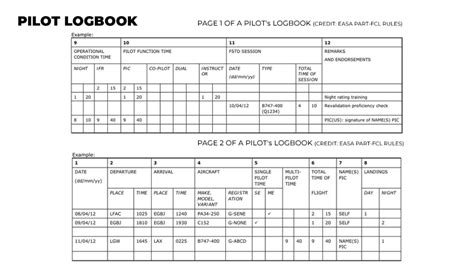
The Federal Aviation Administration sets the floor for everyone. Commercial airline operations under Part 121 require an Airline Transport Pilot certificate, which in standard civilian practice means 1,500 hours of logged flight time, and the Air Line Pilots Association is explicit that no military rank, medal, or combat record substitutes for that regulatory baseline. The FAA does extend a meaningful credit to military aviators, but only for hours flown in aircraft that required more than one crew member, which is why a Navy pilot with thousands of hours in a multi-crew P-8, C-130, or E-2 can qualify at a reduced threshold of 750 hours rather than the full 1,500. A single-seat fighter pilot with a comparable logbook may find that credit harder to claim, a nuance that catches some Hornet and Super Hornet aviators off guard when they first open their logbooks for an airline recruiter.
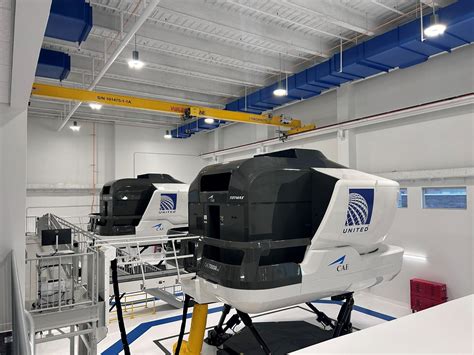
Even the favorable credit does not remove the second hurdle. A newly hired pilot must still complete an aircraft type rating at the carrier’s own training center, typically two to three months of simulator work, systems instruction, and check-ride evaluations, all of which begins on day one of employment rather than being offset by military experience. A newly transitioned Navy pilot therefore enters the commercial system at exactly the same baseline as a civilian regional captain with a fraction of the military flight hours, and the airline treats them identically from that point forward.
The Administrative Shortcut Into the Right Seat
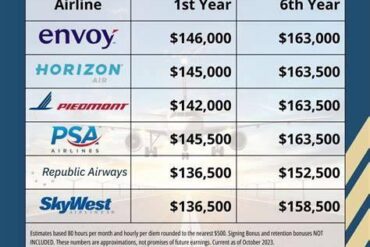
The speed of the initial transition is genuinely remarkable. Because Delta and United both allow military candidates to interview while still on active duty, a naval aviator can hold a conditional job offer months before separation, with a start date deliberately timed so that new-hire training begins during terminal leave. The Department of Defense SkillBridge program reinforces this by permitting service members to complete airline indoctrination and type rating training during their final months of service, effectively stitching the military and civilian careers together without a gap. American Airlines routes many military candidates through its wholly owned regional carrier, Envoy Air, before a flow-through agreement moves them to the mainline list.
Funding for the ATP Certification Training Program and the final practical examination is commonly absorbed by the hiring carrier as part of onboarding, a benefit worth several thousand dollars and a considerable amount of stress. The one item that cannot wait, however, is the FAA first-class medical certificate. Aviators who delay that examination until the week before a conditional offer turns firm risk discovering that a documented VA disability claim or a decades-old service injury triggers a review that stalls the entire hiring process. Seasoned transition candidates obtain that certificate early, often with an aviation medical examiner experienced in military records, and clear the paperwork long before the interview.
The Seniority Clock: Why the Hire Date Outlasts Every Other Credential
Airline seniority is the closest thing commercial aviation has to a religion. The hire date determines which aircraft a pilot flies, which base they call home, whether they sit reserve or hold a line, which days off they get in December, and how quickly they can upgrade to captain. It even determines vacation preference and the ability to commute rather than relocate. Military background secures exactly one measurable advantage: an early hire date ahead of candidates who apply later in the same cycle. That advantage is permanent, and over a thirty-year career it compounds into aircraft preference, schedule quality, and hundreds of thousands of dollars in cumulative earnings.

A moment in late 2022 illustrates how dramatically the queue can shift. The hiring surge that followed the pandemic compressed what had historically taken two decades into a window of three to five years for many first officers, especially at traditionally junior bases including New York. Approximately 8,000 first officer hires are forecast for 2026, a figure that suggests the demand has not vanished. But the deeper driver is not fleet expansion. It is the mandatory retirement age of 65, which removes captains from the top of the list and pulls every remaining pilot up one slot on the master roster. Airlines hire primarily to replace departing captains, not to grow their fleets, and that distinction matters enormously to anyone calculating how fast the upgrade might come.
The Financial Case for Leaving the Navy
The salary gap is stark and it explains most of the attrition. Navy pilots rotate between flying tours and shore tours, deploying for months at a time, relocating every two or three years, and spending only ten to twenty percent of on-duty time actually in the cockpit. The rest goes to ground jobs, high-pressure briefs, and the constant obligations of serving as a military officer twenty-four hours a day. Monthly base pay for a Navy Commander, the O-5 rank at which many aviators separate, runs roughly $7,295 to $9,250 before allowances and flight pay, placing a mid-career aviator in the range of $120,000 annually with bonuses.

Airline captains earn noticeably more, with narrowbody captains near $250,000 and widebody captains at major carriers exceeding $550,000 at the top of the pay scale. Delta’s direct 401(k) contribution of seventeen to eighteen percent adds a retirement benefit that the military cannot match. Retention bonuses of $37,000 to $150,000 for active-duty aviators, and up to $280,000 for select reserve aviators, have not closed the gap sufficiently to keep pilots in uniform, particularly when commercial pilots are paid for flight hours and their working day ends when the engines shut down. The Navy’s investment of roughly one million dollars per pilot in high-performance jet training remains an extraordinary entry-level bargain, but the service commitment that pays for it, eight years for fixed-wing jet pilots and six for helicopter, propeller, and Naval Flight Officer designations, simply delays the calculation rather than changing its arithmetic.
The Upgrade to Captain: A Question of Timing and Vacancy
Nothing about military rank accelerates the upgrade itself. A first officer becomes a captain only when the federal requirements are satisfied and the airline has a vacancy to fill, and then only when the pilot’s seniority position reaches the upgrade threshold at that particular base and on that particular aircraft. Delta and United often publish awarded upgrade dates months in advance, giving pilots time to bid and prepare, while American’s flow-through structure can produce different pacing depending on whether a pilot enters through Envoy or mainline. Widebody captain seats remain far more competitive than narrowbody upgrades, and the difference in hourly rate between an entry first officer and a widebody captain is close to threefold, which is why many transitioning pilots weigh airframe choice against quality of life rather than simply chasing the highest salary line.
The final consideration is the one that former naval aviators frequently underestimate. A rapid upgrade environment is a product of retirement-driven attrition, not a permanent feature of the industry, and pilots who assume the 2022 pace will continue indefinitely may find themselves bidding for narrowbody upgrades in a slower cycle. The disciplined approach is to treat every bid as a career decision, weigh base, aircraft, and commuting burden alongside pay, and recognize that the hire date secured during active duty is the only fixed asset a transitioning aviator carries into the commercial system. Everything else is negotiable, and everything else, eventually, is scheduled.