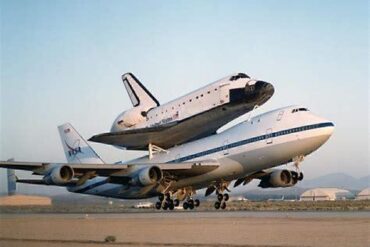
For most of aviation history, an airliner’s final flight was treated as a quiet ending. It landed, taxied to a remote apron, and waited for the scrap dealers. The Boeing 747 seemed destined for exactly that fate during the late 2010s, when passenger carriers replaced the quadjet with twin-engine aircraft that burned less fuel and needed fewer crew members. Then the pandemic arrived, widebody fleets were parked across desert storage facilities, and the Queen of the Skies appeared to be finished for good. What happened next reversed the script entirely, turning stored airframes into some of the most valuable second-hand aircraft in the world.
The transformation did not happen because sentimentality rescued the jumbo. It happened because cargo economics, freight demand, and a closed production line collided at precisely the right moment. Older 747s, many of them written off as obsolete relics, were pulled from storage, inspected, modified, and returned to revenue service. Some had been idle for years. Operators poured millions into them anyway, because the aircraft offered something no newer twinjet could fully replicate.
Why the Boeing 747 Became So Valuable to Cargo Airlines
The Boeing 747 was designed around sheer scale, a philosophy that passenger airlines eventually rejected but cargo carriers never stopped valuing. Early variants carried hundreds of passengers, and later freighter versions became some of the most capable cargo aircraft ever built. As airlines shifted toward the Boeing 787 and Airbus A350, the jumbo retained one enormous advantage that efficient twinjets could not replace: volume. Cargo operators discovered that the aircraft’s cavernous main deck remained ideal for machinery, automotive parts, industrial equipment, and oversized freight that simply cannot fit inside smaller widebody freighters such as the Boeing 767-300F.
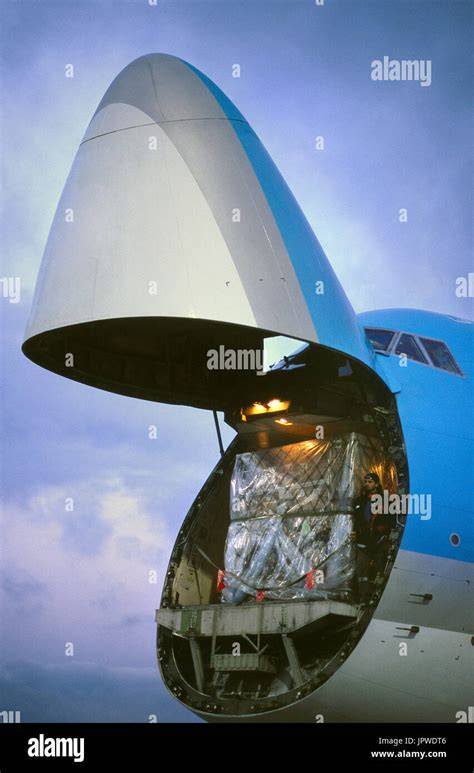
That advantage was amplified by the upward-opening nose door on dedicated freighter variants. Loading crews could insert freight directly into the fuselage without the dimensional restrictions imposed by side-loading aircraft, a feature that made the 747 indispensable for outsized cargo operations. The retirement wave of the early 2020s unexpectedly created a large supply of low-cost airframes at the same time e-commerce growth pushed global air cargo demand sharply higher across North America and Asia. Freight operators needed large aircraft quickly, and Boeing’s production line had already closed. That combination of limited supply and rising demand transformed unwanted passenger aircraft into highly desirable cargo assets almost overnight, with many buyers also recalling the passenger-to-freighter conversions that Boeing ran until 2016 as proof the airframe could be repurposed affordably.
The Desert Storage Facilities That Preserved the Fleet
Aircraft storage facilities in places like Marana, Victorville, and Mojave became central to the 747’s revival because these desert boneyards were engineered not simply for scrapping, but for preserving aircraft for potential future use. The term boneyard suggests final retirement, yet many aircraft stored there remain in carefully maintained condition that allows operators to reactivate them years later. When a jumbo arrives, engineers perform preservation procedures that protect engines, avionics, hydraulics, and flight surfaces from environmental damage. Fuel systems are drained or stabilized, engines are sealed and covered, and critical components are inspected periodically while the aircraft sits inactive in the desert heat.
Depending on the level of storage selected by the owner, some aircraft can theoretically return to service within weeks, while others require months of extensive maintenance work. The pandemic years dramatically expanded the number of airframes entering storage, including dozens of 747s from carriers that permanently exited the type. Qantas, KLM, and Virgin Atlantic all accelerated retirement plans, flooding the secondary market with aging but structurally sound jets. Although many observers assumed the majority would eventually be dismantled for spare parts, freight demand changed the economics entirely. Cargo operators began examining stored aircraft as potential fleet additions, particularly because newer freighters remained expensive and difficult to obtain quickly, and the closure of Boeing’s 747 production line only intensified interest in the surviving fleet, since every stored aircraft represented a finite resource.
How Passenger Boeing 747 Jets Were Converted Into Freighters
One of the most important factors behind the jumbo’s cargo resurgence was the development of passenger-to-cargo conversions, which allowed older airline aircraft to begin entirely new careers transporting freight instead of travelers. These conversions became especially attractive for the Boeing 747-400, a model that combined relatively modern avionics with exceptional payload capability. During a conversion process, the aircraft’s passenger interior is almost completely removed, including seats, overhead bins, galleys, and cabin furnishings.
Engineers then reinforce sections of the floor structure to handle concentrated cargo loads while installing large side cargo doors and specialized handling systems that let pallets and containers move efficiently through the fuselage. Although these modifications require substantial investment, the finished product often costs significantly less than purchasing a newly built freighter. For cargo airlines operating in volatile freight markets, converted 747s became an appealing compromise between capability and affordability, offering a fast route to extra lift without a multi-year order book.
The timing aligned with dramatic shifts in global shipping patterns. Online retail companies increasingly relied on overnight logistics networks capable of moving enormous quantities of goods between continents, while manufacturers sought fast transportation for supply chain disruptions that became common during the early 2020s. The jumbo’s size gave operators flexibility smaller freighters could not match, and a single aircraft could transport huge amounts of cargo across long distances without refueling stops, making it ideal for high-volume routes linking Asia, Europe, and North America. Even older examples remained attractive because cargo operators use aircraft differently from passenger airlines. Freight schedules often involve fewer daily cycles, allowing aging airframes to keep earning long after carriers consider them economically outdated.
Why US Cargo Operators Still Depend on the 747
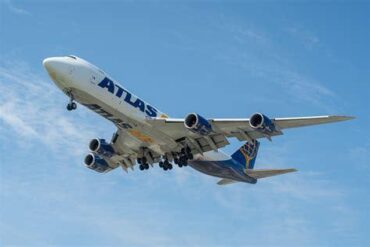
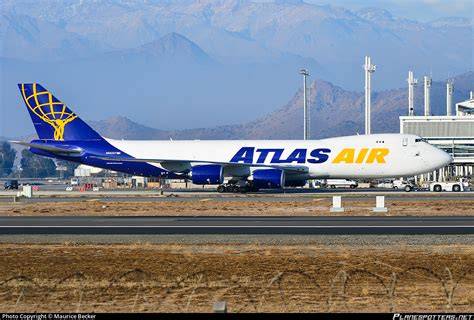
Despite advances in newer cargo aircraft, US operators continue relying heavily on the 747 because few alternatives duplicate its combination of payload, range, and operational flexibility. Major operators, including Atlas Air and Kalitta Air, still deploy large 747 freighter fleets across global cargo routes, carrying everything from e-commerce shipments to military equipment and oversized industrial machinery. According to ch-aviation, Atlas Air operates sixty-seven airframes across the 747-400F and 747-8F, while Kalitta Air fields a fleet of twenty-six 747-400Fs and UPS Airlines flies forty-three freighters in its own right.
The aircraft became particularly important during supply chain disruption, when port bottlenecks forced companies to move urgent cargo by air instead of sea freight. During those moments, the jumbo’s capacity allowed operators to transport high volumes of goods quickly between continents. Military charter work has also contributed to its continued relevance in the United States. The Department of Defense frequently contracts civilian cargo operators to move helicopters, armored vehicles, engines, and humanitarian aid supplies worldwide, and the 747 remains one of the few aircraft capable of handling these missions efficiently. Cargo operators also prioritize payload over fuel efficiency on routes where demand for freight space stays exceptionally high, and while twin-engine freighters consume less fuel overall, they may require additional flights to carry what a single 747 moves in one lift.
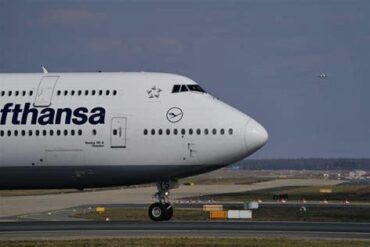
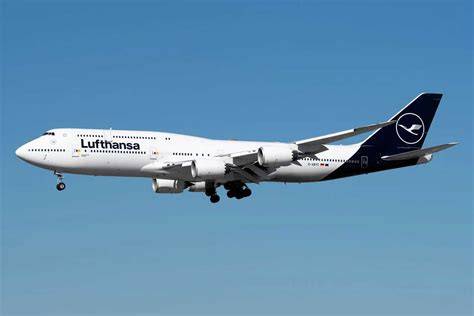
Reliability continues to play a role in the aircraft’s survival. Decades of operational experience created an enormous maintenance infrastructure around the 747, with mechanics, spare parts suppliers, and overhaul facilities spread throughout the industry. Even though the aircraft is no longer in production, operators can maintain fleets effectively because of the large global inventory of parts and technical expertise. That support network makes it economically viable to reactivate aircraft that spent years in storage, particularly when freight rates justify the cost of returning them to service. Lufthansa, with twenty-seven airframes, and Cargolux, with twenty-six, remain among the world’s largest operators, demonstrating that the type’s appeal stretches well beyond American carriers.
The Surprising Return of Retired Passenger Aircraft
Perhaps the most remarkable aspect of the jumbo’s modern resurgence has been the number of retired passenger aircraft that unexpectedly returned to active operations after years in storage. Several airlines and governments have recently sought older 747s for specialized transport missions, demonstrating that the aircraft still fills operational roles few alternatives can handle. Some airlines that previously grounded the type entirely later discovered renewed demand for high-capacity operations, especially on routes where passenger volumes rebounded faster than expected. Other operators purchased retired aircraft specifically to support freight growth, often using former passenger jets as temporary cargo aircraft before full conversion programs could be completed.
Governments have also continued showing interest in the type. The US Air Force still relies on 747 variants for presidential transport, while additional aircraft acquired from foreign operators have been used for training and spare-parts support connected to the delayed replacement Air Force One program. Internationally, some carriers reactivated stored aircraft because sanctions, fleet shortages, or supply chain problems limited access to newer airplanes. In those situations, aging 747s represented immediately available capacity at a time when acquiring modern widebody aircraft became increasingly difficult.
The reactivation process itself can be extraordinarily complex. Aircraft emerging from long-term storage require detailed inspections, engine overhauls, software updates, corrosion checks, and extensive test flights before they can carry cargo or passengers again. Depending on the aircraft’s condition, the work can take several months and cost millions of dollars. Still, operators repeatedly concluded the investment was worthwhile because the 747 continued generating revenue in ways newer aircraft sometimes could not match.
Why the Boeing 747 Still Has a Future in Freight
Although the jumbo’s passenger era has largely ended, its future in cargo aviation appears far more secure than many observers predicted a decade ago. Dedicated freighter variants, particularly the newer Boeing 747-8F, are expected to remain active for decades because no direct replacement currently offers the same combination of payload capability and nose-loading functionality. The continuing expansion of global e-commerce networks ensures demand for high-capacity freighters will likely remain strong, especially on long-haul routes linking manufacturing centers with major consumer markets.
Environmental regulations and fuel costs will gradually pressure older fleets, yet operators still view the 747 as highly effective for missions involving heavy or oversized freight. Older 747-400 freighters continue finding work because cargo aviation traditionally keeps aircraft flying much longer than passenger airlines do, and freighter operators are often willing to accept higher operating costs if an aircraft reliably generates strong cargo revenue, particularly during peak shipping seasons.
The closure of Boeing’s production line may ultimately strengthen the aircraft’s long-term value because it guarantees that surviving airframes are finite in number. Every recoverable 747 sitting in desert storage now represents a limited strategic asset for carriers seeking additional lift capacity without waiting years for newly built alternatives. As a result, aircraft once written off as obsolete passenger relics have become some of the most important workhorses in global cargo aviation, proving that retirement for the Boeing 747 was never quite as final as many people assumed.