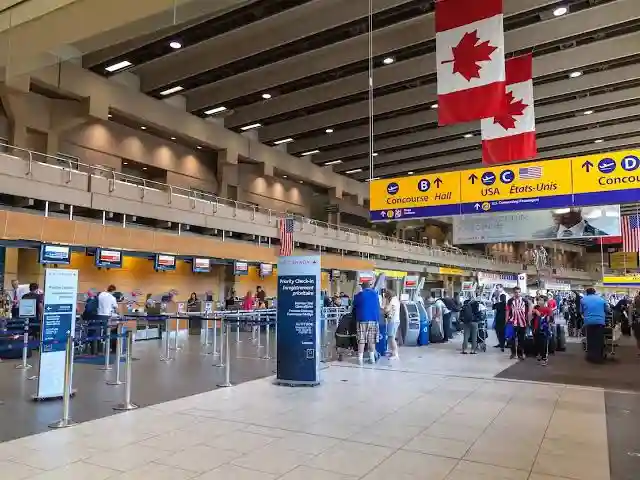
Canadian travelers know the sting of a fare that balloons at checkout. Every ticket leaving a Canadian airport carries a visible stack of itemized charges—airport improvement fees, security charges, NAV Canada navigation fees, taxes, and carrier surcharges—each printed plainly on the receipt. Across the border, the same journey often looks cheaper, but the true cost of American air travel is frequently buried deep inside the ticket price rather than displayed. That contrast in transparency, ownership structure, and government funding sits at the heart of one of the most consequential debates in North American aviation today, and it is now reaching a breaking point under the weight of soaring jet fuel costs.
Why Canadian Airports Print Every Fee on Your Ticket
The defining feature of Canadian air travel pricing is disclosure. The largest line item is the Airport Improvement Fee, a charge Canadian airports levy to fund their own infrastructure upgrades, terminal expansions, runway maintenance, and debt servicing. Because Canadian airports operate as private, not-for-profit corporations that lease land from the federal government rather than receiving direct government infrastructure funding, they must recover capital costs directly from passengers. These fees range from a few dollars on short domestic hops to nearly C$50 (about US$35) on longer or international departures, depending on the airport and route, and they appear as a separate, clearly labeled charge on the fare.
Beyond the airport improvement fee, Canadian tickets carry the Air Travelers Security Charge, a flat government-imposed levy that pays for passenger and baggage screening; NAV Canada fees, collected because air traffic control in the country is delivered by a private corporation rather than a government agency; and high land lease rents that airports pass through to travelers because they must pay Ottawa for the ground beneath their terminals. Federal and provincial sales taxes, fuel taxes, and carrier-imposed surcharges to offset fuel volatility complete the stack. Every one of these costs is visible, itemized, and impossible to miss—which is precisely why Canadian fares look so expensive.
How US Airports Hide Their Costs Inside the Ticket Price
The American model produces a fundamentally different receipt. Most US airports are owned and operated by local municipalities or state governments, and both receive federal funding through programs such as the Airport Improvement Program. That public backing means American airports do not need to recover the full cost of their infrastructure from each passenger. The closest equivalent to Canada’s airport improvement fee is the Passenger Facility Charge, but it is capped by federal law, collected quietly, and rarely itemized as prominently as its Canadian counterpart. Air traffic control, meanwhile, is funded through the federal government and general taxpayer contributions rather than a dedicated private navigation corporation charging per flight.
The security fee tells an even starker story. American travelers pay a flat US$5.60 one way, capped at US$11.20 for a round trip, a charge introduced after the September 11 attacks. Canada’s security charge, by contrast, is structured and priced differently and appears as its own prominent line. The cumulative effect is that US tickets contain fewer visible fee categories, making fares appear simpler and cheaper at the moment of purchase—even when the underlying public subsidy is substantial. The result is that Canada ranks 105th out of 119 countries for aviation cost competitiveness, a ranking that underscores how heavily the visible fee structure weighs on Canadian carriers and passengers alike.
WestJet’s CEO Calls for a National Aviation Strategy
The frustration brewing inside Canadian aviation erupted into public demands at the end of October, when WestJet CEO Alexis von Hoensbroech addressed the Calgary Chamber of Commerce and delivered a scathing diagnosis of the sector. He argued that the current system has made US airlines more competitive and that the surge in jet fuel prices triggered by conflict in the Middle East has exposed structural weaknesses that were always there. “Canada’s aviation system has very few shock absorbers left,” he warned, pointing to airport charges, navigation fees, passenger-protection obligations, and taxes that leave airlines unable to respond dynamically to market shocks.
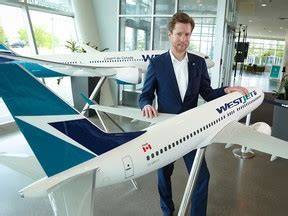
Von Hoensbroech also highlighted an inconsistency that distorts competition: some Canadian airlines receive federal funding while others do not. Carriers receiving that support can offer fares that would otherwise generate losses, making it far harder for unsubsidized competitors to match them. His proposed remedy is not a simple removal or subsidy of passenger charges but something far more holistic—a National Aviation Strategy that treats aviation as essential infrastructure and delivers a competitive, affordable, and healthy airline industry. Both WestJet and Air Canada have separately urged Ottawa to reduce the taxes and fees tied to air travel, signaling rare alignment between the country’s two dominant carriers.
Calgary as the Blueprint for Public-Private Aviation Collaboration
WestJet’s home city offers what the airline considers a working model. In October 2022, WestJet signed a memorandum of understanding with the Government of Alberta under which the carrier committed to making Calgary its exclusive global connecting hub and the home of its widebody fleet, with plans to expand routes and capacity. In return, the provincial government, the airport authority, and business partners pledged to support that expansion through coordinated investment and policy. The collaboration attracted a Lufthansa Technik engine repair facility with contracts worth billions of Canadian dollars and helped develop a CAE training Center of Excellence featuring eight full-flight simulators and cabin trainers.

“Calgary didn’t get here by changing one policy. We got here by dreaming big together and lining up every decision behind that goal,” von Hoensbroech said, arguing that Canada as a whole can replicate the approach. What he wants is a less transactional relationship among airlines, airports, and government—one built on shared strategic goals rather than fee-by-fee negotiations. The Calgary model demonstrates that when public and private sectors align behind a single aviation vision, the resulting investment can offset some of the cost pressures that otherwise flow directly onto passenger tickets.
Fuel Costs Expose the Fragility of Canada’s Aviation Economics
The fuel shock has turned a long-simmering cost problem into an immediate crisis. Von Hoensbroech reported that WestJet is paying roughly double what it paid the previous year for jet fuel, inflating overall costs by about 25% and pushing the airline toward an end-of-year loss. If current market conditions persist, the carrier projects an additional C$1.6 billion (US$1.14 billion) in costs, according to the Calgary Herald. Global jet fuel prices climbed from about US$80 per barrel in 2019 to a peak near US$139 in 2022, and after moderating through the mid-2020s, they have spiked again toward US$152, driven by both the full-scale invasion of Ukraine and ongoing Middle East instability.
To protect earnings, WestJet introduced temporary fuel surcharges on WestJet Rewards Companion Vouchers and on Sunwing Vacations and Vacances WestJet Québec packages. It also cut flying capacity, trimming the least profitable flights by 4% in September and 3% in October. Those reductions shrink the network available to Canadian travelers and raise the effective cost of the remaining seats, compounding the burden created by the visible fees already embedded in every ticket.
Route Cuts Show How Fuel Prices Reshape the Network
The capacity reductions extend to international flying. WestJet removed three transatlantic routes from its 2027 plans—Toronto Pearson (YYZ) to Glasgow (GLA), Halifax Stanfield (YHZ) to Copenhagen (CPH), and Halifax to Madrid–Barajas (MAD)—a decision that signals the carrier expects elevated fuel prices to persist well into next year. The Toronto–Glasgow route spans 2,862 nautical miles (4,967 km) each way, and WestJet had served Scotland’s largest city with Boeing 737-700s between 2015 and 2018 before returning with 737 MAX 8s in 2022 and 2026. Its withdrawal leaves Air Transat as the sole operator on the route using Airbus A321LRs, while Air Canada and WestJet continue serving Scottish passengers through Edinburgh (EDI).
The network retreat is a concrete illustration of how invisible costs and volatile fuel prices interact. Every route must absorb airport improvement fees, NAV Canada charges, and security levies at both ends, so a marginal long-haul service becomes unviable far sooner than it would under a lighter fee regime. WestJet’s fleet of 187 aircraft, with an average age of 10.3 years, must be deployed where returns can cover both the fuel bill and the layered Canadian charges—leaving thinner markets exposed to withdrawal.
Even Air Canada Feels the Squeeze
The flag carrier has not escaped the pressure, despite enjoying advantages WestJet views as unfair. On an earnings call, Air Canada told investors it would cut more than 2% of planned capacity for the first quarter of 2027 in response to fuel costs, after revising its jet fuel estimate upward to C$1.72 (US$1.23) per liter from C$1.29 (US$0.92). Those cuts reduce consumer choice and add pressure to already-high fares, reinforcing the argument that Canada’s cost structure leaves little room to maneuver when fuel markets turn hostile.
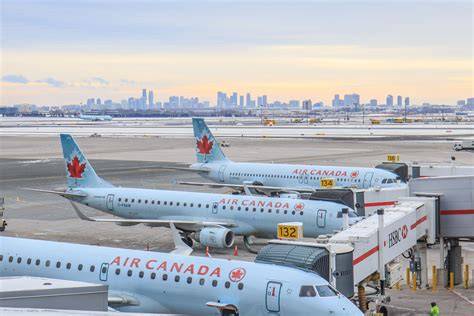
Air Canada’s results nonetheless show resilience that WestJet may envy. Demand held steady across most of its geographies, operating revenue rose 21% in the three months through September, but net income fell to C$139 million (US$98.7 million) from C$264 million (US$187 million) a year earlier. The divergence between revenue growth and profit decline captures the central problem: Canadian carriers are selling more seats while keeping less of every dollar, squeezed between transparent passenger fees, rising fuel, and a competitive disadvantage against American airlines whose costs are spread across taxpayers and buried inside the fare.
What the Transparency Gap Means for Travelers and Policy
The contrast between Canadian itemization and American concealment is more than an accounting curiosity. Visible fees make passengers acutely aware of the cost of infrastructure and security, but they also make Canadian fares look uncompetitive at the moment of booking, even when the total economic cost of a US trip—including public subsidies—is comparable or higher. The Canadian model forces airports to be self-funding and transparent, while the American model spreads costs across municipal budgets, federal programs, and quieter ticket line items. Neither approach is inherently superior, but the divergence explains why a traveler comparing fares between Toronto and Buffalo, or Vancouver and Seattle, sees such different numbers for what is essentially the same journey.
Von Hoensbroech’s call for a National Aviation Strategy is ultimately a plea to align these competing pressures. A coherent strategy would address airport funding models, navigation charges, land lease rents, and passenger-protection obligations as a single system rather than isolated line items, while ensuring that airlines compete on service and efficiency rather than on access to federal support. Until such a framework emerges, Canadian travelers will keep seeing every cost printed in black and white on their tickets—and will keep wondering why the fare next door looks so much smaller, even when the true bill is anything but.