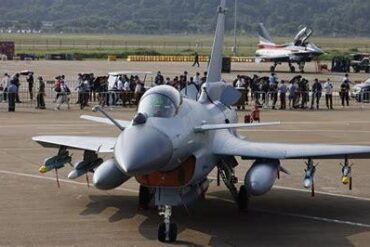
In an era where air superiority defines strategic leverage, the acquisition of Chinese J-10 fighter jets by Indonesia and Pakistan underscores how modern airpower decisions are deeply entwined with geopolitics, technological maturity, and operational priorities. While both nations have embraced variants of China’s Chengdu J-10 series, the critical differences between Indonesia’s J-10B and Pakistan’s J-10C reflect divergent paths in regional defense planning and tactical air warfare capabilities.
The Rise of the Vigorous Dragon
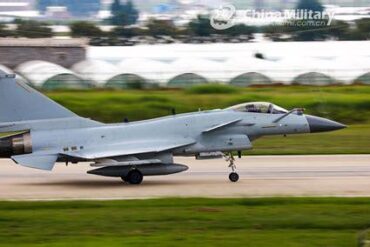
China’s Chengdu J-10 series, known by its evocative moniker “Vigorous Dragon,” is more than just a multirole fighter; it is the embodiment of China’s rapid ascent in aerospace technology. Originally launched in the 1980s to replace aging J-7 and Q-5 airframes, the J-10 has matured through multiple generations—from the baseline J-10A to the stealth-refined J-10B and the network-centric, AESA-equipped J-10C.
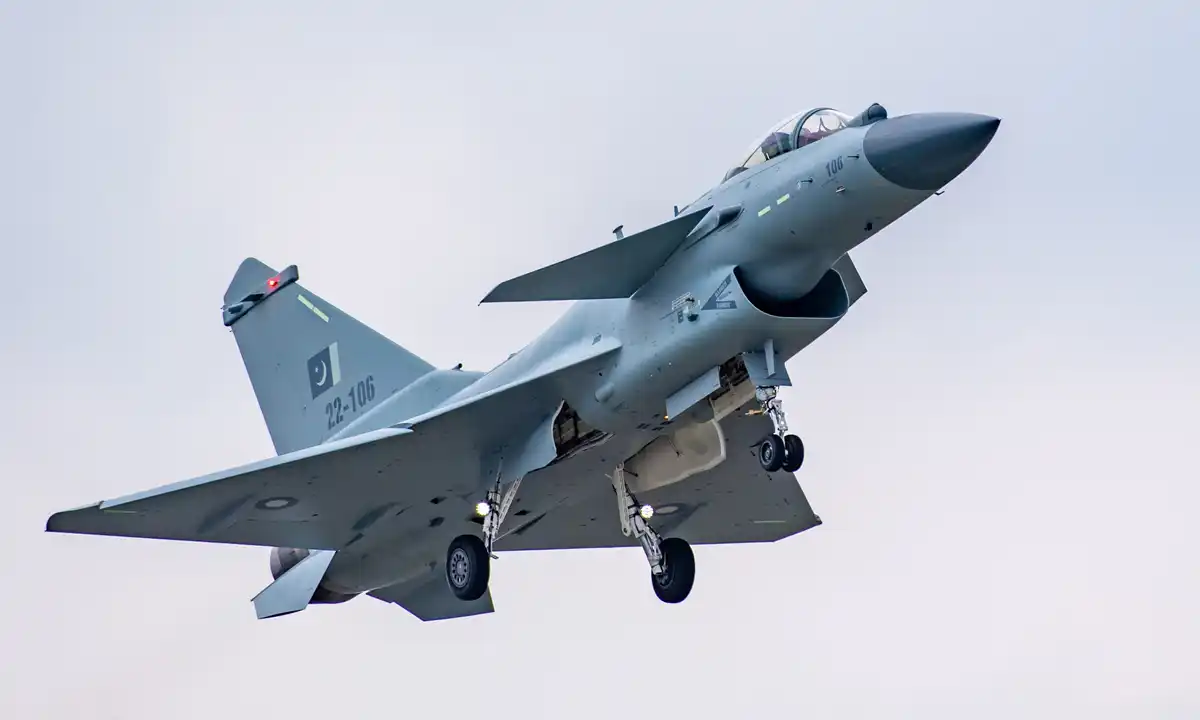
By 2024, over 600 J-10s had been fielded by the People’s Liberation Army Air Force (PLAAF) and the People’s Liberation Army Naval Air Force (PLANAF), making it one of the most prolific Chinese fighter platforms.
The J-10 series showcases China’s indigenous manufacturing evolution, particularly the transition from Russian AL-31 engines to the domestically developed WS-10B turbofan. This shift symbolizes not only a move toward self-reliance but a declaration of Beijing’s aerospace ambitions in the global defense market.
Indonesia’s J-10B Purchase: A Practical Modernization Step
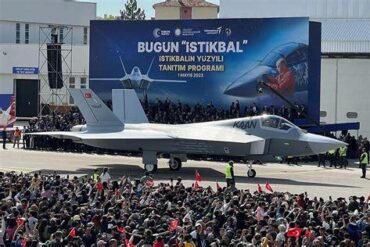
Indonesia’s decision to purchase 42 refurbished J-10Bs for approximately USD 1.6 billion is driven by a mix of economic constraints and operational urgency. The TNI-AU (Indonesian Air Force), long burdened with aging platforms like the F-5 and Su-27, seeks a stopgap modernization while awaiting more advanced Western fighters such as the Rafale and Turkish KAAN.
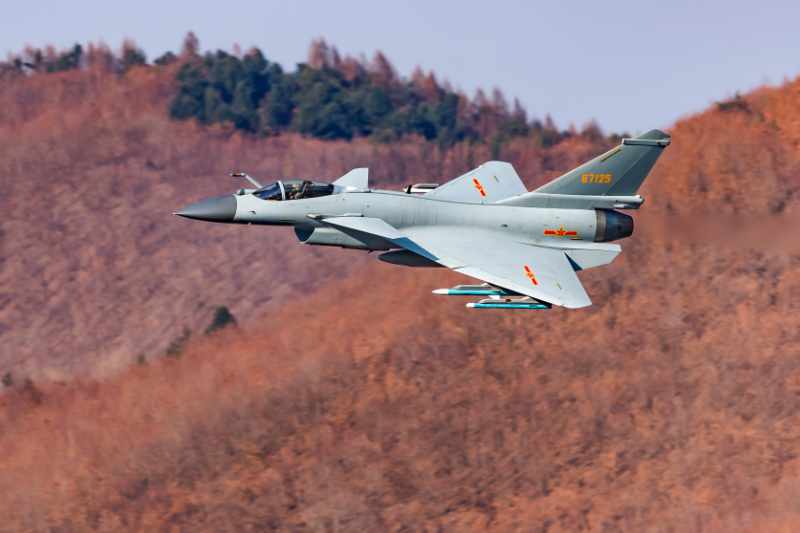
The J-10B, though no longer cutting-edge, brings Indonesia into the realm of 4+ generation fighters. Key attributes include:
- Diverterless Supersonic Inlet (DSI): Reduces radar cross-section and improves efficiency.
- PESA radar system: Capable of tracking 10 targets, engaging 4 simultaneously.
- Russian AL-31FN M1 engine: Offering 13,500 kgf thrust.
- IRST and ECM integration: Providing limited stealth and electronic warfare capability.
- Multirole payload capacity: Including PL-8/PL-12 air-to-air missiles, KD-88 guided munitions, and YJ-91 anti-radiation missiles.
While it lacks the sensor fusion and digital warfare features of its successor, the J-10B grants Jakarta a meaningful capability uplift, especially in maritime patrol, air policing, and deterrence missions.
Pakistan’s J-10C: A Leap into Networked Air Combat
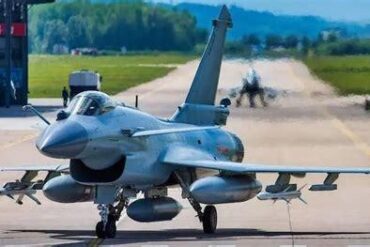
Pakistan’s choice of the J-10C, operational since 2022, places it on a dramatically different technological plateau. The Pakistan Air Force (PAF) inducted 25 J-10CE fighters, and their deployment has been framed as a strategic counterweight to India’s Rafale jets.
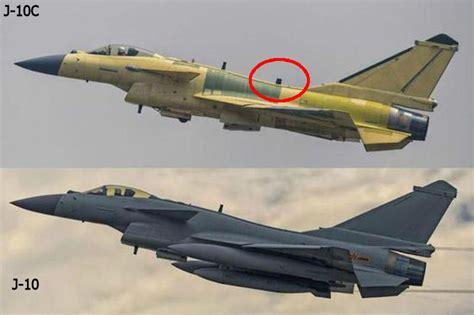
What sets the J-10C apart is not its airframe—which remains similar to the J-10B—but its internal systems and combat doctrine integration:
- AESA Radar: Replacing the PESA with a Chinese-made AESA radar gives the J-10C superior target resolution, jamming resistance, and the ability to track stealth targets.
- WS-10B Engine: More reliable, with a thrust range of 135–144 kN, including thrust vectoring in some demonstrators.
- Sensor Fusion & Datalinks: Full integration with AEW&C platforms and other fighters enables true network-centric warfare.
- PL-10 and PL-15 Missiles: With PL-15’s 200 km range, the J-10C has unmatched BVR (Beyond Visual Range) strike capability in the region.
- Stealth Enhancements: Includes nozzle modifications and signature-reducing coatings that increase survivability.
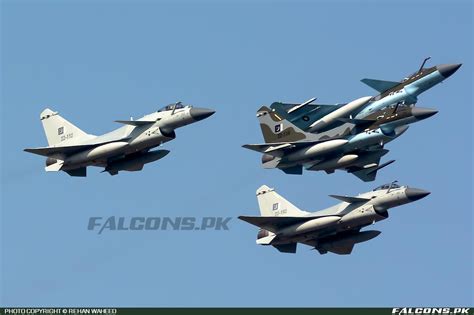
In simulated and real-world exercises, the J-10C has outperformed heavier Russian fighters like the Su-35, thanks to its electronic superiority and low observability. Pakistani pilots, trained with Chinese units, are now executing long-range engagements and multi-layered air defense suppression, leveraging the J-10C’s full spectrum dominance.
Technological Delta: Why the Difference Matters
The J-10B and J-10C share common aerodynamic DNA, but the technological chasm between them is profound. The table below encapsulates this divergence:
| Feature | J-10B | J-10C |
|---|---|---|
| Radar | PESA | AESA (indigenous, low-probability intercept) |
| Engine | AL-31FN M1 | WS-10B (domestic, TVC capability) |
| Stealth | Moderate (DSI, IRST) | Enhanced (nozzle design, coatings) |
| Avionics | Limited EW & HMS | Full sensor fusion, networked ops |
| Weapons | PL-8/12, KD-88 | PL-10/15, twin-rail pylons |
| Production | 60 units | Primary production variant |
This generational leap positions the J-10C at the forefront of China’s export ambitions. More than a fighter, it is a combat node in a digital battlefield, designed to dominate not only through firepower but through information superiority.
Strategic Calculations: Why Each Country Chose Its Variant
For Indonesia, the J-10B is a budget-conscious solution that fills a critical airpower gap. The deal’s structure—refurbished airframes, training in China, rapid delivery—meets Jakarta’s immediate defense needs without exhausting its procurement budget. It provides a bridge to more advanced systems expected later in the decade.
For Pakistan, the J-10C is strategic parity incarnate. Facing India’s Rafales and Su-30MKIs, the PAF needed a fighter with high-end BVR capabilities, digital integration, and agility. The J-10C not only fulfills those roles but signals a deeper Sino-Pakistani military convergence. The PAF’s reported use of PL-15s in 2025 engagements highlights how this aircraft is no longer theoretical—it is battle-proven.
China’s Global Aerospace Footprint Expands
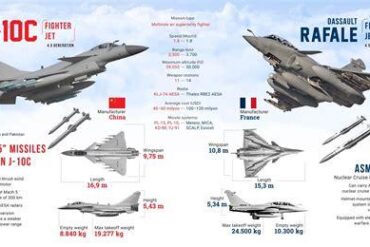
The J-10C’s success in Pakistan and its growing interest from nations like Egypt and Iran reflect Beijing’s maturing credibility as a defense exporter. Unlike earlier Chinese jets that were seen as budget alternatives, the J-10C is viewed as a high-performance, cost-effective rival to Western platforms such as the F-16V, Gripen E, and even the Rafale.
More critically, the J-10C aligns with China’s doctrinal focus on integrated air combat, pairing fighters with AEW&C aircraft, ground-based radar, and precision strike networks. It’s a systems platform, not just an aircraft.
Implications for Regional and Global Airpower Balances
The J-10B/J-10C contrast is not merely technical—it is geopolitical. It illustrates how countries tailor procurement not only based on budget but on operational doctrine and strategic alignment.
- Indonesia’s J-10B acquisition reflects pragmatic modernization without overt alliance signaling.
- Pakistan’s J-10C deployment marks an overt enhancement of frontline capabilities and a deeper fusion with China’s command structures.
Both pathways are valid. Yet, the J-10C’s features suggest that future conflicts will be won not just by flying faster or higher, but by seeing farther, shooting first, and networking deeper.
Conclusion: A Tale of Two Dragons
As the “Vigorous Dragon” continues to evolve, its dual presence in Indonesia and Pakistan illustrates how the same airframe can tell two different stories—one of affordability and transitional modernization, the other of cutting-edge power projection.
The J-10B offers Indonesia a vital upgrade, granting it multirole flexibility at a fraction of the cost of Western systems. But the J-10C, in Pakistan’s hands, represents the true realization of China’s vision: a fourth-generation-plus fighter approaching fifth-gen effectiveness through sensors, weapons, and systems integration.
This divergence highlights a broader trend: China’s growing role in shaping 21st-century aerial warfare. From its indigenous WS-10 engines to PL-15 long-range missiles, from AESA radar to networked datalinks, Beijing’s aerospace push is no longer aspirational—it is operational.
And the world is taking notice.