In a monumental move that redefines Southeast Asia’s defense landscape, Indonesia has signed a $10 billion agreement with Turkey to acquire 48 KAAN fifth-generation multirole fighter jets over the next decade. The deal, formalized during the Indo Defence Expo & Forum in Jakarta, is not just Turkey’s largest-ever defense export—it also represents a strategic leap in Indonesia’s military modernization ambitions. As geopolitical tensions intensify across the Indo-Pacific, this high-stakes partnership positions both Ankara and Jakarta as rising forces in global defense dynamics.
Strategic Timing and High-Level Diplomacy
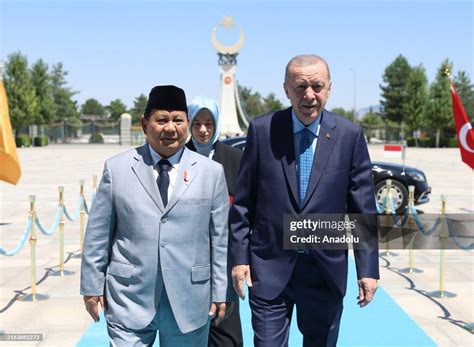
The signing follows months of fast-tracked negotiations, catalyzed by the inauguration of President Prabowo Subianto in October 2024. Subianto’s visit to Ankara in April 2025 marked a pivotal turning point, where discussions with President Recep Tayyip Erdoğan veered beyond procurement into potential co-development of the KAAN platform. The mutual enthusiasm was apparent: for Turkey, it was a statement of export credibility; for Indonesia, it offered a cost-effective path to fifth-generation aerial warfare capabilities while dodging the complexities of Western export limitations.
KAAN: Turkey’s Fifth-Generation Leap
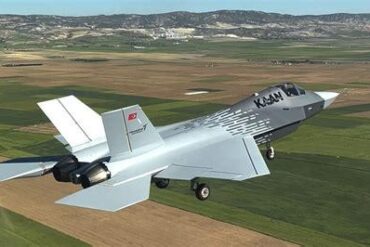
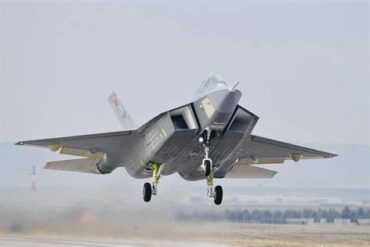
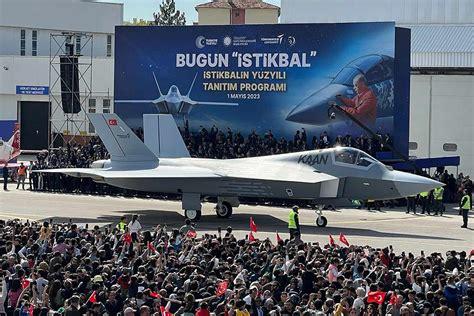
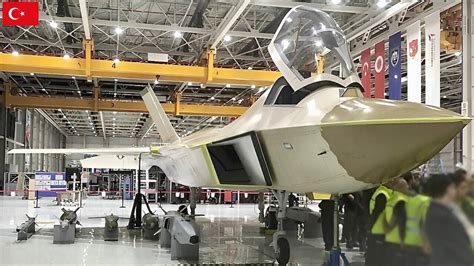
The KAAN, formerly known as the TF-X, is the crown jewel of Turkish aerospace ambition. Developed by Turkish Aerospace Industries (TAI) since 2016, the KAAN is engineered to replace aging F-16s and rival advanced platforms like the U.S. F-35 Lightning II and China’s Chengdu J-20. Its evolution reflects a marriage of domestic innovation and foreign technical partnerships—particularly with BAE Systems and Rolls-Royce, who contributed to early-phase design and engine consultation.
The aircraft achieved several major milestones:
- First flight: February 21, 2024 (8,000 ft altitude, 230 knots)
- Second flight: May 6, 2024 (10,000 ft)
- Afterburner test: December 6, 2024
Turkey’s strategic objective is to replace reliance on foreign jet technology by 2030, transitioning from GE F110 engines to the homegrown TRMotor propulsion system.
Advanced Capabilities and Tactical Edge
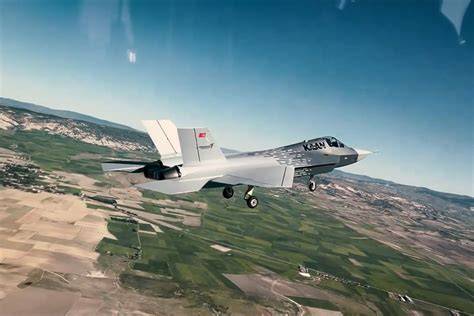
The KAAN is a twin-engine, stealth-capable platform optimized for multirole flexibility in both air-to-air and air-to-ground operations. Key specifications include:
- Top speed: Mach 1.8
- Combat radius: 600 nautical miles
- Sensor suite: AESA radar, Infrared Search and Track (IRST)
- Network integration: Capable of operating in tandem with unmanned systems
Designed for survivability and adaptability, the KAAN features reduced radar cross-section, high agility, and deep-strike capability, providing a comprehensive edge against conventional threats.
Financial Strategy Amid Budget Constraints
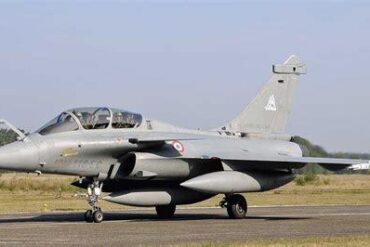
Indonesia’s appetite for cutting-edge fighters comes at a delicate fiscal moment. The country’s 2024 defense budget stands at approximately $9 billion, and its broader national commitments include the construction of a new capital city, estimated to cost $34 billion. With the $8.1 billion Rafale deal signed earlier, Jakarta is now balancing two heavyweight contracts. Nonetheless, Turkish willingness to offer technology transfer, local assembly, and potential co-development opportunities helps offset these burdens, giving Indonesia not just jets—but a burgeoning aerospace industry of its own.
Geopolitical Realignment and Strategic Autonomy
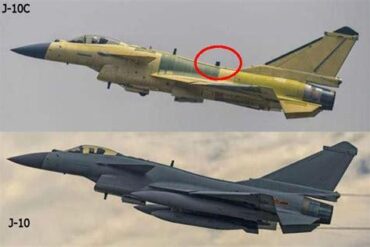
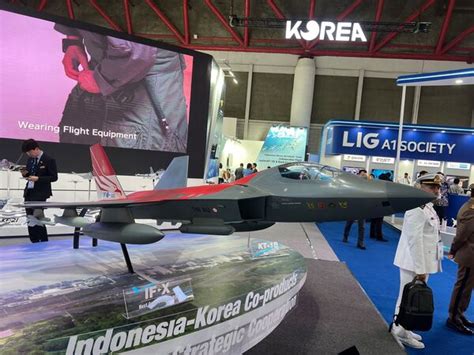
The KAAN deal signals a pronounced pivot in Indonesia’s defense diplomacy. The country’s diversified procurement portfolio—encompassing French Rafales, South Korean KF-21s, and potential interest in Chinese J-10Cs—underscores Jakarta’s non-aligned strategy. But more notably, this agreement distances Indonesia from traditional U.S.-centric defense paradigms.
Previous attempts to acquire Russian Su-35s were derailed by CAATSA sanctions, illustrating the political entanglements of Western and Russian systems. In contrast, Turkey’s offering comes without such encumbrances, positioning KAAN as an attractive, sanction-free fifth-gen alternative. This flexibility supports Indonesia’s goal of maintaining strategic autonomy in an increasingly multipolar Indo-Pacific region.
Technology Transfer and Local Industry Boost
One of the deal’s most compelling elements is Turkey’s readiness to share technology. Unlike Western suppliers who often resist local assembly, Turkey has offered collaborative arrangements including component manufacturing in Indonesia, technician training, and joint R&D facilities. This aligns with Jakarta’s aspirations to become a regional defense hub, capable not only of operating but eventually producing advanced aerospace systems.
This shift is also critical for defense sovereignty. If integration is successful, Indonesia could cultivate domestic expertise that reduces long-term dependency on imports, reshaping its defense economy and stimulating high-skill employment.
Production Timeline and Delivery Milestones
Under current schedules, Turkey plans to deliver the first 20 KAAN jets by 2028, with production scaling to two aircraft per month by 2029. Currently, six prototypes are under construction, and the second prototype is expected to fly by late 2025. The initial batch for Indonesia will likely be powered by the GE F110, with a mid-term shift to Turkish engines expected as the TRMotor completes testing and certification.
This long-tail timeline offers Jakarta the flexibility to phase acquisition costs, synchronize infrastructure upgrades, and ensure pilot and technician training ramp-up aligns with aircraft arrival.
Operational Integration and Training Challenges
Adopting fifth-generation fighters like the KAAN is not merely a purchase—it’s a transformation. Indonesia’s air force will face a steep learning curve in integrating stealth fighters into existing command structures. KAAN’s data-centric warfare capabilities, including its ability to network with drones and other aircraft, demand overhauled command and control (C2) frameworks.
Moreover, runway facilities, maintenance protocols, and weapons integration systems must be upgraded to accommodate the KAAN’s complex architecture. Training programs will need to address pilot workload in high-speed environments, sensor fusion utilization, and tactical data exchange operations. These challenges, while substantial, also offer an opportunity to revitalize and future-proof Indonesia’s military infrastructure.
Turkey’s Ascent as a Global Defense Powerhouse
For Ankara, the Indonesia deal cements its ambitions to become a global arms exporter. Turkey ranked 11th in global defense exports in 2024, marking a 106% growth over four years. The KAAN deal—its first fifth-generation fighter export—gives Turkish defense diplomacy unprecedented credibility. With potential orders from Saudi Arabia (100 aircraft), Malaysia, Pakistan, and the UAE, Turkey is rewriting its role from importer to supplier of next-generation combat power.
The KAAN has become a symbol of soft power, technological maturity, and strategic independence. It also marks the beginning of Turkey’s challenge to the U.S.–Russia–China trinity in the military aviation sector.
Risks and the Road Ahead
Yet, the road ahead is not without hurdles. Key among them is the successful indigenization of engines by 2030. Turkey’s reliance on the GE F110 means export controls and technical licensing could still impede full independence. For Indonesia, infrastructure delays or operational teething issues could slow full integration and readiness.
Political shifts in either country could also disrupt progress. A leadership change, budgetary revisions, or foreign policy recalibrations may alter timelines or the scope of collaboration. However, if executed effectively, this partnership will not only redefine bilateral relations—it will reshape defense alignments in Asia and beyond.
Conclusion: A New Axis in Aerial Power
Indonesia’s procurement of the Turkish KAAN is far more than a billion-dollar purchase—it’s a geopolitical maneuver that reflects ambition, foresight, and realpolitik. As the world’s fourth most populous country invests in aerial dominance, and as Turkey asserts itself as a manufacturer of world-class defense technology, this alliance is poised to become a template for multipolar defense cooperation.
The skies over Southeast Asia are changing—and with them, the balance of power.