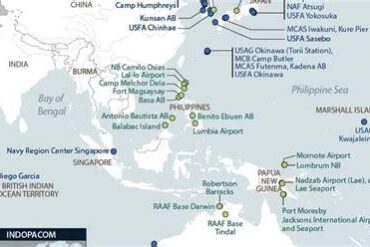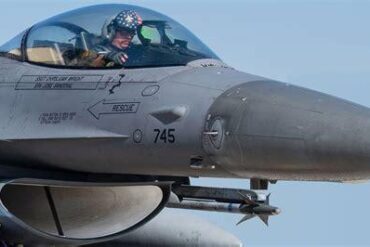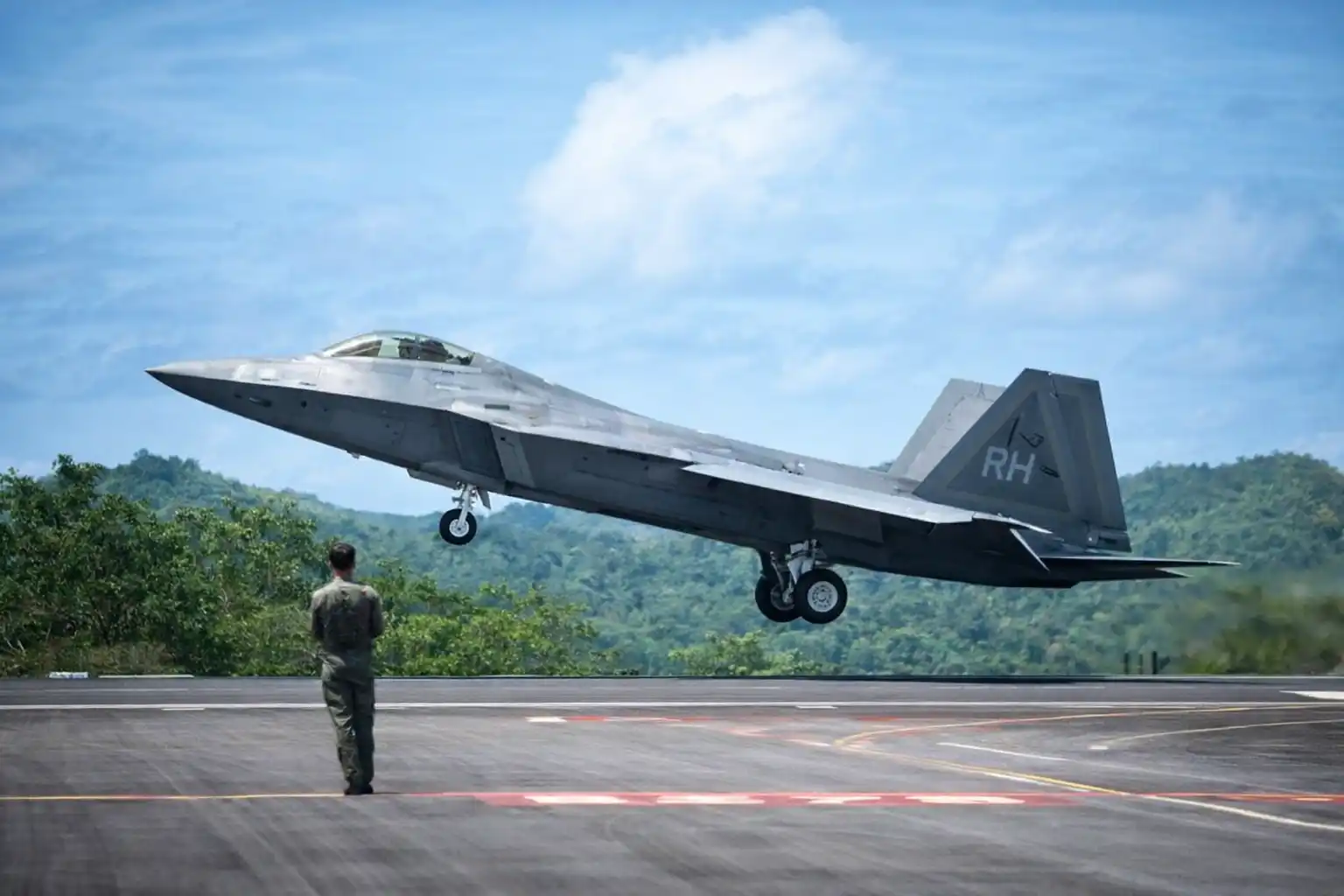
The Pacific is not just an oceanic expanse; it is the central arena of modern great-power competition. Stretching from the western shores of the Americas to the First Island Chain and beyond, this region is where airpower, logistics, deterrence, and alliance credibility intersect. The United States maintains a carefully layered network of air bases across the Pacific that allows it to project force, reassure allies, and respond rapidly to crises. These bases are not interchangeable runways; each one has a distinct operational logic tied to geography, politics, and strategy.
Taken together, the seven most important U.S. military air basing locations in the Pacific form a living system rather than a static footprint. Some host permanently stationed fighter wings, others rely on rotational deployments, and several function as surge platforms designed to absorb pressure in wartime. Their value lies not only in the aircraft they host, but in how they enable command and control, sustainment, intelligence, and interoperability across thousands of miles.
Understanding these bases reveals how U.S. Pacific strategy actually works on the ground and in the air.
Japan Home Islands: The Forward Anchor of U.S. Airpower in East Asia
Japan’s home islands represent the most critical permanent anchor for U.S. airpower in the Western Pacific. Without this network, American air operations east of the Asian mainland would become dramatically more fragile. Across Honshu and northern Japan, the United States permanently stations roughly 105 fighter aircraft, spread across Air Force, Marine Corps, and Navy facilities that are deeply integrated with the Japan Air Self-Defense Force.
Misawa Air Base stands out as a frontline combat installation with a specialized mission set. Historically home to F-16s, Misawa is transitioning to F-35A Lightning II fighters, reflecting a shift toward fifth-generation air dominance. The base plays a key role in electronic warfare, air defense suppression, and counter-ISR operations, making it uniquely suited for high-end conflict scenarios. Its integration with Japanese units allows for seamless coalition operations from day one of any contingency.
MCAS Iwakuni, located further south, serves as a Marine Corps aviation stronghold. Hosting F-35B short takeoff and vertical landing fighters alongside legacy F/A-18s, Iwakuni supports amphibious operations, expeditionary airpower, and rapid response missions. The base’s proximity to the East China Sea allows Marine aviation to influence key maritime chokepoints without relying solely on naval platforms.
Yokota Air Base, while not a fighter hub, may be the most strategically versatile installation in Japan. As the headquarters of U.S. Forces Japan and home to the 374th Airlift Wing, Yokota functions as a logistical nerve center. From here, airlift aircraft move troops, equipment, and humanitarian aid across the theater, enabling everything from special operations to disaster response. In modern warfare, logistics decide outcomes, and Yokota is designed for exactly that reality.
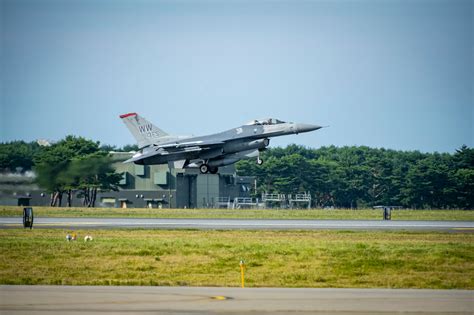
Beyond these installations, the United States relies heavily on Japanese air bases such as Nyutabaru, Tsuiki, and Hyakuri, all of which are fully embedded in U.S. contingency planning. Naval aviation support flows through Atsugi Naval Air Facility, ensuring maritime patrol, logistics, and sustainment remain uninterrupted. This layered basing architecture gives Washington resilience and depth that no single base could provide.
Okinawa: The Keystone of the First Island Chain
Okinawa occupies a singular position in U.S. Pacific strategy. Sitting astride the First Island Chain, it is both geographically exposed and operationally indispensable. While no fighter jets are permanently based on the island today, Okinawa remains one of the most heavily militarized aviation hubs in the region due to its rotational forces and infrastructure density.
Kadena Air Base is widely known as the “Keystone of the Pacific,” a title earned through decades of frontline service. As the largest U.S. Air Force base in the Pacific, Kadena supports rotational deployments of F-15EX, F-22 Raptors, and F-35A fighters, along with tankers, intelligence aircraft, and airborne early warning platforms. The base’s 18th Wing provides air superiority, ISR, and command-and-control capabilities that can influence events across East Asia within hours.
Kadena’s true strength lies in its flexibility. Rather than concentrating permanent squadrons, the base is optimized for surge operations, allowing aircraft to flow in during crises while reducing peacetime vulnerability. This approach reflects lessons learned about survivability in an era of long-range precision strike weapons.
MCAS Futenma complements Kadena by focusing on Marine Corps maneuver and assault support rather than air dominance. It enables rapid troop movement, logistics, and vertical lift operations that are essential for expeditionary warfare. Although politically sensitive, Futenma remains operationally vital for Marine aviation in the region.
Other airfields across the Ryukyu Islands, including Naha Air Base, Shimoji-Shima, Miyako, and Yonaguni, further expand operational options. These dispersed locations support the U.S. shift toward distributed operations, complicating adversary targeting while preserving combat power.
Guam: America’s Unsinkable Aircraft Carrier
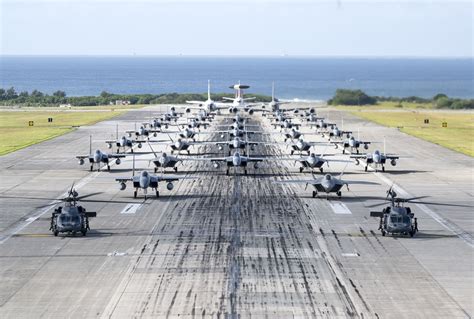
Guam is unique among Pacific bases because it is sovereign U.S. territory, eliminating political uncertainty over access in wartime. Andersen Air Force Base has become synonymous with long-range power projection, often described as an “unsinkable aircraft carrier” anchored in the Western Pacific.
Despite hosting no permanently based fighter squadrons, Andersen plays an outsized strategic role. It is the primary hub for the Continuous Bomber Presence, routinely supporting B-1, B-2, and B-52 bombers. Fifth-generation fighters such as the F-22 and F-35 rotate through the base, ensuring air superiority assets are always within reach of regional flashpoints.
The 36th Wing oversees an installation built for endurance. Massive fuel storage, hardened infrastructure, and expansive runways allow Guam to absorb aircraft surges during major contingencies. In a high-end conflict, Guam would rapidly become one of the most scrutinized locations in the world, precisely because of the volume of combat power it can generate.
Guam’s strategic depth is reinforced by Naval Base Guam and Marine Corps Base Camp Blaz, which together support maritime and ground forces. This joint presence transforms the island into a multi-domain hub capable of sustaining prolonged operations across air, sea, and land.
South Korea: The Forward Line Against North Korea
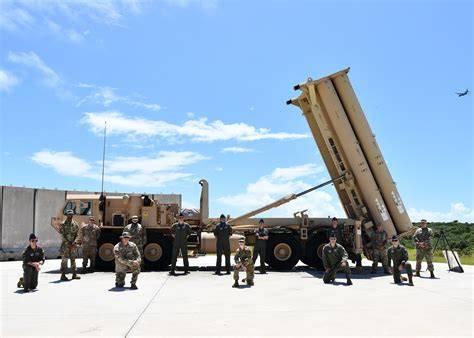
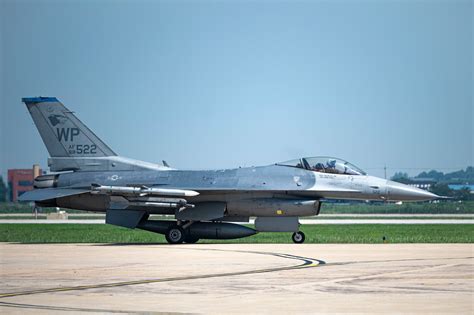
Unlike other Pacific bases that emphasize regional balance, U.S. air bases in South Korea are primarily oriented toward deterring and defending against North Korea. Approximately 70 to 75 fighter aircraft are permanently stationed on the peninsula, making it one of the most forward-deployed U.S. airpower concentrations anywhere in the world.
Osan Air Base, home to the 51st Fighter Wing, sits just 48 miles from the Demilitarized Zone. This proximity makes Osan a frontline installation designed for immediate response. Its F-16s are tasked with air defense, close air support, and rapid strike missions that would be critical in the opening hours of any conflict.
Kunsan Air Base hosts the 8th Fighter Wing, adding further depth with additional F-16 squadrons. Together, Osan and Kunsan create overlapping coverage that strengthens deterrence while maintaining constant readiness. Until recently, A-10 attack aircraft were permanently based in South Korea, underscoring the peninsula’s unique operational demands.
The airpower presence is complemented by significant Army aviation assets at Camp Humphreys, the largest overseas U.S. base. Here, the 2nd Combat Aviation Brigade operates AH-64 Apache helicopters and other rotary-wing platforms, integrating air and ground capabilities in a way rarely seen elsewhere in the Pacific.
Australia and Singapore: Strategic Depth and Access
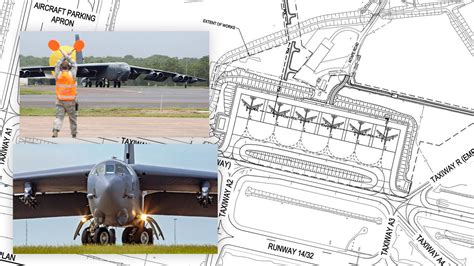
Australia does not host permanent U.S. fighter squadrons, but its role in Pacific air strategy is expanding rapidly. As the United States adopts Agile Combat Employment, the need for dispersed, resilient basing has made northern Australia increasingly valuable.
RAAF Base Tindal is being upgraded to support U.S. bombers, providing strategic depth well beyond the reach of many regional threats. Its location allows aircraft to operate from a position of relative safety while still influencing Indo-Pacific theaters. RAAF Base Darwin, meanwhile, supports rotational Marine Corps deployments and regional training, frequently hosting tilt-rotor aircraft such as the MV-22 Osprey.
Singapore offers a different kind of value. While the U.S. does not own bases there, access to Paya Lebar Air Base gives American aircraft a logistical foothold near the Strait of Malacca, one of the world’s most critical maritime chokepoints. The presence of the 497th Combat Training Flight ensures refueling, maintenance, and operational support across Southeast Asia.
The Philippines: Access Without Ownership
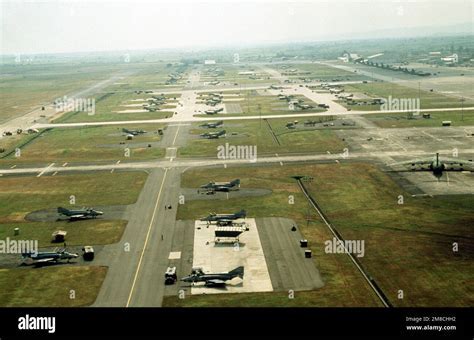
The U.S. military relationship with the Philippines is defined by access rather than permanent basing. After withdrawing from Clark Air Base and Subic Bay in the early 1990s, Washington restructured its presence through legal frameworks such as the Visiting Forces Agreement and the Enhanced Defense Cooperation Agreement.
Under these arrangements, U.S. forces can operate from and upgrade key Philippine air bases, including Basa, Clark, and Antonio Bautista. While no fighter jets are permanently stationed, the ability to pre-position equipment and deploy rapidly has regained strategic importance as tensions in the South China Sea intensify.
This flexible presence allows the United States to support Philippine defense without the political friction of permanent bases, while also extending operational reach closer to contested waters.
Hawaii: The Command Center of the Pacific
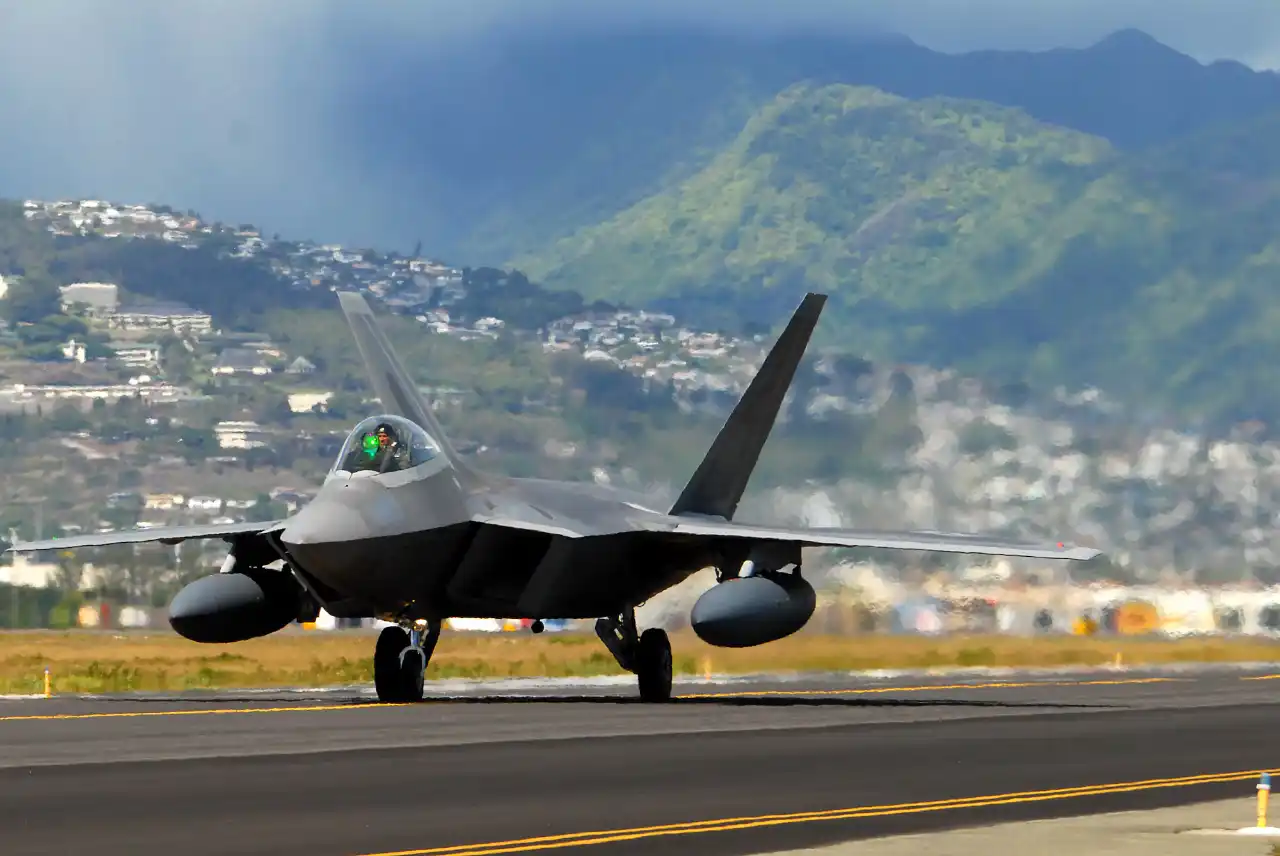
Hawaii is not the tip of the spear, but it is the brain and backbone of U.S. Pacific airpower. Approximately 20 fighter aircraft are permanently based in the archipelago, centered on Joint Base Pearl Harbor-Hickam. Here, the Air Force’s 15th Wing operates F-22 Raptors alongside airlift and refueling platforms.
Hawaii’s true value lies in command, control, and sustainment. It hosts major headquarters, training ranges, and logistics hubs that allow the United States to coordinate operations across the entire Pacific theater. Facilities such as MCAS Kaneohe Bay, Pacific Missile Range Facility Barking Sands, and dual-use civilian airports provide redundancy and resilience.
In a major conflict, Hawaii would function as the place where the war is managed, not where daily sorties are generated. That distinction makes it indispensable.
A Network Designed for Modern War
The seven U.S. military air bases and basing regions across the Pacific are not relics of Cold War thinking. They are adaptive, distributed, and increasingly designed to survive and fight in a contested environment. From Japan’s forward-based fighters to Guam’s bomber hub and Hawaii’s command infrastructure, each location fulfills a specific strategic role.
Together, they form a system that allows the United States to project airpower, deter aggression, and respond decisively across the world’s most consequential region.