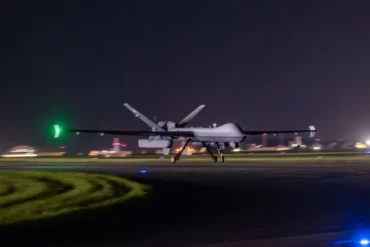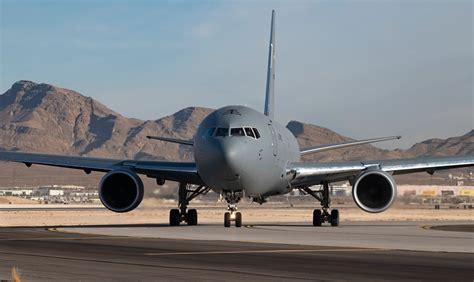
The United States Air Force has escalated its strategic posture in the Indo-Pacific by deploying the advanced KC-46A Pegasus aerial refueling tanker and F-16 Fighting Falcons to Misawa Air Base in Japan, a move seen as a clear demonstration of America’s evolving readiness for potential confrontation in the region.
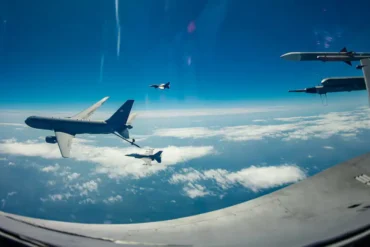
On June 18, 2025, the 60th Air Mobility Wing, stationed at Travis Air Force Base, California, completed a high-profile trans-Pacific mission involving the KC-46A Pegasus in direct support of the 14th Fighter Squadron’s F-16 Fighting Falcons. The deployment, coordinated with the 9th Air Refueling Wing, formed part of a broader readiness exercise focused on enhancing rapid deployment capabilities and operational agility across the vast Indo-Pacific expanse.
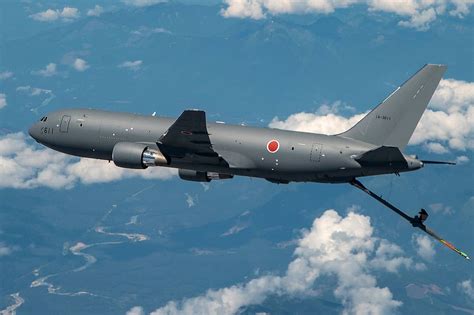
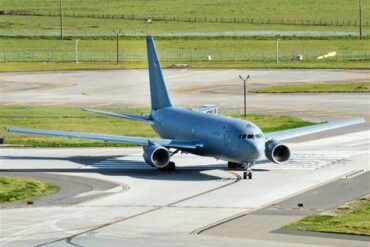
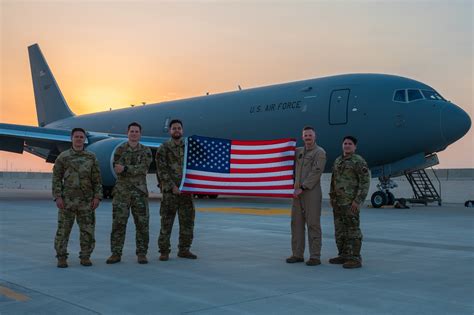
The operation underscores the vital role of aerial refueling in the projection of U.S. airpower across distances that stretch logistical limits. The KC-46A Pegasus, a multirole tanker regarded as the most modern aerial refueling platform in the Department of Defense inventory, enables extended range and endurance for combat aircraft—a critical requirement given the geographic scale of the Indo-Pacific theater.
Equipped with cutting-edge technology, the KC-46A employs a fly-by-wire refueling boom system, supplemented by a centerline drogue and wing-mounted aerial refueling pods (WARPs), enabling it to support most fixed-wing aircraft in the U.S. military arsenal. With a fuel offload capacity exceeding 65,000 pounds, a cargo capacity for 18 pallets, seating for 58 personnel, and accommodations for medical evacuation teams, the KC-46A embodies both logistical flexibility and combat resilience.
More importantly, its integrated communications suite, defensive countermeasures, and electronic protection systems position it as a force multiplier capable of operating in contested environments—an essential capability as regional tensions intensify.
Indo-Pacific at the Epicenter of Global Strategic Rivalry
The deployment to Misawa Air Base, located in Japan’s Aomori Prefecture, is emblematic of the United States’ broader strategic recalibration towards the Indo-Pacific. With simmering disputes in the East China Sea, concerns over Taiwan, and expanding Chinese military activities in the region, maintaining rapid mobility and sustained air presence has become a cornerstone of Washington’s deterrence framework.
Lieutenant Colonel Bradford Waldie, Director of Operations for the 14th Fighter Squadron, emphasized the operational challenges posed by distance in the Pacific theater. “We are operating across some of the most expansive airspace on the planet,” Waldie noted. “The KC-46A’s ability to autonomously complete ten-hour missions and deliver reliable fuel support significantly enhances our ability to project power where and when it’s needed.”
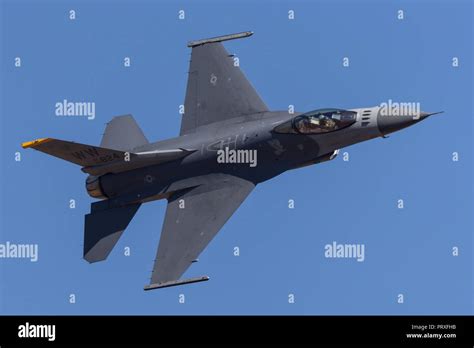
The seamless integration of tanker support and fighter operations enables the United States to reposition combat assets swiftly, reinforcing its capability to maintain air superiority, conduct strikes, and deter adversarial actions throughout the region.
KC-46A: The Backbone of Modern Air Mobility
Originally conceived to replace the aging KC-135 Stratotanker fleet, the KC-46A Pegasus, manufactured by Boeing, represents the technological pinnacle of modern air mobility platforms. Its development aligns with evolving doctrinal imperatives prioritizing rapid global mobility, survivability in contested domains, and interoperability with joint and allied forces.
The KC-46A’s adaptability extends beyond its refueling mission. With its expansive cargo hold and modular design, it serves as a logistics workhorse, capable of transporting critical supplies, equipment, and personnel to remote or austere locations. Its defensive systems—including radar warning receivers, infrared countermeasures, and secure communications—equip it to operate closer to the frontlines than legacy tankers, a necessity in any high-intensity conflict scenario.
Such capabilities are central to addressing the strategic reality in the Indo-Pacific, where U.S. bases are dispersed across island chains, and potential flashpoints—from Taiwan to the South China Sea—require rapid, sustained force projection.
Misawa Air Base: A Strategic Anchor in Northeast Asia
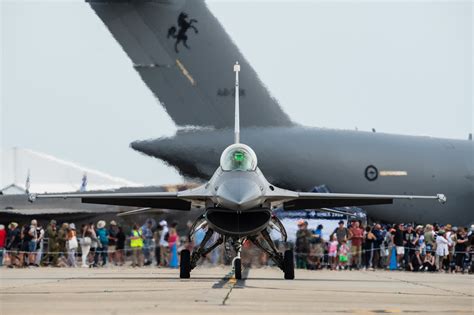
The location of the latest U.S. deployment underscores the enduring strategic significance of Misawa Air Base, one of America’s key airpower hubs in the Indo-Pacific. Home to the 14th Fighter Squadron, Misawa hosts a fleet of F-16 Fighting Falcons, renowned for their multirole versatility in both air-to-air and air-to-ground missions.
Geographically situated in Japan’s northernmost Honshu island, Misawa offers proximity to critical regions, including the Korean Peninsula and the East China Sea. It serves as both a deterrence platform and a rapid response node, enabling U.S. forces to react to crises or provocations across Northeast Asia.
With China continuing to expand its military footprint and assertiveness, the ability to reposition, refuel, and sustain fighter aircraft from forward bases like Misawa is integral to the United States’ Indo-Pacific strategy.
Indo-Pacific Tensions and the ‘Generation’s Fight’
In a candid address to graduating cadets at the U.S. Air Force Academy on May 29, 2025, Secretary of the Air Force Troy Meink articulated the magnitude of the Indo-Pacific challenge. Referring to regional dynamics as “your generation’s fight,” Meink underscored that future mission success hinges on technological superiority, operational agility, and integrated force structures.
“Our ability to sustain combat operations, project power, and maintain freedom of navigation in the Indo-Pacific depends on platforms like the KC-46A,” Meink declared. “Aerial refueling is not simply a support mission—it is a strategic enabler that defines the reach and endurance of our combat forces.”
The Secretary’s remarks reflect growing consensus within defense circles that the Indo-Pacific will remain the focal point of geopolitical competition, requiring persistent investment in capabilities that bridge the tyranny of distance.
Integration of Mobility and Combat Forces
The deployment of the KC-46A in conjunction with F-16 operations epitomizes the Air Force’s commitment to seamless operational integration. This approach ensures that air superiority assets are not only deployed swiftly but also sustained effectively in dynamic threat environments.
Operational exercises like the recent mission to Misawa validate the concept of Agile Combat Employment (ACE), which prioritizes flexibility, dispersion, and resilience. ACE allows U.S. airpower to operate from a network of distributed locations, complicating adversary targeting and enhancing survivability.
Such exercises are increasingly relevant given adversarial advancements in anti-access/area denial (A2/AD) capabilities. China’s development of long-range precision weapons and advanced air defense systems poses a significant challenge to traditional force projection models, making the KC-46A’s versatility indispensable.
Sustaining Regional Stability through Presence and Readiness
Beyond their immediate tactical benefits, deployments like the recent KC-46A mission serve a broader strategic purpose—signaling commitment to allies, deterring aggression, and reinforcing U.S. security guarantees in the Indo-Pacific.
The presence of advanced tankers, fighters, and associated support elements communicates resolve to regional partners such as Japan, South Korea, and Australia. It also underscores the United States’ ability to marshal decisive combat power in defense of shared interests, from preserving free navigation to countering coercive behaviors.
As geopolitical tensions show little sign of abating, the importance of sustained readiness, credible deterrence, and robust logistical frameworks will only grow. Platforms like the KC-46A and integrated exercises with frontline combat units are pivotal components of this enduring commitment.
With the Indo-Pacific emerging as the epicenter of 21st-century security competition, the United States is clearly investing in the capabilities, partnerships, and operational concepts required to meet evolving challenges head-on.