In a significant development in the Indo-Pacific security landscape, Raytheon, a subsidiary of RTX (formerly Raytheon Technologies), has secured a firm-fixed-price contract valued at $698,948,760 from the U.S. Army Contracting Command at Redstone Arsenal. The deal, awarded on November 17, 2025, is part of the broader Foreign Military Sales (FMS) program and includes the production and delivery of NASAMS (National Advanced Surface-to-Air Missile System) fire units to bolster Taiwan’s air defense capabilities.
The contract award comes amid heightened tensions in the Taiwan Strait and increasing concerns over China’s assertive military maneuvers around the self-governed island. This pivotal agreement represents not just a transfer of military hardware but a deepened strategic alignment between Washington and Taipei, intended to fortify air defense and safeguard critical infrastructure and military assets from potential threats, including cruise missiles and unmanned aerial vehicles (UAVs).
NASAMS: Proven, Flexible, and Networked Air Defense System
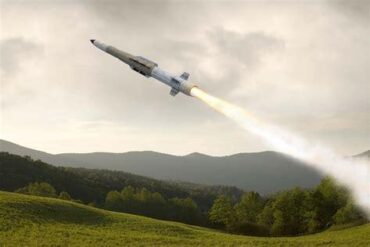
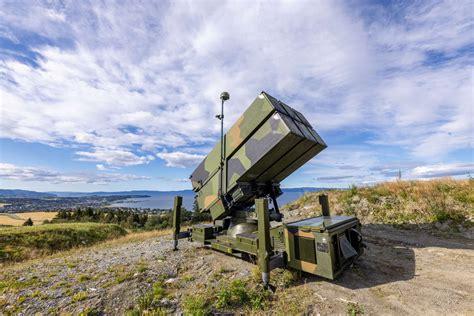
NASAMS is a short- to medium-range, ground-based air defense system co-developed by Raytheon and Kongsberg Defence & Aerospace of Norway. Initially fielded in the late 1990s for the Norwegian military, it has since become one of the most trusted air defense platforms in the world, adopted by over a dozen countries, including the United States, Australia, Ukraine, and several NATO allies.

The baseline NASAMS architecture is built around the following core components:
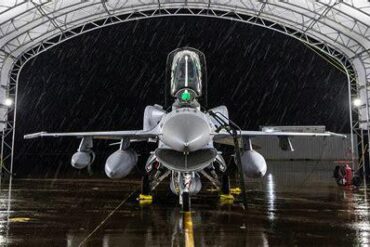
- AIM-120 AMRAAM (Advanced Medium-Range Air-to-Air Missile) interceptors, compatible with both air and ground platforms.
- AN/MPQ-64 Sentinel 3D radars for target detection and tracking.
- Electro-optical sensors for passive surveillance.
- A centralized Fire Distribution Center (FDC) integrated within a distributed, networked system.
This design allows NASAMS to engage targets such as fixed-wing aircraft, helicopters, drones, and cruise missiles, while remaining mobile and highly survivable under electronic warfare conditions.
Taiwan’s Air Defense: A Layered, Resilient Architecture
The inclusion of NASAMS into Taiwan’s defense network represents a strategic enhancement of the island’s multi-layered air and missile defense system. While Patriot missile batteries remain the primary shield against ballistic missile threats, NASAMS bridges the critical medium-range gap. Its specialty lies in intercepting saturation attacks from low-flying aircraft, UAVs, and cruise missiles at altitudes and ranges that complement long-range systems.
Unlike the Patriot system, NASAMS can disperse its sensors and launchers across a wide geographical area—over 20 kilometers—increasing survivability and reducing vulnerability to pre-emptive strikes. This networked modularity allows Taiwan to deploy units flexibly, blending them with indigenous systems like the Sky Bow and Sky Sword series.
Critically, Taiwan’s existing use of AMRAAM missiles for its fighter aircraft provides seamless logistical integration, allowing shared stockpiles and streamlined maintenance protocols, maximizing operational readiness while reducing overhead.
Technical Capabilities and Evolution of NASAMS
NASAMS has evolved through multiple iterations since its initial deployment:
- NASAMS 2 introduced tactical data links (Link 16), enabling real-time coordination across platforms.
- NASAMS 3 incorporated AMRAAM-ER (Extended Range) and AIM-9X interceptors for extended reach and higher altitude coverage.
- Incremental upgrades have added modernized FDCs, improved radar systems, and mobile launch platforms.
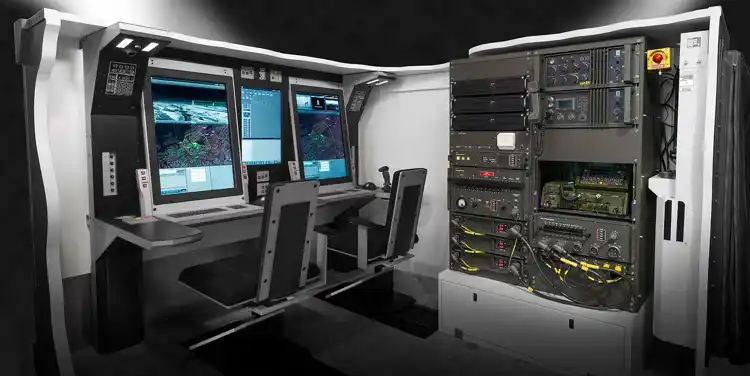
The current Taiwan-bound configuration is expected to reflect many of these enhancements, offering interoperability with Western systems, customization for local terrain and threats, and expanded command-and-control options. This adaptability makes NASAMS not just a product but a framework into which Taiwan can incorporate domestic communications infrastructure and locally manufactured support vehicles.
Strategic Geopolitical Implications
The award forms a substantial portion of a larger $1.16 billion FMS package approved in October 2024, which includes three complete NASAMS systems, associated AMRAAM-ER interceptors, training, and integration support. This initiative is more than a defensive upgrade; it is a strategic signal.
To Beijing, it reaffirms Washington’s commitment to Taiwan’s self-defense and strategic autonomy. Despite growing diplomatic pressure from the People’s Republic of China, the United States has chosen to expand defense cooperation, highlighting that Taiwan’s security remains non-negotiable within the broader Indo-Pacific strategy.
To allied nations, it demonstrates the strength of international air defense cooperation, with Taiwan now joining a community of global NASAMS operators. This facilitates joint training, information-sharing, and future upgrade pathways, aligning Taiwan closer with NATO standards.
NASAMS in Combat: Proven Success in Ukraine
NASAMS’s reputation was significantly enhanced by its deployment in Ukraine, where it played a pivotal role in defending urban centers against Russian cruise missile and drone attacks. Reports from Norwegian defense officials and Ukrainian operators highlighted high interception rates against threats like the Kh-101 and Kalibr cruise missiles.
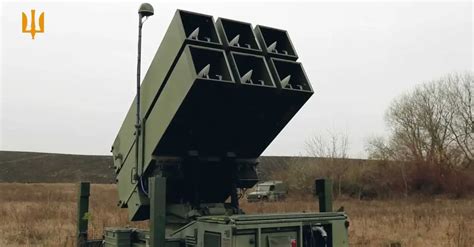
These operational successes in a high-intensity conflict zone serve as real-world validation of NASAMS’s combat effectiveness, resilience, and cost-efficiency, traits highly valued in the defense procurement strategies of frontline nations like Taiwan.
Economic and Industrial Dimensions
The NASAMS order secures substantial industrial activity at Raytheon’s Tewksbury, Massachusetts facility, with full-scale production, testing, and integration work projected through February 2031. This long-term workload underscores the economic benefits of Foreign Military Sales to the U.S. defense industrial base, supporting thousands of skilled jobs while sustaining high-technology manufacturing.
Importantly, the contract’s firm-fixed-price structure guarantees predictable costs and timelines, minimizing fiscal risk for both the U.S. and Taiwanese governments. The missile component of the package is likely handled under separate procurement processes, ensuring optimized logistics and tailored supply chains for both launchers and interceptors.
Integration with Regional and Global Defense Networks
As Taiwan becomes a NASAMS operator, it joins a growing coalition of regional allies embracing the system. Countries such as Australia, Qatar, and Finland have similarly adopted NASAMS, reinforcing its role as a standard for medium-range air defense.
This integration has significant benefits:
- Joint exercises and training frameworks become feasible, improving readiness.
- Shared upgrades across platforms reduce development costs.
- Enhanced deterrence through collective capability improvements.
Taiwan’s participation in this defense ecosystem opens doors to future cooperative upgrades, missile innovation, and doctrinal exchange that are essential for facing the rapidly evolving aerial threat landscape.
Conclusion: A Long-Term Vision for Airspace Resilience
This $698.9 million NASAMS contract is not merely a defense transaction—it is a comprehensive investment in airspace resilience, strategic messaging, and industrial sustainability. Spanning over six years, the program signifies a deliberate, long-range commitment to preparing Taiwan for future conflicts, particularly scenarios involving multi-vector air attacks from drones, cruise missiles, and manned aircraft.
For the United States, it deepens defense ties with a critical democratic partner and bolsters supply chain stability for one of the most trusted missile defense systems in the global market. For Taiwan, it is a vital step toward a layered, redundant, and robust air defense umbrella, ensuring that any adversary must contend with a complex and distributed kill chain.
In an era marked by asymmetric warfare, gray-zone conflicts, and hypersonic weapon development, Taiwan’s NASAMS acquisition reinforces the enduring importance of interoperability, modularity, and resilience in air defense design. This contract solidifies not only a tactical asset but also a strategic narrative: Taiwan’s skies will not be easily breached.