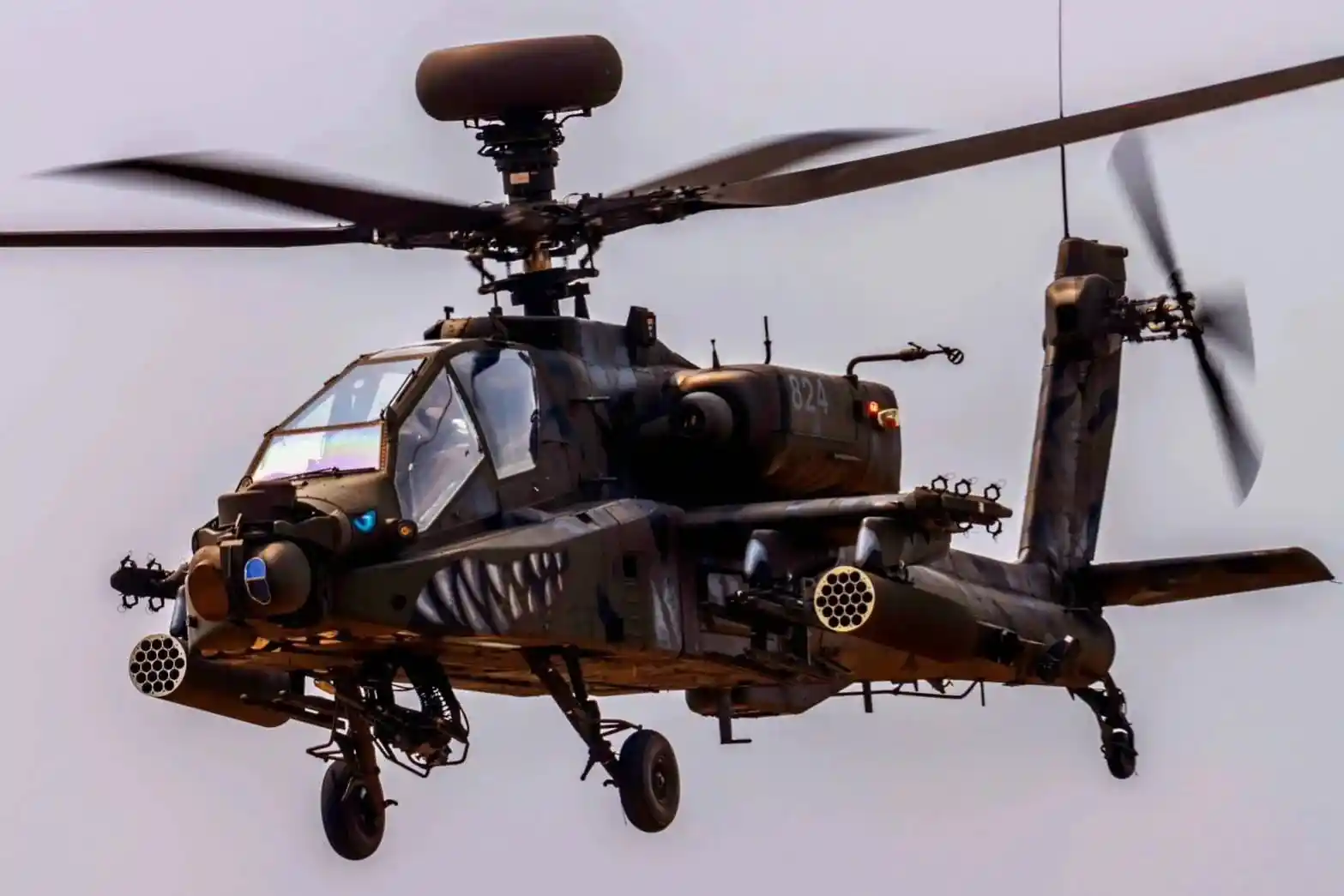
The Indo-Pacific region is witnessing an unprecedented militarization of the skies, as American-made AH-64E Apache helicopters take center stage in the defense strategies of regional powers preparing for a potential showdown with China. With Taiwan executing rapid-response drills and India preparing to induct new Apaches, the AH-64E is emerging as the symbol of airborne lethality—a tank in the air—amid escalating geopolitical tensions.
Taiwan’s Apache-Driven Counteroffensive: Han Kuang Drills Highlight High-Speed Response
As part of the Han Kuang military exercises—Taiwan’s largest and most critical annual war games—the Republic of China (ROC) Army conducted hot-pit refueling and rearming drills on July 16, 2025, in Taichung and New Taipei. The exercise tested the rapid redeployment capability of Taiwan’s elite helicopter fleet, particularly the AH-64E Apaches and UH-60M Black Hawks, both acquired from the United States.
The drills, occurring under the looming threat of a potential Chinese invasion, focused on simulating combat conditions where fixed runways are compromised. Instead of airbases, helicopters landed in urban riverside parks—an audacious display of operational adaptability. This mobile strategy envisions combat aviation units launching from makeshift forward bases in case the Chinese People’s Liberation Army (PLA) cripples key airfields.
According to Taiwan’s Ministry of National Defense, the mission’s goal was to complete both refueling and rearming within 30 minutes. Remarkably, the team achieved this in just 20 minutes, showcasing the Apache’s battlefield efficiency in high-intensity, time-sensitive scenarios.
The Apache’s Role in Taiwan’s Defense Doctrine
Taiwan operates 29 AH-64E Apache helicopters, purchased through a $1.91 billion U.S. arms deal in 2011. Each unit is armed with AN/APG-78 Longbow fire-control radar, AGM-114 Hellfire anti-armor missiles, AIM-92 Stinger air-to-air missiles, and Hydra 70 rocket pods. These capabilities make them formidable multi-role platforms in both anti-invasion and rapid-response scenarios.
Stationed primarily to protect northern Taiwan and Taipei, these Apaches are the cornerstone of Taiwan’s anti-amphibious landing doctrine. The island’s mountainous topography offers natural concealment, allowing the Apaches to execute “pop-up and strike” tactics against advancing Chinese units.
To ensure long-term readiness, Taiwan signed a $47.1 million deal in 2023 for maintenance parts, extending logistical support through 2028. This strategic move hedges against the risk of a Chinese blockade, which experts fear could sever resupply lines during a sustained conflict.
Still, questions persist. Without guaranteed air superiority, these helicopters remain vulnerable to PLA missile and drone strikes. But analysts argue their agility and ability to operate from unconventional locations still render them valuable—especially in special operations or counter-decapitation scenarios targeting Taiwan’s command structure.
India’s Apache Induction: Strategic Firepower Along the Himalayas
Thousands of kilometers west of Taiwan, India is set to induct a new batch of AH-64E Apaches into its military inventory on July 21, 2025, finally concluding a procurement process that began in 2020. The $600 million deal for six Apaches is a key addition to India’s evolving doctrine, especially in light of its standoff with China along the Line of Actual Control (LAC).
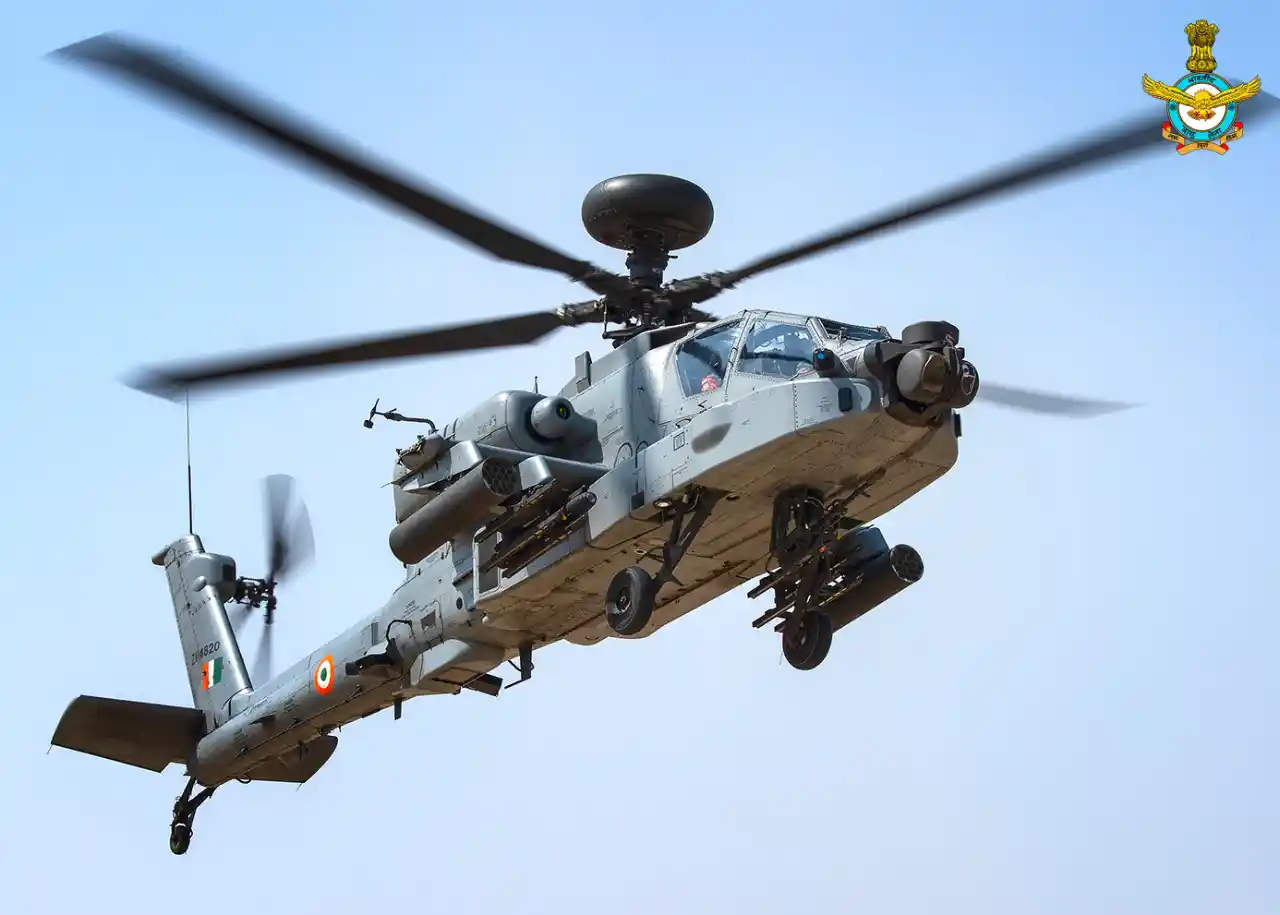
These choppers, arriving at Hindon Air Force Station, will be deployed with the Indian Army’s first dedicated Apache squadron, activated in March 2024 in Jodhpur. This move formalizes the rotary-wing branch’s role in precision strike and close air support operations, particularly in desert warfare near Pakistan and high-altitude missions near China.
The AH-64E is a perfect fit for India’s diverse battlefield needs:
- Manned-Unmanned Teaming (MUM-T) enables real-time coordination with UAVs for reconnaissance and target designation.
- Longbow radar can simultaneously identify up to 128 targets and engage 16 priority threats, critical for neutralizing Chinese armor like the Type 99A main battle tanks.
- High-altitude optimization allows it to operate effectively in the rugged Himalayan terrain, where temperature and oxygen limitations challenge less sophisticated platforms.
During the 2020 Ladakh border crisis, Indian Air Force Apaches were deployed for night-time sorties, proving their worth in reconnaissance and rapid-response roles against PLA movements.
Apache vs. Indigenous LCH: A Debate Within India
Despite the fanfare surrounding the Apaches, not all Indian defense circles are convinced. Critics argue that the Apache’s high acquisition and maintenance costs make it a questionable investment, especially when India has already fielded the indigenous HAL Light Combat Helicopter (LCH), which performs better at extreme altitudes.
The LCH, designed from the ground up for Indian terrain, is considered more cost-efficient, and some veterans claim that it offers comparable firepower and superior maneuverability in narrow Himalayan valleys. Additionally, the focus in modern warfare is shifting toward unmanned aerial vehicles (UAVs) and drone swarms, raising doubts about the longevity of manned attack helicopters.
However, defense analyst and IAF veteran Air Marshal Anil Chopra remains bullish on the Apache’s role. “Attack helicopters will not disappear. They’re the only 350 km/h missile carriers that can hide behind terrain, pop up, and strike with precision,” he wrote in an op-ed. Their psychological impact, combined with tactical versatility, ensures they retain a pivotal role in hybrid warfare scenarios.
U.S. Strategy: Apaches as Deterrent Anchors Across the Indo-Pacific
The United States’ decision to supply AH-64E helicopters to Taiwan, India, and other partners like Japan, South Korea, Indonesia, and Singapore, is part of a larger strategic play to contain Chinese aggression. The Apache is more than just a weapon—it’s a symbol of U.S. security commitment, a line in the sand drawn with rotor blades.
The U.S. continues to sell these platforms under the Taiwan Relations Act and broader defense cooperation agreements, despite recognizing the One China Policy. This dual-track diplomacy has consistently enraged Beijing, which interprets such arms sales as interference in its internal affairs.
From the perspective of Washington and its allies, however, the Apache offers a force-multiplier effect. By enabling friendly nations to mount credible asymmetric responses, the U.S. is ensuring that any Chinese military calculus includes the high cost of escalation.
Tanks in the Air: The Future of Vertical Dominance
What makes the Apache so unique is its combination of brute force, tactical agility, and high-tech integration. The AH-64E variant is the most advanced iteration, featuring upgraded engines, digital avionics, and networked warfare capabilities. Its performance in Afghanistan, Iraq, and Syria has proven its ability to thrive in both urban and mountainous terrain.
In Asia, its relevance only grows. With the PLA rapidly modernizing and increasing pressure on Taiwan, the AH-64E fills a critical niche: a fast-moving, precision strike platform capable of neutralizing key assets like amphibious vehicles, artillery positions, or even mobile command centers.
Meanwhile, the aircraft’s ability to launch from austere environments, including city parks and high-altitude helipads, grants it unparalleled operational flexibility—a quality essential for nations like India and Taiwan.
In summary, the AH-64E Apache is not merely a tool of war; it’s a deterrence platform, a diplomatic message, and a strategic insurance policy. As Taiwan and India bet big on these airborne beasts, and the U.S. cements its role as a security guarantor, one thing becomes clear: the next great power conflict may be fought from above, and the Apache will be leading the charge.