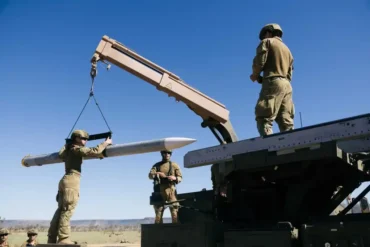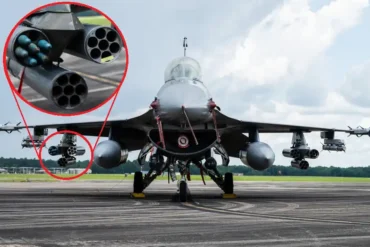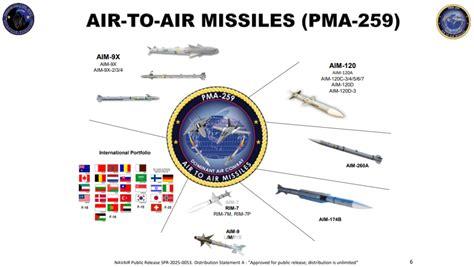
The global race for air superiority has entered a new and dangerous phase as the United States, China, and Russia accelerate the development of very long-range air-to-air missiles (VLRAAMs) designed to reshape aerial combat. With stealth platforms, airborne early warning aircraft, and aerial refueling tankers now prime targets, these next-generation missiles could decisively tilt the balance in any future conflict.
U.S. Unveils Funding Push for AIM-260 JATM to Challenge Chinese Missile Dominance
In a significant development, the U.S. Air Force (USAF) and U.S. Navy have publicly requested $670.5 million for the acquisition of the classified AIM-260 Joint Advanced Tactical Missile (JATM) under the Fiscal Year 2026 budget, marking the program’s most visible funding milestone to date. An additional $687 million has been earmarked for continued research and development, underscoring the strategic urgency behind this initiative.
Breaking down the funding request:
- The Air Force seeks $368.593 million for AIM-260A procurement.
- The Navy has requested $301.858 million for its share.
- Development funds include $425,029 for the Air Force and $222,782 for the Navy.
Despite its classified nature, glimpses into the AIM-260’s capabilities have surfaced. The missile is set to succeed the venerable AIM-120 AMRAAM, with military analysts speculating it will leverage ramjet propulsion or dual-pulse rocket motors for extended range and velocity.
Crucially, the AIM-260 is expected to incorporate an advanced multi-mode seeker, blending infrared imaging with active radar guidance. This dual-seeker architecture significantly boosts accuracy while enhancing resistance to electronic countermeasures — a vital trait in the era of stealth aircraft and sophisticated jamming.
A two-way datalink, akin to that on the latest AIM-120D-3, will allow real-time targeting updates, enabling mid-course corrections or re-targeting, especially against elusive or maneuvering opponents.
The Chinese PL-Series: Shifting the Strategic Balance in Asia
The genesis of the AIM-260 program is directly tied to the emergence of China’s PL-15 missile, which entered public consciousness in 2016. This beyond visual range (BVR) missile, with a reported range exceeding 200 kilometers, sounded alarm bells in Washington due to its potential to outmatch existing U.S. air-to-air weapons.
Since then, China has advanced further. The PL-17, believed to boast a staggering range of approximately 400 kilometers, arms elite J-16 fighters, providing the People’s Liberation Army Air Force (PLAAF) and People’s Liberation Army Navy (PLAN) with an unprecedented engagement envelope.
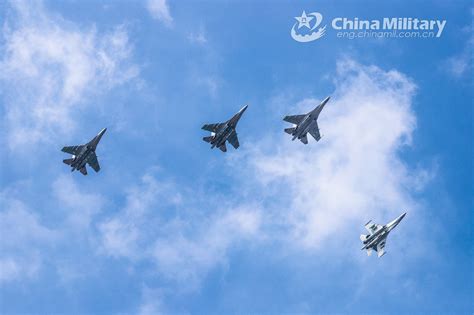
Leveraging a combination of inertial navigation, satellite guidance, and off-board target updates, the PL-17 enables Chinese fighters to strike high-value targets—such as AWACS, refueling aircraft, or even stealth platforms—well beyond the limits of onboard sensors. Analysts suggest the missile may incorporate passive sensors to detect radar emissions from support aircraft, enhancing its lethality.
In parallel, China is advancing the PL-21, believed to utilize an active AESA radar seeker and speculated to possess a range between 300 to 800 kilometers, although exact specifications remain classified. This capability aligns with Beijing’s broader anti-access/area-denial (A2/AD) doctrine designed to project power and deter U.S. intervention, particularly regarding Taiwan and the South China Sea.
The AIM-260: U.S. Answer to Escalating Regional Tensions
The development of the AIM-260 JATM is part of Washington’s broader strategy to neutralize China’s air dominance in key flashpoints like the Taiwan Strait and the South China Sea. As regional tensions escalate, long-range air-to-air missiles are no longer optional—they are strategic necessities.
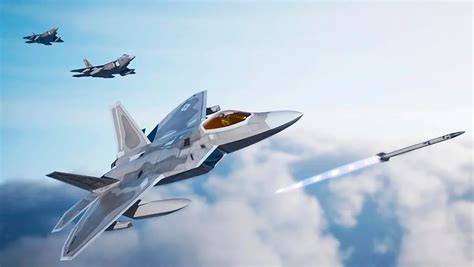
A leaked concept image from Lockheed Martin in 2022 depicted the F-22 Raptor firing the AIM-260 JATM, confirming that America’s fifth-generation stealth fighters will be the initial launch platforms. Experts anticipate eventual integration with the advanced F-15EX Eagle II and the ubiquitous F-35 Lightning II, ensuring broad deployment across the U.S. fighter fleet.
Moreover, the U.S. Navy has revealed concept renderings of the AIM-260, providing further insights into its exterior design and sophisticated guidance sections. Its introduction will complement other cutting-edge systems, such as the AIM-174B, derived from the SM-6 missile, fortifying U.S. air dominance.
Global VLRAAM Race: Russia’s R-37M Adds Another Dimension
While Sino-American competition dominates headlines, Russia remains a formidable player in the VLRAAM domain. The Vympel R-37M, also known by its NATO reporting name “Axehead,” exemplifies Russia’s legacy in long-range missile development.
Derived from the Cold War-era R-37, the modernized R-37M has seen extensive use in the Ukraine conflict, where it has been employed to deny airspace to Ukrainian fighters and target high-value airborne assets.
The R-37M boasts impressive specifications:
- Operational range between 150 to 400 kilometers.
- Dual-pulse solid-propellant rocket motor for sustained engagement.
- Dual-band active radar seeker, capable of locking onto targets with radar cross-sections as small as 54 square feet during terminal phase.
Initially designed for the MiG-31 Foxhound, it has since been integrated into versatile platforms like the Su-30SM, Su-35S, and Russia’s flagship stealth aircraft, the Su-57 Felon.
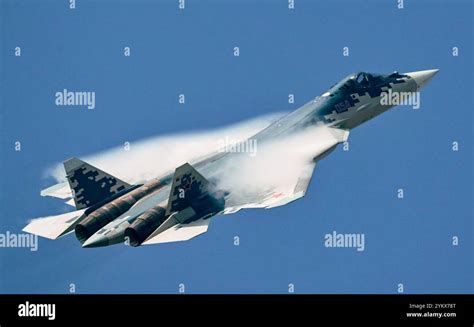
Intriguingly, reports from the U.S. Defense Intelligence Agency (DIA) hint at a possible nuclear-tipped air-to-air missile in Russia’s arsenal, potentially based on the R-33—a predecessor to the R-37. While unconfirmed, this revelation underscores Moscow’s willingness to push technological and doctrinal boundaries in pursuit of aerial dominance.
Implications for Future Conflict: Beyond Visual Range Becomes the Norm
The rapid advancement of VLRAAMs by the U.S., China, and Russia signals a paradigm shift in air combat. Traditional dogfights within visual range are being supplanted by engagements where aircraft may never see their adversaries, relying instead on advanced sensors, networked data links, and long-range precision munitions.
For the United States, fielding the AIM-260 JATM is critical to:
- Counter China’s PL-15, PL-17, and PL-21 missiles.
- Maintain qualitative superiority over near-peer adversaries.
- Enable standoff engagements to neutralize high-value targets.
- Preserve freedom of operation in contested regions like the Indo-Pacific.
Simultaneously, China’s missile advancements empower its A2/AD strategy, complicating U.S. military intervention scenarios, particularly around Taiwan. The PL-17 and PL-21, with ranges dwarfing most legacy Western air-to-air missiles, provide the PLAAF with unprecedented reach and deterrence.
Russia’s R-37M further expands the spectrum of long-range air-to-air threats, demonstrated vividly in Ukraine’s contested skies.
Conclusion: The Air-to-Air Arms Race Escalates
The global competition to field “deadly” beyond-visual-range air-to-air missiles has fundamentally altered the strategic calculus of modern air warfare. With the AIM-260 JATM poised to enter operational service, the United States aims to close the capability gap exposed by China’s PL-series missiles.
Yet, with China advancing towards even longer-range platforms and Russia demonstrating proven capabilities with the R-37M, the VLRAAM race shows no signs of slowing. The next aerial battlefield will be fought at distances where pilots rely more on sensors, software, and missile performance than on visual identification—a reality that underscores the high stakes of this technological arms race.
As the geopolitical landscape grows increasingly volatile, particularly across the Indo-Pacific and Eastern Europe, the deployment of these next-generation air-to-air missiles could determine not only tactical outcomes but the broader balance of power for years to come.