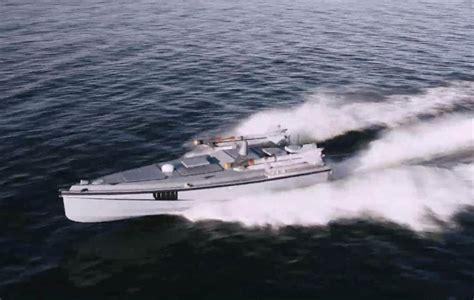
The Russo-Ukrainian war has seen an extraordinary leap in drone warfare innovation, and nowhere is this more apparent than in the deployment of Ukraine’s MAGURA V7 uncrewed surface vessels (USVs). These cutting-edge naval drones have done more than just damage Russian warships — they’ve now shot down Su-30 Flanker fighter jets, marking a historical first in modern military combat. The event has shifted perceptions of maritime warfare and signaled a new era of surface-based anti-air operations.
Uncrewed Surface Vessels: Ukraine’s Floating Arsenal
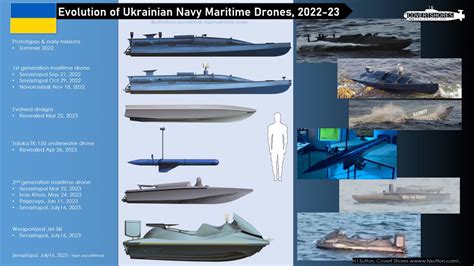
Ukraine’s defense against Russian aggression has transformed the battlefield, particularly in the maritime domain. The latest development comes in the form of the MAGURA V7, a formidable evolution of the earlier MAGURA V5 drone boats. These USVs are not mere kamikaze drones anymore; they are intelligent, missile-armed vessels capable of complex missions including anti-aircraft warfare. Designed with both stealth and versatility in mind, these waterborne platforms offer a blend of lethality and resilience.
The MAGURA (Maritime Autonomous Guard Unmanned Robotic Apparatus) program has played a vital role in pushing the limits of Ukraine’s naval capabilities. The MAGURA V7 entered active combat in early 2025, and within months, achieved something no other naval drone in history has managed: downing supersonic enemy aircraft using air-to-air missiles launched from the sea.
The Su-30 Kill: A Tactical First in Naval Drone Warfare
On May 2, 2025, a Ukrainian special operations unit — working closely with the Security Service of Ukraine (SBU) and the Defense Forces of Ukraine — engaged in a daring mission over the Black Sea. Utilizing three MAGURA V7 drone boats, they targeted and successfully destroyed two Russian Su-30 Flanker fighter jets using AIM-9M Sidewinder missiles. It marked the first successful aerial kill from a naval drone platform and the first operational use of the AIM-9 from a USV.
Footage of the incident, released by Ukraine’s Defense Intelligence, shows the precise moment when the heat-seeking Sidewinders locked onto and obliterated the Russian aircraft. The loss of these jets, particularly the Su-30s — one of Russia’s premier multirole fighters — dealt a significant blow to Russian air dominance aspirations over the Black Sea. One pilot was confirmed dead, while the second was rescued by a civilian vessel nearby.
Inside the MAGURA V7: A Mobile Missile Platform
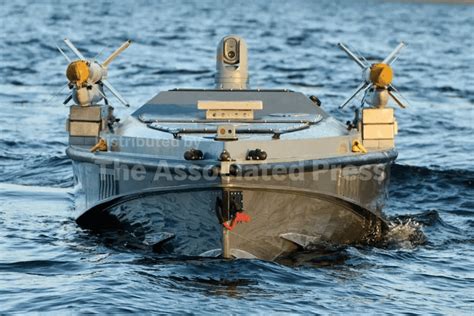
The MAGURA V7 is a quantum leap forward from its predecessors. Designed with a fiberglass hull and measuring 23.6 feet in length, it weighs in at 7,496 pounds — nearly two tons heavier than the V5, providing added stability and payload capacity. Despite the added mass, it still achieves speeds up to 45 mph and can function in wave heights of nearly 10 feet, showcasing robust sea handling in hostile conditions.
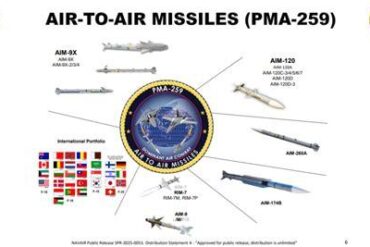
What truly elevates the V7 is its ability to fire AIM-9M Sidewinder missiles — supersonic air-to-air weapons that have been adapted for sea launch. These missiles travel at Mach 2.5 (approx. 1,918 mph) and use infrared homing systems to pursue and eliminate heat-emitting targets, such as jet engines. With a range of 10–18 miles, they provide stand-off capability for the drone boat, allowing it to remain at a tactical distance while still neutralizing airborne threats.
AIM-9M Sidewinder: A Missile Reborn at Sea
The AIM-9M Sidewinder, long a staple of American and allied air forces, has seen new life in Ukraine’s innovative warfare approach. Originally designed for fighter jets, this missile’s inclusion on an unmanned naval platform redefines its tactical use case. Key features of the missile include:
- Infrared heat-seeking guidance, ensuring precision target acquisition
- Mach 2.5 velocity, making it exceptionally hard to evade
- Proven kill record of over 270 aerial victories, now including USV-launched kills
Ukraine’s adaptation of the AIM-9M is part of a broader effort to integrate legacy Western armaments with new delivery systems, creating asymmetric advantages in theater-level combat. This particular instance demonstrates that even Cold War-era technology, when paired with modern platforms, can yield game-changing outcomes.
Multi-Role Versatility: More Than Just a Missile Boat
While the MAGURA V7’s primary role is now clearly air-target engagement, its modular architecture allows for significant flexibility in mission profiles. Depending on operational requirements, the missile launch system can be swapped for a gyro-stabilized machine gun turret, enabling:
- Defensive cover fire during engagements
- Naval interdiction operations
- Night and all-weather capability through advanced imaging optics
Additionally, the vessel boasts a payload capacity of 1,433 pounds, enabling it to carry:
- Firefighting equipment
- Logistical cargo for forward operating bases
- Acoustic sensors for submarine detection and maritime surveillance
Secure, Long-Range, Autonomous Operation
The MAGURA V7 is not tethered to line-of-sight control. It utilizes a multi-channel satellite communication system, rendering it highly resistant to Russian electronic warfare tactics. This allows for control over ranges up to 932 miles, with endurance between two to seven days on station — a level of autonomy unmatched by manned patrol craft in the region.
These capabilities make the MAGURA V7 ideal for deep operations in the Black Sea theater, especially where traditional naval or aerial assets would face heavy resistance or prohibitive risk.
Geopolitical and Strategic Implications
The destruction of the Su-30 Flankers by MAGURA V7s is more than just a battlefield win — it’s a symbolic and strategic victory. It indicates that Ukraine can deny Russia air superiority not only from land-based systems like MANPADS and SAMs, but also from the sea, adding another layer to Ukraine’s integrated defense network.
Moreover, the successful deployment sends a clear message to military planners worldwide: naval drones equipped with air-to-air missiles are now a credible threat. This will likely influence future NATO naval doctrine, push forward USV development globally, and lead to further investment in AI-integrated autonomous systems capable of lethal engagement decisions.
Conclusion: The Future of Naval Warfare Has Arrived
In the ever-evolving landscape of the Russo-Ukrainian war, Ukraine has once again proven its technological adaptability and strategic brilliance. The MAGURA V7 drone boat, armed with AIM-9M Sidewinders, has rewritten the rules of naval combat by shooting down state-of-the-art Russian fighter jets from the surface of the sea. It has redefined what uncrewed platforms can accomplish, turning the tide not only tactically but historically.
As Ukraine continues to innovate, the world watches closely. The implications are vast, not only for the current conflict but for the future of naval warfare across the globe.