Modern air warfare is no longer only about speed, stealth, and firepower. Increasingly, victory depends on controlling what the enemy sees — and sometimes the most valuable aircraft on the battlefield is one that does not exist. The US military’s updated MALD decoy system is designed to create convincing radar illusions, making enemy air defenses believe they are tracking advanced fighter jets such as the F-35 Lightning II or F-15 Eagle when there is nothing more than a small unmanned decoy flying through hostile airspace.
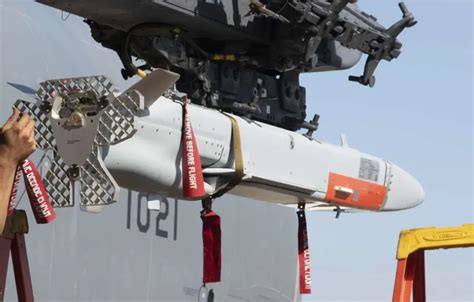
The technology behind this deception comes from the ADM-160 Miniature Air-Launched Decoy (MALD), a system developed to protect pilots and high-value aircraft during dangerous missions. Instead of directly attacking enemy defenses, MALD creates confusion by overwhelming radar operators with false targets, forcing them to react to threats that are not real while actual combat aircraft conduct their missions.
The concept of using decoys in warfare is decades old, but modern improvements in software, electronics, and electronic warfare have transformed MALD into a sophisticated battlefield tool. Today’s versions can imitate the radar signatures and flight patterns of multiple aircraft types, giving commanders a powerful way to manipulate enemy air defense networks.
How the US MALD Decoy System Creates Fake Fighter Jets on Enemy Radar
The basic idea behind MALD is simple but highly effective: send a small unmanned aircraft into contested airspace and make the enemy believe it is a much larger and more valuable aircraft. The decoy flies similar routes and profiles used by American and allied fighters, creating radar returns that appear authentic to both automated systems and human operators.
Unlike traditional missiles, MALD carries no explosive warhead. Its mission is not destruction but deception. Instead of striking a target, the system uses advanced electronic payloads to influence enemy radar signals and generate false impressions.
A radar operator monitoring the battlefield may see what appears to be a formation of incoming fighters approaching from multiple directions. The system can be programmed to replicate the characteristics of aircraft such as the F-35 stealth fighter, F-15 fighter jet, or other allied platforms, depending on the mission requirements.
This creates a difficult decision for enemy air defense crews. If they ignore the incoming signals, they risk allowing real aircraft to penetrate their defenses. If they respond to every radar contact, they may waste missiles and reveal their positions against targets that were never there.
MALD and MALD-J Bring Advanced Electronic Warfare Capabilities
The original MALD system has evolved significantly since its introduction in the 1990s. After Raytheon assumed responsibility for the program in 2003, newer versions introduced improved electronics, greater reliability, and enhanced mission flexibility.
The most advanced variant, the MALD-J, adds electronic jamming capabilities to the standard decoy mission. Instead of only pretending to be an aircraft, MALD-J can actively interfere with enemy radar systems, reducing their ability to track and engage real aircraft.
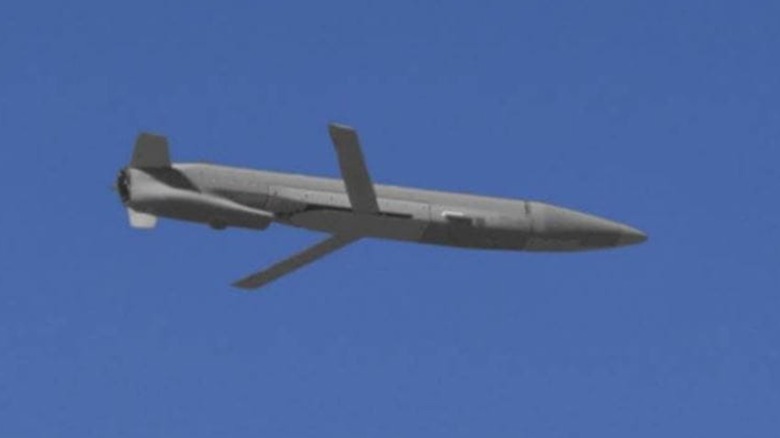
MALD-J can operate independently or alongside other decoys, moving close to enemy radar installations before activating its electronic warfare systems. This allows it to disrupt communications, confuse targeting networks, and create openings for manned aircraft to complete their missions.
The combination of deception and electronic attack makes MALD especially valuable in environments protected by advanced surface-to-air missile systems. Modern air defenses rely heavily on radar detection and tracking, meaning a system that can manipulate radar information provides a major strategic advantage.
A Small Decoy With a Major Battlefield Impact
Despite its capabilities, MALD is surprisingly compact. The system measures approximately 9 feet 4 inches long with a wingspan of about 5 feet 7 inches. Each vehicle weighs roughly 99 pounds and is powered by a Hamilton Sundstrand TJ-150 turbojet engine.
The decoy can reach speeds of approximately Mach 0.91, giving it the ability to travel deep into hostile territory. With a range of around 575 miles, MALD can operate far beyond the immediate area of the launching aircraft, allowing commanders to create deception operations over large distances.
The relatively small size of MALD also allows aircraft to carry multiple units. A single fighter or bomber can launch several decoys, creating the appearance of a much larger strike package approaching enemy airspace.
Although MALD units cost hundreds of thousands of dollars each, they remain extremely affordable compared with the aircraft they protect. Losing a decoy costing about $380,000 is far less costly than risking a fifth-generation fighter such as the F-22 Raptor, which represents an investment of hundreds of millions of dollars and carries a trained pilot.
MALD’s Role in Modern Conflicts and Future Air Warfare
The effectiveness of MALD has been demonstrated in recent conflicts, including its use by Ukraine against Russian radar and air defense systems. The system has shown how relatively inexpensive unmanned technology can challenge sophisticated military networks.
As air defenses become more advanced, traditional approaches that rely only on aircraft speed or stealth are becoming less sufficient. Future conflicts will likely depend heavily on electronic warfare, artificial intelligence, unmanned systems, and deception technologies.
The updated MALD system represents a shift in how militaries approach air combat. Instead of simply trying to hide aircraft from enemy sensors, modern forces can actively manipulate those sensors and control the information available to opponents.
In future battlespaces, the ability to create convincing false targets may become just as important as the ability to destroy real ones. By making enemy radars see fighter jets that are not there, MALD gives pilots and commanders another layer of protection in some of the world’s most dangerous airspace.