Ukrainian defense officials have uncovered a new Russian decoy drone composed entirely of Chinese components, marking a significant escalation in Beijing’s indirect support for Moscow’s war effort in Ukraine. According to Ukraine’s Defense Intelligence Directorate (GUR), this discovery provides fresh evidence of the deepening technological collaboration between Russia and China amid ongoing Western sanctions.
100% Chinese Components: A First for Russian Drone Manufacturing
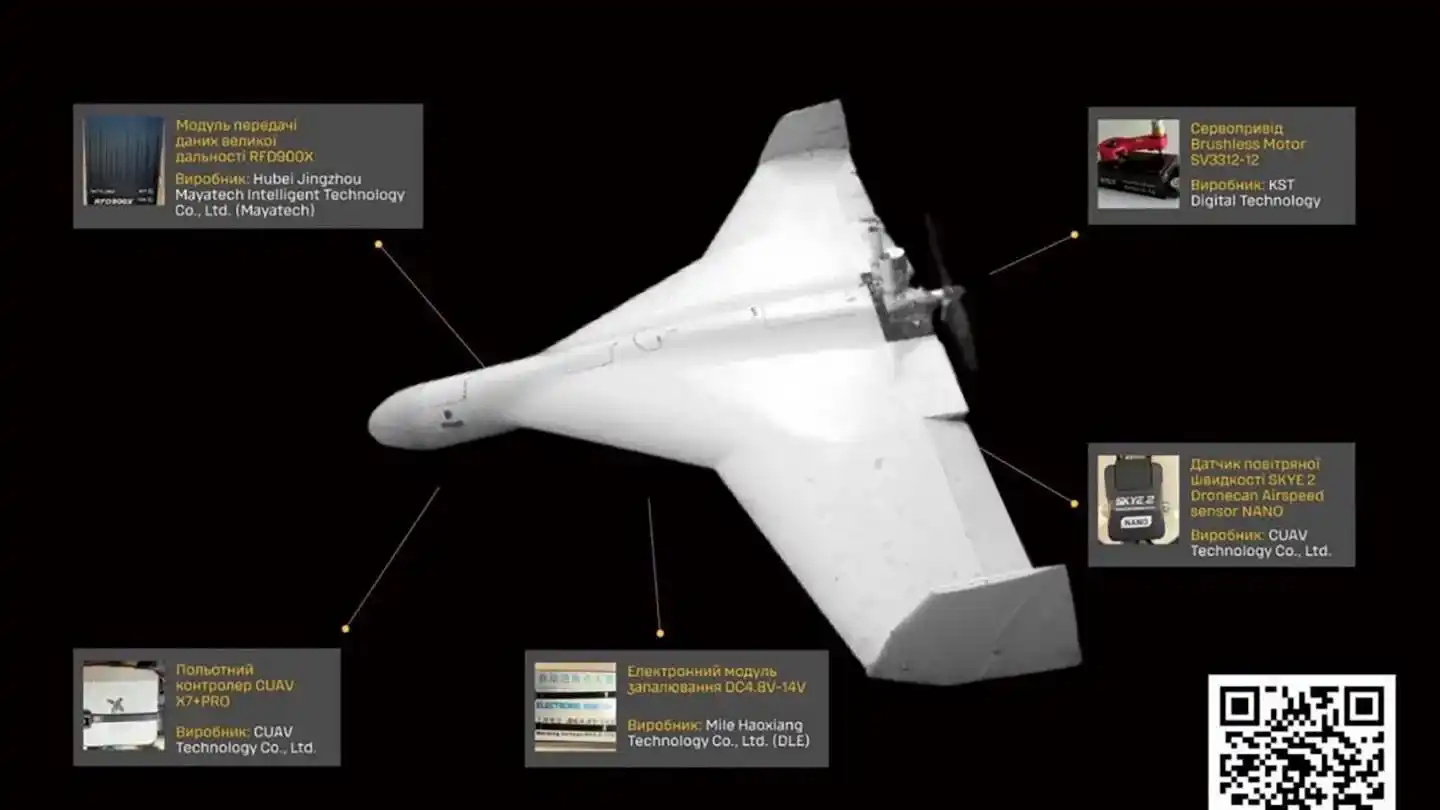
GUR reported that the decoy drone—designed to overwhelm Ukrainian air defense systems—contains 100% Chinese-made components, an unprecedented finding in the ongoing conflict. While Russian drones have previously incorporated Chinese parts, this appears to be the first time an entire drone has been manufactured exclusively with components sourced from China.
This decoy drone features a delta-wing configuration similar in appearance to the Iranian-made Shahed-136 loitering munition but is considerably smaller in size. Despite being a decoy, GUR revealed that the drone can potentially carry a warhead weighing up to 15 kilograms (33 pounds), giving it a dual-purpose capability.
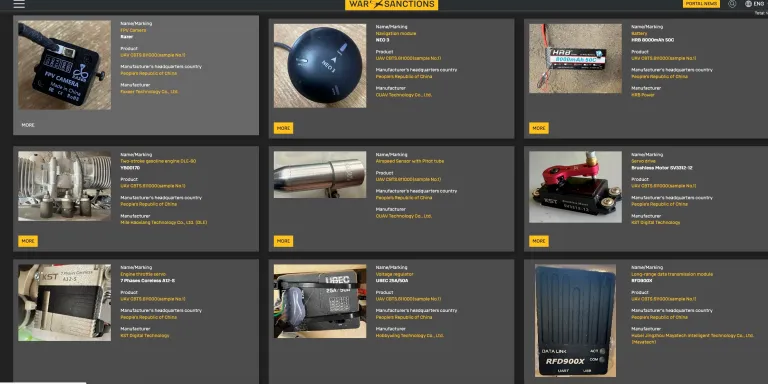
“All components and blocks [in the new drones] are of Chinese origin,” GUR’s War&Sanctions project stated. The project maintains an extensive database cataloging thousands of foreign parts found in Russian weapons.
Key Role of CUAV Technology in Russian Drones
Nearly half of the drone’s components reportedly originate from CUAV Technology, a Chinese firm specializing in open-source unmanned systems. Among the recovered parts are autopilot flight controllers, navigation modules, antennas, and airspeed sensors. These sophisticated modules are critical for ensuring stable flight and autonomous navigation, a feature Russia has been integrating into its UAVs at an accelerated pace.
According to CUAV Technology’s official description, the company is a “National High-Tech Enterprise and Guangdong Provincial Specialized, Refined, Unique, and Innovative Enterprise,” focusing on R&D, production, and sales of unmanned aerial technologies.
Despite announcing restrictions in October 2022 to prevent their products from being supplied to Russia or Ukraine for military use, the appearance of their components in newly recovered Russian drones suggests alternative procurement routes, possibly through resellers or off-the-shelf purchases on platforms like AliExpress.
Advanced Capabilities and Strategic Use of Decoy Drones
The newly identified drone is designed not just to act as a decoy but also to engage targets with its potential explosive payload, giving it a hybrid role. Such drones are particularly valuable in saturation attacks, overwhelming Ukrainian air defense networks by forcing them to expend costly interceptors on relatively inexpensive UAVs.
GUR also noted that these drones represent a new phase in Russian indigenous production—instead of using entirely off-the-shelf commercial drones, Moscow appears to be integrating foreign components into custom-designed platforms.
Chinese AI and Fiber-Optic Contributions to Russian Drone Warfare
The discovery adds to growing evidence of China’s critical role in enhancing Russian drone capabilities, particularly in artificial intelligence (AI) and machine learning (ML). In a separate case, GUR found that a Russian V2U barrage drone deployed in Sumy used AI-driven target selection, leveraging a Chinese Leetop A203 minicomputer and an NVIDIA Jetson Orin processor.
Additionally, China has provided fiber-optic spools enabling Russian drones to extend their operational range up to 50 kilometers (31 miles). Fiber-optic control systems make UAVs immune to electronic jamming and signal interference, giving Russian forces a substantial advantage in contested environments.
Previous Recoveries Highlight Russia’s Global Procurement Network
This discovery reinforces the broader pattern of Russian weapons containing diverse foreign-sourced components. For instance:
- A recovered Shahed-136 drone included parts from the U.S., Iran, and Taiwan.
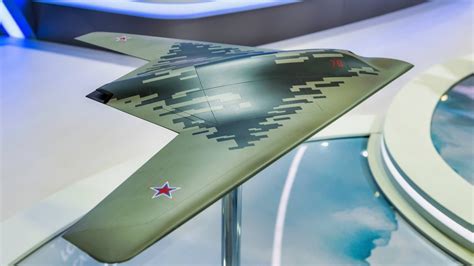
- A downed S-70 Okhotnik-B UCAV revealed components from multiple Western and Asian manufacturers.
- The Banderol S-8000 cruise missile contained elements from Switzerland, Taiwan, Japan, South Korea, and more.
These findings underline the complex international supply chains sustaining Russia’s war machine despite extensive sanctions.
Beijing’s Growing Strategic Alignment with Moscow
While China has publicly maintained a position of neutrality, its actions increasingly suggest de facto support for Moscow. Ukrainian intelligence argues that Beijing’s supply of components, and possibly entire systems, reflects a strategic partnership designed to counterbalance U.S. and NATO influence.
Earlier this month, Chinese Foreign Minister Wang Yi reportedly told EU foreign affairs chief Kaja Kallas that Beijing cannot accept a Russian defeat in Ukraine, fearing it would free the U.S. to concentrate fully on containing China. This aligns with a broader Chinese strategy of supporting a protracted conflict that ties down Western resources.
Implications for Ukraine and the West
The emergence of a fully Chinese-made Russian drone has far-reaching implications. It not only highlights Russia’s ability to circumvent sanctions but also demonstrates Beijing’s willingness to supply advanced technologies for military purposes—either directly or indirectly. For Ukraine, this development complicates efforts to disrupt Russian supply chains, while for the West, it raises urgent questions about sanctions enforcement and export controls.
With Russia accelerating its wartime industrial mobilization and China positioning itself as a key technological enabler, future Ukrainian battlefields are likely to see increasingly sophisticated drones combining foreign precision parts with Russian military engineering.
Conclusion
The discovery of this new Russian decoy drone built entirely with Chinese components is a wake-up call for Ukraine and its allies. It showcases the growing interdependence between Moscow and Beijing, particularly in the field of military technology. As Russia seeks to adapt and innovate under sanctions pressure, China emerges as its most crucial lifeline, supplying the components that keep its drone warfare program operational and evolving.
If current trends continue, Ukraine may face an even greater challenge in defending against swarms of technologically advanced UAVs, forcing a reevaluation of defense strategies and Western support mechanisms.