Russia’s domestic aviation network suffered a major blow on July 6, as nearly 300 flights were abruptly canceled across multiple key airports following a surge in Ukrainian drone attacks. The disruption—described by aviation authorities as unprecedented in scope—highlights an evolving and increasingly bold chapter in Ukraine’s drone warfare strategy aimed deep within Russian territory.
The Russian Federal Aviation Agency (Rosaviatsia) confirmed the scale of the disruption in an evening statement, reporting that 287 flights were grounded at three of the country’s major international airports: Moscow’s Sheremetyevo, St. Petersburg’s Pulkovo, and Strigino Airport in Nizhny Novgorod.
The cancellations came just hours after Russia’s Defense Ministry claimed it had intercepted 120 Ukrainian drones overnight, describing the aerial campaign as one of the largest swarm-style incursions on record. Although Kyiv has remained silent, analysts believe these drone operations are part of Ukraine’s strategy to extend the psychological and logistical reach of the war far beyond the front lines.
Sheremetyevo, Pulkovo, and Strigino Paralyzed by Airspace Lockdowns
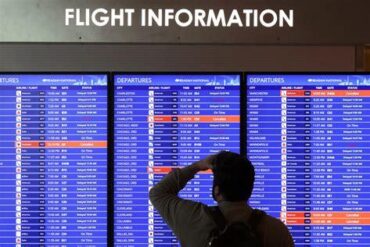
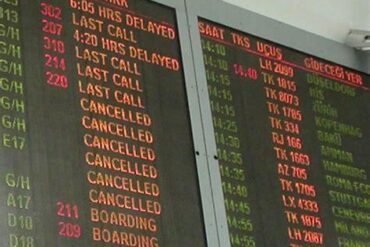
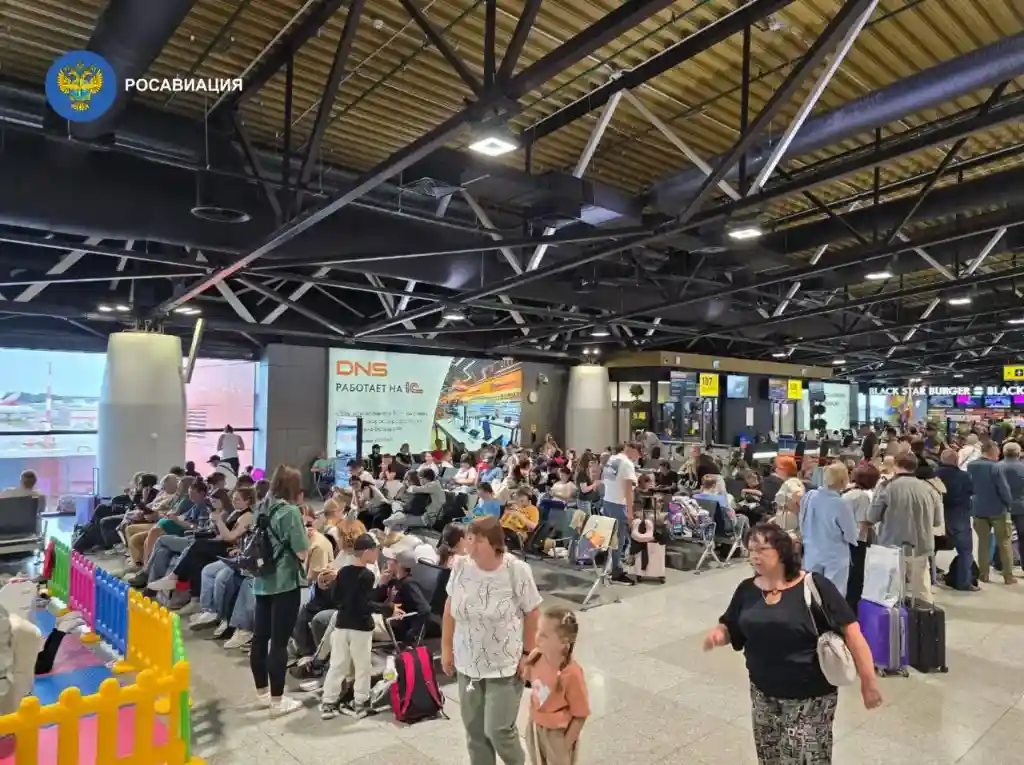
Moscow’s Sheremetyevo International Airport, the busiest in Russia, bore the brunt of the airspace restrictions. With 171 flights canceled and 56 delayed, thousands of travelers were left stranded as terminals swelled with confused and frustrated passengers. According to Rosaviatsia, the decision to halt flights was driven by both airspace closure orders and strong wind advisories, though the former is clearly tied to the ongoing drone threat.
In St. Petersburg, Pulkovo Airport saw 90 flights canceled and 37 delayed, further compounding the ripple effects across Russia’s aviation grid. Meanwhile, Strigino Airport in Nizhny Novgorod reported 26 cancellations and 13 delays, as airspace safety concerns extended into central Russia. Flight restrictions were also imposed on regional airports in Ivanovo, Kaluga, Pskov, and Tambov, underscoring the breadth of the threat.
Although Rosaviatsia did not offer a timeline for lifting the restrictions, it is evident the cancellations reflect an evolving military reality: Russia’s airspace, once considered secure, is now vulnerable to aerial incursions from small, hard-to-detect unmanned aircraft.
Ukraine’s Expanding Drone Campaign: A Calculated Disruption
This incident is part of a broader Ukrainian drone offensive that has visibly expanded over recent months. Unlike traditional missile strikes, drones provide Ukraine with a cost-effective, asymmetric means of projection, enabling strikes on infrastructure and military sites deep inside Russian territory.
Ukrainian defense sources have indicated that this strategy is not just military, but also psychological. Serhii Bratchuk, spokesperson for the Ukrainian Defense Army’s Southern Division, emphasized in May that Ukraine’s drone approach is designed to “make the war visible to the Russian population” by disrupting daily life, including air travel.
That strategy appears to be gaining momentum.
Borisoglebsk Airfield Strike Signals Strategic Shift
On the same night that civilian air travel was thrown into disarray, Ukraine launched a precision drone attack on the Borisoglebsk military airfield in Voronezh Oblast. According to Ukraine’s General Staff, the strike caused significant damage to a warehouse storing guided bombs, military aircraft, and logistical supplies. The Borisoglebsk base is home to Su-34, Su-35S, and Su-30SM jets, which have been widely used in Russian bombing campaigns against Ukrainian cities and infrastructure.
Reports from local Russian residents, relayed through the independent outlet Astra, described 8–10 powerful explosions around 2 a.m. local time, accompanied by visible fires. NASA’s FIRMS (Fire Information for Resource Management System) confirmed the presence of a thermal anomaly consistent with fire at the Borisoglebsk site shortly after the reported strike.
Military analysts believe this attack represents a deliberate attempt by Ukraine to neutralize Russia’s air superiority by targeting assets before they are deployed. If confirmed, the destruction or damage of advanced multi-role fighters like the Su-34 or Su-35S could deliver a significant tactical blow to Russian operational capabilities.
Impact on Russia’s Domestic Stability and Infrastructure
The fallout from these strikes is not confined to military calculations. The disruptions at Sheremetyevo, Pulkovo, and other airports serve as a stark indicator of how modern conflict can penetrate civilian life. Russia, which has long projected a narrative of control and stability on the home front, now faces the reality of mass flight cancellations, public alarm, and economic disruption directly linked to wartime developments.
Aviation hubs are not just transportation nodes—they are symbolic centers of economic activity and mobility. The fact that these were targeted, directly or indirectly, underscores a strategic aim: to erode Russian confidence and project Ukrainian technological reach.
Russia’s Defensive Capabilities Under Scrutiny
The Russian Defense Ministry’s announcement that it had intercepted 120 drones in a single night raises serious questions about the resilience of Russian air defense systems. While the number of intercepted drones is high, the fact that so many were launched—and that some clearly succeeded in hitting their targets—suggests gaps in coverage or coordination.
Military experts argue that defending against mass drone incursions is exponentially more difficult than defending against larger, manned aircraft or missiles. Drones are often small, fast, and capable of low-altitude flight, evading radar and traditional interception methods. The scale of the July 5–6 assault hints at increased production and tactical sophistication within Ukraine’s drone program.
For Russia, this adds strain to an already overextended military apparatus, which must now divert resources to homeland defense, even as it remains embroiled in a grinding ground campaign across eastern and southern Ukraine.
Kyiv’s Silence, Moscow’s Dilemma
As with previous strikes deep into Russian territory, Ukraine has remained publicly silent on its role in the drone attacks. This policy of strategic ambiguity allows Kyiv to maintain plausible deniability while also amplifying uncertainty in the Russian information space. For Moscow, each unexplained explosion or canceled flight breeds public doubt and operational distraction.
For the Kremlin, the consequences are twofold: first, the need to reassure a domestic audience increasingly exposed to war’s reality, and second, the compounding costs of securing not just the front line, but the vast expanse of Russian territory that now falls within drone range.
What’s Next: The Sky Is No Longer Safe
The July 6 flight cancellations mark a turning point in the war’s geography. No longer confined to Donetsk trenches or Kharkiv alleyways, the battlefield has extended vertically into Russian skies and deep into strategic aviation hubs.
If this trend continues—and all signs suggest it will—Russia will need to radically rethink airspace security, civilian infrastructure protection, and its messaging to a population now directly impacted by war.
In the immediate term, flight delays and mass cancellations may become more routine as both sides continue to escalate technologically and tactically. For the average Russian traveler, the once unthinkable notion that a Ukrainian drone could shut down Sheremetyevo is now an urgent reality.
Ukraine’s strategy to “bring the war home” to Russia is succeeding—not just militarily, but psychologically, technologically, and politically. What happens next may depend not only on drone manufacturers and defense ministries but on how well nations can adapt to a future where even the skies are contested.