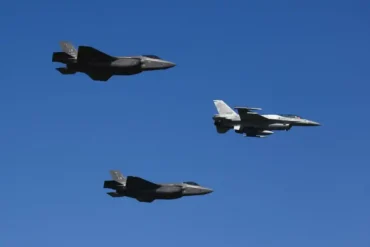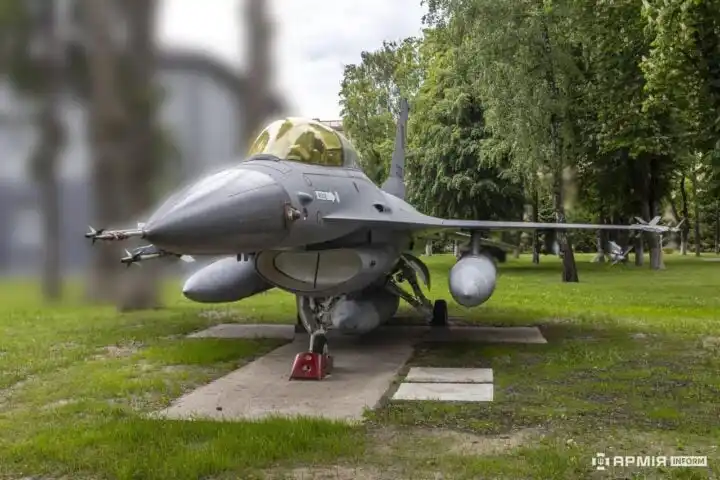
The Ukrainian Air Force’s deployment of F-16 Fighting Falcons has marked a critical shift in the country’s aerial capabilities since their arrival in 2024. Despite having a modest fleet of just over thirty jets—and still awaiting nearly half of the pledged aircraft—Ukraine has demonstrated remarkable operational effectiveness with these Western fighter platforms. The jets, delivered in gradual waves, are playing an essential role not only in neutralizing air threats but also in disrupting Russian ground operations.
As of late 2025, Ukrainian F-16s have successfully conducted over 300 ground strike missions. These attacks have resulted in the destruction of hundreds of key Russian military assets, including:
- Command and control centers
- Drone operation nodes
- Ammunition storage sites
- Logistics and resupply hubs
- Armored equipment and artillery positions
These precision strikes, enabled by the advanced avionics and targeting capabilities of the F-16s, reflect a high-value impact on Russia’s battlefield infrastructure.
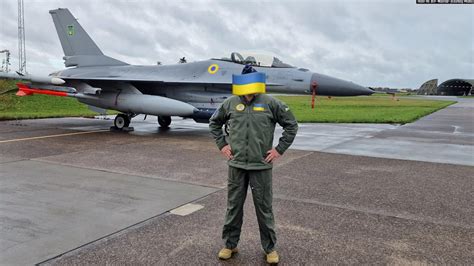
Air Defense Dominance: 1,300 Cruise Missiles and Drones Neutralized
While the ground strike capability is significant, the primary mission of the F-16s remains air defense. Ukrainian officials have confirmed that these jets have intercepted and destroyed more than 1,300 Russian cruise missiles and long-range drones, a feat that highlights their strategic importance in defending critical infrastructure and population centers. In practical terms, this achievement has dramatically reduced the efficacy of Russia’s long-range standoff attacks, keeping Ukrainian skies more secure than they’ve been since the onset of the full-scale invasion.
This air superiority also imposes a deterrent barrier—Russian manned aircraft can no longer penetrate Ukrainian-controlled airspace without significant risk. The mere presence of F-16s has reshaped the aerial calculus, forcing Russian pilots to operate more conservatively and at extended ranges, often limiting their effectiveness.
Public Expectations vs. Strategic Realities
There has been considerable public debate, especially across social media, about why these advanced fighter jets have not been used more aggressively in offensive campaigns. Critics argue that their role appears too limited in scope given the severity of the conflict. However, expecting F-16s to independently alter the war’s trajectory misunderstands both their intended mission profile and the complexity of modern combined arms warfare.
Fighter jets like the F-16 are force multipliers—not silver bullets. Their value lies in creating air denial, providing tactical intelligence, and delivering surgical strikes in coordination with ground forces and long-range fires. The Ukrainian military’s integration of these platforms into its broader defense matrix has been methodical, emphasizing sustainable progress over flashy, isolated assaults.
Operational Challenges and the Road Ahead
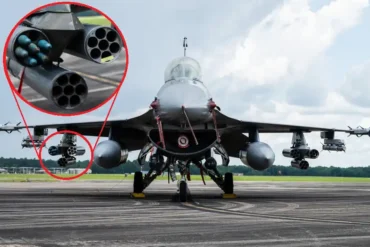
Despite these successes, Ukraine’s F-16 program faces several logistical and operational challenges. The country has yet to receive the full batch of jets initially pledged by Western allies, and munitions compatible with the F-16 remain in limited supply. Furthermore, the training pipeline for pilots and ground crews is ongoing, which constrains the tempo and scope of operations. These bottlenecks highlight the importance of sustained international support to ensure that Ukraine can realize the full potential of its F-16 fleet.
Looking ahead, the F-16 is expected to serve as a cornerstone of Ukraine’s future air force. Alongside the anticipated introduction of French Mirage 2000s, Swedish Saab Gripens, and potentially Dassault Rafales, Ukraine is building a diversified and NATO-interoperable fighter force. This transformation is not just about winning the current war—it’s about ensuring long-term deterrence and regional stability.
Conclusion: A Steady Climb Toward Tactical Mastery
The destruction of more than 300 Russian ground targets by Ukrainian F-16s, coupled with the interception of 1,300 aerial threats, marks an impressive start to the integration of Western airpower into Ukraine’s defense architecture. While still operating under constraints, Ukrainian pilots have demonstrated precision, discipline, and ingenuity in deploying these jets across a dynamic and highly contested battlespace.
These results underscore a broader strategic trend: Ukraine is not just surviving the war—it is learning, adapting, and gradually shifting the balance through smarter, more integrated use of modern military technology.