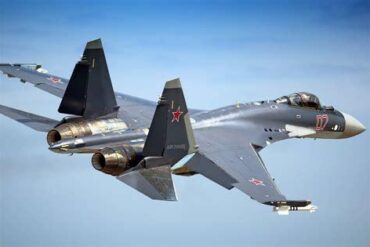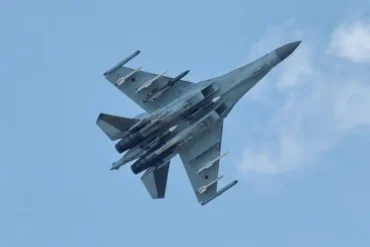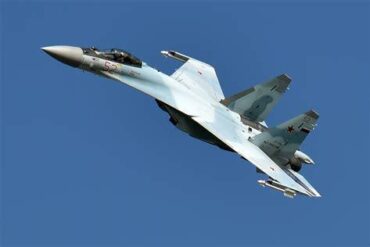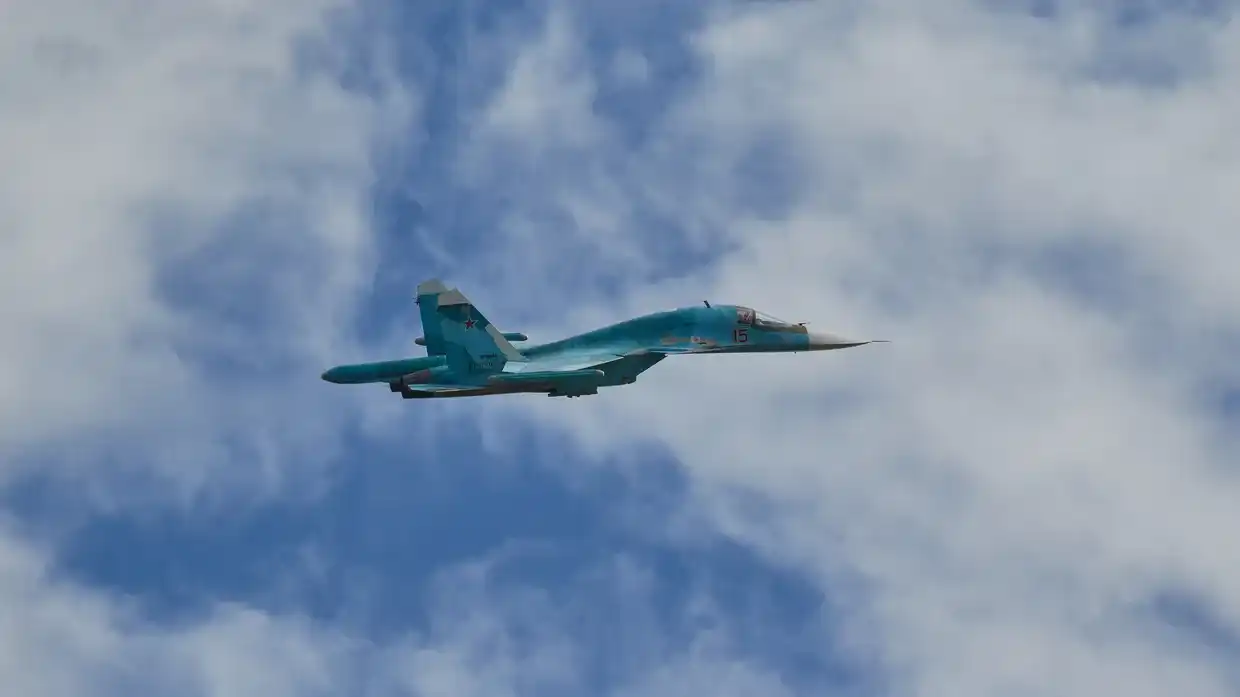
Ukraine has executed one of its most audacious drone operations to date, targeting Russia’s Marinovka airfield in Volgograd Oblast, striking four Su-34 fighter jets overnight on June 27, 2025, according to Ukraine’s General Staff. This latest precision strike underscores Kyiv’s increasing reliance on unmanned aerial systems to counter Russia’s air superiority and project power deep into enemy territory.
The Marinovka airbase, located roughly 900 kilometers southeast of Moscow, has long served as a strategic military hub for the Russian Air Force. The airfield is integral for deploying Su-34 fighter-bombers, which have been extensively used by Russia to conduct bombing raids and deploy guided aerial munitions across Ukrainian cities and military positions.
The Ukrainian General Staff reported that the operation was executed through a joint effort involving Ukraine’s elite Special Forces, the Security Service of Ukraine (SBU), and other classified military units. The coordinated drone strike resulted in the destruction of two Su-34 aircraft and inflicted damage on two others, severely disrupting Russian aerial operations in the region.
Escalating Drone Warfare: Ukraine’s Strategic Shift
Ukraine’s bold operation in Volgograd is part of a broader strategy that has seen a dramatic escalation in drone warfare since early 2024. As conventional front-line battles remain deadlocked, Ukrainian forces have shifted focus towards leveraging long-range unmanned aerial vehicles (UAVs) to strike critical infrastructure, airbases, and logistical nodes within Russian territory.
These precision drone strikes aim to achieve multiple objectives:
- Undermine Russia’s ability to project air power.
- Disrupt the maintenance and deployment cycles of frontline aircraft.
- Force Russia to divert air defense resources away from occupied Ukrainian regions.
- Inflict psychological and economic pressure on the Russian population.
The attack on Marinovka represents one of the deepest penetrations by Ukrainian drones, demonstrating both technological sophistication and the intelligence capabilities required to pinpoint and strike valuable military assets nearly a thousand kilometers inside Russia.
The Marinovka Airfield: A Strategic Target
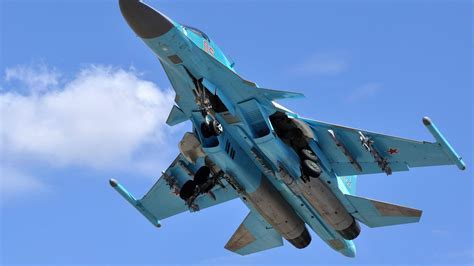
The Marinovka airfield has played a critical role in Russia’s ongoing war against Ukraine. Home to advanced fighter-bomber squadrons, the base supports operations involving guided aerial bombs, which have devastated Ukrainian cities and infrastructure over the past year. The Su-34 aircraft stationed there, known for their long-range strike capabilities and versatility, are particularly valuable to Russia’s campaign.
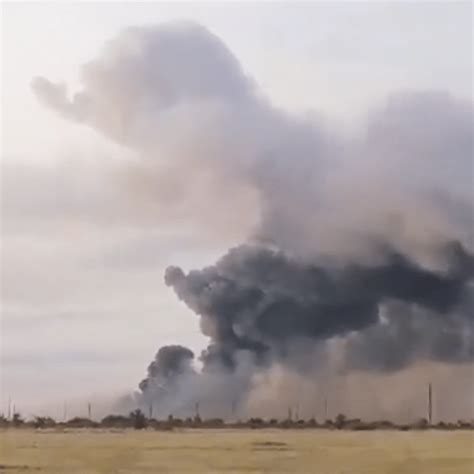
By targeting Marinovka, Ukraine aimed not only to destroy aircraft but also to cripple the operational backbone of Russian air support. The General Staff confirmed that in addition to damaging or destroying four Su-34 jets, the attack caused a significant fire within the airfield’s technical and operational unit — a facility essential for the servicing, maintenance, and rapid redeployment of combat aircraft.
Russian Response and Information Fog
As with previous incidents inside Russian territory, independent verification of Ukraine’s claims remains limited. Russian state-controlled media has largely downplayed the extent of the damage, while officials in Moscow have yet to provide a comprehensive account of the strike’s aftermath.
Historically, the Kremlin has been reluctant to acknowledge Ukrainian drone strikes that compromise the image of Russian military invulnerability. Nonetheless, open-source satellite imagery, social media posts from locals near the Volgograd region, and growing evidence of fire damage support at least some elements of Kyiv’s account.
Russia’s Ministry of Defense, when pressed for comment, reiterated standard rhetoric about intercepting “enemy drones” and minimizing damage, but avoided acknowledging specific aircraft losses. This pattern mirrors previous high-profile attacks on Russian infrastructure, such as the strikes on the Engels Air Base and Crimean military sites, where Moscow initially denied significant impacts only for independent sources to later confirm substantial damage.
Growing Reach of Ukraine’s Drone Program
Ukraine’s capacity to strike targets deep within Russia reflects substantial advancements in its domestic drone manufacturing sector and operational intelligence capabilities. Over the past 18 months, Ukraine has fielded increasingly sophisticated long-range drones, some capable of traveling over 1,000 kilometers with high accuracy.
These developments have been fueled by:
- Technological partnerships with Western defense firms.
- Reverse engineering of captured Russian UAV components.
- The emergence of local startups producing military-grade drones.
- Crowdsourced fundraising initiatives supporting UAV production.
Ukraine’s SBU and military intelligence units have also improved their ability to identify high-value targets, coordinate complex operations, and exploit gaps in Russia’s layered air defense networks.
Impact on Russia’s War Machine
The destruction and damage of Su-34 jets at Marinovka could have significant tactical and psychological ramifications. The Su-34 is not only expensive — with an estimated cost of over $50 million per unit — but also central to Russia’s aerial bombardment campaign. Losing even a small number of these aircraft strains Russia’s operational readiness.
Furthermore, the attack amplifies the vulnerability of Russian military assets previously thought to be safely stationed far from the frontlines. Repeated Ukrainian strikes inside Russia, including at oil depots, logistics hubs, and now airbases, have exposed shortcomings in Russia’s air defense coverage, despite heavy investments in missile and radar systems.
Volgograd Oblast, situated hundreds of kilometers from Ukraine’s borders, was assumed to be beyond the effective range of Kyiv’s drone operations. The successful strike challenges that perception and may compel Russian commanders to reallocate resources towards protecting rear-area facilities, weakening their ability to sustain offensive operations elsewhere.
Broader Geopolitical Implications
The Marinovka drone strike arrives amid escalating hostilities and deteriorating diplomatic relations between Kyiv and Moscow. Russia has intensified its aerial assaults on Ukrainian cities, with mounting civilian casualties from missile and drone strikes on population centers such as Kharkiv, Dnipro, and Zaporizhzhia.
In response, Ukraine has ramped up asymmetric operations designed to strike inside Russian borders, signaling both resolve and strategic innovation. Western allies, observing Ukraine’s growing drone capabilities, may further invest in technologies that enable Kyiv to maintain pressure on Russian military infrastructure without relying solely on conventional ground offensives.
The incident also reignites debates within Russia regarding domestic security and the effectiveness of its military leadership. High-profile failures to prevent such strikes have drawn criticism from nationalist commentators and exposed divisions within Russia’s defense establishment.
Conclusion: A Turning Point in Drone Warfare?
The successful Ukrainian strike on four Su-34 fighter jets at Russia’s Marinovka airfield illustrates how modern drone warfare continues to reshape the dynamics of the conflict. By demonstrating the ability to conduct deep, precise attacks on critical military assets, Ukraine not only inflicts tangible losses on Russia’s airpower but also erodes the perception of sanctuary within Russian territory.
As both sides adapt to evolving technologies and strategies, the frequency, sophistication, and impact of long-range drone operations are likely to increase. With each successful strike, Ukraine signals its intent to contest not only the frontlines but also the strategic depth of Russian military infrastructure.
While the full ramifications of the Marinovka strike will unfold in the coming weeks, the message is unequivocal: the age of secure rear areas in this conflict is rapidly vanishing, and with it, the notion that any target within range of advanced UAVs remains untouchable.