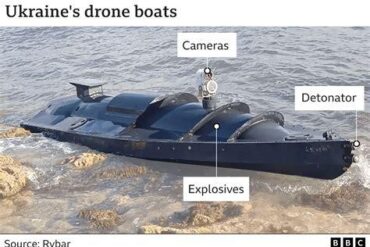
As Ukrainian drones increasingly penetrate deep into Russian airspace, the Kremlin has responded with an unexpected countermeasure: the deployment of MiG-35 multirole fighters over the skies of Moscow. For the first time since the aircraft’s introduction, these advanced but underutilized jets have taken on a defensive role near the capital, confronting low-flying unmanned threats that traditional air defense systems have struggled to neutralize. This strategic pivot not only underscores the evolving nature of modern warfare but also highlights Russia’s urgent attempt to adapt its air defense doctrine under pressure.
The MiG-35: A Legacy Airframe with Modern Ambitions
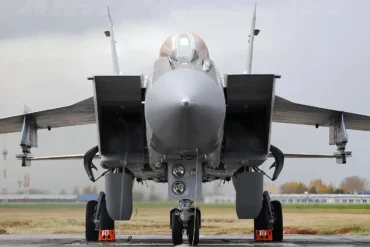
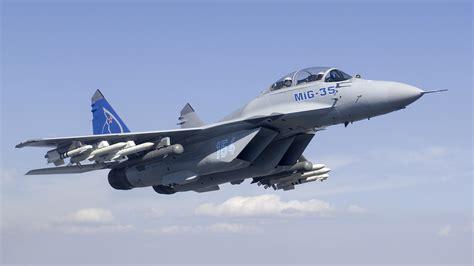
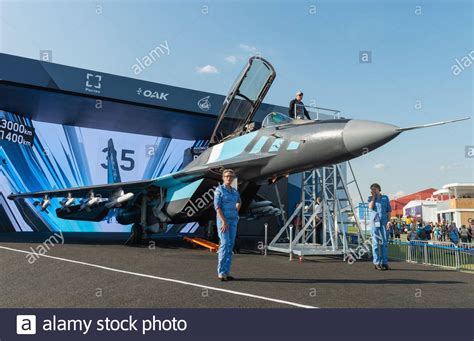
The MiG-35 Fulcrum-F is not a newcomer to the Russian arsenal, but its emergence in the skies above Moscow in May 2025 signals a novel application of its capabilities. Originally derived from the MiG-29, the MiG-35 was envisioned as a 4++ generation fighter, competing with Western equivalents like the F-16V and Eurofighter Typhoon. However, the aircraft’s career has been hindered by limited production, a lack of international buyers, and internal competition from more advanced Russian jets like the Su-35S.
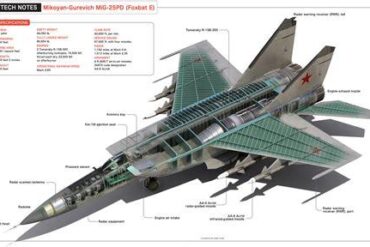
Despite these setbacks, the MiG-35 boasts a number of formidable systems. It features twin Klimov RD-33MK engines, generating 19,800 pounds of thrust each with afterburners, delivering a maximum speed of Mach 2.25 and a combat radius of 620 miles. Unlike fifth-generation stealth fighters, the MiG-35 does not prioritize low observability, but its use of composite materials offers modest reductions in weight and radar signature.
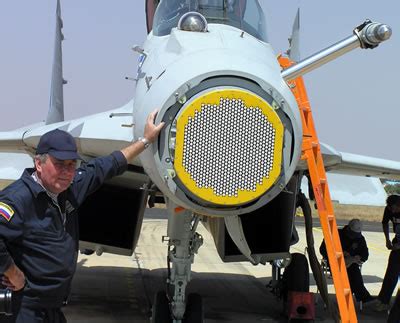
The aircraft’s standout feature is the Phazotron Zhuk-A AESA radar, capable of tracking 30 airborne targets at ranges exceeding 120 miles. However, reports have surfaced that cost constraints have resulted in downgraded or omitted radar systems in several operational airframes, casting doubt on the consistency of its sensor suite.
Operational Deployment Amid Rising Drone Incursions
The sudden appearance of MiG-35s above Moscow is directly tied to the escalating drone campaign launched by Ukraine. On March 11, 2025, Russia reported intercepting 337 drones, including 91 over Moscow Oblast. This represented the largest drone strike targeting the capital region since the onset of the conflict. According to Andrey Vorobyov, Governor of Moscow Oblast, “Seventy-four drones were shot down on approach to Moscow in the early hours.”
The attacks have consistently targeted critical infrastructure, especially oil depots and munitions storage, illustrating Kyiv’s intent to sap Russia’s operational logistics. While ground-based systems like the S-400 and Pantsir-S1 remain central to Russian air defense, they have shown limitations when confronting swarms of small, low-signature drones that fly below 1,000 feet.
This gap in coverage has prompted the Ministry of Defense to scramble MiG-35s from nearby bases, marking a tactical adaptation in response to an asymmetric threat. According to posts on X and Russian military outlets, these fighters are actively patrolling and being used in live operational trials against Ukrainian UAVs.
A Misfit for Drone Interception? Tactical Challenges and Limitations
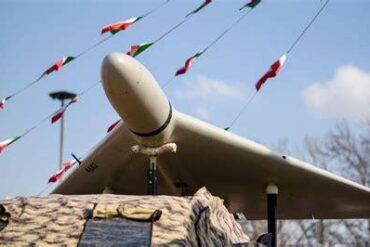
The MiG-35 was never designed for counter-drone operations. High-speed multirole fighters, especially those optimized for air superiority, are ill-suited to engage small, slow, low-flying drones. UAVs such as the UJ-22 or RAM II, used by Ukraine, often feature minimal radar signatures, forcing Russian pilots to rely on visual tracking or ground-based target designation.
To neutralize these drones, MiG-35s may deploy:
- R-73 short-range infrared-guided missiles
- GSh-30-1 30mm cannon for close-quarters fire
- Helmet-mounted targeting systems for enhanced situational awareness
But these measures are inherently inefficient. A single flight hour of the MiG-35 is estimated at \$20,000 or more, making it a costly substitute for dedicated anti-drone assets such as radio-frequency jammers, laser systems, or cheap kamikaze interceptors. This is further complicated by the fact that the airframe lacks stealth, and its radar is more effective against full-sized aircraft or cruise missiles.
Testing Under Fire: Strategic Implications for Russia’s Air Doctrine
The MiG-35’s presence over Moscow may not solely be a defensive maneuver—it likely represents a live combat trial under urgent operational conditions. According to the United Aircraft Corporation, the aircraft is currently undergoing field tests. Given that fewer than 10 MiG-35s exist in service—including prototypes—Russia may be exploiting the current crisis to assess the jet’s viability in a role it was never explicitly designed to fulfill.
The effort aligns with broader Russian goals to modernize its Aerospace Forces, particularly after suffering attrition of Su-30 and Su-35 aircraft in Ukraine. Russia has begun unifying avionics and weapons systems across its fighter fleet to streamline training, maintenance, and parts logistics. The MiG-35 now shares many components with the Su-30SM2 and Su-35S, reinforcing its potential as a modular, lower-cost alternative—if its systems prove combat-reliable.
Export Hopes Dashed: A Jet Without a Market
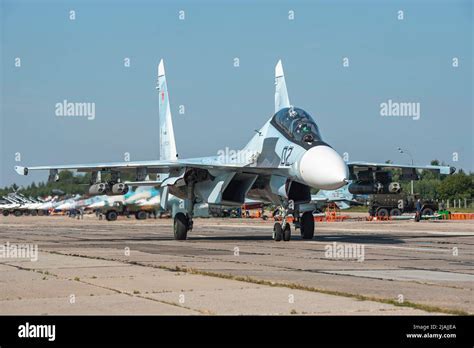
When first unveiled in 2007, the MiG-35 was presented as a next-gen export fighter to replace aging MiG-29 fleets worldwide. Nations like India, Egypt, and Malaysia showed interest. But over time, the jet lost ground to Chinese J-10 variants, Western fighters like the F-16 Block 70, and Russia’s own Su-30/35 families.
As of 2025, no export contracts have materialized. The war in Ukraine and resulting Western sanctions have further disrupted defense industrial supply chains, making it increasingly difficult for Russia to fulfill foreign orders—even if interest existed.
Despite a 2017 order of 24 units from the Russian Ministry of Defense, only a handful have been delivered, with many delayed due to component shortages and prioritization of higher-tier aircraft. According to Euromaidan Press, fewer than 10 have been confirmed as operational, underscoring the limited scale of the current deployment.
Symbolism and Strategy: The Victory Day Connection
The timing of the MiG-35’s appearance in the skies over Moscow is politically and symbolically significant. Its deployment occurred in the lead-up to Victory Day on May 9, Russia’s most visible military parade, held annually in Red Square. This year, the parade showcased Yars nuclear missile launchers, unmanned aircraft, and other symbols of Russian military might.
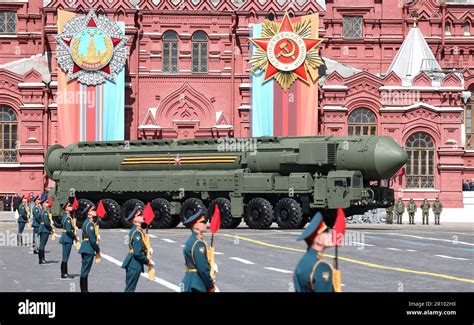
The MiG-35’s patrols may serve more as a propaganda gesture than a tactical necessity, aimed at reassuring the public and projecting strength. With growing scrutiny over Russia’s military performance, especially after repeated drone penetrations of critical airspace, the image of sleek, fast jets guarding the capital offers a compelling visual counter-narrative.
Ukraine’s Drone Doctrine: Asymmetric Warfare Redefined
On the other side of the conflict, Ukraine’s drone strategy reflects a deliberate shift toward low-cost, long-range attacks on Russian infrastructure. Many of the drones used are domestically produced with extended operational ranges of over 600 miles, enabling them to strike Moscow and beyond.
The March 11 assault, which saw drones penetrate several regions simultaneously, highlighted the vulnerabilities of even advanced air defense systems when overwhelmed by volume. Ukrainian forces aim not just to inflict material damage but to divert Russian resources, create psychological pressure, and force tactical shifts, such as deploying strategic aircraft like the MiG-35 for local defense.
Global Comparisons: East vs. West in Drone Defense
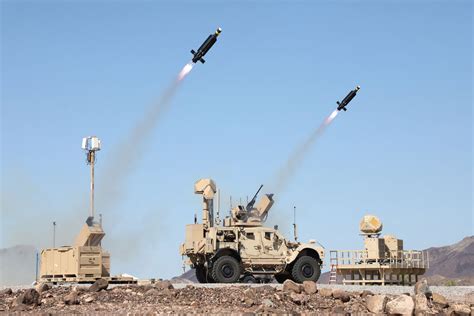
The use of fighter jets like the MiG-35 for drone interception contrasts sharply with Western counter-drone doctrines. The U.S. Army, for instance, employs Coyote interceptors, low-cost kinetic and electronic warfare systems, and autonomous laser units to neutralize threats economically and efficiently.
Israel’s Drone Dome and Drone Guard systems, designed specifically for detecting and disabling UAVs, offer similarly focused solutions. In comparison, Russia’s approach—using a multi-million-dollar aircraft to down drones that cost a few thousand dollars—may prove unsustainable over time, especially given the strain of prolonged conflict.
Conclusion: Stopgap or Strategic Realignment?
The use of the MiG-35 in a counter-drone capacity represents a significant departure from its intended role and a revealing look into the challenges facing the Russian military. It is both an act of desperation and innovation—testing unproven platforms in live combat, while attempting to secure the symbolic heart of Russia.
While the aircraft’s speed, agility, and weaponry offer some advantages, they are poorly matched against the swarming, stealthy nature of drone warfare. As the conflict evolves, Russia must weigh the high costs and limited scalability of such deployments against the broader need for dedicated anti-drone infrastructure.
In the meantime, the MiG-35 soars over Moscow, not as the spearhead of air superiority it was meant to be, but as a visible line of defense in a war increasingly fought by machines without pilots.