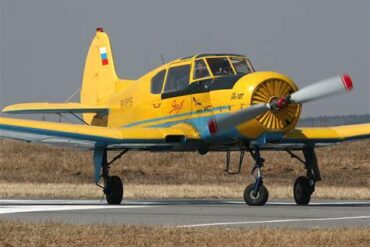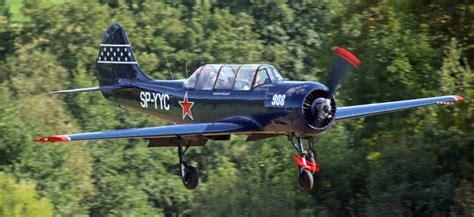
In a striking escalation of asymmetric air defense tactics, Russia has begun testing a modified version of the Yakovlev Yak-52 trainer aircraft, designated Yak-52B2, equipped with a semi-automatic shotgun and sensor turret to intercept and destroy Ukrainian drones. This adaptation mirrors a Ukrainian strategy observed earlier in 2024, where light trainer aircraft were reconfigured for drone-hunting roles, underscoring the growing threat posed by long-range one-way attack drones and the strain they place on conventional air defense systems.
The Yak-52B2, dubbed a “drone fighter” by Russian military commentators, has emerged from an experimental effort that appears to involve one of Russia’s lesser-known aviation design bureaus. The aircraft features a sensor turret under its left wing, reportedly capable of air-to-air, air-to-ground, and weather-avoidance operations, and a 12-gauge shotgun fixed under the right wing. This unusual weapon choice is emblematic of the low-tech yet high-ingenuity responses developing across the Russia-Ukraine conflict.
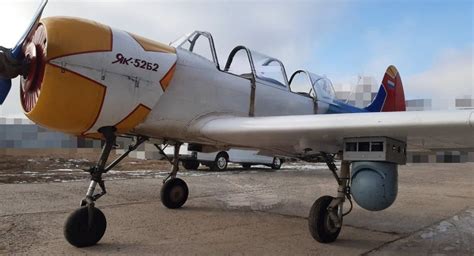
Early images and information released on Russian social media show the Yak-52B2 as a light, maneuverable platform adapted for homeland defense. The aircraft’s configuration includes an onboard fire-control computer and a navigation suite allowing for limited all-weather and night-time operations, which is critical since Ukrainian drone strikes typically occur under cover of darkness. Each wing reportedly supports a payload of up to 90 kilograms (198 pounds), allowing for potential modular upgrades in the future.
Ukraine’s Innovation Inspires Russian Emulation
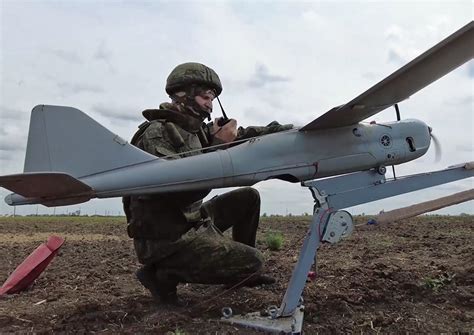
Ukraine’s pioneering use of modified Yak-52s for drone interdiction began making headlines in early 2024. Video footage from the Odesa region showed a Ukrainian Yak-52 engaging a Russian Orlan-10 drone. Unlike Russia’s fixed-armament approach, Ukrainian adaptations involved a sharpshooter positioned in the rear cockpit, manually firing a rifle-caliber weapon at enemy drones. These crews, part of the Civil Air Patrol of Ukraine, were largely civilian volunteers and amateur pilots pressed into an increasingly militarized role.
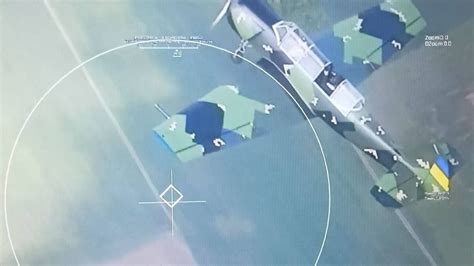
By mid-2024, Ukrainian Yak-52s had begun sporting kill markings, with one aircraft credited with downing two ZALA 421-16E drones and six Orlan-10/30 variants. These aircraft were painted in digital camouflage schemes, tailored for low-altitude missions over hostile terrain. However, the limited availability of Yak-52s in Ukraine—only about a dozen are known to have been operational—left the fleet vulnerable to Russian retaliation. A missile strike on an airfield near Odessa, reportedly using an Iskander short-range ballistic missile, appears to have been aimed directly at neutralizing this emerging threat.
Reimagining the Yak-52’s Combat Role
The Soviet-era Yak-52B, a lightly armed version tested in 1982 for counterinsurgency in Afghanistan, provided a historical precedent for this rearmament. That version featured 23mm gun pods and unguided rocket launchers, although it never entered mass production. The Yak-52B2’s development, in contrast, seems directly motivated by the emergent drone threat and the relatively large stockpile of Yak-52 airframes still available across Russia.
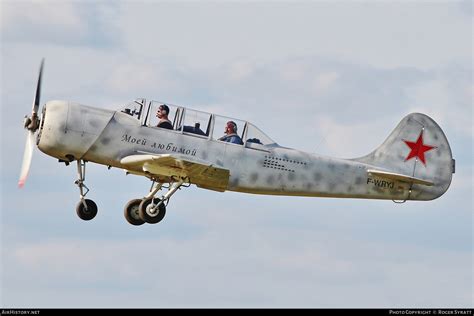
This trainer aircraft, originally designed for aerobatic and basic military pilot instruction, is relatively easy to maintain and can operate from rudimentary airstrips, making it ideal for rapid deployment in regional defensive roles. The Yak-52B2’s slow cruising speed, however, limits its pursuit capabilities, meaning it functions best as a point-defense interceptor, stationed near critical infrastructure vulnerable to drone attacks.
Technical Shortcomings and Tactical Risks
The decision to equip the Yak-52B2 with a semi-automatic 12-gauge shotgun, potentially the Russian-made Saiga, is both bold and problematic. Shotguns, particularly when not firing slugs, have extremely limited effective range—typically 30 to 50 yards. When mounted on a fixed-wing aircraft flying into headwinds or attempting to intercept a fast-moving drone from behind, the margin for successful engagement narrows drastically.
This limitation introduces significant risks: drone debris or detonating warheads could easily damage or destroy the trailing Yak-52B2, given the minimal separation during engagement. While this approach avoids collateral damage on the ground, it sacrifices aerial crew safety, especially in engagements with explosive-laden drones like the Aeroprakt A-22.
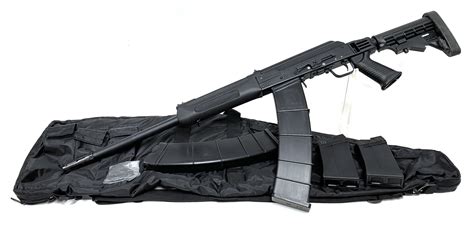
The use of a box-fed shotgun magazine—likely a 10 to 12-round variant—limits sustained fire capabilities. Unconfirmed reports suggest that Russian designers initially considered mounting a PKTM general-purpose machine gun, but rejected the idea due to concerns over potential damage to civilian infrastructure from missed rounds or overpenetration. This highlights the delicate balancing act in deploying kinetic interceptors in domestic airspace.
The Value of Low-Tech Innovation in Modern Warfare
Despite its shortcomings, the Yak-52B2 brings real advantages. Its sensor turret allows for night-time engagements, essential for intercepting Ukrainian drones that often cross into Russia under cover of darkness. Unlike Ukraine’s hand-aimed approach, the fire-control computer aboard the Yak-52B2 provides calculated targeting data, theoretically increasing hit probability despite the short effective range.
The aircraft’s low cost, availability, and adaptability make it a low-risk test platform for Russia, particularly at a time when combat aircraft and missile systems are heavily committed to the frontlines. Furthermore, Russia’s relatively uncontested homeland airspace provides a safe environment for experimental aircraft like the Yak-52B2 to operate without the fear of enemy interception.
Strategic Implications and Future Outlook
This development signals a strategic pivot in Russia’s aerial defense posture—leveraging inexpensive, existing platforms to offset gaps in traditional air defense coverage. It also emphasizes the need for multi-layered defense systems, combining kinetic and non-kinetic solutions, such as electronic warfare, jamming, and laser weapons, with platforms like the Yak-52B2 for last-mile interception.
Russian President Vladimir Putin himself has acknowledged the limitations of existing systems in defending against these persistent and inexpensive drone incursions. Following strikes on Moscow in May 2023, Putin noted, “The air defense system of Moscow worked normally, satisfactorily. Although there is something to work on.” This admission likely accelerated the search for novel solutions like the Yak-52B2, particularly as Russian ground-based air defense assets remain overextended.
The Yak-52B2, now reportedly undergoing flight testing and debugging, may soon be fielded in limited numbers across Russia’s western and southern regions, where Ukrainian drone attacks have been most concentrated. If effective, this concept could potentially be scaled up, or even adapted into future unmanned platforms derived from the same airframe.
Conclusion
The emergence of the Yak-52B2 shotgun-armed trainer aircraft as a counter-drone interceptor highlights the growing urgency and improvisation in modern aerial warfare. As traditional high-cost systems prove too slow or overstretched to neutralize fast, cheap drone swarms, nations are turning to retrofitted legacy platforms to plug critical defensive gaps. While this solution is inherently limited, its value lies in its accessibility, agility, and symbolic defiance in the face of evolving aerial threats. Whether the Yak-52B2 becomes a mainstay or a footnote in drone warfare, its development offers a compelling look into the future of tactical improvisation on the modern battlefield.