Belgium is quietly reshaping the future of aerial defense by adapting one of its most trusted platforms—the F-16AM fighter—into a cost-effective counter-drone weapon system. At a time when inexpensive unmanned aerial systems are redefining modern conflict, the Belgian Air Component’s decision to trial FZ275 laser-guided rockets marks a pivotal shift in tactical thinking. Rather than relying solely on high-cost air-to-air missiles, Belgium is exploring how precision-guided 70 mm rockets can deliver scalable, efficient responses to increasingly complex aerial threats.
The urgency behind this evolution is rooted in a harsh operational reality: modern battlefields are no longer dominated by high-value aircraft alone. Instead, low-cost drones—often deployed in swarms—are capable of overwhelming even sophisticated air defense networks. Belgium’s answer is not to outspend the threat, but to outthink it.
Belgian F-16AM Loadout Signals a Tactical Shift
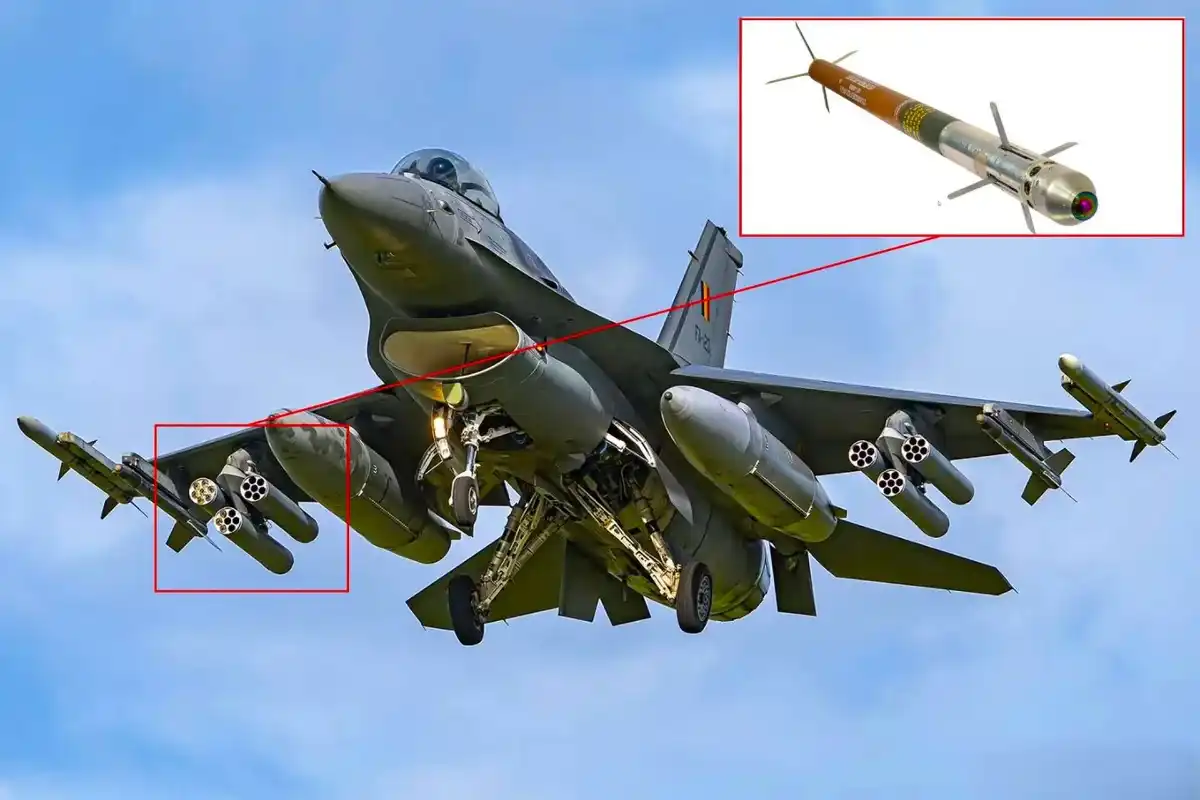
The transformation became visible when a Belgian F-16AM returned to Kleine Brogel Air Base carrying an unusually dense configuration of rocket pods. This was no ordinary sortie. The aircraft was equipped with six LAU-131-type pods, each capable of holding seven 70 mm rockets, creating a potential payload of 42 guided munitions. That number alone tells a story: this is about volume, not just precision.
Unlike traditional fighter configurations that prioritize a handful of high-value missiles, this loadout reflects a deliberate pivot toward “magazine depth.” In counter-drone warfare, where multiple targets may appear simultaneously, the ability to engage repeatedly without rearming becomes a decisive advantage.
The presence of a Sniper targeting pod on a companion aircraft further hints at the development of coordinated targeting strategies. While official details remain limited, the combination suggests that Belgium is testing real-world engagement scenarios where detection, tracking, and precision strike must occur seamlessly in dynamic airspace.
FZ275 Laser-Guided Rockets: Precision Meets Affordability
At the heart of the Belgian initiative lies the FZ275 laser-guided rocket, developed by Thales Belgium. This 70 mm munition represents a modern evolution of a decades-old rocket format, enhanced with semi-active laser guidance to achieve pinpoint accuracy.
Weighing approximately 12.7 kilograms and carrying a 4.1-kilogram warhead, the FZ275 offers a range between 1.5 and 7 kilometers. More impressively, it achieves a circular error probable of less than one meter at 6 kilometers—precision that rivals far more expensive systems.
This combination of accuracy and affordability is exactly what makes the FZ275 so compelling in a counter-drone role. Instead of expending a missile that may cost hundreds of thousands of dollars to destroy a relatively cheap drone, the FZ275 provides a proportional response—one that aligns cost with target value without sacrificing effectiveness.
Parallel Testing of APKWS-Based AGR-20F FALCO
Belgium’s approach is notably pragmatic. Rather than committing to a single solution, the Directorate General of Material Resources is also evaluating the AGR-20F FALCO system, an American-developed variant linked to the APKWS (Advanced Precision Kill Weapon System).
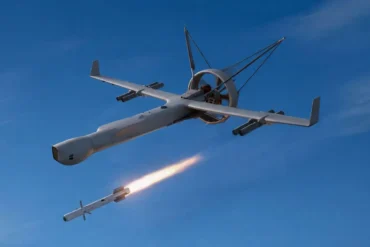
This system takes a different path to the same goal. Instead of designing a new rocket from scratch, APKWS transforms existing Hydra 70 unguided rockets into precision-guided weapons using a modular guidance kit. The result is a flexible, cost-efficient solution that leverages existing stockpiles.
The FALCO variant specifically targets counter-UAS missions, emphasizing scalability and adaptability against Group 3 drones and swarm scenarios. By testing both the FZ275 and AGR-20F, Belgium is effectively benchmarking two philosophies: purpose-built precision versus modular conversion. The outcome could influence procurement decisions far beyond its borders.
Counter-Drone Warfare and the Cost Equation
The logic driving these trials is brutally simple: traditional air defense systems are economically unsustainable against mass drone attacks. In recent conflicts, adversaries have exploited this imbalance by deploying large numbers of low-cost drones to exhaust high-end defenses.
Belgium’s response directly addresses this imbalance. By equipping F-16s with guided rockets, the Air Component is creating a layered response capability—one where expensive missiles are reserved for high-priority threats, while rockets handle lower-tier targets.
This shift is not just tactical; it is economic warfare. Every intercepted drone represents a calculation. When the cost of interception exceeds the cost of the threat, the defender is already at a disadvantage. The FZ275 and similar systems aim to reverse that equation.
Operational Flexibility of Rocket-Armed Fighters
Equipping a fighter jet with dozens of guided rockets fundamentally changes its role. The F-16, traditionally seen as a multirole platform optimized for air superiority and strike missions, gains a new identity as a persistent counter-drone hunter.
This role offers several advantages:
- The ability to engage multiple targets in a single sortie
- Rapid response across wide operational areas
- Reduced reliance on ground-based air defenses
- Increased endurance in contested airspace
Yet, this is not a universal solution. Rocket-based systems may struggle against highly agile or stealthy drones, and they do not replace layered air defense networks. Instead, they complement them—filling a critical gap between high-end interceptors and ground-based systems.
Strategic Implications for European Defense
Belgium’s trials are not occurring in isolation. Across Europe, the proliferation of drones has forced militaries to rethink procurement priorities and operational doctrines. The emphasis is shifting toward systems that combine effectiveness with sustainability.
By testing a domestically developed solution like the FZ275 alongside an American alternative, Belgium is also signaling its interest in maintaining industrial flexibility. This dual-track approach supports both national defense capabilities and broader European strategic autonomy.
The implications extend beyond Belgium’s F-16 fleet. As next-generation aircraft enter service, the expectation may evolve: future fighters could be designed from the outset to carry large quantities of low-cost precision munitions specifically for counter-drone missions.
Adapting Legacy Aircraft for Modern Threats
One of the most compelling aspects of this initiative is its efficiency. Rather than waiting for new platforms, Belgium is extracting additional value from its existing F-16 fleet. This approach demonstrates how legacy aircraft can remain relevant in rapidly changing threat environments.
By integrating guided rockets, the F-16 becomes more than a transitional platform—it becomes a testbed for future concepts. Lessons learned from these trials could inform the design and doctrine of next-generation air combat systems.
There’s something quietly clever here: instead of chasing entirely new technology, Belgium is reimagining what it already has. That kind of adaptability tends to age very well in defense planning.
A Glimpse Into the Future of Air Combat
The Belgian Air Component’s experimentation with FZ275 laser-guided rockets reveals a broader truth about modern warfare: adaptability matters as much as capability. The rise of drones has disrupted traditional assumptions, forcing air forces to innovate quickly and pragmatically.
What emerges from these trials is a vision of air combat that is more layered, more flexible, and significantly more cost-aware. Fighters are no longer just platforms for high-end engagements; they are becoming versatile nodes in a wider defense ecosystem.
Belgium’s approach suggests that the future of aerial defense will not be defined by a single breakthrough technology, but by the smart integration of existing systems into new roles. In that sense, the F-16—armed with guided rockets—may be less a relic of the past and more a preview of what comes next.
And honestly? Turning a classic fighter into a drone-swatting workhorse with 42 precision shots onboard feels like the kind of upgrade that quietly changes the game.