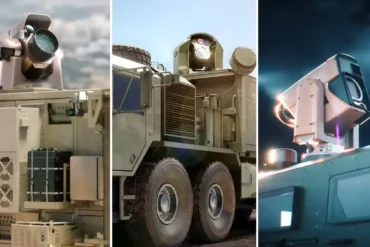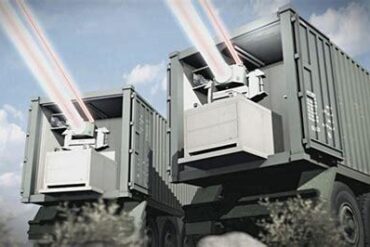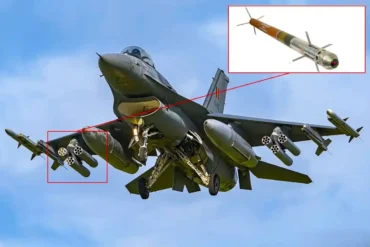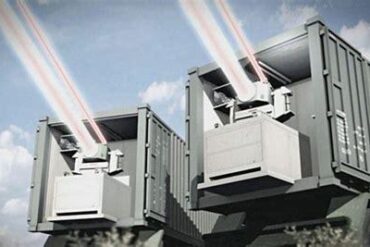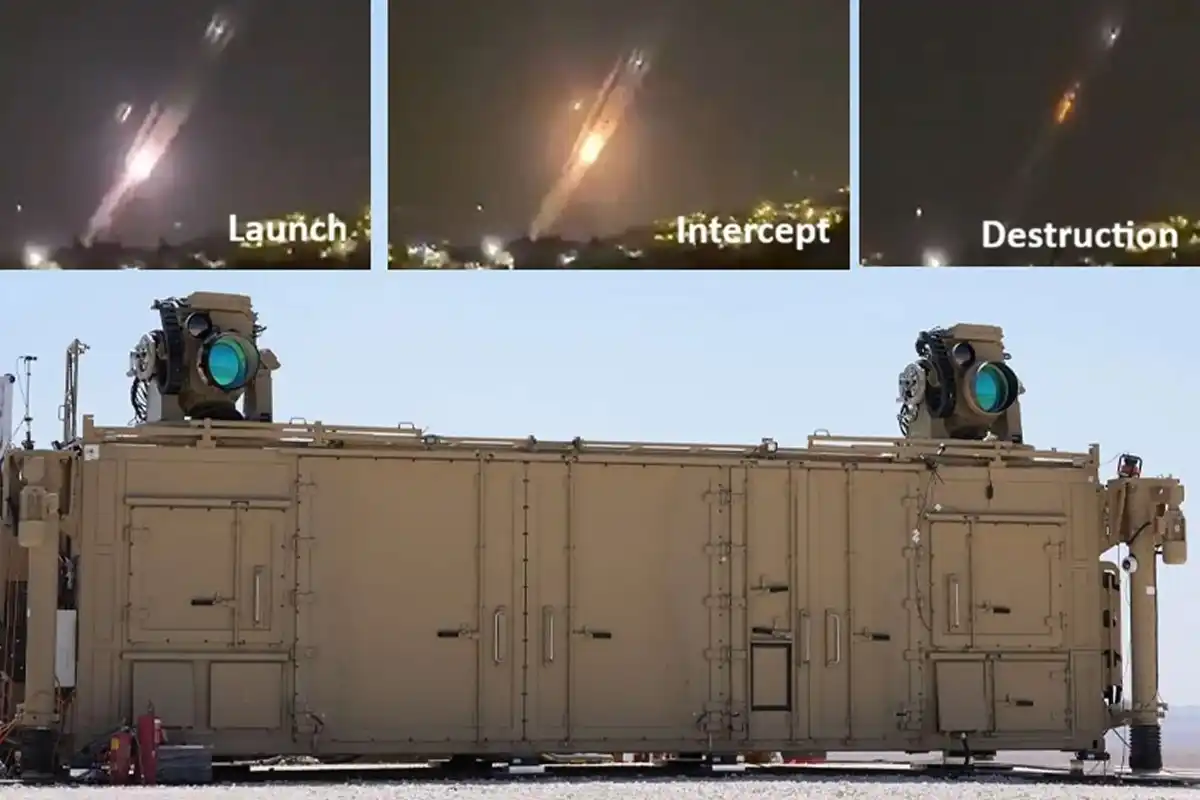
Israel may have crossed a historic threshold in modern warfare. Emerging reports from March 2026 suggest that Israel’s Iron Beam high-energy laser air defense system was used in real combat conditions to intercept rockets launched from southern Lebanon, potentially marking the first operational use of a 100-kilowatt-class directed-energy weapon in active hostilities. While Israeli authorities have not publicly released a detailed combat log confirming the specific effector used, multiple defense sources and video analyses have linked recent nighttime interceptions to the system known in Hebrew as “Or Eitan,” widely associated with Iron Beam.
The significance of this development extends far beyond a single engagement. If verified, Iron Beam’s use represents a profound shift in the economics and physics of air defense. For decades, missile defense has relied on interceptors costing tens of thousands of dollars per shot to defeat threats that can be manufactured for a fraction of that price. A laser changes the equation. Instead of launching a missile, the defender directs concentrated energy at the speed of light, with each “shot” powered primarily by electricity rather than a finite interceptor inventory.
The operational context surrounding these reported engagements reflects a familiar pattern in Israel’s northern theater. The Israel Defense Forces confirmed that rockets were launched from Lebanon and that several were intercepted while others were allowed to fall in open areas, consistent with established selective engagement policies. What remains under scrutiny is whether some of these intercepts were executed by Iron Beam rather than by the well-known Iron Dome missile defense system.
The Architecture of a Directed-Energy Shield
Iron Beam is not designed to replace Israel’s existing layered defense structure; it is engineered to complement it. The country’s multi-tiered system includes Iron Dome for short-range threats, David’s Sling for medium-range missiles, and the Arrow system for long-range ballistic threats. Iron Beam slots into the lowest tier, targeting short-range rockets, mortars, and drones that pose immediate danger within several kilometers of launch sites.
Developed by Rafael Advanced Defense Systems, the laser system reportedly operates in the 100 kW power class for its primary configuration, with additional variants ranging from 10 kW to 50 kW. This power level is not arbitrary. It represents the threshold at which sustained energy deposition can structurally compromise small rockets or unmanned aerial vehicles within seconds. Unlike kinetic interceptors that rely on proximity detonation, a high-energy laser must dwell on a precise point long enough to induce catastrophic failure—burning through the casing of a rocket, igniting internal propellant, or disabling flight controls.
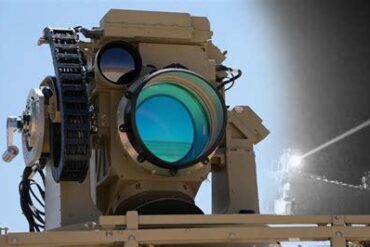
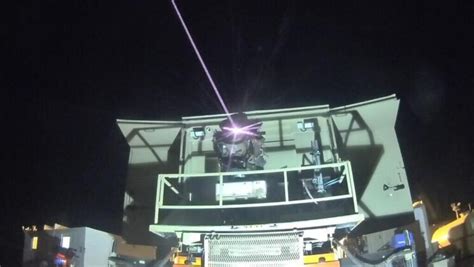
The technological foundation enabling this capability rests on several interlocking components: a high-output laser source, advanced beam control, adaptive optics to compensate for atmospheric turbulence, and electro-optical tracking systems capable of maintaining lock on fast-moving targets. The beam director, often featuring a 250-millimeter-class aperture, uses fast steering mirrors and thermal imaging to maintain stable tracking. Energy is supplied through onboard battery systems and generators, creating what operators describe as an effectively renewable magazine limited primarily by heat dissipation and electrical generation rather than physical ammunition stockpiles.
Cost Exchange and the End of the Interceptor Dilemma
The strategic promise of Iron Beam lies in its ability to disrupt what military planners call the “cost-exchange ratio.” Hezbollah and other armed groups have long leveraged inexpensive rockets and drones to pressure Israel’s defenses. Each Tamir interceptor launched by Iron Dome carries a significant cost, while the attacker’s projectile may be assembled at a fraction of that expense.
A laser shifts this asymmetry. Each engagement consumes electricity and imposes thermal load, but the marginal cost per shot is dramatically lower than that of a missile interceptor. In high-volume attack scenarios—particularly short-range rocket barrages launched near the border—the ability to respond at minimal per-shot cost could preserve interceptor stocks for higher-lethality or weather-compromised scenarios.
Israel’s Ministry of Defense has already confirmed that the first operational Iron Beam system was delivered in late December and integrated into the Israeli Air Force’s air defense architecture. A production expansion deal reportedly valued at approximately 2 billion shekels underscores the transition from experimental capability to scaled deployment. This is no longer a laboratory curiosity; it is a fielded component of national defense planning.
Combat Clues in the Night Sky
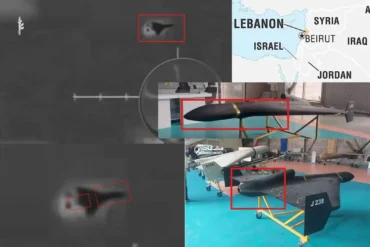
Video footage circulating after the March escalation shows brief flashes and sudden disintegration of aerial targets during nighttime engagements. Analysts have pointed out that laser engagements typically produce subtle visual signatures. The beam itself is invisible to the naked eye; what observers see are terminal flashes as structural failure occurs. The time between detection and destruction appears remarkably short—sometimes within a second of the target entering engagement geometry.
However, caution is warranted. Conventional interceptors, proximity fuzes, and debris ignition can produce similar optical effects. Israel’s layered system often engages threats with multiple effectors simultaneously, complicating attribution. Without an official statement explicitly naming Iron Beam as the interceptor used in specific engagements, the claim remains strongly suggestive but unconfirmed.
From a tactical standpoint, Iron Beam’s effective range—reported between roughly 7 and 10 kilometers—positions it for point defense and border-area coverage rather than nationwide blanket protection. Range is a decisive variable because the defended area expands with the square of the radius. Even a few kilometers of additional reach significantly alter coverage geometry. Still, line-of-sight requirements and atmospheric degradation in cloud, dust, or heavy humidity impose practical constraints. Laser performance drops sharply in adverse weather, making integration with kinetic systems essential rather than optional.
Saturation Warfare and Magazine Depth
One of the defining characteristics of modern rocket warfare is saturation. The objective is not necessarily to guarantee each projectile hits its target, but to overwhelm the defender’s magazine capacity and decision cycle. Missile-based systems, regardless of sophistication, must contend with physical inventory constraints. Production, distribution, and storage pipelines determine sustainability in prolonged campaigns.
A directed-energy layer changes that calculus. Instead of measuring capacity in stored missiles, planners think in terms of sustained power generation and thermal cycling. As long as generators operate and cooling systems function, the system can theoretically continue firing. The constraint becomes physics and engineering rather than warehouse inventory.
This shift does not eliminate vulnerability. Power supply becomes a critical node. Beam directors represent high-value assets requiring protection. Terrain masking can restrict engagement angles. Yet the strategic flexibility gained from a low-marginal-cost interceptor alters the attacker’s decision-making landscape. If inexpensive rockets can be neutralized at minimal defensive cost, escalation becomes economically irrational unless the attacker increases sophistication or payload lethality.
Implications for Global Air Defense Doctrine
Should official confirmation follow, Iron Beam’s reported combat use would represent a watershed moment in air defense doctrine. For years, directed-energy systems were discussed as “next-generation” or “future capabilities.” Demonstrations existed, but operational deployment remained elusive. A confirmed combat intercept would signal that the era of fielded high-energy laser air defense has arrived.
This development would reverberate across procurement debates worldwide. Militaries in Europe and the Indo-Pacific face similar drone proliferation and rocket saturation threats. Affordable countermeasures are urgently sought as unmanned systems become ubiquitous. A validated operational model from Israel would likely accelerate investments in comparable systems, reshaping defense industrial competition.
At the same time, expectations must remain disciplined. A laser is not a universal shield. It does not bend around clouds or penetrate heavy rain without degradation. It cannot easily defeat hardened ballistic missiles traveling at hypersonic speeds. It excels within a defined engagement envelope: short range, clear line of sight, precise tracking, and rapid energy transfer. Its power lies in integration, not isolation.
The reported March 2026 intercepts thus sit at the intersection of innovation and uncertainty. Evidence suggests credible deployment. Official confirmation remains pending. What is beyond dispute is that Israel has moved decisively from experimentation to operational integration. The delivery of the first system, its incorporation into the Israeli Air Force architecture, and the scaling of production all indicate strategic commitment.
If Iron Beam indeed fired in anger against Hezbollah rockets, it would mark the first time a national air defense network employed a high-energy laser as an active combat interceptor in live hostilities. That moment would not simply belong to Israel. It would belong to the broader history of warfare, where physics, engineering, and necessity converge to reshape the battlefield.
In the evolving contest between projectile and protection, the speed of light may now be more than a metaphor.