Israel’s pursuit of an airborne Iron Beam laser represents one of the most significant developments in modern air defense. As inexpensive drones, loitering munitions, and precision-guided weapons become increasingly common on today’s battlefields, militaries are searching for defensive solutions that are both effective and economically sustainable. Israel’s answer is to take its proven Iron Beam concept beyond fixed ground installations and integrate it onto aircraft, creating a mobile laser defense platform capable of intercepting threats long before they reach their targets.
The project reflects a broader shift in military thinking. Instead of relying exclusively on expensive interceptor missiles to destroy low-cost aerial threats, defense planners are investing in directed-energy weapons that can fire repeatedly at a fraction of the cost. If successful, Israel’s airborne Iron Beam could reshape how nations defend their airspace against the growing threat posed by unmanned aerial systems.
The emergence of affordable drones has dramatically changed military operations across the globe. Commercial technologies have allowed relatively inexpensive aircraft to perform reconnaissance, strike infrastructure, and overwhelm traditional air defenses. Conventional missile interceptors remain highly capable, but using missiles that may cost hundreds of thousands of dollars to destroy drones worth only a few thousand creates an unfavorable economic equation. Directed-energy weapons offer a compelling alternative by dramatically lowering the cost of each engagement while maintaining rapid response capability.
Why an Airborne Iron Beam Changes the Battlefield
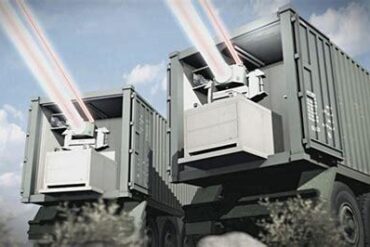
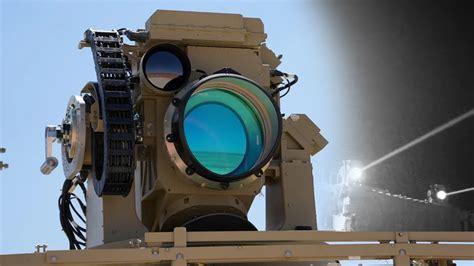
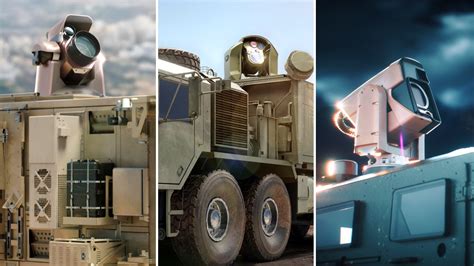
The existing Iron Beam was never intended to replace Israel’s famous Iron Dome missile defense network. Instead, it serves as an additional defensive layer designed to engage drones, rockets, mortar rounds, and other aerial threats using a powerful 100-kilowatt laser.
One of the system’s greatest strengths is its operating cost. Unlike interceptor missiles that require complex manufacturing and replenishment, a laser primarily consumes electrical power. Estimates place each laser engagement at only a few dollars, making it dramatically cheaper than firing traditional surface-to-air missiles against inexpensive drones.
Ground-based lasers, however, face unavoidable environmental challenges. Dust, humidity, atmospheric turbulence, smoke, and poor visibility can weaken laser performance by scattering or absorbing the beam before it reaches its target. These limitations reduce effectiveness precisely when reliable air defense is needed most.
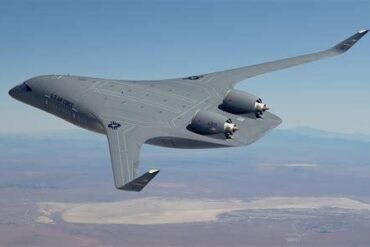
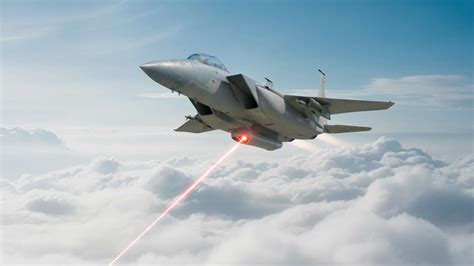
Mounting Iron Beam on an aircraft addresses many of these obstacles. Operating between 20,000 and 30,000 feet, the laser platform flies above much of the atmosphere’s dust and moisture, providing significantly clearer conditions for laser propagation. The improved line of sight also allows operators to detect and engage incoming threats at much greater distances.
This elevated position extends defensive coverage beyond national borders. Instead of waiting for hostile drones to approach critical infrastructure, airborne laser platforms could neutralize them while they remain far from populated areas, increasing both reaction time and operational flexibility.
Engineering Challenges Behind Flying a High-Energy Laser
Transforming a powerful ground-based laser into an airborne weapon involves far more than installing equipment inside an aircraft. Every component must be redesigned to meet strict aviation requirements involving size, weight, cooling, and electrical power generation.
High-energy lasers require sophisticated thermal management systems because enormous amounts of heat are generated during operation. Ground installations can utilize large cooling equipment, but aircraft have limited space and weight capacity. Engineers therefore had to develop compact cooling technologies capable of maintaining consistent laser performance without compromising flight characteristics.
Equally important is beam stabilization. Aircraft constantly experience vibration from engines, aerodynamic forces, banking maneuvers, and atmospheric turbulence. Even tiny movements can cause a laser beam to drift away from its intended target over long distances.
To overcome these issues, engineers have focused on advanced stabilization systems capable of maintaining pinpoint accuracy despite continuous aircraft motion. Precision optics, sophisticated tracking systems, and rapid control algorithms must work together to ensure the laser remains locked onto fast-moving drones during flight.
Miniaturization Opens New Platform Possibilities
A major breakthrough has involved reducing the overall size of the laser system. High-energy directed-energy weapons traditionally occupy substantial space, making aircraft integration extremely difficult. Through extensive engineering, Israel has significantly miniaturized both the laser itself and its supporting hardware.
Potential host aircraft reportedly include F-15 fighter jets as well as UH-60A/L Yanshuf helicopters, Israel’s locally operated version of the Black Hawk. Each platform offers different operational advantages.
Fighter aircraft provide exceptional speed, altitude, and wide-area coverage, enabling rapid deployment against emerging threats across large regions. Helicopters, meanwhile, offer slower flight profiles and greater endurance over specific operational areas, making them suitable for protecting critical assets or supporting ground forces during extended missions.
Miniaturization also improves future flexibility. As laser systems continue shrinking while increasing in power, additional aircraft types—including transport aircraft, surveillance platforms, or even unmanned aircraft—could eventually carry similar directed-energy weapons.
Artificial Intelligence Accelerates Development
Developing airborne laser technology requires solving thousands of interconnected engineering problems simultaneously. Israel’s defense industry has reportedly employed hundreds of engineers alongside artificial intelligence tools to accelerate system optimization.
AI contributes by modeling structural behavior, optimizing component layouts, evaluating thermal performance, and identifying engineering solutions that would otherwise require extensive physical testing. Combined with advanced manufacturing techniques, including military-grade 3D printing, these technologies have shortened development cycles while improving design precision.
Although many technical details remain classified, these digital engineering methods have become increasingly important in modern defense programs where rapid innovation often determines operational superiority.
Strategic Implications for Future Air Defense
The airborne Iron Beam represents more than another defensive weapon—it signals the evolution of integrated, layered air defense. Rather than replacing missile systems, airborne lasers complement existing interceptors by engaging suitable targets before missile defenses become necessary.
This layered approach conserves expensive interceptor inventories while improving overall defensive capacity during large-scale drone attacks. As adversaries increasingly rely on mass-produced unmanned systems to saturate traditional defenses, laser-equipped aircraft could become indispensable force multipliers.
Operational timelines remain undisclosed, but available information suggests substantial progress has already been achieved. Once fully deployed, Israel’s airborne Iron Beam may establish a new standard for counter-drone warfare, demonstrating how directed-energy weapons can provide faster, cheaper, and more sustainable protection against one of modern warfare’s fastest-growing threats.