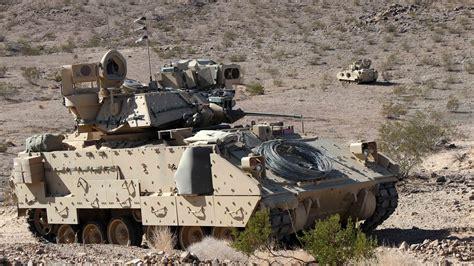
The U.S. Army has taken a decisive step to reinforce the survivability of its mechanized infantry forces by selecting Israel’s Iron Fist Active Protection System for the M2 Bradley Infantry Fighting Vehicle, signaling a clear response to the rapidly evolving anti-armor threat environment. The decision reflects hard lessons drawn from recent high-intensity conflicts, where armored vehicles have faced relentless pressure from precision-guided missiles, loitering munitions, and increasingly capable drones operating at every altitude and angle.
At the center of this move is a 228 million dollar contract confirmed by Elbit Systems, awarded through General Dynamics Ordnance and Tactical Systems, to deliver Iron Fist systems for the Bradley fleet. More than a procurement milestone, the award marks a shift in how the U.S. Army intends to preserve combat relevance for legacy platforms that continue to form the backbone of deployed brigade combat teams across Europe, the Indo-Pacific, and the Middle East.
For decades, the Bradley has balanced mobility, firepower, and protection within tight design margins established during the Cold War. That balance has been steadily eroded by the proliferation of advanced anti-tank guided missiles, tandem warheads, and top-attack munitions designed explicitly to defeat passive armor. The adoption of a hard-kill active protection system represents an acknowledgment that steel and composite armor alone can no longer guarantee crew survival on modern battlefields.
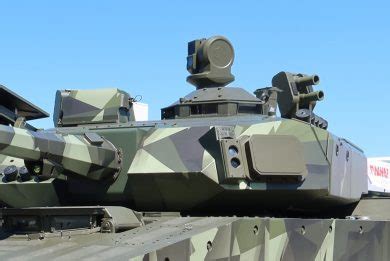
Iron Fist stands out as Elbit Systems’ second-generation active protection solution, engineered to meet demanding size, weight, and power constraints without compromising effectiveness. Using a tightly integrated mix of radar and electro-optical sensors, the system detects incoming threats in milliseconds, tracks their trajectory, and deploys countermeasures designed to neutralize the projectile before impact. This pre-emptive defensive layer fundamentally alters the engagement timeline, often defeating threats before the crew is even aware an attack has been launched.
Unlike earlier APS designs that imposed heavy penalties on vehicle balance and power generation, Iron Fist was optimized from the outset for platforms with limited growth potential. U.S. Army officials evaluating the system repeatedly emphasized its relatively low mass and compact footprint as decisive advantages for the Bradley, which lacks the electrical surplus and structural margins of newer armored vehicles. Preserving turret dynamics and crew ergonomics was a non-negotiable requirement, and testing reportedly demonstrated that Iron Fist could be integrated without degrading mobility or lethality.
The technical envelope of Iron Fist extends well beyond traditional rocket-propelled grenades. Elbit has designed the system to counter advanced anti-tank guided missiles, short-range rockets, and emerging aerial threats, including unmanned aerial systems and loitering munitions approaching from elevated angles. The architecture provides full 360-degree hemispherical coverage, ensuring that attacks from above, a defining feature of recent conflicts, are addressed with equal priority.
Operational flexibility is another factor driving the U.S. Army’s selection. Iron Fist is intended to function effectively in both open terrain and dense urban environments, where clutter, short engagement distances, and civilian infrastructure complicate threat detection. Urban combat has repeatedly exposed the vulnerability of infantry fighting vehicles operating in close proximity to dismounted troops, and the ability to defeat threats without relying solely on reactive armor improves both survivability and freedom of maneuver.
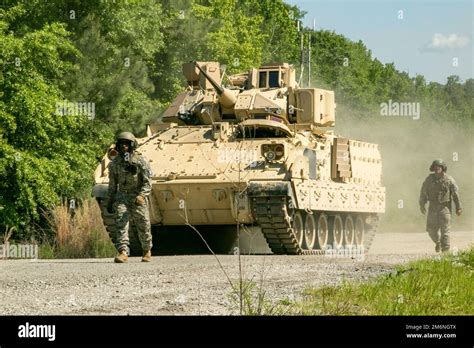
For Bradley crews, the introduction of active protection represents a qualitative shift in how risk is managed during combat operations. Instead of relying entirely on tactics, terrain masking, and supporting fires to mitigate exposure, APS-equipped vehicles can operate closer to contested areas while maintaining a higher margin of safety. This is particularly significant for mechanized infantry missions, where the Bradley must remain near dismounted soldiers to provide suppressive fire and rapid maneuver support.
The contract structure suggests a deliberate, phased approach to fielding. While exact quantities remain undisclosed, industry sources indicate that Iron Fist production will be aligned with Bradley reset and modernization cycles, allowing installation without disrupting operational readiness. This incremental rollout reduces integration risk and ensures that units deploying on short notice are not sidelined by extensive retrofit schedules.
From a strategic perspective, the decision underscores how the U.S. Army is internalizing lessons from Ukraine and the Middle East, where even heavily armored platforms have suffered losses to relatively inexpensive, widely available anti-armor weapons. Active protection systems are no longer viewed as experimental add-ons but as essential components of survivability, especially in environments saturated with sensors and precision fires.
The selection of Iron Fist also highlights the growing role of international defense partnerships in U.S. modernization efforts. Elbit Systems has spent years adapting its technology to meet American military standards, cybersecurity requirements, and integration protocols. Working through General Dynamics Ordnance and Tactical Systems provided a familiar industrial interface for the Army, reducing acquisition friction and accelerating the transition from evaluation to production.
For the Bradley Fighting Vehicle, Iron Fist serves as a bridge capability, extending relevance until next-generation platforms enter service in sufficient numbers. While the Army’s future fighting vehicle programs promise enhanced protection by design, timelines and budgets remain uncertain. In the interim, upgrading existing fleets with proven active protection ensures that mechanized infantry units retain credibility against peer and near-peer adversaries.
The broader implication of the award is a signal to both allies and competitors. For allies, it reinforces confidence that U.S. armored formations are adapting quickly to emerging threats and remain capable partners in coalition operations. For potential adversaries, it complicates targeting assumptions by introducing an additional defensive layer that must be overcome, raising the cost and uncertainty of anti-armor engagements.
If integration and acceptance testing proceed on schedule, the first operational Iron Fist-equipped Bradleys could enter service within the contract’s three-year window. That milestone would represent more than a technical upgrade; it would reflect a doctrinal evolution toward layered survivability, where armor, electronic awareness, and active interception work together to protect crews.
This modernization effort also sends a clear message about prioritization within constrained defense budgets, favoring upgrades that deliver immediate battlefield payoff. By focusing on survivability enhancements with proven performance, the Army maximizes return on investment while avoiding the operational gaps that often emerge when legacy platforms are allowed to age without meaningful protection improvements across deployed formations.
In an era where battlefields are defined by speed, precision, and persistent surveillance, the U.S. Army’s decision to field Iron Fist on the Bradley is a pragmatic response to uncomfortable realities. By investing in active defense rather than passive resilience alone, the Army is buying time, flexibility, and lives, ensuring that a venerable infantry fighting vehicle remains viable in conflicts that look nothing like those it was originally designed to fight.