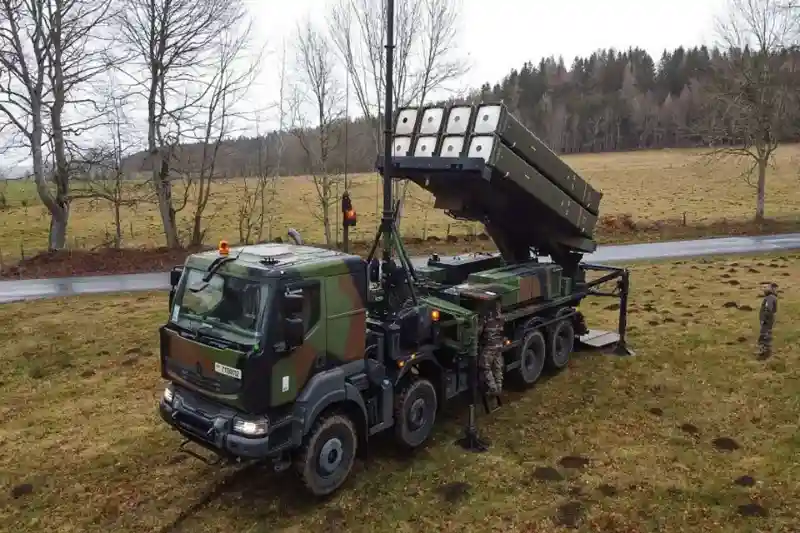
Ukraine is preparing to enter a new phase in its air defense evolution by combat-testing the next-generation SAMP/T NG system against real-world ballistic missile threats in 2026. This move represents more than a routine military procurement—it is a pivotal moment where European-designed missile defense technology will face the most demanding operational environment in modern warfare. As Russian strike patterns grow increasingly complex, Kyiv’s decision signals both urgency and strategic calculation.
At the center of this development is the collaboration between MBDA Systems and Eurosam, whose SAMP/T NG platform is designed to rival established systems like Patriot. For Ukraine, the stakes are immediate and existential: protecting critical infrastructure, preserving energy resilience, and maintaining civilian morale under relentless aerial assault.
The decision follows high-level discussions between Ukrainian President Volodymyr Zelensky and French President Emmanuel Macron, where commitments were made to accelerate delivery and prioritize deployment. Kyiv has made it clear that if the system proves effective under combat conditions, it intends to secure expanded access—effectively placing itself at the front of the production queue.
Why Ukraine Needs a New Layer of Missile Defense
Russia’s evolving strike doctrine has exposed critical vulnerabilities in Ukraine’s air defense network. Rather than relying on single-vector attacks, Moscow increasingly employs mixed salvos that combine drones, cruise missiles, and ballistic missiles in coordinated waves. These attacks are designed to overwhelm defenses, exploit response timing, and exhaust interceptor stockpiles.
The scale of recent strikes underscores the urgency. In a single wave in March 2026, Ukraine reported hundreds of drones and dozens of missiles launched simultaneously, targeting energy infrastructure and urban centers. These operations are not random—they are calculated to degrade Ukraine’s long-term resilience.
Traditional short- and medium-range systems struggle against such saturation tactics, especially when ballistic missiles are involved. Ballistic threats travel faster, follow steeper trajectories, and leave less reaction time. This is precisely the gap SAMP/T NG is designed to fill.
Inside the SAMP/T NG: Europe’s Answer to Advanced Missile Threats
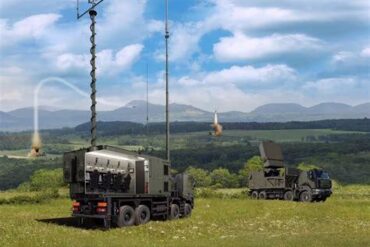
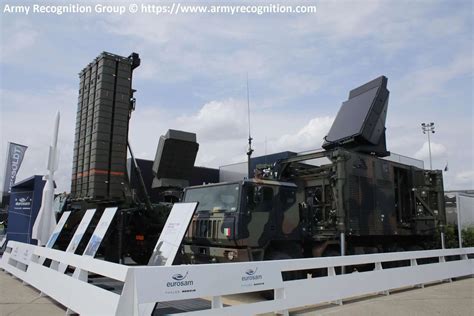
The SAMP/T NG represents a significant leap beyond earlier European air defense systems. Unlike legacy configurations, the NG variant integrates advanced radar, faster engagement cycles, and enhanced interceptor performance tailored specifically for ballistic missile defense.
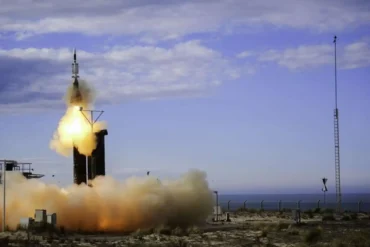
Each battery can deploy up to six vertical launchers, with eight ready-to-fire missiles per launcher—allowing a total of 48 interceptors immediately available. This high-density configuration is critical when facing saturation attacks, where multiple targets must be engaged within seconds.
The system’s radar capabilities are equally impressive. The French configuration incorporates the Ground Fire 300 radar developed by Thales Group, while the Italian version uses the Kronos Grand Mobile High Power radar from Leonardo S.p.A.. Both are active electronically scanned array (AESA) systems capable of detecting threats at ranges exceeding 350 kilometers.
Operational readiness is another defining feature. The system can be deployed and made combat-ready in under 30 minutes, a crucial advantage in a conflict where mobility and survivability are essential.
Aster 30 B1NT: The Missile That Changes the Equation
At the heart of SAMP/T NG lies the Aster 30 B1NT interceptor—a missile engineered specifically to counter tactical ballistic threats. This is not merely an incremental upgrade but a fundamental redesign aimed at improving interception probability against high-speed targets.
The missile uses a two-stage guidance system. Initially, it relies on inertial navigation supported by radar updates. In the terminal phase, it switches to an active seeker, allowing precise targeting even in complex electronic environments. What sets it apart is its PIF-PAF control system, which combines aerodynamic surfaces with lateral thrusters to deliver exceptional maneuverability during the final moments of interception.
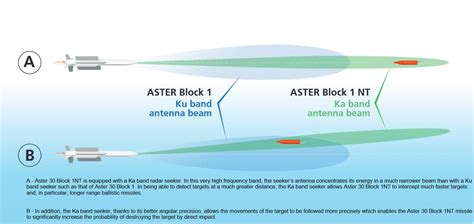
The introduction of a Ka-band seeker—unique among European systems—enhances target discrimination, particularly against decoys and countermeasures. This capability is critical in modern warfare, where adversaries increasingly deploy sophisticated deception tactics.
Battlefield Validation: The Ultimate Test Environment
Laboratory testing and controlled firing exercises can only simulate so much. Ukraine offers something no testing range can replicate: real combat conditions against a technologically capable adversary.
Russian missile attacks present a combination of challenges rarely encountered simultaneously—compressed warning times, electronic interference, mixed threat vectors, and repeated operational stress. These conditions force systems to perform not just technically, but sustainably.
For manufacturers like MBDA Systems, this is an unprecedented opportunity to validate performance under pressure. Data collected from real engagements will inform software updates, refine engagement doctrines, and shape future production priorities.
In this sense, Ukraine is not just a recipient of military aid—it is becoming a live testing ground that will define the future of European missile defense.
Integration into Ukraine’s Layered Defense Network
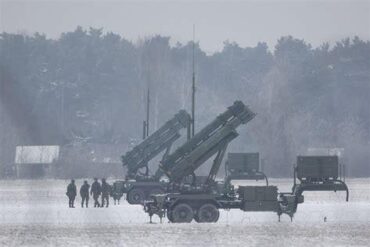
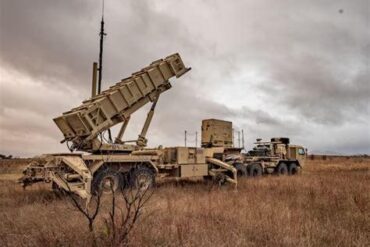
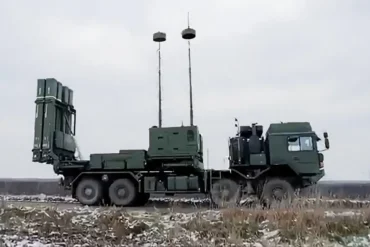
Ukraine’s current air defense architecture is a complex mix of Western and Soviet-era systems. High-end platforms like Patriot and NASAMS provide long- and medium-range coverage, while IRIS-T systems contribute to point defense. Beneath these layers, older systems such as the S-300 and Buk families continue to play a critical role.
However, this network remains uneven, particularly in its ability to counter ballistic threats. SAMP/T NG is expected to strengthen this upper tier, providing an additional layer capable of intercepting high-speed missiles before they reach critical targets.
Interoperability is a key advantage. Designed to operate within NATO frameworks, SAMP/T NG can integrate with existing command-and-control systems, enabling coordinated responses across multiple الدفاع layers. This is essential in a battlefield where timing and coordination can determine success or failure.
Strategic Implications for Europe and NATO
The implications of Ukraine’s deployment extend far beyond its borders. For Europe, SAMP/T NG represents a chance to demonstrate technological sovereignty in an area long dominated by U.S. systems.
If the system proves effective against Russian ballistic missiles, it could reshape procurement strategies across NATO. Countries seeking alternatives to Patriot may look to SAMP/T NG as a viable option—especially as demand for air defense systems continues to surge globally.
Production capacity will become a निर्णing factor. Current orders already include multiple SAMP/T NG sections, and missile production is being accelerated to meet rising demand. A successful combat debut in Ukraine would likely trigger a wave of additional orders, placing pressure on manufacturers to scale output rapidly.
Reducing Dependence on Patriot Systems
For Ukraine, the introduction of SAMP/T NG offers a critical strategic benefit: diversification. Reliance on a single high-end system creates vulnerabilities, particularly when supply chains are strained or political considerations affect deliveries.
By adding a second advanced system capable of intercepting ballistic missiles, Ukraine gains flexibility in deployment and resilience in sustainment. This diversification also complicates adversary planning, as Russia must account for multiple interception technologies with different capabilities and engagement profiles.
While SAMP/T NG is unlikely to replace Patriot entirely, it has the potential to complement it effectively—creating a more robust and adaptable defense network.
A Defining Moment for Modern Air Defense Warfare
The upcoming deployment of SAMP/T NG in Ukraine represents more than a technological milestone—it is a defining moment in the evolution of modern air defense. For the first time, a European-designed system will face sustained ballistic missile threats in a high-intensity conflict.
Success will not be measured solely by interception rates, but by consistency, sustainability, and adaptability under pressure. Can the system maintain performance over repeated engagements? Can it handle evolving threat profiles? Can it operate effectively within a complex, layered defense network?
These questions will be answered not in theory, but in the skies over Ukraine.
As 2026 approaches, the world will be watching closely. The outcome will shape not only Ukraine’s defensive capabilities but also the future trajectory of global missile defense systems.