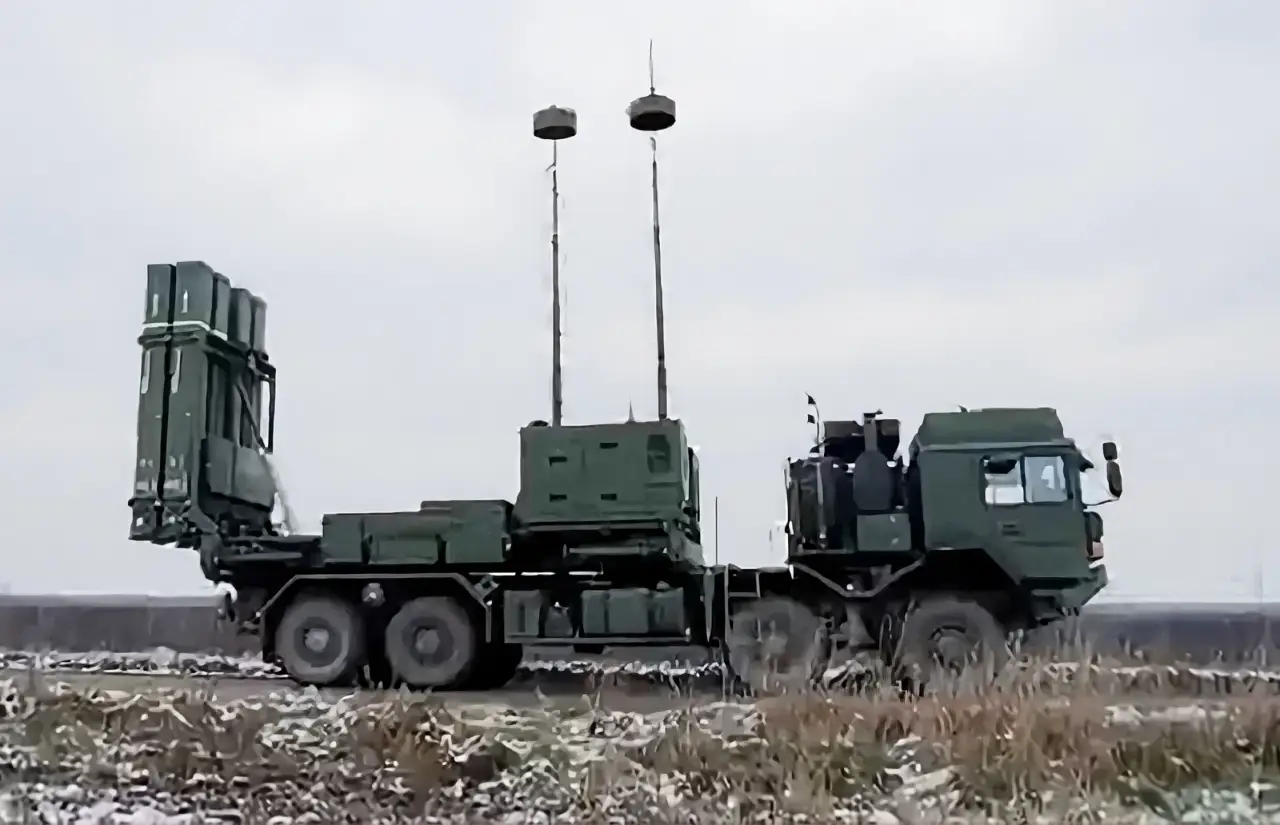
The German-made IRIS-T SLM air defense system has achieved a landmark operational milestone in Ukraine, successfully intercepting Russian short-range ballistic missiles in live combat engagements. According to a July 28, 2025 report by European Pravda, Ukrainian Ambassador to Germany Oleksii Makeiev confirmed that the system has been employed effectively against high-speed ballistic threats, marking the first publicly acknowledged interception of this type by the IRIS-T SLM. This achievement underscores the system’s multi-role capabilities and reinforces its reputation as one of Europe’s most advanced medium-range air defense platforms.
German Support and Deployment in Ukraine
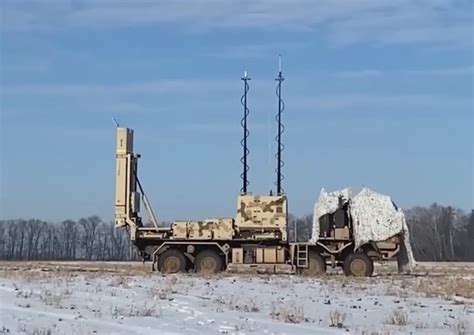
Since the onset of Russia’s full-scale invasion in February 2022, Germany has delivered seven IRIS-T SLM batteries to Ukraine as part of a comprehensive defense assistance package. These batteries have been strategically positioned to defend urban centers, energy facilities, and other critical infrastructure against a diverse range of aerial threats. Initially lauded for their near-flawless record against cruise missiles and drones, the IRIS-T systems have now proven their worth against the more complex challenge of intercepting ballistic missiles.
Ballistic missiles differ dramatically from traditional cruise missiles or UAVs. Launched from ground or air platforms, they follow a steep, suborbital trajectory before re-entering the atmosphere at speeds often exceeding several kilometers per second. This high-speed descent allows only seconds for detection, tracking, and interception. Coupled with their ability to employ decoys and perform terminal maneuvers, these weapons are among the most difficult to neutralize, requiring advanced radar, ultra-fast computing, and highly agile interceptors.
The IRIS-T SLM: Design and Capabilities
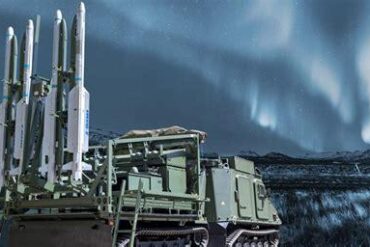
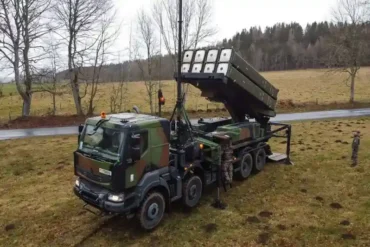
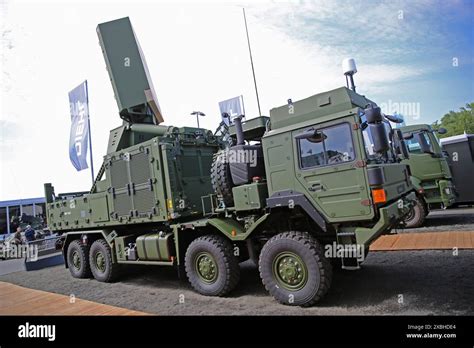
Developed by Diehl Defence, the IRIS-T SLM is a cutting-edge medium-range surface-to-air missile system designed for versatility across multiple threat types. Each battery comprises:
- Vertical launchers for rapid-response intercepts
- The TRML-4D AESA radar developed by Hensoldt, providing 360-degree coverage
- A command-and-control center capable of seamless integration with NATO-standard air defense networks
The IRIS-T missiles themselves employ infrared homing guidance and thrust vector control, granting them exceptional maneuverability and precision. They boast an engagement range of up to 40 kilometers and a ceiling of 20 kilometers, enabling effective interception of high-speed aerial targets. The system can simultaneously track and engage multiple threats, making it particularly resilient against saturation attacks.
Previous operational data highlighted the IRIS-T’s effectiveness in intercepting cruise missiles with remarkable accuracy, including a confirmed instance where eight missiles were destroyed with eight interceptors in under 30 seconds. Now, with the confirmed interception of ballistic missiles, the IRIS-T SLM’s role as a true multi-layered defense asset has been solidified.
Combat Validation Against Ballistic Missiles
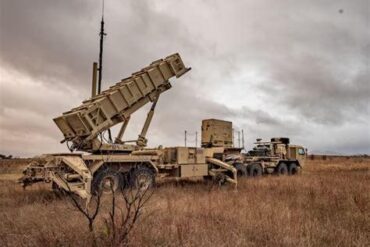
While Diehl Defence had long claimed that the IRIS-T SLM could engage short-range tactical ballistic missiles, its combat performance in Ukraine now validates this claim under real-world battlefield conditions. The interception of Russian ballistic missiles elevates the system to a class of air defense platforms typically reserved for higher-tier systems such as the U.S. Patriot PAC-3 or Israel’s David’s Sling. This success not only highlights the technical sophistication of German defense engineering but also proves that medium-range European systems can provide robust defenses against some of the most formidable modern threats.
Strategic and Geopolitical Implications
The IRIS-T SLM’s performance carries broader implications for both Ukraine and NATO. For Ukraine, the ability to counter short-range ballistic missiles directly strengthens its strategic defense posture, protecting vital infrastructure and reducing the impact of Russian strikes aimed at destabilizing the country’s energy grid and civilian population centers. For NATO and European defense planners, this operational proof serves as a compelling case study for future procurement and integration of advanced European-made air defense systems.
The system’s interoperability with NATO networks also means it can be easily incorporated into joint European air defense initiatives, reinforcing collective security frameworks. As the demand for layered, multi-role defense solutions grows amid escalating global tensions, the IRIS-T SLM now emerges as a proven alternative to more costly long-range platforms, offering a balance between capability, cost-efficiency, and rapid deployability.
A New Chapter in European Air Defense
The success of the IRIS-T SLM against Russian ballistic missiles signals a turning point for European defense technology. It demonstrates that European manufacturers, with Germany at the forefront, can develop battlefield-tested systems that rival—and in some contexts complement—long-standing U.S. and Israeli solutions. With heightened threats from Russia, Iran, and other state actors, this milestone strengthens the argument for greater investment in indigenous European defense innovation.
Looking ahead, Ukraine’s experience with the IRIS-T SLM is likely to influence future NATO air defense strategies and procurement trends across Europe. The system’s confirmed capabilities may lead to expanded production, wider export interest, and increased collaborative projects aimed at enhancing European strategic autonomy in air defense.
In conclusion, the German IRIS-T SLM air defense system has proven itself as more than a theoretical solution—it is now a combat-validated shield against one of the most challenging threats in modern warfare. Its ability to engage and neutralize Russian short-range ballistic missiles not only boosts Ukraine’s defensive resilience but also reshapes the perception of Europe’s defense capabilities in the 21st century battlefield.