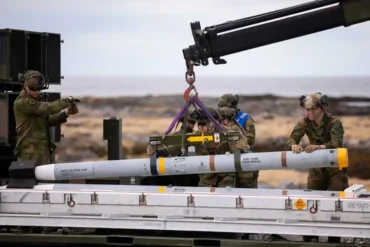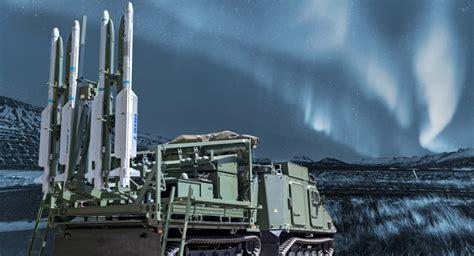
Ukraine has taken a major step to reinforce its national air defense architecture by ordering 18 additional IRIS-T SLM medium-range air defense systems, signaling a decisive response to Russia’s sustained missile and drone strikes. The procurement reflects a clear strategic priority: strengthening the middle layer of Ukraine’s air defense network to better protect cities, energy infrastructure, and frontline forces against the most frequently employed aerial threats. Backed by German industry and international financing mechanisms, the order represents one of the most substantial expansions of Western-supplied air defense assets since the start of the full-scale war.
The decision comes as Russia continues to rely heavily on cruise missiles, long-range attack drones, and glide bombs to compensate for limitations in ground maneuver warfare. These weapons, often launched in large salvos, aim to overwhelm Ukrainian defenses through saturation rather than precision alone. By increasing the number of IRIS-T SLM systems, Kyiv is deliberately targeting this vulnerability, seeking to raise interception rates and impose higher operational costs on Russian air operations.
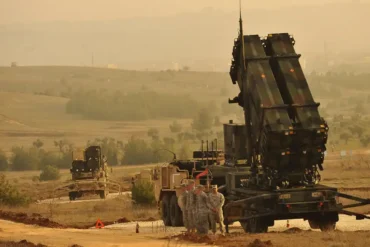
Beyond its immediate military value, the acquisition underscores the growing shift in Ukraine’s defense posture toward networked, Western-standard air and missile defense solutions. The IRIS-T SLM is not simply an isolated system; it is designed to operate as part of a layered, integrated architecture, complementing high-end systems like Patriot while filling critical gaps left by aging Soviet-era equipment still in service.
Strengthening the Medium-Range Layer of Ukraine’s Air Defense
The importance of the IRIS-T SLM lies in its position within a layered defense concept. High-altitude, long-range systems are optimized for ballistic missiles and strategic threats, but they are expensive to operate and limited in number. Short-range systems, while effective against drones and helicopters, struggle with fast, low-flying cruise missiles. The IRIS-T SLM sits squarely between these layers, offering a balanced combination of range, accuracy, and cost-effectiveness that matches the most common threats Ukraine faces on a daily basis.
In recent months, Russian forces have increasingly relied on mass-produced one-way attack drones and air-launched cruise missiles to probe and exhaust Ukrainian defenses. Medium-range systems like IRIS-T SLM are uniquely suited to counter these tactics, intercepting targets before they reach densely populated areas or critical infrastructure. The addition of 18 systems significantly expands coverage, allowing Ukraine to protect multiple regions simultaneously rather than concentrating defenses around a handful of strategic sites.
The move also reflects lessons learned from earlier deployments of Western air defense systems. Ukrainian operators have demonstrated high proficiency in integrating new technologies under combat conditions, rapidly adapting tactics to maximize interception success. Expanding the IRIS-T fleet builds on this experience, turning proven battlefield performance into broader strategic effect.
Advanced Radar and Missile Technology at the Core
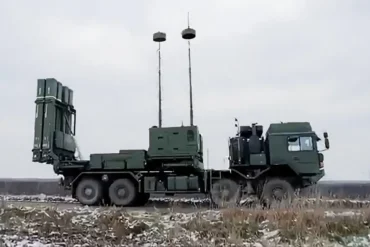
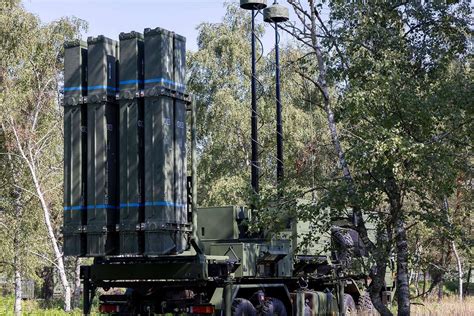
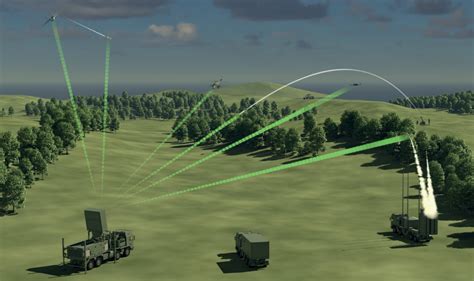
At the heart of the IRIS-T SLM system is the TRML-4D active electronically scanned array radar, developed by German firm Hensoldt. Operating in the S-band, the radar can detect, track, and classify up to 1,500 aerial targets simultaneously at distances reaching 250 kilometers. This capability is critical in an environment where Russian attacks often involve mixed profiles, combining drones, cruise missiles, and aircraft in complex flight patterns designed to confuse defenders.
The radar’s ability to detect low-altitude and low-observable targets gives Ukraine a decisive edge against terrain-hugging cruise missiles and small drones. Its resistance to electronic countermeasures ensures reliable performance even in heavily contested electromagnetic environments, a frequent feature of the current conflict.
The interceptor missile itself is derived from the proven IRIS-T air-to-air missile, but optimized for surface launch. Equipped with an imaging infrared seeker, the missile offers exceptional target discrimination and immunity to radar jamming. Because it homes passively on heat signatures, it provides no warning to the target, sharply reducing reaction time for enemy aircraft or missile guidance systems. With thrust vector control and extreme maneuverability, the missile can engage highly agile targets at ranges of around 40 kilometers and altitudes up to 20 kilometers.
Mobility, Survivability, and Network Integration
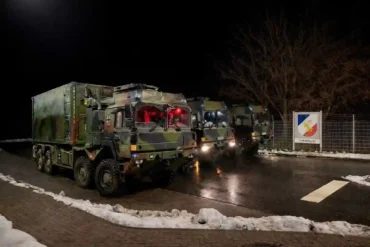
One of the defining strengths of the IRIS-T SLM is its emphasis on mobility and survivability. Mounted on MAN 8×8 tactical trucks, the system is designed for rapid deployment and relocation. Launchers and radar units can conduct engagements and then move within minutes, a crucial advantage in a battlefield dominated by drones and long-range precision strikes.
This “shoot-and-scoot” capability complicates Russian suppression of enemy air defenses operations, forcing attackers to expend more resources for diminishing returns. In practical terms, it means Ukrainian air defense units can remain active and effective even under constant surveillance and threat.
Equally important is the system’s open, network-centric architecture. IRIS-T SLM can seamlessly integrate with other Western systems such as Patriot and NASAMS, as well as selected legacy platforms. Shared situational awareness allows operators to assign the most appropriate interceptor to each target, conserving expensive missiles and maximizing overall interception efficiency across the network.
Countering Russia’s Evolving Air Tactics
Russia’s air campaign has evolved steadily, shifting toward stand-off weapons designed to minimize exposure to Ukrainian air defenses. Glide bombs released from aircraft like the Su-34 have become a particular challenge, allowing Russian pilots to strike from outside the range of short-range defenses. The expanded deployment of IRIS-T SLM systems directly addresses this threat.
By extending medium-range coverage closer to the frontline, the system forces Russian aircraft to operate from greater distances or lower altitudes, reducing both accuracy and effectiveness. Even when aircraft avoid direct engagement, the mere presence of a capable medium-range system reshapes enemy tactics, limiting operational freedom and increasing mission risk.
Against cruise missiles and drones, the IRIS-T SLM offers a high probability of kill without the cost burden associated with strategic interceptors. This balance is essential in a prolonged conflict where sustainability matters as much as raw capability.
Strategic Implications for Ukraine’s Airspace Control
The order for 18 additional systems marks a shift from a primarily reactive defense posture toward a more proactive air denial strategy. Rather than simply responding to incoming threats, Ukraine is building the capacity to shape the aerial battlespace, closing gaps and reducing the effectiveness of mass attack tactics.
Over time, expanded IRIS-T coverage will help protect not only cities and infrastructure but also logistics hubs and maneuver forces, directly supporting ground operations. It also reinforces Ukraine’s broader integration into Western defense ecosystems, aligning doctrine, technology, and operational practices with NATO standards.
As Russian missile and drone strikes continue to test Ukraine’s resilience, the expanded IRIS-T SLM fleet stands as a clear signal of intent. It represents an investment not just in hardware, but in sustained air defense dominance, aimed at preserving lives, safeguarding infrastructure, and steadily reclaiming control of Ukrainian airspace.