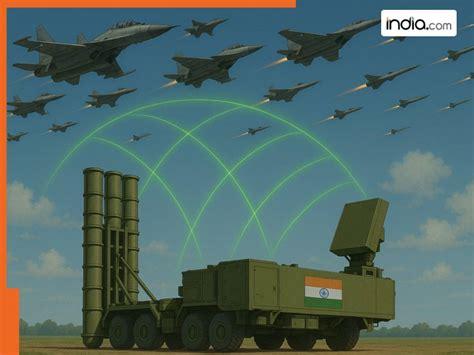
India is preparing to significantly expand its long-range air defense architecture by procuring five additional Russian-made S-400 “Sudarshan Chakra” systems, a move that would effectively double its planned fleet and reshape the country’s high-altitude defensive geometry. The expansion underscores a strategic recalibration in New Delhi’s military planning, as the Indian Air Force positions the S-400 not as a limited strategic asset but as a central pillar in a layered, networked air and missile defense structure designed for simultaneous contingencies along both western and northern borders.
The decision emerges at a moment when India is still completing deliveries under its landmark 2018 agreement with Moscow, widely valued at approximately $5.4–$5.5 billion for five squadrons. Those deliveries, affected by broader disruptions in Russia’s defense-industrial output, are expected to conclude in the 2026–2027 timeframe. Yet rather than pause, Indian defense planners appear determined to build depth, resilience, and redundancy into the nation’s long-range air defense shield.
This proposed procurement signals more than inventory growth. It reflects a shift in doctrine. By doubling the number of S-400 units, India aims to create a distributed protective umbrella capable of safeguarding airbases, command nodes, population centers, and critical infrastructure against a spectrum of threats ranging from advanced fighter aircraft to cruise missiles and limited ballistic attacks.
The Architecture of India’s S-400 Sudarshan Chakra System
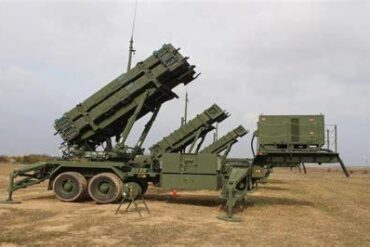
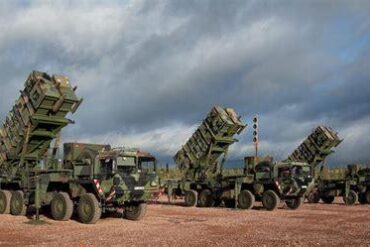
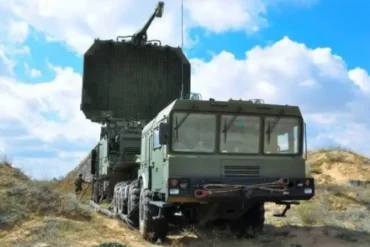
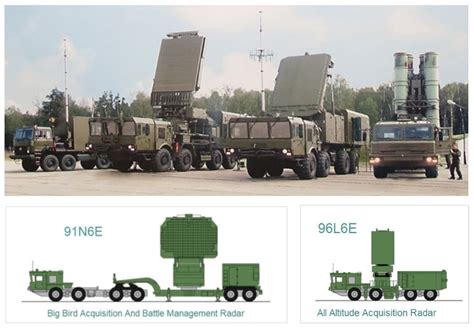
In Indian service, an S-400 squadron functions as a self-contained and highly mobile fire unit. Typically organized around two batteries, each squadron integrates a command-and-control element, a long-range surveillance radar, and a dedicated engagement radar. Approximately six transporter-erector-launchers (TELs) per battery bring the total to roughly twelve launchers per squadron, each carrying four canisterized interceptor missiles.
Behind the visible launchers lies a more complex ecosystem of reload vehicles, power units, communications nodes, and maintenance support platforms. This modular design allows the system to disperse, relocate, and reconfigure with agility—an essential trait in high-intensity conflict environments where survivability depends on mobility and electronic resilience.
What transforms the S-400 from a missile battery into a regional defense node is its sensor fusion capability. The system can track multiple targets simultaneously, assign engagement priorities, and guide different missile types from the same launcher array. It can also integrate with higher-level command networks, enabling coordinated engagements within a broader national air picture.
Mixed Missile Loadout and Long-Range Engagement Capability
The S-400’s operational flexibility stems largely from its mixed interceptor family. Export specifications list engagement ranges against aerodynamic targets of up to 380 kilometers and engagement altitudes reaching 30 kilometers. Ballistic targets are advertised with engagement ranges of approximately 60 kilometers and altitudes up to 25 kilometers, with target velocities supported up to 4,800 meters per second.
India’s systems are widely associated with the 48N6-series and 9M96-series interceptors, offering medium- and long-range coverage, as well as the 40N6E-class missile tied to the system’s maximum reach. While maximum-range engagements depend heavily on radar horizon, target altitude, and detection geometry, the theoretical envelope alone alters adversarial planning.
The system’s raid-handling capacity is particularly consequential. A full S-400 formation can prosecute dozens of targets while guiding multiple interceptors in flight simultaneously. In practical terms, this means it can respond not only to isolated intrusions but also to coordinated strike packages involving aircraft, cruise missiles, and unmanned aerial vehicles operating in concert.
Operational Impact on Adversary Air Campaign Planning
The presence of long-range S-400 units reshapes the tactical calculus of any opposing air force. Aircraft and support platforms are compelled to operate at greater stand-off distances, increasing reliance on precision-guided munitions, electronic warfare, and low-altitude ingress tactics. The S-400’s true strategic weight often lies not in the fighters it might intercept, but in the high-value enablers it can threaten.
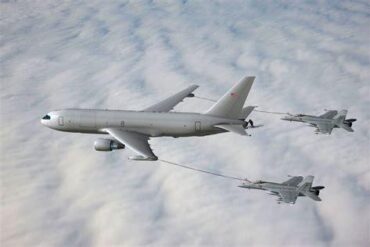
Airborne early warning and control aircraft, aerial refueling tankers, and electronic attack platforms extend an air force’s reach and coordination capacity. By placing these assets within theoretical engagement zones, the S-400 compresses the adversary’s operational flexibility. Detection ranges shrink. Strike coordination becomes more complex. The cost of penetration rises sharply.
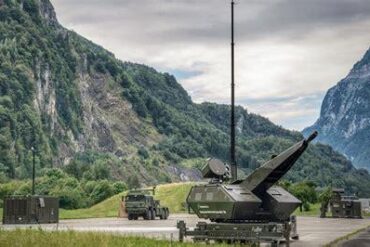
Within India’s broader defense network, the S-400 does not operate in isolation. Indian reporting has emphasized integration with centralized command-and-control frameworks that merge missile batteries, radar arrays, gun systems, and counter-unmanned aerial measures into a cohesive air defense grid. This networked structure shortens the sensor-to-shooter cycle and enhances layered response options against diverse threats.
Two-Front Contingency and Geographic Coverage Requirements
India’s strategic geography imposes unique demands on its air defense posture. Along the western frontier, threats emanate from Pakistan’s expanding inventory of cruise missiles, precision-guided munitions, and advanced aircraft. To the north and east, China fields long-range strike capabilities, high-altitude platforms, and growing missile forces.
Five S-400 squadrons provide powerful coverage but remain insufficient for persistent, depth-layered defense across multiple theaters. Doubling the fleet to ten squadrons enhances flexibility in several critical ways.
First, it allows simultaneous protection of key regions in both western and eastern sectors. Second, it provides redundancy, ensuring that maintenance cycles or redeployments do not leave gaps in the defensive shield. Third, it strengthens magazine depth—the available stock of interceptors necessary to withstand sustained, multi-wave strike scenarios.
Modern air campaigns increasingly rely on saturation tactics. Cruise missiles, loitering munitions, drone swarms, and decoy systems can be launched in numbers designed to exhaust interceptor inventories. By procuring additional squadrons and expanding missile stocks, India signals that it is preparing not merely for isolated incidents but for high-tempo operations requiring endurance and sustained engagement capacity.
Bridging to Indigenous Long-Range Air Defense: Project Kusha
The expansion of the S-400 fleet also intersects with India’s domestic defense ambitions. Under the Defence Research and Development Organisation (DRDO), Project Kusha aims to deliver a three-tier indigenous long-range air defense system. Planned interceptor classes span approximately 150 kilometers, 250 kilometers, and potentially 350–400 kilometers in range, with full integration into the Integrated Air Command and Control System.
Acceptance of Necessity for five squadrons of the indigenous system has already been granted. Early testing milestones have reportedly demonstrated promising progress. Yet long-range air defense development is a technically demanding endeavor. Achieving reliable interception of high-speed, maneuvering targets at extended distances requires advanced seekers, propulsion systems, guidance algorithms, and robust radar integration.
Such development cycles unfold over years, not months. In this context, additional S-400 units function as an operational bridge. They provide immediate long-range coverage while domestic systems mature. This approach allows India to maintain deterrence credibility in the near term while steadily advancing toward strategic autonomy.
Industrial and Geopolitical Considerations
Expanding S-400 procurement inevitably deepens India’s defense ties with Russia. Even as New Delhi diversifies suppliers and accelerates domestic production, Moscow remains a critical partner in high-end air defense technology. Delivery timelines, however, remain sensitive to Russia’s industrial capacity and international constraints.
From India’s perspective, the calculus is pragmatic. Immediate operational requirements outweigh political hesitation. Long-range air defense is not a capability that can tolerate prolonged gaps. Securing additional units and replenishment missiles strengthens deterrence during a period of shifting regional military balances.
At the same time, integrating foreign-sourced systems with indigenous command networks demands technical precision. Seamless data fusion across services, secure communications, and interoperability between imported and domestic platforms will determine whether expanded S-400 deployments function as isolated assets or as fully integrated nodes in a national air defense architecture.
Toward a Resilient National Integrated Air and Missile Defense
Doubling the S-400 fleet represents more than numerical expansion. It reflects an attempt to construct a resilient, layered shield capable of absorbing the initial shock of a high-intensity strike campaign while preserving the operational capacity of the Indian Air Force.
A mature integrated air and missile defense system must combine early warning radars, interceptor batteries, electronic warfare assets, and distributed command structures into a synchronized whole. It must maintain sufficient interceptor inventory to endure sustained engagements and possess the mobility to evade targeting.
By reinforcing both western and eastern sectors with additional long-range coverage, India moves closer to that objective. The S-400’s extended reach complicates adversary planning, enhances protection of strategic infrastructure, and buys critical time in the event of escalation.
As final deliveries from the original contract conclude and negotiations for new units progress, the evolution of India’s air defense posture will hinge on three parallel tracks: timely acquisition of additional systems and missiles, effective integration with domestic command frameworks, and steady advancement of indigenous long-range alternatives.
If these efforts advance in concert, India’s air defense modernization will stand not as a series of disconnected purchases, but as a coherent, layered architecture engineered for endurance in a two-front security environment defined by rapid technological change and intensifying regional competition.