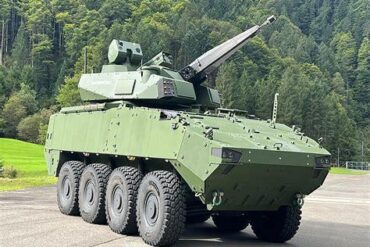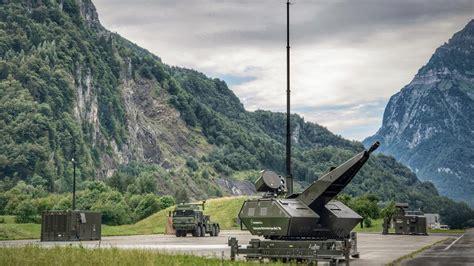
Romania is preparing a significant leap in its short-range air defense capabilities with a planned order of seven Rheinmetall Skynex very short-range air defense systems, financed through the European Union’s Security Action For Europe (SAFE) program. The move reflects Bucharest’s accelerating military modernization agenda and its response to a rapidly changing security environment on NATO’s eastern flank, where aerial threats have become more numerous, cheaper, and harder to intercept.
The acquisition is embedded within a vast €16.6 billion SAFE financing package, structured as a long-term EU-backed credit facility spanning 45 years with a 10-year grace period. This mechanism allows Romania to invest heavily in defense modernization without immediate fiscal pressure, leveraging EU-level borrowing conditions aligned with AAA credit ratings rather than Romania’s national BBB rating. Repayments are scheduled to begin after 2035, giving the country a full decade to integrate new systems and capabilities before servicing the debt.
Crucially, the SAFE framework is not limited to defense alone. While €9.6 billion is earmarked for military procurement, substantial funds are also allocated to strategic infrastructure and internal security. However, within the defense share, air defense emerges as a top priority, driven by the demonstrated effectiveness of drones, loitering munitions, cruise missiles, and indirect fire systems in recent conflicts near Romania’s borders.
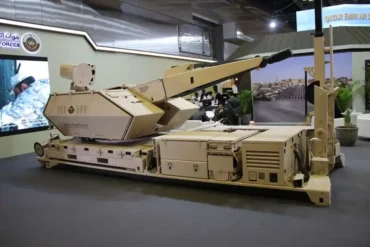
Within this financial architecture, the Skynex acquisition stands out as a focused investment in very short-range air defense (VSHORAD) and counter-UAS capability. The SAFE allocation lists the seven Skynex systems at €476 million, translating into roughly 28 Revolver Gun Mk3 cannons, associated command-and-control nodes, surveillance radars, and ammunition stocks. This places Romania among a growing group of European operators adopting gun-based air defense as a cost-effective and resilient layer beneath missile systems.
SAFE Financing and Romania’s Broader Defense Modernization Drive
Romania’s SAFE-funded defense portfolio spans 21 separate programs valued at approximately €9.53 billion, divided between 10 joint European procurements and 11 national acquisitions. This structure reflects a deliberate balance between strengthening European defense industrial cooperation and preserving national operational autonomy. The Skynex systems fall into the latter category, tailored to Romania’s specific operational geography and threat assessments.
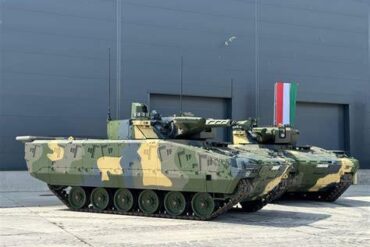
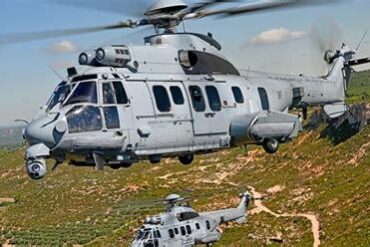
Ground forces modernization absorbs a substantial share of funding, including 139 Piranha 5 8×8 armored personnel carriers, 198 tracked infantry fighting vehicles, and more than 1,370 wheeled logistics vehicles. Naval investments cover two offshore patrol vessels and seven Naval Strike Missile coastal defense systems, reinforcing Romania’s posture in the Black Sea region. In the air domain, acquisitions include Airbus H225M multi-mission helicopters, medium-range surveillance radars, integrated air and missile defense command posts, and medium-range surface-to-air missile systems.
Within this layered architecture, Skynex occupies the innermost defensive ring, designed to defeat threats that penetrate or bypass longer-range sensors and interceptors. Its role is not glamorous but essential: protecting air bases, command centers, logistics hubs, critical infrastructure, and maneuvering forces against saturation attacks by small, fast, and low-observable targets.
Anatomy of a Skynex Battery
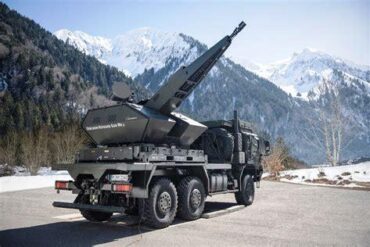
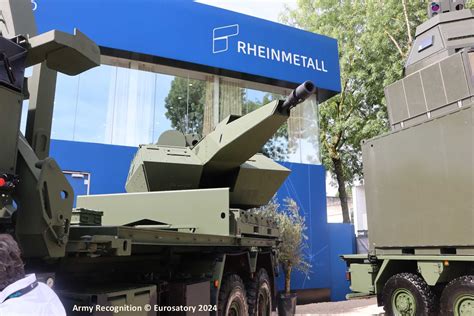
A standard Rheinmetall Skynex battery is built around modularity and networked operations. Each battery typically includes four 35 mm Oerlikon Revolver Gun Mk3 unmanned turrets, a Skynex Control Node CN-1, and at least one X-TAR3D X-band radar. Romania’s planned procurement of seven batteries therefore implies a force structure of 28 guns, seven command nodes, and a minimum of seven surveillance radars, with the option to expand sensor coverage as required.
The CN-1 command node operates using Rheinmetall’s Skymaster battle management system, which fuses data from connected sensors to generate a real-time three-dimensional air picture. Threats are automatically detected, classified, prioritized, and assigned to available effectors, reducing reaction times and minimizing operator workload. This architecture allows Skynex batteries to operate autonomously or to integrate seamlessly into higher-level national and NATO air defense networks.
For Romania, this flexibility is particularly valuable. Skynex can be deployed in static configurations to defend fixed sites or mounted on 6×6 military trucks for mobile operations, enabling protection of forward-deployed units or temporary infrastructure along critical axes leading toward Ukraine and the Republic of Moldova.
X-TAR3D Radar and the Sensor Layer
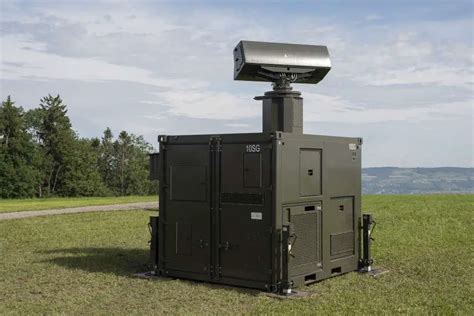
Airspace surveillance within Skynex is typically provided by the Oerlikon X-TAR3D X-band radar, a fully coherent phased-array pulse-Doppler system optimized for low-altitude threats. Depending on configuration, the radar offers instrumented detection ranges of 25 km, 35 km, or up to 50–55 km, with 360-degree coverage and the ability to track around 50 air targets simultaneously.
The X-TAR3D is specifically designed to detect low radar cross-section objects, including small drones, cruise missiles, rockets, artillery shells, and mortar rounds. Its performance against cluttered backgrounds and in dense electromagnetic environments makes it suitable for both urban and field deployments. Optional Multi Sensor Units can supplement radar data with electro-optical and infrared channels, adding passive detection and identification capabilities resistant to electronic countermeasures.
Revolver Gun Mk3 and the AHEAD Advantage
At the heart of Skynex’s lethality is the Oerlikon Revolver Gun Mk3, a 35 mm automatic cannon engineered for high precision and rapid response. Each gun achieves a rate of fire of up to 1,000 rounds per minute and incorporates its own radar tracker and electro-optical sensor suite, allowing for autonomous engagement if required. Typical engagement ranges extend to around 4 km against small aerial targets, covering the most critical zone where reaction time is measured in seconds.
The gun’s effectiveness is magnified by its use of 35×228 mm AHEAD (Advanced Hit Efficiency And Destruction) airburst ammunition. Each round contains 152 tungsten sub-projectiles, which are released in a precisely timed cloud just ahead of the target. This mechanism dramatically increases hit probability against agile targets such as drones and loitering munitions, while reducing reliance on direct hits or vulnerable guidance systems.
For Romania, AHEAD ammunition offers a pragmatic solution to the economics of air defense. Gun-based intercepts are significantly cheaper than missile launches, enabling sustained defense against massed attacks without exhausting high-value interceptors.
Operational Relevance in the Eastern European Security Environment
Romania’s decision to invest in Skynex must be understood in the context of lessons learned from ongoing conflicts in Eastern Europe. The proliferation of inexpensive UAVs, combined with precision-guided rockets and cruise missiles, has exposed vulnerabilities in traditional air defense architectures that rely too heavily on expensive missile systems. Skynex addresses this gap by providing a dense, responsive, and electronically resilient defensive layer.
The system’s networked architecture allows Romania to protect dispersed assets across a wide territory while maintaining centralized command oversight. This is particularly relevant given Romania’s role as a logistical hub for NATO operations and its proximity to contested airspace over the Black Sea region.
European Industrial Integration and Export Flexibility
Skynex is produced within Rheinmetall’s European industrial ecosystem, with manufacturing and integration activities distributed between Germany, Switzerland, and Italy. Originally developed by Oerlikon in Switzerland, production has expanded to Rheinmetall Italia, enabling exports that circumvent Swiss restrictions on the delivery of complete war materiel to active conflict zones.
This industrial flexibility has already enabled deliveries to Ukraine, which received two Skynex systems, and to Italy, which completed initial deliveries of four static systems in December 2025. Qatar has also disclosed Skynex-related assets, underscoring the system’s growing international footprint. Romania’s planned acquisition would make it one of the most significant European operators of Skynex, reinforcing interoperability with allied forces using similar architectures.
A Strategic Step Toward Layered Air Defense by 2030
Romania’s acquisition of seven Rheinmetall Skynex systems under the SAFE program represents more than a procurement decision. It is a strategic investment in resilience, sustainability, and adaptability within a layered national air defense framework extending toward 2030. By combining gun-based systems with medium-range missiles, advanced sensors, and integrated command posts, Romania is building an air defense posture capable of absorbing shocks and adapting to evolving threats.
In an era where the skies are increasingly crowded with inexpensive yet lethal systems, Skynex offers Romania a technologically mature, economically sustainable, and operationally proven solution. The decision underscores Bucharest’s intent to remain a credible security provider on NATO’s eastern frontier, equipped not only with modern platforms but with the depth and redundancy required for long-term deterrence.