Romania has taken a bold and strategic leap in its defense posture by signing a €2.038 billion agreement with Israel’s Rafael Advanced Defense Systems to acquire six integrated SHORAD and VSHORAD air defense systems. This landmark deal, finalized on July 18, 2025, marks one of the country’s most significant military procurements in the post-Cold War era and underscores a growing urgency to fortify NATO’s eastern flank.
A Seven-Year Pact to Reinforce Airspace Security
The contract, negotiated through Romania’s General Directorate for Armaments and the state procurement entity Romtehnica SA, spans a seven-year acquisition timeline. It includes a package of six Short-Range Air Defense (SHORAD) and six Very Short-Range Air Defense (VSHORAD) batteries—totaling twelve fully integrated systems. Beyond the hardware, the agreement encompasses live missiles, comprehensive operator training programs, simulation platforms, logistical backing, and evaluation systems. The first VSHORAD systems are set to arrive within three years, establishing a critical initial layer of defense.
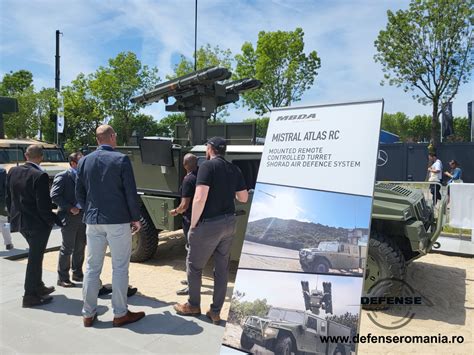
This acquisition emerges amid Romania’s increasingly proactive defense modernization drive, as tensions escalate across Eastern Europe. The 2022 Russian invasion of Ukraine and the subsequent rise in drone incursions and cruise missile threats have shifted Romanian defense planning into high gear, aiming to build a multi-layered, interoperable, and NATO-compliant air defense structure.
Spyder: Israel’s Agile Shield for the Sky
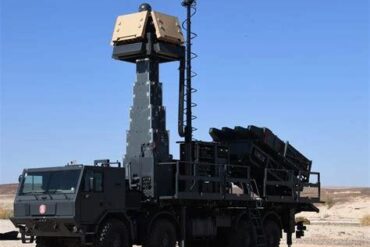
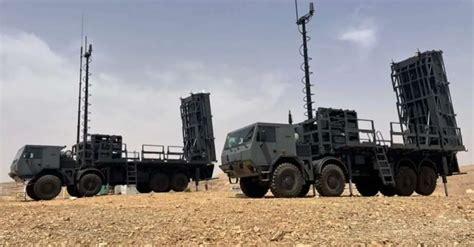
The Spyder (Surface-to-air PYthon and DERby) system, developed by Israel’s Rafael Advanced Defense Systems, is a highly versatile and mobile air defense platform capable of intercepting a wide spectrum of airborne threats. From drones and helicopters to fighter jets and precision-guided munitions, Spyder has been engineered for rapid response and flexible deployment under complex combat scenarios.
Romania’s configuration emphasizes SHORAD and VSHORAD variants, which are tailored to engage low- to medium-altitude threats at relatively short ranges. These configurations are ideal for protecting mobile units, urban centers, military bases, and strategic infrastructure—precisely the types of targets increasingly at risk in today’s drone-saturated battlespace.
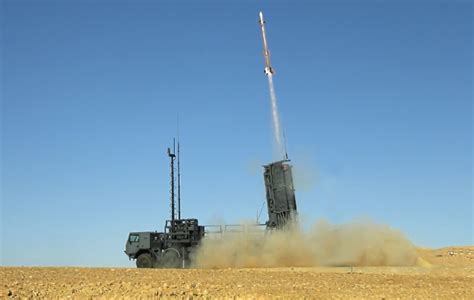
At the heart of the Spyder system are two formidable air-to-air missiles adapted for surface launch:
- Python-5: A fifth-generation missile guided by dual infrared and imaging sensors, enabling high maneuverability and lock-on-after-launch capabilities.
- Derby: An active radar-guided missile with beyond-visual-range targeting, suitable for fast and evasive aerial threats.
Both are launched from mobile platforms integrated with the Elta EL/M-2106 ATAR 3D radar and advanced electro-optical sensors, allowing for day-and-night, all-weather operations. The result is a platform that combines mobility, lethality, and digital integration, making it well-suited for Romania’s dynamic regional threat environment.
A System Built on Layered Defense Philosophy
Spyder’s greatest strategic appeal lies in its modular range architecture:
- Spyder-SR: Short-Range variant offering coverage up to 20 km.
- Spyder-ER: Extended-Range variant with booster-enhanced reach up to 40 km.
- Spyder-MR and LR: Medium and Long-Range models with capabilities stretching up to and beyond 70 km.
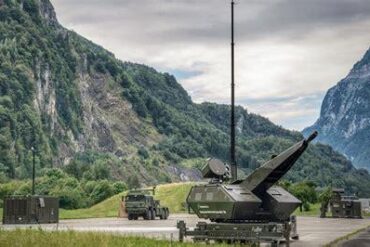
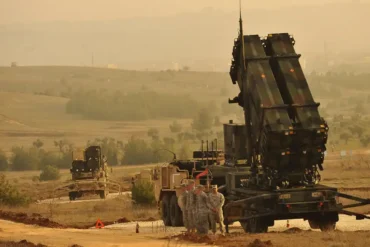
Romania’s focus on SHORAD and VSHORAD variants suggests a strong tactical imperative: defending against close-in, time-sensitive threats, especially drones and low-flying cruise missiles. This complements Romania’s existing procurement of Patriot PAC-3 long-range systems, NASAMS mid-range platforms, and legacy 35mm Oerlikon cannons.
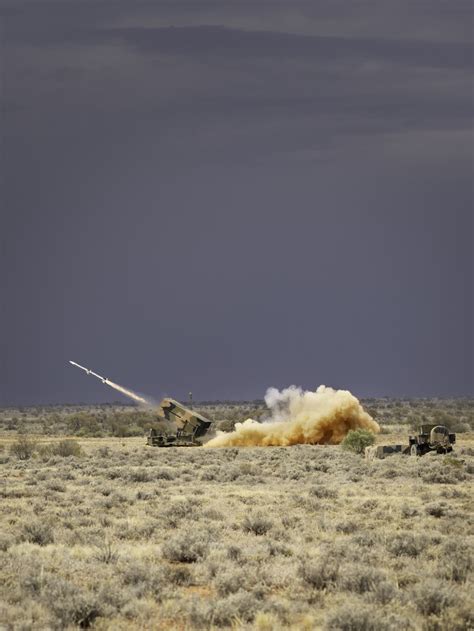
In the context of NATO’s Integrated Air and Missile Defense (IAMD) initiative, this purchase helps fill critical operational gaps. By establishing quick-reaction short-range layers, Spyder enhances Romania’s ability to defend against saturation attacks, dispersed drone swarms, and low-observable threats—challenges that traditional high-altitude systems are not optimized to handle.
Geopolitical Urgency: The Eastern Flank Factor
The timing of this deal reflects more than just military planning—it is a geopolitical necessity. The war in Ukraine has redefined Europe’s eastern frontier, with Romania now sharing a volatile Black Sea border with increasingly assertive Russian naval and aerial operations. In addition, regional drone warfare has exploded, as evidenced by the use of Iranian Shahed drones, loitering munitions, and GPS-jamming tactics in Ukraine and beyond.
For Romania, these trends pose a direct national security challenge. Critical energy infrastructure, command posts, and troop movements are now under constant threat of rapid air attack. The Spyder system’s speed, sensor fusion, and mobility are uniquely suited to neutralize such threats before they cause irreversible damage.
Moreover, Spyder’s integration potential within NATO architecture ensures that Romania will be able to contribute to and benefit from allied surveillance, target acquisition, and joint engagement protocols—a strategic multiplier in any future cross-border confrontation.
Technology Transfer and Industrial Implications
While the framework agreement does not explicitly mention domestic production, analysts suggest that technology sharing and possible co-production opportunities may follow in subsequent phases. Rafael has previously cooperated with partners in India, Singapore, and the Czech Republic, offering integration support and partial local assembly in line with broader economic partnership strategies.
If similar arrangements materialize in Romania, they could revitalize local defense contractors, boost skilled labor demand, and embed Israeli high-tech know-how into Romania’s defense ecosystem. The prospect of simulation platforms and training centers also points toward long-term skill transfer and institutional development, not just equipment delivery.
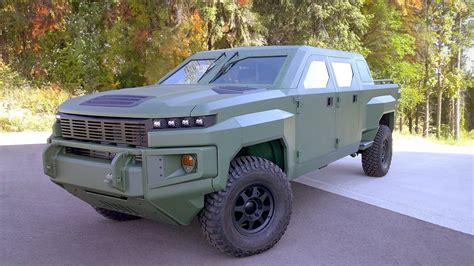
This forward-thinking procurement strategy aligns with NATO’s emphasis on resilient supply chains and regional industrial base strengthening, particularly in the face of disruptions stemming from war or international embargoes.
NATO Interoperability and Operational Readiness
Romania’s growing inventory of Western-aligned missile systems marks a definitive shift away from its Warsaw Pact-era arsenal. The Spyder’s command and control system is designed to seamlessly interface with NATO’s Link-16 data networks, enabling real-time coordination with assets like Patriot batteries, AWACS surveillance aircraft, and allied interceptor platforms.
As NATO continues to conduct joint air policing and readiness drills across Eastern Europe, Romania’s ability to plug into that network with high-capability, short-range assets significantly enhances both national and alliance-level deterrence. The system’s agility also allows it to accompany mobile ground forces during wartime maneuvers—something Romania’s existing systems were not designed to do.
The inclusion of training, simulation, and operator certification components ensures that Romania’s military personnel will not only operate but master the system, creating long-term sustainability and doctrine integration. These are not off-the-shelf purchases—they are foundational components of a modern integrated air defense doctrine.
Strategic Vision, Tactical Precision
By investing in the Spyder system, Romania is sending a clear signal—to allies and adversaries alike—that it is no longer content with passive defense. This is a deliberate step toward building a credible, layered, and resilient air defense posture capable of reacting at the speed of modern warfare.
The €2 billion contract is not just a procurement—it’s an affirmation of Romania’s commitment to NATO collective defense, regional stability, and the protection of its national sovereignty. In doing so, it moves decisively into the circle of NATO members with fully layered missile shields, combining long-, medium-, and short-range interceptors across domains and operating environments.
In a region where skies are increasingly weaponized, Romania’s new Israeli-built shield could prove indispensable.