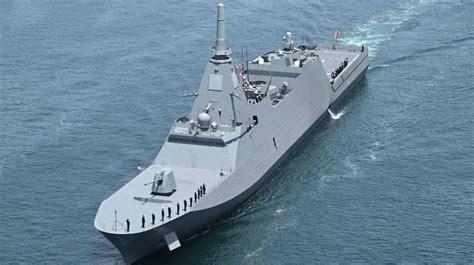
Japan has taken a bold strategic leap in 2026 by approving a record $56 billion defense budget, marking a fundamental shift in its postwar security doctrine. This move is not merely fiscal—it represents a deep recalibration of Tokyo’s national defense priorities as tensions with China continue to escalate in the Western Pacific.
Japan’s Defense Budget Reaches Historic Levels
On December 26, 2025, the Japanese Ministry of Defense announced its FY2026 defense plan, allocating approximately JPY 8.81 trillion ($56 billion)—a figure that swells to JPY 9.04 trillion when related defense expenditures are included. This dramatic surge aims to bring Japan closer to the NATO-standard defense spending target of 2% of GDP, signaling a decisive break from decades of minimal military outlay under Article 9 of the pacifist constitution.
This budget is not a routine annual adjustment, but rather a structural transformation toward preparing for a sustained, high-pressure conflict scenario—particularly within the First Island Chain, a critical geographical belt stretching from the Japanese archipelago through Taiwan and the Philippines.
Long-Range Strike Capabilities Redefined
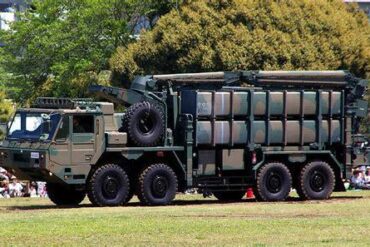
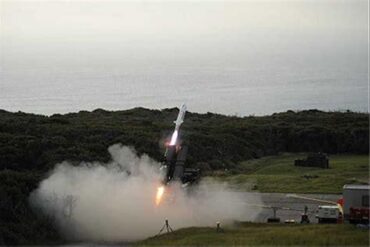
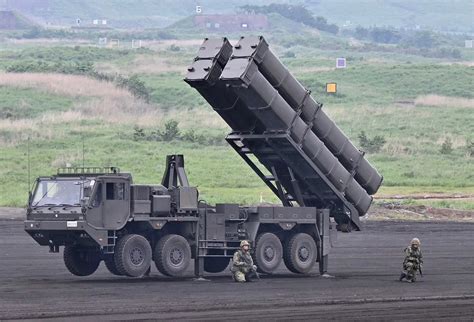
At the core of Japan’s rearmament lies its growing arsenal of long-range precision strike weapons. With a budget of JPY 973 billion ($6.2 billion) earmarked for stand-off strike systems, Tokyo is reshaping how it projects force across its expansive 3,000-kilometer territorial arc.
Japan is investing in multiple missile platforms, both domestic and imported:
- Type-12 Surface-to-Ship Missile, upgraded for land and ship launch.
- Submarine-Launched Missiles with enhanced stealth and survivability.
- Hypersonic Weapons like the Hyper Velocity Gliding Projectile and another unnamed missile capable of speeds exceeding Mach 5, designed to complicate enemy interception.
- Foreign procurements including the Joint Strike Missile for the F-35A, JASSM for F-15 upgrades, and Tomahawk capabilities for maritime platforms.
This combination gives Japan layered, flexible strike options across domains: stealth air-launched munitions for initial precision strikes, coastal and naval batteries for maritime interdiction, and hypersonic trajectories to pierce hardened defenses.
Fortifying the Air and Missile Defense Shield
Recognizing that strike capabilities must be matched by robust protection, Japan has dedicated JPY 509 billion ($3.25 billion) to integrated air and missile defense (IAMD). This investment is directed at modernizing systems and enhancing Japan’s ability to endure sustained missile barrages from hostile forces, especially those targeting bases in Okinawa and the Ryukyu chain.
Key upgrades include:
- The Aegis System Equipped Vessel (ASEV), a sea-based ballistic missile defense solution.
- Modernization of Patriot missile batteries.
- Enhancements to the Type 03 medium-range SAM, adding anti-ballistic missile capability.
- Acquisition of new interceptors, notably the SM-3 Block IIA and SM-6.
- Upgrading Japan’s JADGE command-and-control system, improving real-time coordination between sensors and shooters.
This suite of enhancements is aimed not at creating an impenetrable shield, but rather at ensuring operational endurance—keeping ports open, aircraft flying, and forces mobile long enough to reposition and retaliate effectively.
Unmanned Systems Inspired by Ukraine’s Battlefield
Japan’s military planners have clearly internalized lessons from the Russia-Ukraine war, particularly the value of unmanned mass in a modern conflict. The FY2026 budget funds a future-facing SHIELD architecture, built around synchronized swarms of UAVs (drones), USVs (surface vehicles), and UUVs (underwater drones).
Some highlights include:
- Small attack UAVs, optimized for saturation strikes.
- Ship-launched and anti-ship drones, designed to harass or neutralize enemy vessels.
- Unmanned surface and underwater systems for reconnaissance, mine warfare, and support roles.
- Acquisition of four MQ-9B SeaGuardian UAVs, each capable of 30+ hours of maritime surveillance.
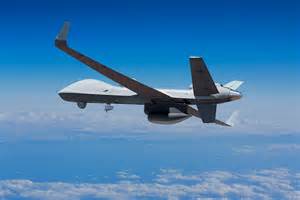
Together, these systems serve a dual purpose: confusing and saturating enemy defenses while providing persistent surveillance across the Ryukyu Islands and the Taiwan Strait. This allows Japan to make better targeting decisions while forcing adversaries to waste high-value missiles on inexpensive drones.
Conventional Forces as Enablers, Not Centerpieces
While legacy platforms like submarines, frigates, and fighter jets remain in the mix, they now play a supporting role to the missile-centric, sensor-driven battlefield Japan envisions.
FY2026 procurement includes:
- A new Mogami-class frigate.
- P-1 patrol aircraft and SH-60L helicopters for anti-submarine and surface surveillance.
- A new diesel-electric submarine and advanced minesweeper.
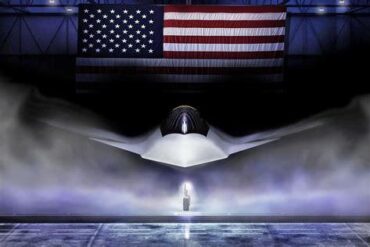
- Eight F-35A and three F-35B stealth fighters, bolstering both homeland defense and island expeditionary capabilities.
- KC-46A aerial tankers and UH-2 helicopters to sustain long-range operations and support rapid island deployments.
Breaking from Pacifist Legacy: Why Now?
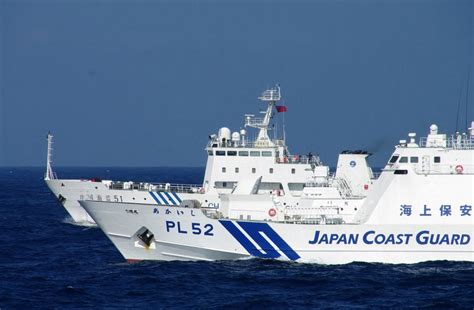
The tectonic shift in Japan’s defense posture cannot be separated from the growing assertiveness of China’s People’s Liberation Army (PLA). The Senkaku Islands, administered by Japan but claimed by Beijing, are a persistent flashpoint, with near-daily intrusions by Chinese coast guard or fishing vessels in what Tokyo views as an ongoing “gray-zone” pressure campaign.
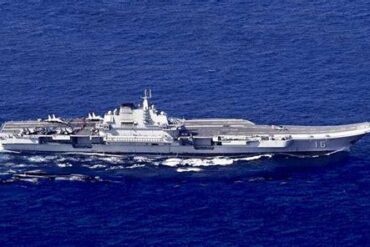
At the same time, the military balance around Taiwan is tipping quickly, reducing warning time for Japan’s southern defenses. Beijing’s rapid naval expansion and modernization have created fears in Tokyo that the first island chain could be overwhelmed in a crisis.
For decades, Japan’s political class leaned on Article 9 and U.S. protection guarantees to justify a constrained military policy. But with strategic risks increasing and domestic public opinion shifting, Japan’s 2022 National Security Strategy formally endorsed “counterstrike capabilities”—a once-taboo phrase now fully integrated into its defense lexicon.
Strategic Implications for the Indo-Pacific
Japan’s FY2026 defense blueprint will reshape Indo-Pacific deterrence dynamics for the foreseeable future. It sends a clear message to adversaries and allies alike: Tokyo is no longer a passive player, but a central actor in regional security.
By building a force that can detect, target, and strike threats across air, sea, and cyber domains, Japan is signaling that it is prepared to impose costs on any hostile actor attempting to test its resolve. The integration of long-range fires, resilient sensor networks, and autonomous systems will create a multidimensional challenge for China and support broader U.S.-led regional strategies.
Furthermore, Japan’s investments also enable greater interoperability with allies, especially the United States, Australia, and the United Kingdom, all of whom are moving toward a “lattice” model of collective deterrence in the Indo-Pacific.
Conclusion: The End of Strategic Restraint
Japan’s 2026 defense budget is a watershed moment—a deliberate departure from the era of strategic restraint and symbolic capabilities. It represents a new doctrine grounded in range, readiness, and resilience, and backed by the political will to execute.
As Tokyo implements this sweeping military transformation, the region must now recalibrate to a reality where Japan is not just defending its islands—but shaping the balance of power far beyond them.