New Zealand has taken a significant step toward bolstering its national security by allocating NZ$2 billion to replace its aging maritime helicopter fleet. This investment, part of a broader defense spending initiative, is designed to modernize the country’s military capabilities and reassert its strategic role within the Indo-Pacific region. As geopolitical uncertainty continues to mount, this move underscores Wellington’s recognition of the urgent need for maritime preparedness in the 21st century.
Strategic Shift in Defense Priorities
The government’s decision to channel this unprecedented budget allocation into maritime aviation is both a response to global instability and a proactive move toward meeting international defense standards. According to Defence Minister Judith Collins, this investment marks a turning point in how New Zealand addresses national and regional security threats.
“It is very clear that New Zealand is not immune from the increasing tensions being felt throughout the world,” Collins noted. Her statement reflects the growing anxiety around strategic competition in the Indo-Pacific, as powers like China, the United States, and Russia expand their influence. By announcing this procurement ahead of the May 22 national budget, the government has sent a clear signal of prioritization: safeguarding maritime boundaries and ensuring operational readiness of the Royal New Zealand Navy.
Replacing the SH-2G(I) Seasprite: Operational Limitations and Strategic Gaps
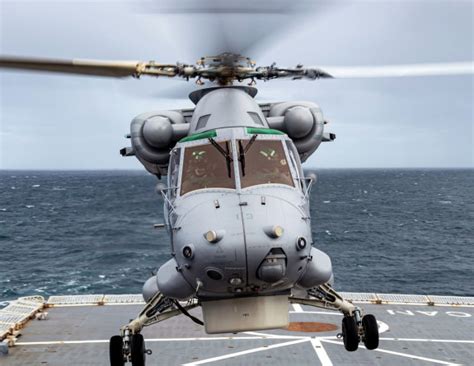
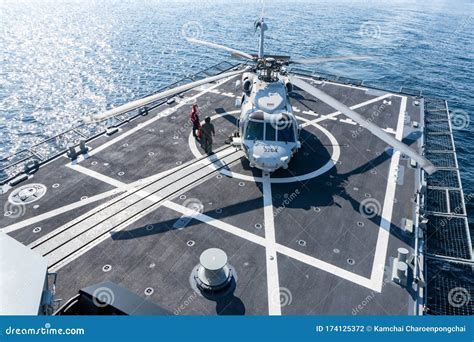
Currently, New Zealand operates a fleet of eight SH-2G(I) Seasprite maritime helicopters, a platform that has served the country for decades but is now seen as technologically outdated and strategically insufficient. These aircraft, though reliable in their time, are no longer suited for the dynamic and multi-dimensional threats that define today’s maritime domain. Their limited range, aging onboard systems, and lower survivability in contested environments pose a serious challenge to operational effectiveness.
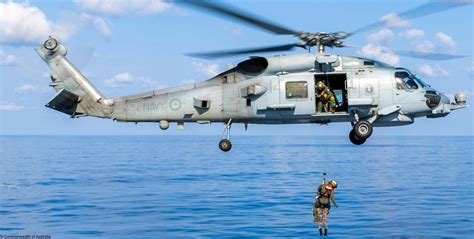
The move to retire the Seasprites and introduce a next-generation fleet is expected to significantly enhance the surveillance, offensive, and defensive capabilities of New Zealand’s naval forces. Specifically, this transition will improve the interoperability of its frigates with allied forces and boost mission capabilities in areas such as anti-submarine warfare (ASW), search and rescue (SAR), humanitarian assistance, and disaster response operations.
The Role of Maritime Helicopters in National Defense
As a nation comprising more than 700 islands and with a vast Exclusive Economic Zone (EEZ) covering over 4 million square kilometers, New Zealand is inherently a maritime nation. The ability to project surveillance, deliver logistics, and defend sea lanes is not optional — it is foundational to economic security and regional stability. Maritime helicopters are the airborne extension of naval power, enabling rapid response and persistent oversight in areas unreachable by surface vessels alone.
Upgrading this capability provides several strategic advantages:
- Increased detection range for surface and sub-surface threats
- Enhanced payload capacity for missions involving troops, supplies, or medevac
- Modern communication and sensor suites to share real-time intelligence
- Improved survivability through advanced defensive systems
The new fleet, although not yet named, is expected to feature cutting-edge avionics, autonomous flight capabilities, and advanced sensor integration, aligning with modern combat and support demands.
Integrating Defence Spending with National Strategy
The NZ$2 billion earmarked for helicopters is only one component of a broader NZ$9 billion defense spending surge over the next four years. The government has also committed to increasing baseline annual spending for the Defence Force by NZ$239 million. This investment is consistent with the 2023 National Security Strategy, which called for greater military modernization, improved resilience against climate impacts, and closer partnerships within the Indo-Pacific.
New Zealand currently spends just over 1% of its Gross Domestic Product (GDP) on defense — well below the 2% benchmark recommended by NATO and allied frameworks. However, Collins affirmed that this new defense path is structured to raise defense spending to 2% of GDP by 2032–33. Achieving this will not only improve force readiness but also rebuild credibility with strategic partners like Australia, the United States, and Japan.
Indo-Pacific Tensions and Global Maritime Dynamics
The decision to prioritize naval capabilities is not occurring in a vacuum. The Indo-Pacific region has become a hotbed of geopolitical rivalry, with contested sea lanes, disputed territories, and military posturing becoming increasingly common. China’s expanding naval footprint in the South China Sea, Russia’s pivot to the Pacific, and U.S. efforts to maintain influence have created an arms race in maritime preparedness.
New Zealand’s position — both geographically and diplomatically — puts it in a unique role. Unlike larger militaries, its strength lies in agility, cooperation, and niche specialization. By fielding a modern, capable helicopter fleet, it can offer meaningful contributions to joint maritime operations, whether in freedom of navigation exercises, disaster relief missions, or counter-piracy patrols.
This modernization also plays into regional defense diplomacy. Shared exercises with the Royal Australian Navy, Japan’s Maritime Self-Defense Force, and U.S. Pacific Command depend on interoperability and reliability, which aging platforms can no longer provide.
Domestic Industry and Procurement Transparency
While the details of the procurement process have yet to be unveiled, New Zealand’s defense acquisition strategy emphasizes transparency, efficiency, and sustainability. The government is expected to weigh options from established maritime helicopter producers such as:
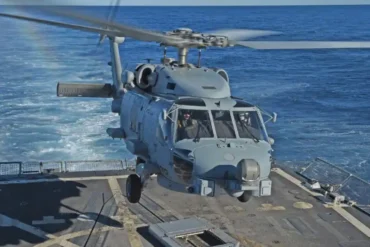
- Lockheed Martin’s MH-60R Seahawk, currently in use by the U.S. Navy and Royal Australian Navy
- Airbus’ H160M Guépard, a modular platform for multi-role utility
- Leonardo’s AW159 Wildcat, noted for its compact naval integration
Selection will depend not only on performance metrics but also on life-cycle costs, compatibility with existing infrastructure, and the potential for domestic industry involvement. The defense ministry has previously highlighted the importance of ensuring local maintenance capabilities and logistics support chains, especially given New Zealand’s distance from major defense partners.
Building a Future-Proof Maritime Force
The investment into new helicopters also represents an opportunity to retrain personnel, upgrade naval platforms, and create a more integrated multi-domain force. Modern helicopters are no longer standalone platforms — they are nodes in a networked battlespace. Equipped with real-time data-sharing capabilities, they can feed into command and control centers, satellite-linked intelligence systems, and joint strike coordination platforms.
This will enable New Zealand to:
- Detect and respond to submarine incursions far beyond its coast
- Conduct persistent maritime domain awareness in Pacific island territories
- Respond to climate-induced disasters with greater speed and versatility
Furthermore, integrating these new capabilities aligns with broader climate adaptation strategies, ensuring that the defense force can deliver aid in disaster-prone areas with minimal delay and maximum reach.
Political Implications and Public Perception
Domestically, this surge in defense spending has prompted debate. While some sectors question the opportunity cost of military investment during economic uncertainty, others argue that security and economic stability are intertwined. Collins addressed these concerns by emphasizing that national security is a precondition for economic resilience.
Public support appears cautiously optimistic, especially given the dual-use nature of modern defense assets. Maritime helicopters can pivot from surveillance missions to search-and-rescue operations or environmental monitoring without political controversy, giving them a high utility-to-cost ratio in the eyes of both policymakers and citizens.
Looking Ahead: Budget Day and Beyond
The full scope of defense commitments will become clearer on May 22, when the national budget is formally released. Analysts expect further details on procurement timelines, contractor engagement, and potential platform selection criteria. Regardless of specific model choice, the NZ$2 billion allocation signals a clear and irreversible shift in how New Zealand sees its role in the world.
In a climate of rising uncertainty, this move is not just about buying helicopters — it is about buying time, influence, and stability in a region where those commodities are in short supply. For New Zealand, the sky is no longer the limit — it is the launchpad for maritime sovereignty and regional leadership.