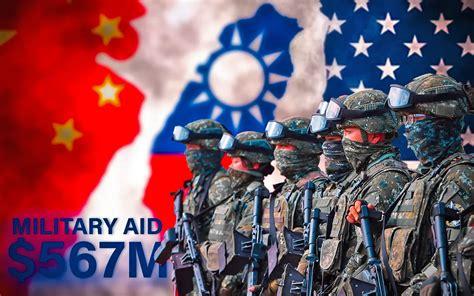
The administration of President Donald Trump has officially requested $1 billion in military aid for Taiwan, doubling the amount previously approved by the House of Representatives under the 2026 Defense Appropriations Bill. This significant budget increase is part of the Taiwan Security Cooperation Initiative (TSCI) and aims to enhance the island’s defense capabilities amid growing concerns about a potential large-scale Chinese military offensive.
Strategic Purpose Behind the $1 Billion Request
According to the Office of Management and Budget (OMB), the Trump administration considers the $1 billion request “vital for deterrence in the Indo-Pacific” and essential for safeguarding U.S. personnel in case of a crisis. The move reflects Washington’s recognition of Taiwan as a critical strategic partner and reinforces its position as Taipei’s primary military backer. While the U.S. maintains no formal diplomatic ties with Taiwan, this aid package underlines its commitment to upholding stability and balance in the region.
This proposal comes at a time when Trump’s foreign policy toward Taiwan has appeared somewhat ambiguous. In February, when asked by Reuters whether the U.S. would intervene militarily in the event of a Chinese invasion, Trump declined to give a direct answer. His past remarks criticizing Taiwan for allegedly “stealing” the U.S. semiconductor industry have also raised concerns in Taipei. As a result, the $1 billion aid proposal serves as a tangible demonstration of U.S. intent to deter Beijing’s military ambitions.
Enhancing Taiwan’s Defensive Capabilities
This funding will support a range of advanced military equipment already being transferred to Taiwan. These include:
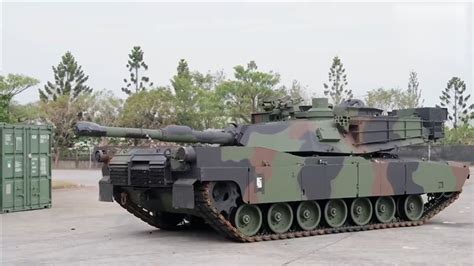
- M1A2T Abrams tanks – Offering superior armor, mobility, and firepower compared to China’s Type 96 and Type 99 tanks.
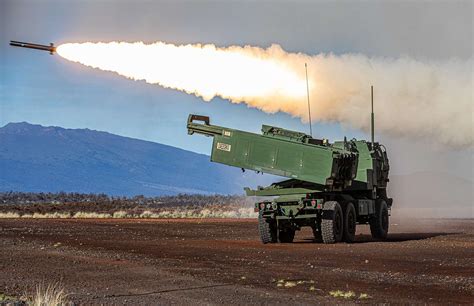
- HIMARS multiple rocket launchers – Capable of delivering long-range precision-guided ATACMS missiles to target key strategic sites on China’s eastern coast.
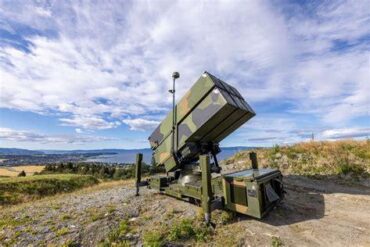
- Patriot PAC-3 air defense systems – Strengthening Taiwan’s ability to counter Chinese missile threats.
- Harpoon anti-ship missiles – Enhancing coastal defense and deterring Chinese naval operations.
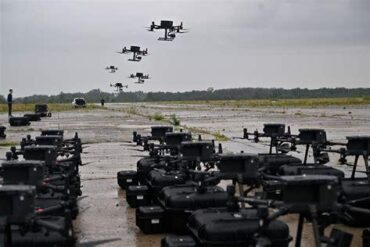
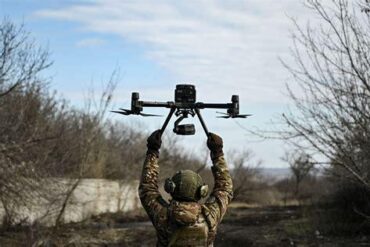
- Reconnaissance drones – Improving intelligence-gathering and battlefield awareness.
- TOW-2B anti-tank missiles – Providing an effective response to armored incursions.
These assets aim to build an integrated, mobile, and resilient defense network capable of withstanding a rapid offensive by Chinese forces. The primary focus is on anti-access and area denial strategies, preventing Beijing from establishing a logistics corridor or gaining operational momentum in the event of a cross-strait conflict.
Preparing for a Potential Amphibious Invasion
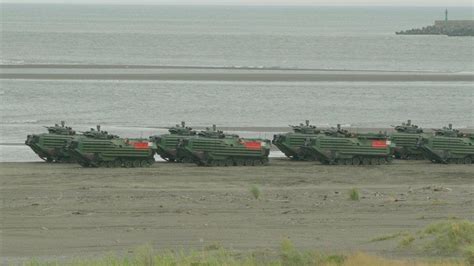
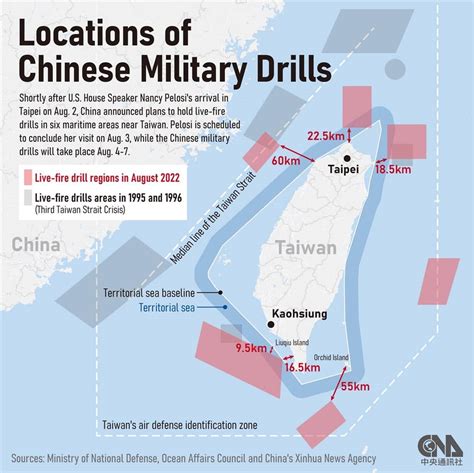
The most pressing threat for Taiwan remains a large-scale amphibious assault. Chinese military drills, involving warships, drones, and fighter jets, increasingly resemble rehearsals for a blockade or landing operation. In response, Taiwan is reinforcing its coastal defenses with shore-based missile systems, amphibious vehicles, and long-range mobile artillery.
HIMARS plays a particularly crucial role in Taiwan’s anti-access/area-denial (A2/AD) strategy, enabling preemptive strikes on enemy vessels, staging areas, and command nodes before they can establish a foothold. This layered approach allows Taiwan to complicate China’s operational planning and prolong its defensive window in case of hostilities.
Urban Warfare and Civil Defense Preparations
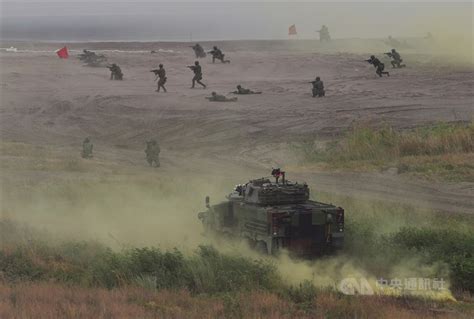
In addition to conventional defense measures, Taiwan is preparing for urban combat scenarios, drawing lessons from the Ukraine conflict. The Han Kuang exercises, the island’s largest annual military drills, have simulated street-level battles in major cities, focusing on:
- Mobilizing reservists for rapid response.
- Deploying surveillance drones for real-time intelligence.
- Constructing barricades and fortifying civilian infrastructure.
- Integrating regular forces with local militias for coordinated urban resistance.
This strategy aims to transform Taiwan into a fortified urban battleground, making it costly and complex for any invading force to secure territorial control.
Beijing’s Reaction and Rising U.S.-China Tensions
Although Beijing has yet to issue an official response, Chinese authorities have consistently condemned U.S. military support for Taiwan, labeling it foreign interference in domestic affairs. The People’s Republic of China (PRC) continues to view Taiwan as a breakaway province and has not ruled out the use of force for reunification.
Adding to the tensions, Trump’s tariff policies on Chinese goods have further strained U.S.-China relations, creating a complex geopolitical landscape where economic and military considerations intertwine.
Implications for Regional Security
If approved by the Senate, the $1 billion aid package will serve as a strong deterrent signal to Beijing, reaffirming U.S. commitment to Indo-Pacific stability. This move could reshape regional defense dynamics, encouraging other U.S. allies, such as Japan and the Philippines, to strengthen their own military postures.
Moreover, this initiative underscores Washington’s intent to fortify Taiwan’s self-defense capabilities without committing U.S. forces to direct confrontation—a balancing act aimed at maintaining strategic ambiguity while bolstering deterrence.
Conclusion: A Critical Moment for U.S.-Taiwan Relations
The Trump administration’s request for $1 billion in military aid to Taiwan marks a pivotal moment in U.S.-Taiwan relations. It reflects a calculated response to China’s expanding military presence and a reaffirmation of Washington’s role as Taipei’s security guarantor. As the proposal moves to the U.S. Senate for review, the stakes for the Indo-Pacific’s security architecture continue to rise, setting the stage for a potentially transformative phase in cross-strait and U.S.-China relations.