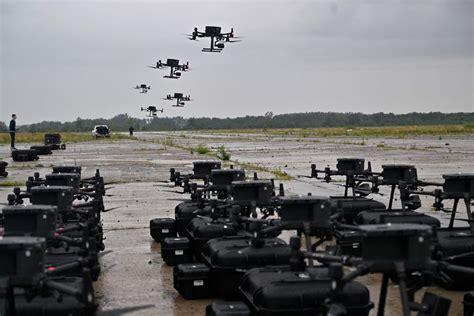
The Pentagon’s pursuit of low-collateral drone defense technologies marks a critical evolution in military strategy, one driven by the increasing sophistication and ubiquity of commercial drones near U.S. and overseas military installations. With recent incidents highlighting glaring vulnerabilities—such as the two-week appearance of hostile drones over Langley Air Force Base in Virginia—the Department of Defense has intensified its call for systems capable of neutralizing airborne threats without endangering civilians or surrounding infrastructure.
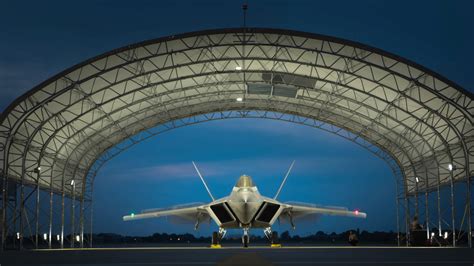
The Defense Innovation Unit (DIU), in collaboration with U.S. Northern Command and the Joint Counter-small Unmanned Aircraft Systems Office, has launched a rapid solicitation under the broader Replicator 2 initiative. This effort aims to identify and test a suite of low-collateral defeat (LCD) systems that offer scalable, reliable solutions for drone neutralization across domestic and international bases. With pre-production testing scheduled for next year, urgency underlines this campaign.
The New Face of Asymmetric Threats: Drones in Domestic Airspace
The exponential growth of the commercial drone industry—from hobbyist quadcopters to advanced autonomous UAVs—has outpaced U.S. military and homeland defense response capabilities. In 2024 alone, over 350 unauthorized drone incursions were recorded across nearly 100 U.S. military bases, raising concerns within the Pentagon and on Capitol Hill about gaps in existing defensive infrastructure.
According to David Payne, director of the DIU’s Replicator 2 program, these developments are no longer peripheral but represent a persistent and evolving threat. “Drones are getting faster, more agile, and harder to detect or intercept with conventional means,” Payne explained. “And in civilian-rich environments, any engagement must be as precise and clean as possible.”
Beyond Explosives: The Shift Toward Non-Kinetic Defense
Traditional kinetic approaches—such as missiles and gunfire—have proven effective in battlefield conditions but are inappropriate for populated environments due to debris fallout and unintended damage. The Pentagon now emphasizes non-kinetic systems that provide a more controlled form of neutralization. These include:
- High-energy lasers capable of incinerating drone components midair without explosive force.
- High-powered microwave (HPM) systems that disable drone electronics through electromagnetic pulses.
- Radio frequency (RF) jammers that intercept or override drone communication protocols.
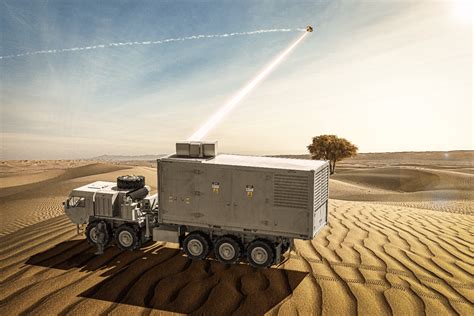
Defense analyst Shaan Shaikh of RAND underscores the delicate balance these systems must strike. “You’re trying to stop the drone without frying nearby electronics or having wreckage fall on civilians. That’s why radio frequency soft-kill mechanisms and signal interception are now in the spotlight.”
The rise of electronic warfare-style countermeasures reflects a strategic shift. Instead of destruction, many systems are now being designed to seize control of drones mid-flight, redirecting them away from sensitive areas or landing them safely for forensic analysis.
Intercept Drones and the Concept of Safe Collision
In cases where signal capture is not viable, the Pentagon is exploring interceptor drones—autonomous UAVs that can physically ram hostile drones out of the sky with minimal kinetic force. According to Stacie Pettyjohn, director of the Defense Program at the Center for a New American Security, this method offers a safer alternative to bullets or missiles.
“You want to crash the drone in a way that doesn’t damage homes, infrastructure, or risk human life,” Pettyjohn noted. “Since many U.S. military installations are embedded within civilian zones, the use of controlled collision drones could present a viable low-risk solution.”
These drone-on-drone engagements may also pave the way for autonomous aerial policing systems, continuously patrolling high-risk airspace and responding to unauthorized entries in real time.
Legal, Regulatory, and Coordination Hurdles
While the technological frontier of drone defense is advancing rapidly, the bureaucratic and legal landscape remains fractured. Multiple agencies—including the Federal Aviation Administration (FAA), Department of Homeland Security (DHS), state and local governments, and law enforcement bodies—share overlapping jurisdiction over airspace and security protocols.
“The core issue isn’t legality but interagency coordination,” said Pettyjohn. “The military can’t act in a vacuum. To down a drone, you need to notify the FAA to clear airspace, inform DHS, and ensure local authorities are looped in. That process is cumbersome and, frankly, doesn’t exist in an operationally efficient form.”
This bureaucratic lag leaves installations vulnerable during critical response windows. In testimony before Congress, Mark Ditlevson, acting assistant Secretary of Defense for Homeland Defense and Hemispheric Affairs, advocated for legislative revisions to Section 130i under Title 10, which currently limits autonomous drone engagement within U.S. borders.

“We want to expand the authority to include all U.S. installations,” Ditlevson emphasized, arguing that current laws unnecessarily constrain defensive capabilities. By widening the scope of approved operations, the Pentagon seeks to create a legal foundation that allows base commanders to act swiftly in the face of imminent drone threats.
The Flyaway Kit Strategy: A Short-Term Patch
While longer-term solutions undergo testing, the U.S. Northern Command has deployed “flyaway kits” as a mobile stop-gap measure. These compact, deployable packages include tools like:
- RF jammers
- Directed energy weapons
- Portable radar and detection units
- Compact kinetic interceptors
They offer temporary relief by enabling rapid-response drone defense at the discretion of base commanders. Yet, experts warn that flyaway kits are only Band-Aids, not a comprehensive cure.
A Market Opportunity for Defense Innovators
The Pentagon has opened a competitive gateway for drone defense technology developers. Companies have until May 19 to submit proposals under the DIU’s new LCD solicitation. Selected participants will undergo initial test evaluations in fall or winter 2025, followed by rapid development cycles and pre-production trials within just over a year.
“This initiative is about giving each branch a diverse menu of tools,” Payne stated. “From sensors to control systems to non-lethal defeat mechanisms, we’re casting a wide net to find cutting-edge solutions that meet real-world threats.”
What sets this effort apart is not just its urgency, but the emphasis on modular integration. The goal is a system-of-systems approach—where sensors, processors, and engagement technologies operate cohesively in layered defense architectures.
Conclusion: Beyond the Battlefield, Toward Smart Defense
As drones increasingly blur the line between civilian nuisance and strategic threat, the Pentagon’s emphasis on low-collateral drone defeat technologies signals a strategic pivot. This is not just about protecting runways or radar towers, but about securing the modern battlespace that extends into suburban skies and commercial airways.
The complexity of this challenge spans hardware innovation, legal reform, interagency collaboration, and operational agility. Whether through precision RF takeover, energy-based neutralization, or aerial intercept drones, the U.S. defense apparatus is finally adapting to a threat landscape it once underestimated.
In doing so, it must walk a tightrope between efficacy and ethics, ensuring that while the skies are secured, the rights and safety of those on the ground remain intact.
The race is now on—not only to catch up to drone technology, but to leap ahead of it.