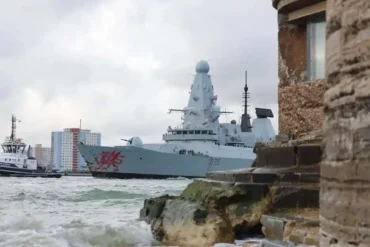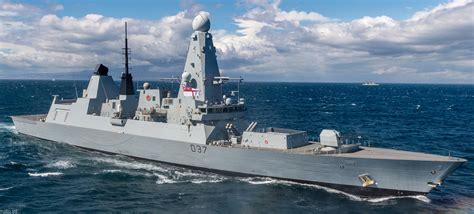
Britain is actively assessing the deployment of the Royal Navy’s Type 45 destroyer HMS Duncan to waters off Cyprus following Iranian-linked drone activity that damaged infrastructure at RAF Akrotiri, one of the United Kingdom’s most strategically significant overseas air bases. The deliberations come amid heightened regional tensions and growing concern over the expanding use of one-way attack drones and potential missile threats across the Eastern Mediterranean. Positioning a high-end air-defense destroyer offshore would significantly enhance layered protection for the base while reinforcing NATO’s defensive posture in a region increasingly shaped by long-range precision strike capabilities.
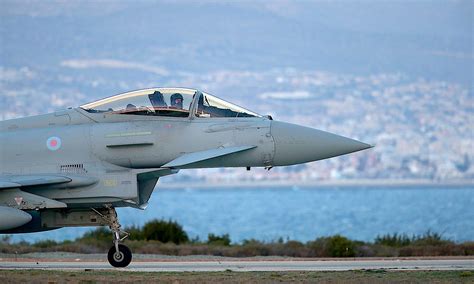
The reported trigger for the review was a drone incident that breached local defenses and caused damage to the runway at RAF Akrotiri. While full technical details remain undisclosed, open-source reporting has linked the system to Iranian-supplied platforms, potentially resembling the Shahed-type loitering munition family that has proliferated across multiple theaters. Even limited physical damage to a runway carries outsized operational implications. Akrotiri functions as a critical sortie-generation hub, supporting British and allied air operations across the Levant and wider Middle East. Temporary runway disruption can slow mission tempo, complicate logistics, and impose strategic friction far beyond the cost of the attacking drone.
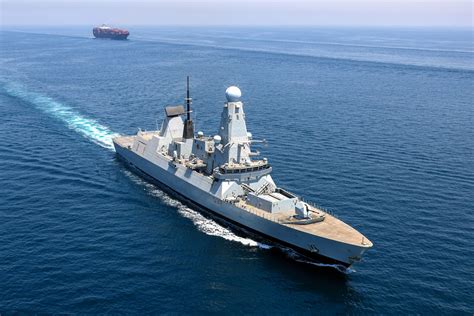
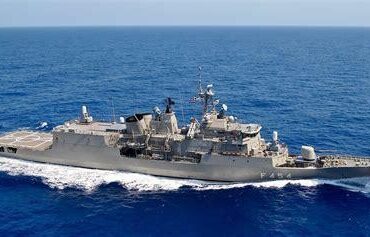
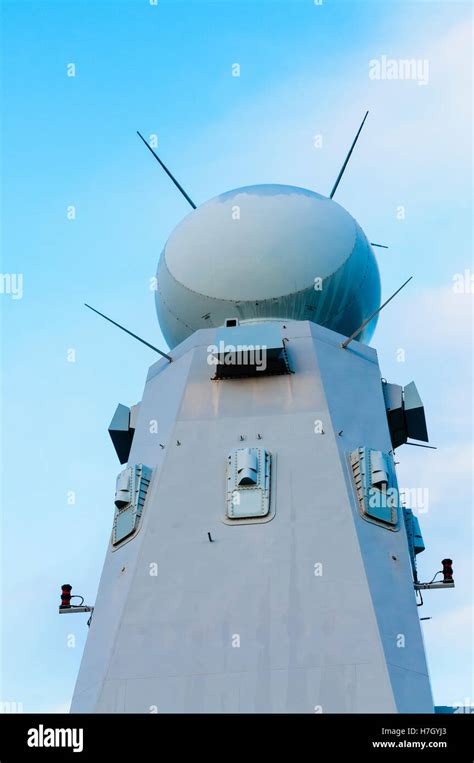
Deploying HMS Duncan would represent more than a symbolic show of force. The Type 45 class was purpose-built for area air defense, centered on the highly sophisticated Sea Viper missile system. At its core is the SAMPSON multi-function radar, a rotating active electronically scanned array capable of tracking numerous fast-moving aerial targets simultaneously, paired with the long-range S1850M radar for extended surveillance. This combination enables the ship to build and maintain a comprehensive air picture across a wide maritime and coastal sector, detecting threats earlier than many land-based point-defense systems can achieve.
In practical terms, stationing a Type 45 off Cyprus would shift the defensive engagement envelope outward over the sea. Early detection over water improves radar horizon geometry and increases intercept windows, allowing threats to be engaged at greater distances from population centers and military infrastructure. Rather than relying solely on ground-based systems to defend the runway perimeter, the defensive fight would begin far beyond the coastline, buying critical seconds or minutes for engagement decisions—time that can determine whether a threat is neutralized cleanly or reaches its target.
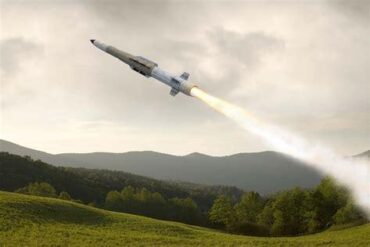
The Sea Viper system employs Aster interceptors, housed within the destroyer’s vertical launch cells. These missiles are designed for high maneuverability and precision engagement, enabling the ship to counter complex raid scenarios involving multiple inbound tracks. Although the Aster 30’s headline range figures are often cited, the operational significance lies in engagement flexibility and rapid target sequencing. A Type 45 can prosecute several threats in quick succession while maneuvering, maintaining defensive coverage even as the threat axis shifts.
That mobility is strategically important in the Eastern Mediterranean, where potential launch points vary. Threats could originate from coastal areas in Lebanon or Syria, from maritime platforms, or from more distant launch sites if longer-range systems are employed. A sea-based defender can reposition within hours, adjusting coverage geometry without the diplomatic and logistical constraints that accompany the deployment of new land-based batteries. The destroyer becomes a floating extension of the base’s defensive perimeter.
Yet the economics of modern air defense introduce complexity. One-way attack drones are deliberately inexpensive and expendable, while high-end interceptors represent significant investment. No responsible planner would expend advanced missiles indiscriminately against every low-cost aerial system. A credible defensive architecture therefore relies on layering: electronic warfare measures, close-in weapon systems, and ground-based counter-drone technologies address lower-end threats, while Sea Viper is reserved for higher-speed, higher-value, or saturation-level attacks. In that layered construct, HMS Duncan would serve as the high-confidence shield against the most dangerous trajectories—cruise missile–class systems, coordinated multi-vector raids, or any leakers that evade nearer defenses.
The broader strategic calculus extends beyond drone defense. Iranian military doctrine increasingly emphasizes the integration of drones, cruise missiles, and potentially ballistic systems to complicate adversary air-defense networks. Introducing a Type 45 into the Cyprus defense equation signals that the United Kingdom is prepared to manage more sophisticated aerial threats, not merely isolated drone incidents. The presence of a destroyer equipped for complex air warfare raises the threshold for escalation by signaling that coercive air attacks will face a capable and resilient defensive architecture.
London’s ongoing modernization efforts further contextualize this potential deployment. The Royal Navy is investing hundreds of millions of pounds into enhancing Sea Viper’s capabilities, including software, radar, and interceptor upgrades intended to address emerging missile threats. While the Type 45 is not a dedicated ballistic missile defense platform on the scale of U.S. Aegis destroyers configured for that role, incremental enhancements expand its capacity to confront more demanding target profiles. In a region where missile proliferation is accelerating, such adaptability increases the destroyer’s strategic utility.
The political dimension is equally significant. Cyprus hosts sovereign British base areas that are legally distinct and strategically indispensable. A visible maritime defender reinforces the message that attacks on these facilities will not occur in a vacuum. At the same time, deploying a defensive asset rather than initiating offensive strikes reflects calibrated escalation management. Strengthening defenses hardens the target without immediately broadening the conflict. It communicates resolve while preserving diplomatic maneuvering space.
Allied coordination may shape the final posture. Reporting has indicated that France is considering contributing anti-missile or anti-drone systems to bolster regional defenses. A multinational defensive framework complicates adversary planning by distributing sensors and shooters across platforms and territories. Integrated air and missile defense functions best when radar tracks, targeting data, and engagement authority are shared through secure tactical data links. In such an architecture, HMS Duncan would not operate in isolation but as a high-end node within a broader defensive web.
Operational endurance and resource allocation remain practical considerations. The Royal Navy’s destroyer fleet is limited in number, and sustained stationing in the Eastern Mediterranean requires logistical support and maintenance planning. Missile magazines are finite; replenishment at sea for vertical launch interceptors is not straightforward. These constraints underscore that a Type 45 deployment, if executed, would likely be part of a rotational or coalition-supported posture rather than a permanent single-ship umbrella.
For RAF Akrotiri, the implications are immediate and tangible. Maintaining runway integrity and sortie tempo under threat conditions preserves the United Kingdom’s capacity to project air power, conduct surveillance, and support regional stability operations. Even modest degradation can ripple outward into broader operational planning. A destroyer offshore increases the probability that the base remains functional despite persistent harassment attempts.
For Iran and affiliated actors, the message embedded in a Type 45 deployment is layered. It signals that deniable or low-cost aerial harassment will encounter a technologically advanced countermeasure suite designed for contested airspace. It also suggests that the United Kingdom views the Eastern Mediterranean not as a peripheral theater but as a core strategic zone where sovereignty and alliance commitments will be defended with high-end naval assets if required.
The evolution of modern conflict has compressed geography. Systems once limited to regional battlefields now reach rear areas and logistical hubs with relative ease. Cheap drones, precision-guided munitions, and long-range sensors have transformed the defensive equation for forward bases. In this environment, naval air-defense platforms serve as flexible guardians of infrastructure that was previously considered beyond routine strike range. The debate over deploying HMS Duncan reflects this broader shift: defense is no longer static, and the line between frontline and rear area is increasingly blurred.
Whether the United Kingdom ultimately authorizes the deployment will depend on threat assessments, alliance coordination, and broader strategic calculations. What remains clear is that the potential presence of HMS Duncan off Cyprus would materially strengthen the island’s air and missile defense architecture, elevate deterrence, and demonstrate a rapid, adaptive response to evolving aerial threats in one of the world’s most strategically sensitive maritime corridors.