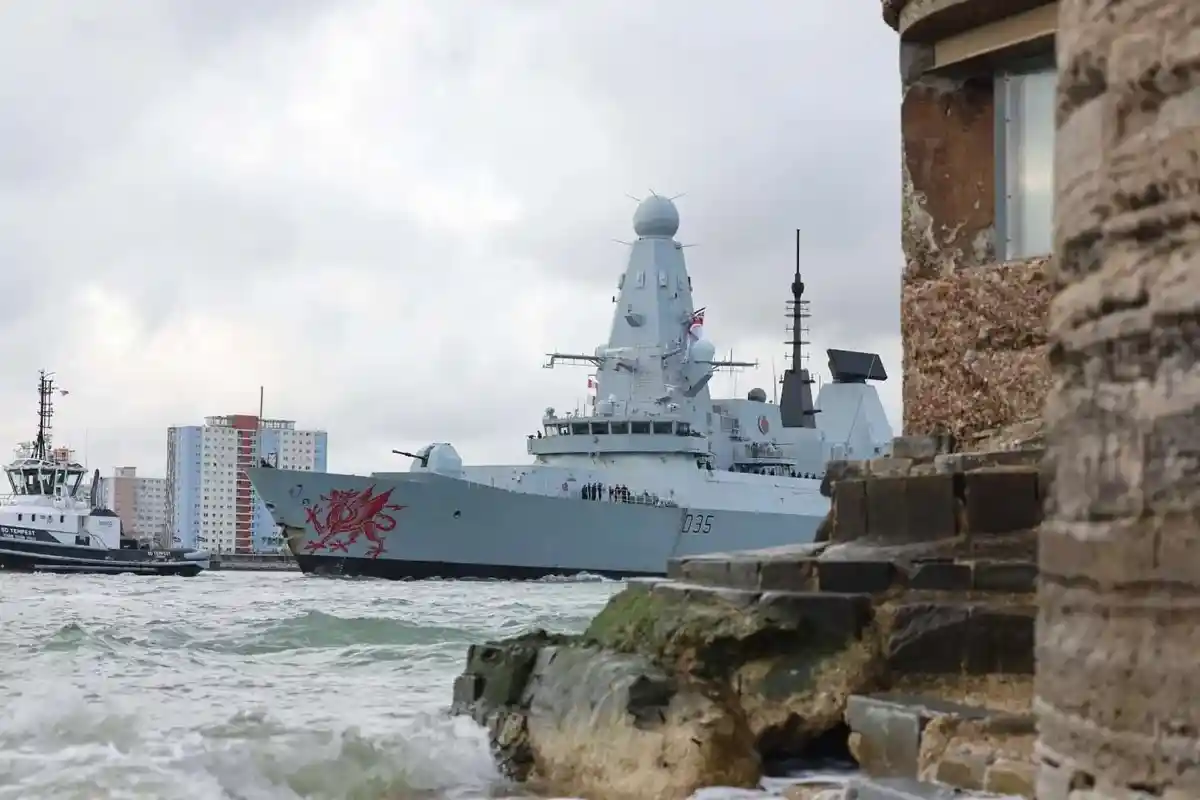
The strategic geometry of the Eastern Mediterranean has shifted once again as the United Kingdom deploys the Type 45 destroyer HMS Dragon to reinforce defensive coverage around Cyprus following a drone strike near RAF Akrotiri. The move illustrates how modern naval air-defense ships are increasingly functioning as mobile guardians of land bases, extending radar coverage and missile interception capability far beyond the coastline. In a security environment defined by fast-moving drones, long-range missiles, and compressed reaction times, a warship like HMS Dragon becomes less of a traditional escort and more of a floating air-defense fortress.
The decision to deploy the destroyer was triggered by an incident that landed a drone within 800 yards of British personnel stationed near RAF Akrotiri, one of the United Kingdom’s most critical overseas air hubs. Though damage was avoided, the proximity of the strike sent a clear signal about the growing reach and sophistication of regional drone operations. Western military planners have been increasingly concerned about Iranian-designed loitering munitions, which can fly long distances, evade radar detection, and overwhelm defenses through saturation attacks.
London’s response was immediate but carefully structured. Rather than relying solely on fixed defenses on the island, the United Kingdom began constructing a layered defense architecture combining maritime and air capabilities. The dispatch of HMS Dragon forms the centerpiece of that system, linking naval sensors, interceptor missiles, helicopters, and land-based radar into a single defensive network.
HMS Dragon: The Royal Navy’s Air Defense Specialist
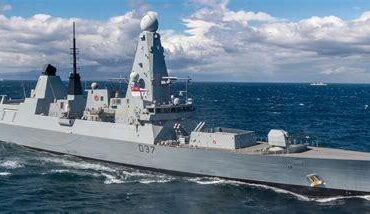
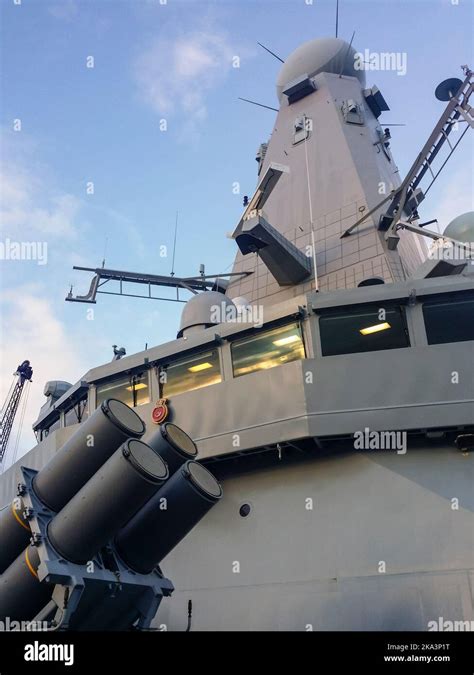
The Type 45 destroyer HMS Dragon is one of the most sophisticated air-defense vessels ever built for the Royal Navy. Displacing roughly 7,350 tonnes and stretching 152 meters in length, the ship was designed from the keel up to defeat airborne threats. While destroyers historically carried heavy guns for naval battles, the modern Type 45 is essentially a missile shield at sea, built to detect and neutralize hostile aircraft, drones, and incoming missiles before they reach their targets.
At the heart of the ship lies the Sea Viper air-defense system, a highly integrated network combining advanced radar sensors, fire-control software, and vertical-launch missiles. Sea Viper can launch eight interceptor missiles within ten seconds and guide up to sixteen simultaneously, allowing the destroyer to counter multiple threats arriving at high speed. In theoretical coverage terms, the system can defend an area several times larger than the island of Cyprus itself.
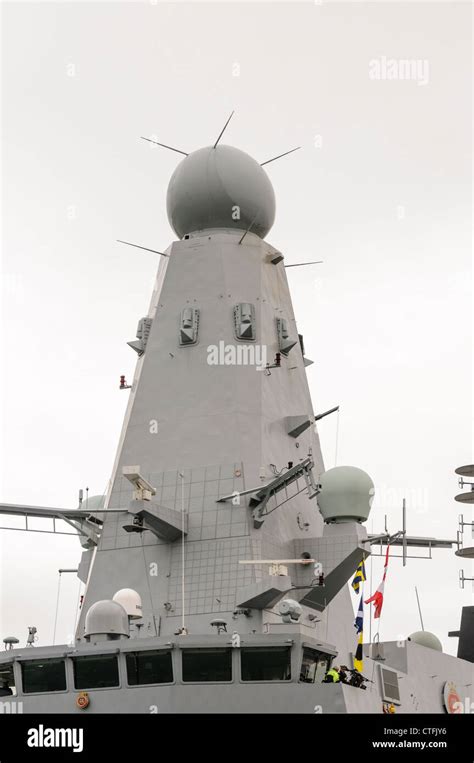
The ship’s sensor backbone is the powerful SAMPSON multi-function radar, a rotating array mounted high on the distinctive mast. This radar can detect and track objects more than 250 miles away, even when those targets are small, fast, or maneuvering. In practical terms, that means drones or missiles heading toward Cyprus can be identified far out over the sea, buying precious minutes for interception.
Building a Layered Air and Missile Defense Network
HMS Dragon does not operate alone. The deployment is part of a broader British effort to create a multi-layered defense umbrella over Cyprus and the surrounding maritime approaches. In modern warfare, no single platform is expected to defeat every threat; instead, survivability comes from overlapping systems that detect, track, and engage targets at different ranges.
The British package currently includes several critical components:
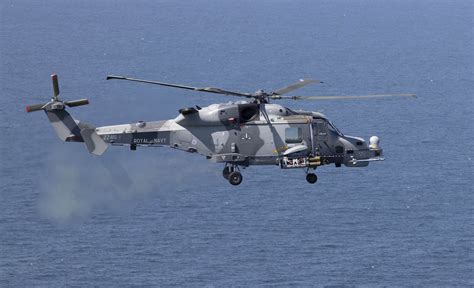
- Wildcat helicopters from 815 Naval Air Squadron, equipped with Martlet lightweight missiles capable of intercepting drones.
- A Merlin Mk2 helicopter fitted with the Crowsnest airborne surveillance system, providing long-range radar coverage beyond the horizon.
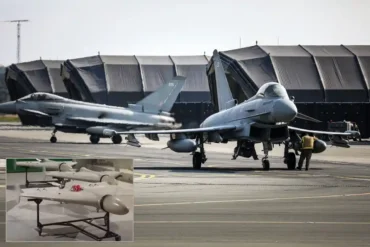
- Additional fighter aircraft and ground-based air defense units stationed at RAF Akrotiri.
- Enhanced radar monitoring and surveillance networks across the region.
Together, these assets form what military planners describe as a “kill web”, where sensors and weapons share targeting data in real time. If a drone swarm approaches from the east, a radar on HMS Dragon might detect it first. The data could then be transmitted to fighters or ground batteries, while the destroyer itself prepares missile interceptors.
This interconnected approach dramatically improves reaction time. Instead of waiting for a drone to appear near the coastline, defenders can engage threats hundreds of miles from the island, reducing the risk to personnel and infrastructure.
Combat-Proven Missile Defense Capabilities
The Type 45 destroyer’s reputation as a premier air-defense platform is not based solely on theoretical performance. Recent exercises and real-world operations have demonstrated the system’s ability to handle difficult targets.
In 2025, HMS Dragon became the first British warship to destroy a supersonic maneuvering missile target during a high-intensity exercise. Such targets are designed to simulate modern anti-ship missiles that change direction at extreme speeds. Successfully intercepting one demonstrates both the precision of the Sea Viper missile and the sophistication of the ship’s radar tracking systems.
Another vessel in the same class, HMS Diamond, recently proved the system’s value during operations in the Red Sea. In that deployment, the destroyer shot down nine drones and one missile that threatened commercial shipping routes. Incidents like these have turned the Type 45 fleet into an essential tool for protecting both military and civilian assets in volatile regions.
The growing prevalence of loitering munitions and drone swarms means that these defensive systems are no longer optional luxuries. They are rapidly becoming core infrastructure for any military presence near contested airspace.
Cyprus: A Strategic Anchor in the Eastern Mediterranean
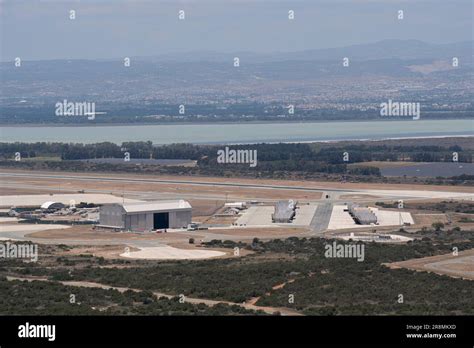
The deployment also highlights the strategic importance of Cyprus within Britain’s global military posture. The island hosts the Sovereign Base Areas of Akrotiri and Dhekelia, territories retained by the United Kingdom after Cypriot independence in 1960. These bases function as forward operating hubs for operations across the Middle East, North Africa, and the eastern Mediterranean.
RAF Akrotiri in particular plays a central role in regional air operations. From this base, the United Kingdom can conduct surveillance flights, deploy combat aircraft, coordinate coalition missions, and support evacuation operations during regional crises.
British officials have indicated that more than 4,000 personnel are regularly stationed on the island. An additional 400-member air-defense team supports the protection of the base and its infrastructure. In times of heightened tension, these numbers can increase as reinforcements arrive.
The island’s geographic position is what gives it extraordinary strategic value. Cyprus sits at the crossroads of the Levant, the Suez Canal approach, and the wider Middle East, making it a natural staging ground for rapid military response. When tensions rise across the region, the island becomes both a launch platform and a logistical lifeline.
Rapid Deployment Under Operational Pressure
Although the decision to send HMS Dragon was swift, executing the deployment required an intense logistical push. The destroyer had been undergoing maintenance in dry dock at Portsmouth, meaning it was not immediately ready to sail.
Preparing the vessel for operational duty required a compressed series of steps: refloating the ship, completing essential maintenance work, loading Sea Viper missiles, replenishing fuel and supplies, and reassembling the full crew. Normally, this sequence of tasks can take several weeks, but naval planners accelerated the schedule dramatically.
Officials later explained that what typically involves six weeks of preparation was condensed into just six days. The urgency of the situation demanded that the ship reach the Mediterranean as quickly as possible.
The episode also highlights the reality facing the Royal Navy’s small but highly capable destroyer fleet. With only six Type 45 ships in service, balancing maintenance, training, and operational commitments is a delicate exercise. Even so, when crises erupt, these vessels remain among Britain’s most powerful tools for projecting defensive strength overseas.
A Mobile Shield for an Uncertain Security Environment
HMS Dragon’s deployment to Cyprus is about more than responding to a single drone strike. It represents an evolving strategy for defending forward bases in an era where cheap drones and precision missiles can threaten even well-protected installations.
Instead of relying solely on static defenses, modern militaries increasingly turn to mobile maritime platforms that can extend detection and interception far from land. A destroyer positioned offshore effectively expands the defensive perimeter, giving commanders more time and space to respond to incoming threats.
In the increasingly contested skies of the Eastern Mediterranean, the arrival of HMS Dragon signals that Britain intends to maintain a robust and flexible defensive presence. The ship’s radars now sweep the sea lanes and air corridors surrounding Cyprus, forming a vigilant electronic horizon against whatever might emerge from beyond it.