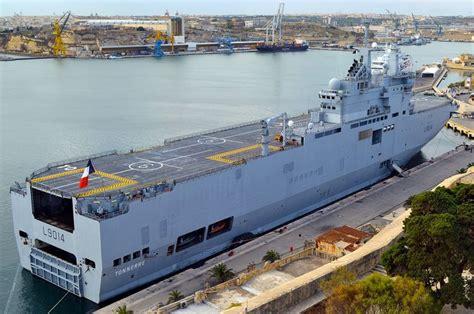
The rapid escalation of tensions across the Middle East has prompted France to deploy the Mistral-class amphibious assault ship Tonnerre to the Eastern Mediterranean, a move designed to provide Paris with a flexible maritime platform capable of evacuating civilians, coordinating military operations, and delivering humanitarian assistance should the crisis spill into Lebanon. As the confrontation involving the United States, Israel, and Iran intensifies, French officials fear that Lebanon could become a secondary theater of instability, putting thousands of foreign nationals at risk and potentially destabilizing the wider Levant.
The deployment underscores France’s determination to maintain an independent operational posture in the region while safeguarding its citizens and reinforcing its diplomatic influence in the Mediterranean basin. With approximately 20,000 French citizens and dual nationals currently residing in Lebanon, the presence of a fully equipped amphibious command ship provides Paris with an immediate and adaptable response option should conditions deteriorate rapidly.
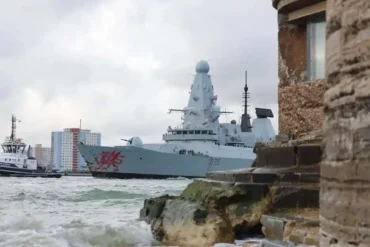
Reports from French naval observers confirm that Tonnerre departed from the naval base in Toulon, escorted by the stealth-capable light frigate Courbet, signaling the start of a carefully calibrated maritime deployment intended to combine deterrence with crisis management capabilities. While framed publicly as a contingency measure, the operation forms part of a broader French effort to reinforce its regional footprint as the geopolitical environment grows increasingly volatile.
France Strengthens Its Mediterranean Military Posture
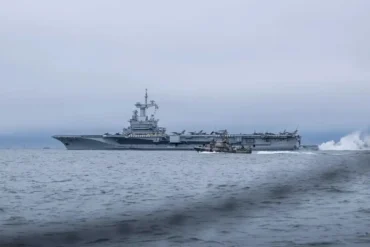
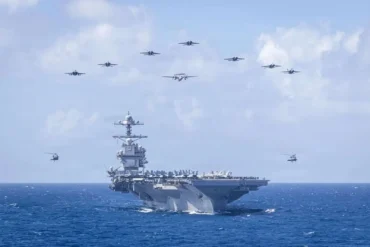
The dispatch of Tonnerre must be viewed within the broader strategic adjustments announced by President Emmanuel Macron in early March. In a national address, Macron revealed that France had begun reinforcing several regional bases while initiating precautionary repatriation flights for vulnerable civilians. He also confirmed that the aircraft carrier Charles de Gaulle and its accompanying strike group were returning toward the Mediterranean, significantly strengthening French naval capabilities in the theater.
Alongside these deployments, the French Navy has positioned the frigate Languedoc near Cyprus, where security concerns increased after reported attacks targeting infrastructure on the island. This layered deployment demonstrates Paris’s determination to maintain operational flexibility while avoiding direct participation in offensive military operations against Iran.
Macron’s message balanced firmness with caution. Although the French president blamed Tehran for contributing to regional escalation, he emphasized that France’s primary objectives remain the protection of its citizens, the defense of allied partners, and the preservation of regional stability. The deployment of Tonnerre therefore reflects a defensive yet strategically proactive approach, allowing France to prepare for multiple contingencies without committing to a direct combat role in the evolving conflict.
Tonnerre: A Floating Crisis-Management Hub
At nearly 199 meters in length and displacing approximately 21,500 tons, the Mistral-class amphibious assault ship Tonnerre is far more than a traditional troop transport vessel. Designed as a multi-role amphibious command platform, the ship combines aviation operations, amphibious transport, advanced command facilities, and medical capabilities within a single hull.
Tonnerre can embark between 400 and 900 troops, depending on mission requirements, and features a large flight deck capable of supporting multiple helicopters simultaneously. Its internal hangar and command spaces allow military planners to coordinate complex joint operations directly from the sea, providing a highly adaptable command node during crisis situations.
Perhaps most crucially in humanitarian emergencies, the ship carries a 69-bed hospital equipped with two fully functional operating rooms, intensive care units, and diagnostic facilities. In severe emergencies, the vessel’s medical capacity can be expanded further through modular field hospital units installed in the hangar deck. This capability transforms Tonnerre into a floating medical facility capable of handling mass casualty events, making it particularly valuable during evacuations or disaster response operations.
Helicopters, Drones, and Landing Craft Prepare for Multiple Missions
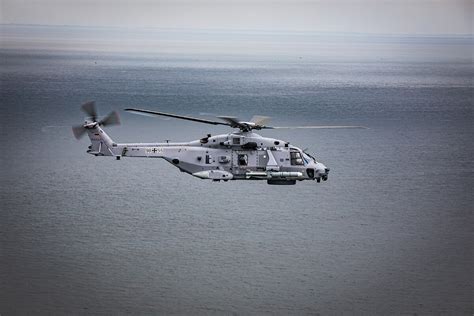
Initial reports from naval monitoring sources indicate that Tonnerre departed with a carefully selected air and amphibious component tailored to the Lebanese contingency scenario. The embarked aviation detachment reportedly includes two NH90 transport helicopters, two Tiger attack helicopters, and Schiebel S-100 vertical takeoff and landing unmanned aerial vehicles.
The NH90 helicopters provide essential capabilities for tactical transport, casualty evacuation, and liaison missions between offshore ships and coastal areas. Meanwhile, the Tiger attack helicopters offer armed overwatch and defensive firepower, ensuring that evacuation or insertion missions can be protected if security conditions deteriorate.
The presence of the S-100 VTOL drones significantly expands the ship’s surveillance reach. These unmanned aircraft can conduct persistent reconnaissance missions along coastal zones, monitor urban littorals, and identify potential threats before helicopters or landing craft approach the shore.
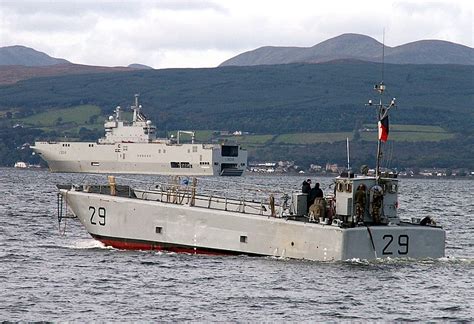
Amphibious mobility is further enhanced by the embarkation of EDAR and EDAS landing craft, which allow personnel, vehicles, and evacuees to be transferred between ship and land even when port facilities are inaccessible or politically sensitive. This capability is essential in scenarios where airports or harbors become unusable due to conflict or infrastructure damage.
Preparing for Potential Evacuations from Lebanon
If the regional conflict expands toward Lebanon, Tonnerre could play a central role in non-combatant evacuation operations (NEO). Positioned offshore, the ship could receive evacuees transported by helicopter or landing craft and temporarily shelter them while arrangements are made for onward travel to safer locations such as Cyprus or mainland Europe.
During such operations, the ship’s medical facilities would be used to triage and treat injured civilians, while its command center could coordinate evacuation corridors with allied forces and international organizations. The ability to conduct these tasks from international waters gives France a significant operational advantage, allowing it to act quickly without requiring extensive infrastructure on land.
The ship’s presence also supports French forces already deployed in the region. France contributes approximately 700 personnel to the United Nations Interim Force in Lebanon (UNIFIL) under Operation Daman, a mission tasked with maintaining stability along the Lebanon–Israel border. Tonnerre could provide logistical support, emergency extraction capability, and command coordination for these troops if security conditions deteriorate.
Strategic Significance in the Wider Middle East Crisis
Although Tonnerre is a powerful and versatile platform, it is not designed to operate independently in high-intensity naval combat environments. The ship lacks the sophisticated area air defense systems and long-range strike weapons carried by dedicated surface combatants. As a result, its deployment is closely tied to the broader French naval task group assembling in the Mediterranean.
The escorting frigate Courbet, the presence of Languedoc near Cyprus, and the anticipated arrival of the Charles de Gaulle carrier strike group together create a layered protective framework. Within this formation, Tonnerre serves as the littoral operations hub, while other vessels provide air defense, surveillance, and strike capabilities.
This layered posture reflects a carefully calibrated French strategy. Rather than escalating the conflict by joining offensive operations against Iran, Paris is positioning assets that allow it to protect civilians, support peacekeeping forces, and respond to humanitarian crises without abandoning strategic autonomy.
France Reasserts Its Role in the Eastern Mediterranean
The arrival of Tonnerre in the Eastern Mediterranean highlights France’s enduring ambition to remain a decisive maritime actor in the Levant. For Paris, the region is not only a theater of security concern but also a crucial arena of diplomatic influence and humanitarian responsibility.
By deploying a versatile amphibious command ship capable of evacuation, medical care, and operational coordination, France ensures it possesses a sovereign, rapidly deployable instrument of crisis management positioned close to the evolving conflict. The ship’s presence sends a clear message that France intends to shape events rather than react to them.
As the Middle East crisis continues to evolve, Tonnerre’s role may expand from precautionary deployment to active operational support. Whether conducting evacuations, assisting peacekeeping forces, or coordinating humanitarian relief, the amphibious assault ship stands as a tangible symbol of France’s commitment to stability, protection of its citizens, and strategic engagement in one of the world’s most volatile regions.