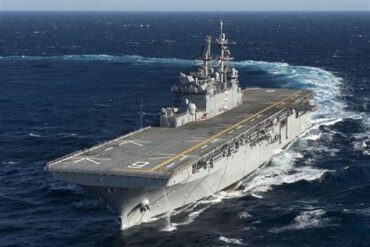
The U.S. Navy and Marine Corps have stepped up preparations for one of the most unforgiving problems in modern naval warfare: moving large, high-value amphibious ships through narrow straits where geography, politics, and weapons overlap. In late January 2026, sailors and Marines aboard the Wasp-class amphibious assault ship USS Boxer (LHD-4) conducted a simulated strait transit in the Pacific, rehearsing how an amphibious task force survives and fights when sea room collapses and threats can appear from both coastlines without warning.
Released imagery and unit reporting from January 27 reveal a drill that goes far beyond routine navigation. This was a force-protection, command-and-control, and combat-systems exercise, designed to replicate the stress of chokepoint operations where commercial traffic, hostile surveillance, drones, mines, missiles, and fast attack craft compress decision time to seconds. For the Navy–Marine Corps team, this scenario is no longer theoretical. Strategic chokepoints are increasingly viewed as pressure valves in future conflicts, places where adversaries can challenge freedom of movement without crossing the threshold of open war.
The exercise brought together the Boxer Amphibious Ready Group (ARG) and the embarked 11th Marine Expeditionary Unit (MEU), reinforcing the idea that amphibious forces must be able to fight their way through constrained waters, not merely pass through them. Strait transits, once treated as largely administrative evolutions, are now rehearsed as potentially contested operations with immediate tactical consequences.
After the initial navigation and watch-standing phases, the complexity of the drill increased rapidly. Ships maneuvered in tight formation while coordinating layered defenses, aviation overwatch, and real-time contact classification in waters deliberately framed as crowded, shallow, and hostile.
Why Strait Transits Have Become a Frontline Naval Problem
Chokepoints are the places where maritime strategy becomes unavoidable reality. The world’s most important sea lanes funnel traffic through narrow passages, and amphibious ships cannot bypass them. Unlike submarines or small surface combatants, a big-deck amphibious assault ship advertises its presence through size, signature, and mission profile. That makes it both strategically valuable and tactically tempting.
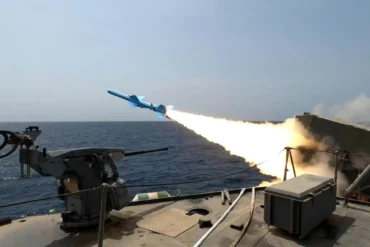
In a strait, threat timelines shrink dramatically. Anti-ship missiles launched from shore batteries, loitering munitions cued by small drones, naval mines seeded in shallow water, and fast inshore attack craft all thrive in confined spaces. Commercial shipping further complicates the picture, masking hostile intent and limiting maneuver options. A single misidentified contact can escalate from ambiguity to engagement faster than doctrine prefers.
The USS Boxer drill acknowledged this reality directly. The scenario emphasized continuous contact evaluation, disciplined emissions control, and seamless coordination between shipboard combat information centers and embarked Marine units. The message was clear: in chokepoints, hesitation is vulnerability.
The Amphibious Task Group Under Pressure
The Boxer ARG brought together a classic three-ship amphibious formation, each vessel playing a distinct role in a high-risk transit. Alongside Boxer were the San Antonio-class amphibious transport dock USS Portland (LPD-27) and the Whidbey Island-class dock landing ship USS Comstock (LSD-45). Together, they represent aviation dominance, command-and-control flexibility, and surface connector power.
USS Boxer functions as the formation’s aviation and command hub, supporting fixed-wing and rotary-wing aircraft while hosting the core staff that coordinates naval and Marine actions. In a strait, this role becomes more demanding, not less. The ship must manage airspace crowded by civilian traffic, friendly aircraft, and potential hostile drones, all while maintaining defensive readiness.
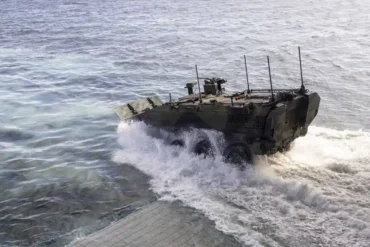
USS Portland adds depth to the formation. Designed to move Marines, vehicles, and landing craft efficiently, the LPD must continue logistics and command functions even while under potential surveillance or threat. USS Comstock, with its well deck optimized for landing craft operations, brings a different challenge: operating a ship whose very mission profile can increase signatures in confined waters.
The drill forced these ships to act as a single organism, sharing sensor data, coordinating defensive arcs, and maintaining formation integrity under simulated pressure.
Layered Shipboard Defenses in Confined Waters
In narrow seas, shipboard defenses are not theoretical insurance policies; they are constantly exercised tools. Wasp-class amphibious assault ships like Boxer carry a layered defensive suite designed to counter missiles, aircraft, drones, and surface threats at progressively shorter ranges. This includes Rolling Airframe Missile launchers, NATO Sea Sparrow systems, Phalanx CIWS, and multiple medium-caliber and crew-served weapons for close-in engagements.
The supporting ships mirror this philosophy. USS Portland’s RAM launchers and 30-millimeter guns are optimized for fast reaction against small, agile threats, while USS Comstock relies on CIWS, RAM, and Mk 38 guns to defend itself during vulnerable operations such as well-deck activity. In a strait, these systems must be ready simultaneously, because threats do not arrive sequentially.
The exercise stressed not only firing drills but also rules of engagement discipline, target discrimination, and coordination between ships to avoid gaps or overlaps that could be exploited.
Aviation as the Key to Early Warning and Control
The presence of the 11th Marine Expeditionary Unit’s aviation combat element transformed the transit from a defensive posture into an armed passage with options. Recent imagery confirmed F-35B Lightning II operations from USS Boxer during the workups. In a chokepoint scenario, the F-35B’s value lies as much in its sensor fusion and networking as in its strike capability.
Operating above cluttered coastlines, the aircraft can detect, classify, and relay information about surface and air contacts that shipboard sensors might struggle to separate from background noise. This extended awareness buys time, the most precious commodity in narrow waters.
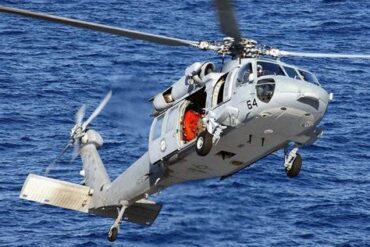
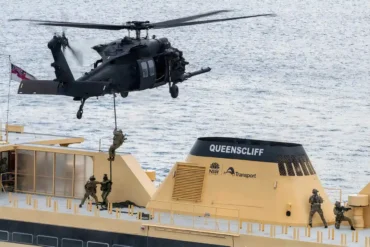
Tiltrotor aircraft further expanded the MEU’s flexibility. They enable rapid insertion of boarding teams, repositioning of air defense elements, or reconnaissance of coastal features that could hide launch sites or sensors. In effect, aviation stretches the task force’s situational awareness bubble beyond the limits imposed by geography.
Counter-Drone Warfare Moves to Center Stage
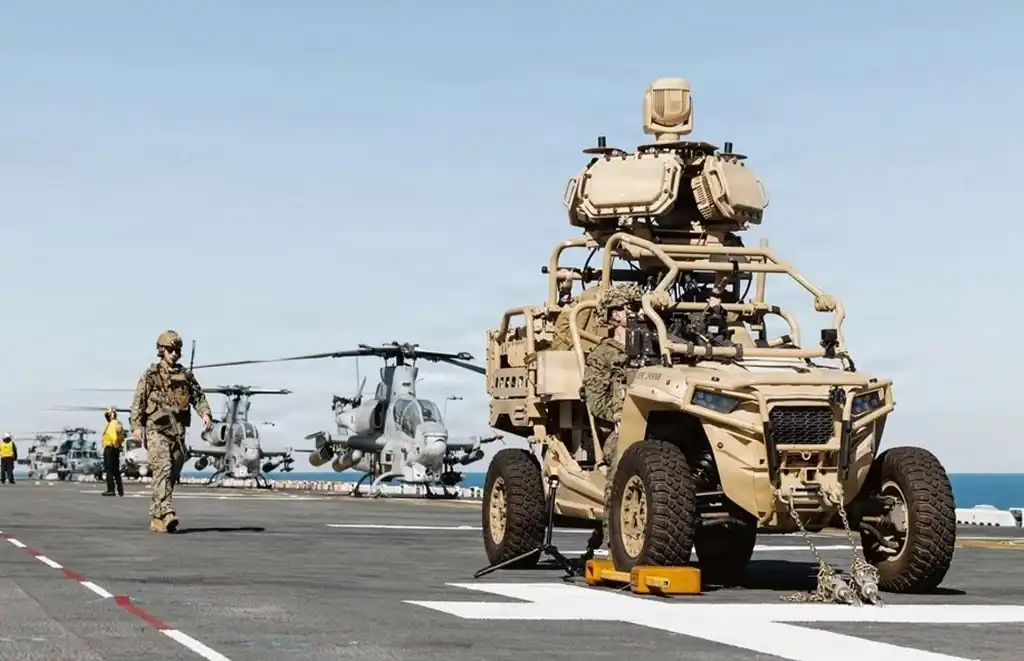
One of the most quietly significant aspects of the drill was its emphasis on counter-uncrewed systems. The Marine Corps has been explicit about the threat posed by small, cheap drones acting as scouts, decoys, or direct attack platforms. Systems such as the Light Marine Air Defense Integrated System (LMADIS) are designed to disrupt these threats through detection and electronic attack rather than brute force alone.
In a strait transit, LMADIS-type capabilities are about breaking kill chains, not scoring visible intercepts. By interfering with control links or forcing drones to reveal themselves, these systems reduce the effectiveness of shore-based missile units and swarm tactics. The Boxer exercise integrated this layer into the broader defensive picture, acknowledging that future chokepoint fights will be as much electronic as kinetic.
Geography as an Adversary
What makes strait transits uniquely dangerous is not just the presence of weapons, but the absence of space. Shallow water constrains maneuvering and complicates anti-submarine warfare. Coastlines create overlapping engagement zones for missiles and rockets. Dense civilian traffic introduces constant ambiguity.
The drill highlighted how even small errors can cascade. A delayed turn, a misunderstood radio call, or an unclassified contact can rapidly escalate into collision risk or tactical surprise. In such an environment, procedural excellence becomes combat power.
A Strategic Signal Beyond Training
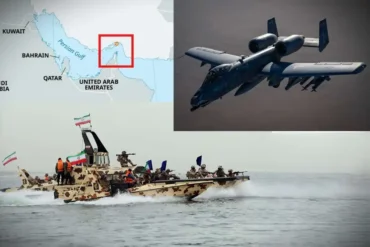
Exercises like the USS Boxer strait transit are not merely about crew proficiency. They are also strategic signals, demonstrating that the U.S. Navy and Marine Corps expect chokepoints to be contested and are preparing accordingly. From the Strait of Hormuz to Indo-Pacific passages where regional tensions simmer, amphibious forces will continue to operate in places where restraint and readiness must coexist.
The underlying lesson is blunt but necessary. Amphibious task forces do not get to choose the geography of global trade and politics. They must be prepared to navigate, defend, and if necessary fight through the world’s narrowest waters under the most demanding conditions. By turning routine transits into rehearsed combat problems, the Navy and Marine Corps are acknowledging a simple truth of modern maritime competition: in chokepoints, complacency is the enemy, and preparation is the only margin.