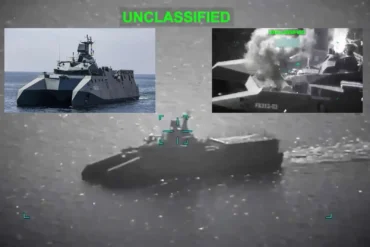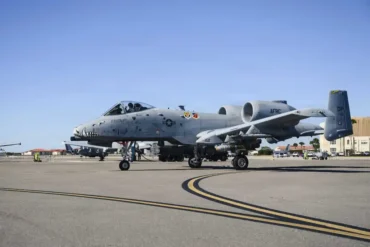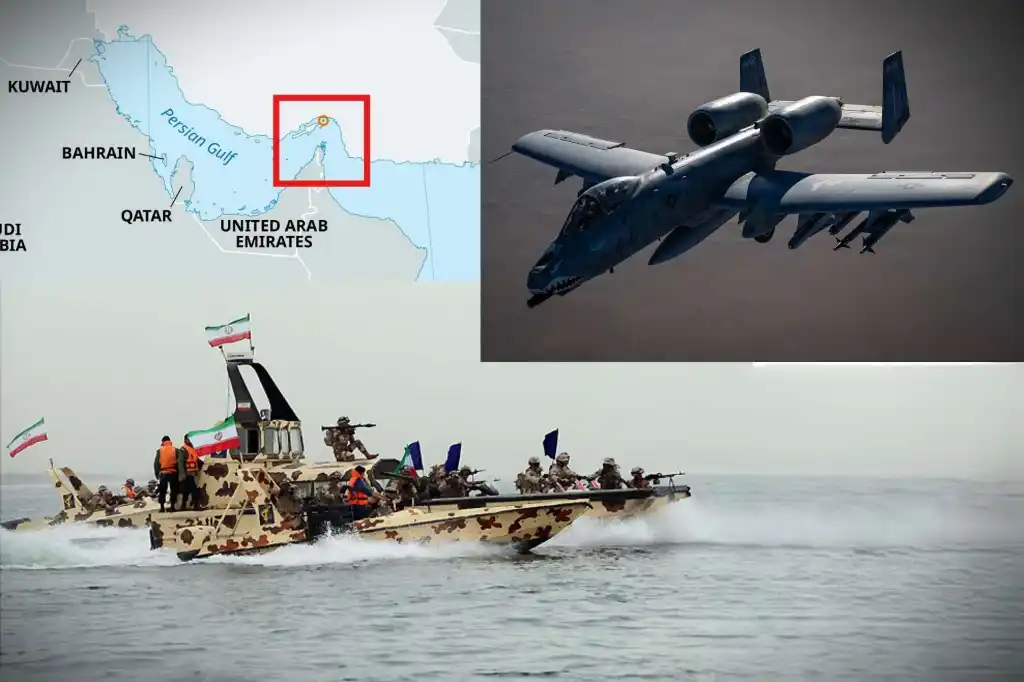
The intensifying confrontation in the Persian Gulf has entered a decisive new phase as the United States deploys its iconic A-10 Warthog into direct maritime combat operations. During Operation Epic Fury, these rugged attack aircraft are now actively hunting and destroying Iranian fast attack craft in the strategically vital Strait of Hormuz—a move that signals not just tactical adaptation, but a deliberate escalation in securing global maritime stability.
This evolution marks a shift from deep-strike operations toward aggressive suppression of asymmetric naval threats. Iranian small craft, long used to harass shipping and project regional pressure, are now facing a platform uniquely engineered for persistence, precision, and battlefield dominance.
A-10 Warthog: Built for the Fight Others Avoid
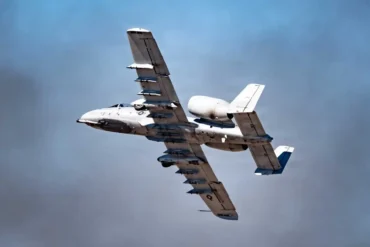
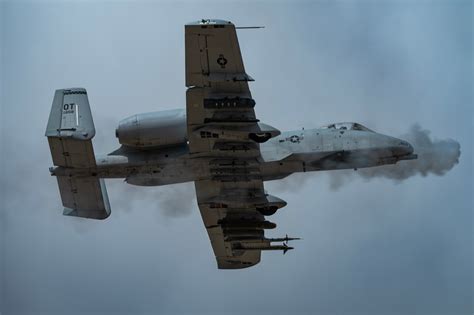
The Fairchild Republic A-10 Thunderbolt II, widely known as the Warthog, has often been underestimated outside traditional land warfare contexts. Yet in the confined and volatile waters of the Strait of Hormuz, its capabilities are proving not just relevant—but decisive.
Unlike high-speed jet fighters optimized for air superiority, the A-10 thrives in chaotic, close-range environments. Its ability to loiter for extended periods allows pilots to track fast-moving maritime targets that can disappear as quickly as they emerge. Iranian fast attack craft rely on precisely this unpredictability—appearing in swarms, dispersing rapidly, and exploiting cluttered maritime traffic to mask intent.
The Warthog turns that advantage into a liability.
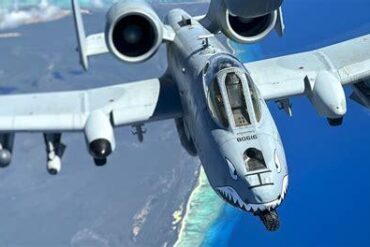
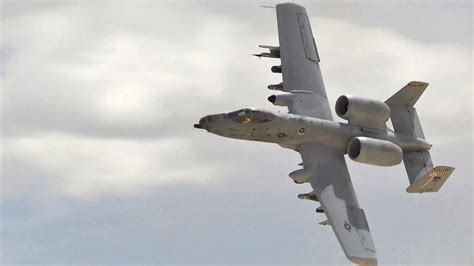
Its GAU-8 Avenger rotary cannon, capable of unleashing devastating firepower with surgical precision, is particularly effective against lightly armored vessels. Combined with advanced targeting systems and pilot visibility unmatched in modern combat aviation, the A-10 transforms the cluttered maritime battlefield into a controlled engagement zone.
By maintaining constant overwatch, it denies Iranian forces the element of surprise—arguably their most valuable tactical asset.
Operation Epic Fury Expands Into Maritime Warfare
Originally conceived as a campaign targeting Iranian military infrastructure, Operation Epic Fury has rapidly evolved into a multi-domain operation encompassing air, land, and now maritime dominance. According to statements from Dan Caine, U.S. forces are actively engaging Iranian naval elements threatening freedom of navigation.
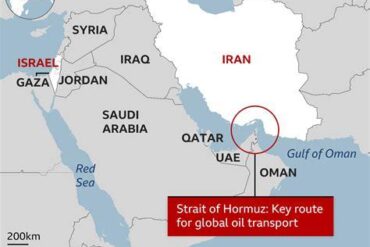
This shift reflects a deeper strategic reality: the Strait of Hormuz is not merely a regional chokepoint—it is a global economic artery. A significant portion of the world’s oil supply transits this narrow passage, making any disruption a potential trigger for worldwide economic instability.
Iran has long recognized this leverage. Its reliance on asymmetric naval tactics—particularly fast attack craft, mine-laying operations, and coastal missile systems—has been central to its maritime doctrine. These methods are designed to impose costs without triggering full-scale conventional conflict.
The U.S. response is now clear: deny those tactics any operational space.
Hunting the Swarm: Tactical Reality Over Open Water
Engaging fast attack craft is not a conventional naval battle. These vessels are small, fast, and often indistinguishable from civilian traffic until the last moment. Their strength lies in numbers and coordination—what military planners refer to as swarm tactics.
The A-10’s role in countering this threat is both surgical and relentless.
Pilots are tasked with identifying hostile intent in real time, tracking multiple targets simultaneously, and executing rapid engagement sequences before enemy craft can disperse. Unlike larger naval assets that may struggle with reaction time or rules of engagement complexity, the A-10 provides immediate, flexible response.
Its ability to reattack targets within seconds ensures that once a threat is identified, it is not merely deterred—it is eliminated.
This operational tempo disrupts Iranian tactics at their core. Swarm attacks rely on overwhelming defenses through speed and numbers. The presence of persistent aerial hunters transforms that equation, forcing Iranian units into a defensive posture where hesitation can be fatal.
AH-64 Apache: The Close-Range Enforcer
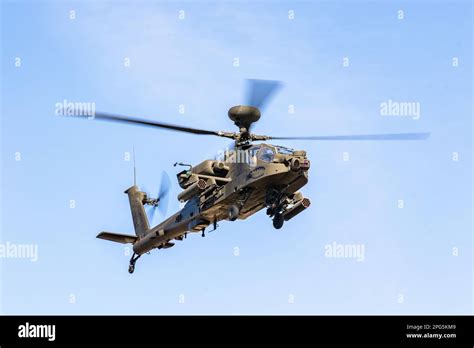
Complementing the A-10’s dominance is the deployment of the Boeing AH-64 Apache, adding another layer of lethality to the battlespace. Operating at lower altitudes and closer ranges, Apaches excel in identifying and engaging targets that might evade higher-flying aircraft.
Their integration into Operation Epic Fury creates a layered strike architecture—a coordinated system where A-10s provide broad-area surveillance and rapid engagement, while Apaches deliver precision strikes in complex or congested environments.
This combination is particularly effective in littoral zones, where geography, traffic density, and limited visibility create operational challenges. Together, these platforms ensure that no hostile movement goes unobserved or unanswered.
The result is not just control—it is dominance.
Strategic Geography: Why the Strait of Hormuz Matters
The importance of the Strait of Hormuz cannot be overstated. At its narrowest point, this maritime corridor is only about 21 miles wide, with shipping lanes even more constrained. It serves as the primary export route for major Gulf oil producers, linking regional energy supplies to global markets.
Any credible threat to this passage carries immediate and far-reaching consequences. Insurance rates surge, shipping routes shift, and energy markets react with volatility.
By deploying A-10 Warthogs into this environment, the United States is making a powerful statement: not only will the corridor remain open, but any attempt to disrupt it will be met with overwhelming and immediate force.
This is not merely about tactical victories against individual boats—it is about shaping the strategic environment.
A-10’s Enduring Relevance in Modern Warfare
For years, debates have surrounded the future of the A-10 within the U.S. military. Critics have argued that advanced multi-role fighters could replace its capabilities, rendering the platform obsolete.
Operation Epic Fury tells a different story.
In the constrained, ambiguous battlespace of the Strait of Hormuz, the very qualities that define the A-10—endurance, survivability, and target discrimination—are precisely what modern warfare demands. High-speed jets may dominate in contested airspace, but they lack the persistence required to manage fluid, low-intensity threats over extended periods.
The Warthog fills that gap with unmatched efficiency.
Its deployment is not a nostalgic nod to legacy systems—it is a calculated decision based on operational necessity. In an era increasingly defined by hybrid warfare and asymmetric threats, platforms like the A-10 offer capabilities that cutting-edge technology alone cannot replicate.
Geopolitical Signaling and Escalation Control
Beyond its battlefield impact, the use of A-10s in the Strait of Hormuz carries significant geopolitical weight. It sends a clear message to Iran—and to the broader international community—that the United States retains both the capability and the will to control escalation dynamics in one of the world’s most sensitive regions.
This is not an indiscriminate show of force. It is a targeted, proportional response designed to neutralize specific threats while maintaining broader strategic stability.
By matching Iranian tactics with tailored countermeasures, the U.S. avoids overextension while ensuring that no coercive action goes unanswered. This balance is critical in preventing localized tensions from spiraling into wider conflict.
At the same time, it reinforces confidence among allies and commercial stakeholders who depend on the uninterrupted flow of goods through the Gulf.
The New Reality in the Gulf
The deployment of A-10 Warthogs and AH-64 Apaches under Operation Epic Fury represents more than a tactical adjustment—it marks a redefinition of how maritime security is enforced in contested environments.
Iran’s long-standing reliance on ambiguity and asymmetry is being systematically dismantled. The ability to harass, disrupt, and intimidate without consequence is rapidly eroding under constant aerial surveillance and immediate strike capability.
For the United States, the objective is clear: maintain freedom of navigation, deter aggression, and ensure that the Strait of Hormuz remains open to global commerce.
For Iran, the message is equally unmistakable: the cost of disruption has just increased dramatically.
In this evolving battlespace, the A-10 Warthog has proven that relevance is not defined by age, but by effectiveness. And in the narrow waters of the world’s most critical chokepoint, effectiveness is everything.