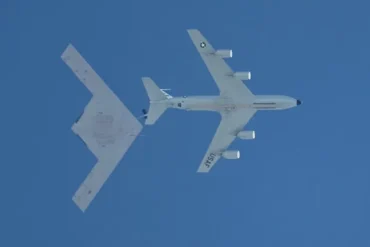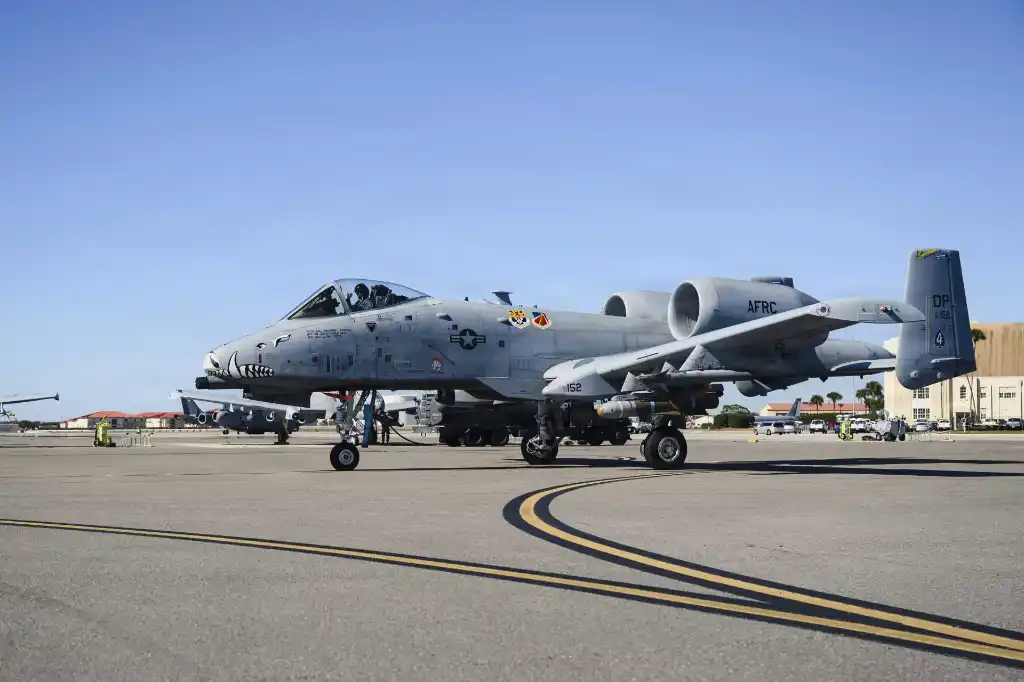
The decision to deploy the A-10 Thunderbolt II in the first strike wave against Iranian targets marks one of the most consequential operational choices of Operation Epic Fury. Confirmed by U.S. Central Command on March 2, 2026, the aircraft’s integration during the first 48 hours underscores the type of combat environment American planners anticipated: dispersed targets, mobile launch teams, and the need for persistent close air support rather than high-speed, one-pass strikes.
Unlike stealth platforms designed for deep penetration into dense air defense networks, the A-10 thrives in controlled but hostile airspace where endurance and visual identification matter. Its presence in the opening phase suggests that U.S. forces were not merely conducting symbolic strikes but preparing for sustained tactical engagements requiring continuous overwatch and rapid re-engagement capability.
By February 19, 2026, the regional concentration of U.S. forces had reached its highest level since the 2003 invasion of Iraq. Aircraft carriers, guided-missile destroyers, long-range bombers, missile defense systems, and expanded command infrastructure formed a layered network across the Middle East. Within this architecture, the A-10’s mission profile filled a specific operational niche: hunting small, time-sensitive targets that could evade larger strike packages.
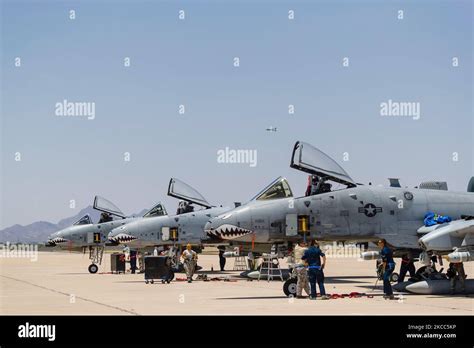
The Strategic Logic Behind Deploying the A-10 in the First Wave
Integrating the A-10 into the initial strike sequence was not accidental. It signaled a deliberate emphasis on sustained close air support and armed overwatch during a phase when Iranian retaliatory missile and drone launches were expected across the Persian Gulf and Levant. Reports during the same period indicated strikes affecting Israel, Jordan, Kuwait, Bahrain, Qatar, Saudi Arabia, the United Arab Emirates, Iraq, Cyprus, and maritime traffic near the Strait of Hormuz.
In such a fragmented battlespace, high-end fighters and strategic bombers deliver precision at scale, but they do not loiter indefinitely over potential launch zones. The A-10 does. Its slower cruise speed—approximately 560 kilometers per hour—combined with long endurance allows pilots to remain on station, visually identify threats, and engage targets in coordination with ground or naval units under time pressure.
The aircraft’s capability for controlled, repeat attack runs makes it particularly effective against dispersed rocket teams or light vehicles attempting to relocate after firing. In the first 48 hours of Operation Epic Fury, that flexibility became a tactical asset.
Engineering a Survivable Low-Altitude Attack Platform
The A-10 originated from the post-Vietnam A-X program, designed to create a survivable close air support aircraft capable of operating under sustained ground fire. Entering service in the late 1970s, the Thunderbolt II—often called the “Warthog”—prioritized ruggedness over speed.
The aircraft’s titanium “bathtub” cockpit shields the pilot from small arms and anti-aircraft fire. Redundant flight control systems and separated hydraulic lines allow continued operation even after significant damage. Fuel tanks incorporate foam protection to reduce explosion risk, and engine placement high on the fuselage minimizes foreign object ingestion on semi-prepared runways.
Modernization into the A-10C configuration added digital stores management, upgraded cockpit displays, electronic countermeasures, and compatibility with advanced targeting pods such as LITENING. These upgrades extended operational relevance into the precision-guided era, ensuring that the aircraft can deliver smart munitions alongside its traditional cannon fire.
The GAU-8/A Avenger: A Cannon That Defines the Aircraft
At the heart of the A-10 lies the GAU-8/A Avenger, a 30 mm seven-barrel Gatling autocannon that fundamentally shaped the aircraft’s structure. The cannon fires at roughly 3,900 rounds per minute and is mounted along the centerline to manage recoil forces of approximately 45 kilonewtons. Its ammunition—armor-piercing incendiary and high-explosive incendiary rounds—travels at a muzzle velocity exceeding 1,000 meters per second.
Eighty percent of rounds fall within a 12-meter circle at design range, a dispersion rating that gives the aircraft formidable precision during low-altitude attack runs. The ammunition drum carries more than 1,150 rounds, and spent casings are returned to maintain balance. The nose landing gear is offset to accommodate the cannon’s alignment—an engineering compromise that reveals just how central the weapon is to the platform’s identity.
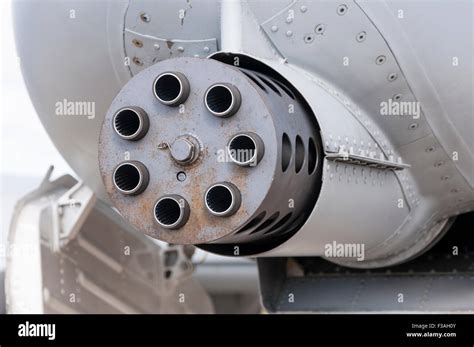
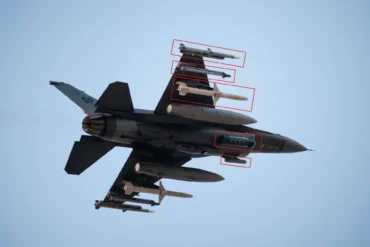
While the GAU-8 dominates public imagination, the A-10 also carries AGM-65 Maverick missiles, guided bombs, rockets including Advanced Precision Kill Weapon System II, and external fuel tanks that extend endurance.
Congressional Constraints and Fleet Preservation
The deployment occurred amid ongoing debate over the aircraft’s future. The FY2026 National Defense Authorization Act prohibited the U.S. Air Force from reducing the A-10 inventory below 103 aircraft, mandating at least 93 primary mission aircraft through September 30, 2026. The legislation restricted the use of FY2026 funds for retirement or long-term storage below that threshold without formal certification and a recapitalization plan.
This marked another chapter in a long-running institutional struggle. Throughout the 2010s and early 2020s, Air Force leadership sought to retire portions of the fleet to prioritize F-35 procurement and reduce maintenance costs. Congress repeatedly intervened, citing the aircraft’s unmatched close air support record and its enduring value in asymmetric conflicts.
Operation Epic Fury placed the debate into real-world context. The aircraft was not merely a legacy system awaiting retirement; it was actively integrated into a high-intensity regional confrontation.
Operational History and Proven Resilience
The A-10’s combat résumé spans Operation Desert Storm, the Balkans, Iraq, and Afghanistan. During the 1991 Gulf War, units flew more than 8,000 sorties, destroying armored vehicles, artillery, and supply convoys. In 2003, Captain Kim “Killer Chick” Campbell returned her heavily damaged aircraft to base using manual controls after sustaining extensive anti-aircraft fire, demonstrating the platform’s resilience.
In recent years, its mission profile expanded to maritime and counter-unmanned operations under Central Command. On February 2, 2026, an A-10C conducted armed overwatch for USS Santa Barbara (LCS-32), an Independence-variant Littoral Combat Ship configured with a mine countermeasures package. The aircraft’s visible loadout included 500-pound Joint Direct Attack Munitions, a LITENING targeting pod, and a 600-gallon centerline fuel tank—an arrangement tailored to protect mine-hunting operations near the Strait of Hormuz.
Such deployments reflect an evolving role beyond traditional land-based close air support. The A-10 has demonstrated adaptability in protecting maritime corridors, countering fast-boat swarms, and responding to drone threats.
Tactical Implications in a High-Intensity Theater
Despite its strengths, the A-10 is not designed to penetrate dense, modern integrated air defense systems independently. Its survivability depends on operating within airspace where suppression and air superiority have been established by other assets. In Operation Epic Fury, that layered approach appears evident: strategic bombers targeting missile sites, naval forces securing sea lanes, missile defenses countering retaliation, and A-10s conducting persistent overwatch in designated zones.
The inclusion of the Thunderbolt II in the first strike wave communicates operational intent. It indicates preparation for sustained engagements requiring visual confirmation and flexible fire control rather than singular, high-speed sorties. In a theater characterized by mobile launchers and decentralized threats, that endurance becomes decisive.
The aircraft’s ability to operate from runways shorter than 1,200 meters, including semi-prepared surfaces, also offers basing flexibility. Distributed operations reduce vulnerability to missile strikes and enable rapid redeployment across the region.
A Legacy Platform in a Contemporary Conflict
Operation Epic Fury demonstrates that legacy platforms, when modernized and properly integrated, retain operational value. The A-10’s architecture—straight wings for low-speed maneuverability, high-mounted turbofan engines, redundant systems—was conceived during the Cold War, yet its relevance persists in contemporary conflicts defined by hybrid threats and dispersed targets.
The aircraft’s presence in the opening phase against Iran illustrates a blend of old and new: precision-guided munitions delivered from a platform built around a cannon whose recoil once challenged engineers to redesign landing gear alignment. It is a reminder that technological evolution does not always eliminate earlier solutions; sometimes it reframes them.
As tensions continue across the Persian Gulf and surrounding regions, the A-10 Thunderbolt II remains more than a symbol. It is a working instrument of sustained close air support, embedded within a broader joint force structure designed to project power, protect maritime corridors, and respond to dynamic threats. In the opening hours of Operation Epic Fury, that combination of endurance, firepower, and survivability once again placed the Warthog at the center of modern air combat.