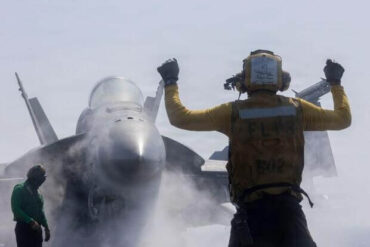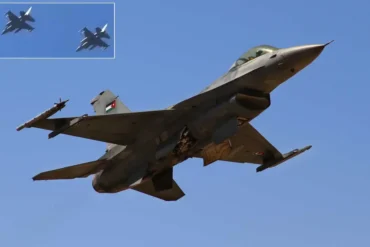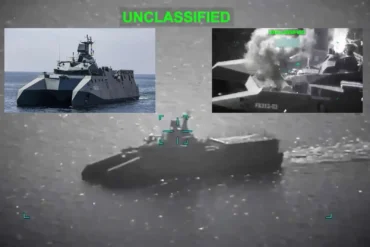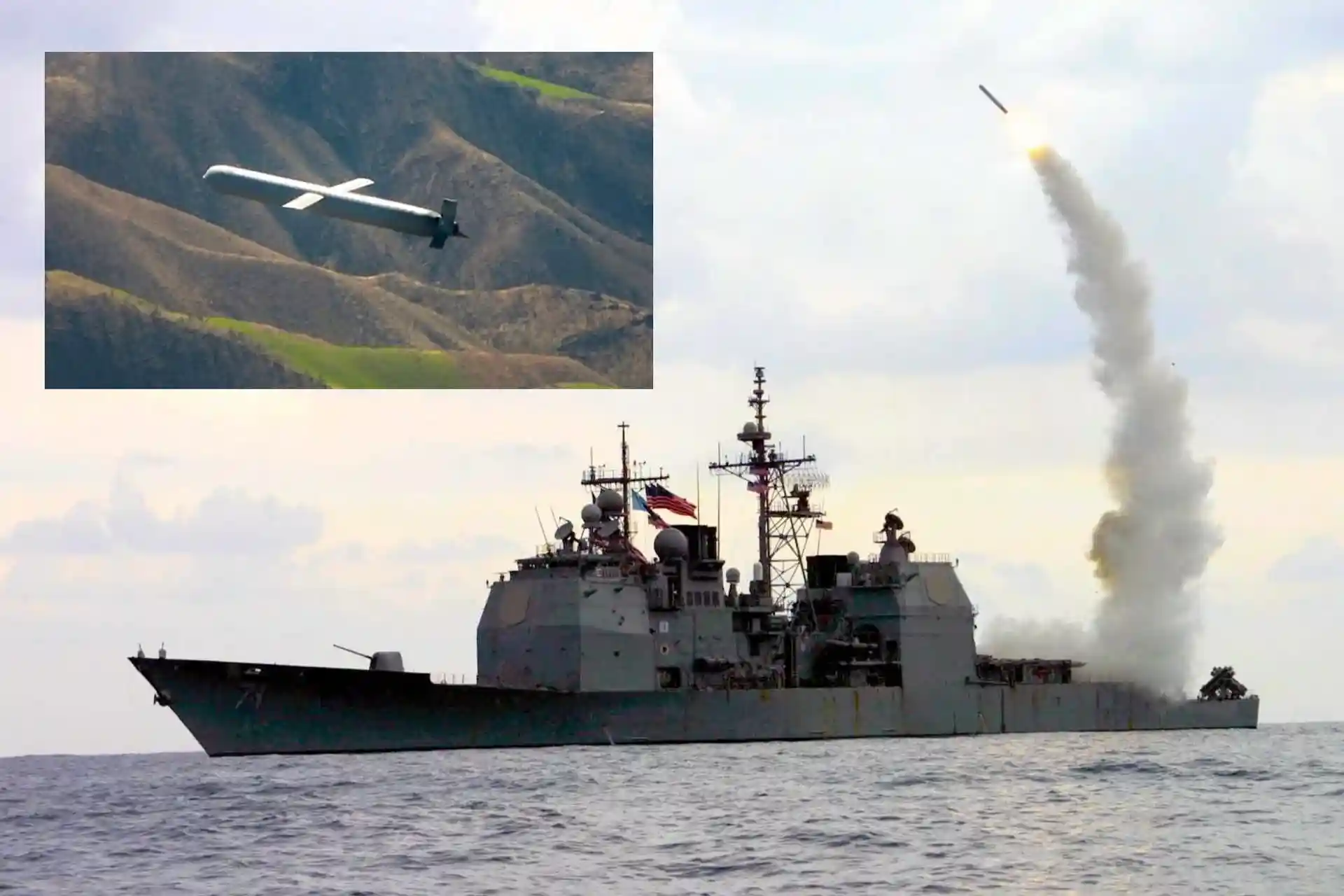
On February 28, 2026, the United States escalated direct military operations against Iran through a coordinated campaign officially designated Operation Epic Fury, combining crewed aircraft and sea-launched Tomahawk cruise missiles in precision strikes against targets inside Iranian territory. The operation, confirmed by U.S. defense officials and reported by multiple international outlets, represents one of the most significant uses of long-range naval strike capabilities in the region in recent years. While specific details remain closely held, early reporting and open-source material indicate that cruise missiles played a central role in the opening wave.
The campaign unfolded amid heightened regional tensions and followed a pattern familiar to modern U.S. military doctrine: degrade high-value targets at long range, limit exposure of crewed aircraft to advanced air defenses, and retain operational flexibility through distributed launch platforms. According to initial accounts, U.S. Navy vessels positioned in regional waters launched multiple Tomahawk land-attack missiles, while Israeli and American aircraft conducted parallel strikes. Officials have not disclosed the total number of munitions used or the precise breakdown between missile and air-delivered weapons.
Open-source intelligence circulating online has added texture to the early narrative. Videos allegedly recorded over Iraqi territory show low-flying missiles traveling west to east in coordinated sequences, their flight paths consistent with terrain-following cruise profiles. Some clips appear to capture more than twenty projectiles moving in timed intervals. Additional imagery shared by conflict-monitoring channels purports to show debris fragments resembling components of the BGM-109 Tomahawk family. These materials align with known missile characteristics, though independent verification remains pending and caution is warranted in interpreting unconfirmed footage.
Reports emerging from inside Iran describe explosions near infrastructure sites and facilities characterized locally as administrative or nuclear-related. Witnesses recount observing missiles approaching at low altitude shortly before impact, consistent with cruise-missile flight envelopes designed to evade radar detection. However, analysts emphasize that multiple types of precision-guided munitions may have been used during the operation, making it premature to attribute specific damage exclusively to Tomahawks without detailed battle-damage assessments or satellite confirmation.
Operational Design Behind Operation Epic Fury
The reported use of sea-launched cruise missiles reflects the enduring logic of U.S. naval strike doctrine. The Tomahawk’s defining advantage lies in its stand-off capability—the ability to strike targets hundreds of miles inland while launch platforms remain outside the densest defensive envelopes. Surface combatants such as Arleigh Burke-class guided-missile destroyers and Ticonderoga-class cruisers, along with attack submarines, are equipped with vertical launch systems capable of deploying these missiles with minimal warning.
By initiating strikes from maritime positions, planners can achieve several objectives simultaneously. Launch platforms are dispersed across wide ocean areas, complicating adversary targeting. Missiles can approach from multiple azimuths, saturating or bypassing radar coverage. Crewed aircraft can enter contested airspace only after initial suppression of air-defense networks has degraded threat systems. This sequencing is central to modern expeditionary warfare, where precision and risk mitigation shape campaign design as much as raw firepower.
The apparent routing of missiles across Iraqi airspace, as suggested by OSINT material, would be consistent with optimized terrain-following profiles. Tomahawks are engineered to skim terrain at altitudes sometimes as low as 30 to 50 meters, exploiting radar shadowing and contour variations. Such flight paths reduce detection windows and compress response times for defending forces.
The Tomahawk Cruise Missile: Capabilities and Evolution
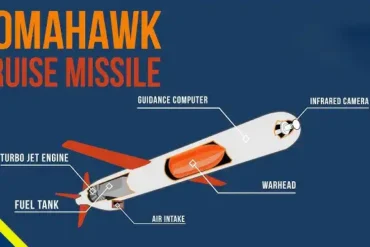
The Tomahawk land-attack missile (TLAM) has served as a cornerstone of U.S. naval power projection since the early 1980s. Designated BGM-109, it is a subsonic, jet-powered cruise missile launched initially by a solid-fuel booster before transitioning to a turbofan engine for sustained flight. With a typical range approaching 900 nautical miles—roughly 1,600 kilometers depending on variant—it can reach deep inland targets from well beyond territorial waters.
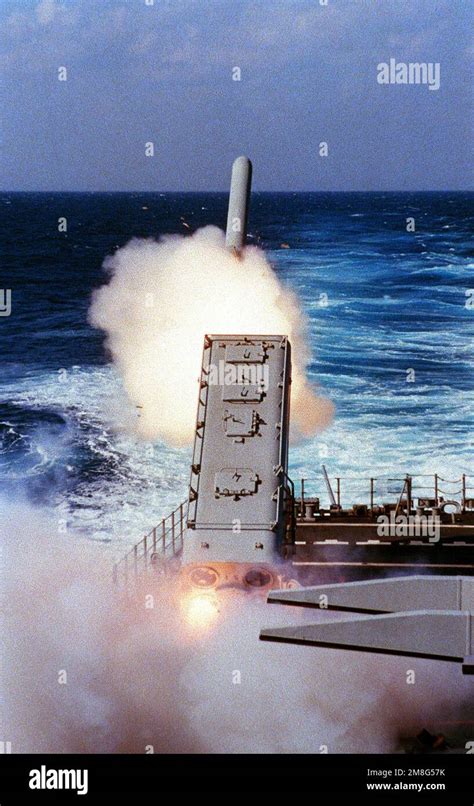
Modern iterations, including the Block IV Tactical Tomahawk and upgraded Block V variants, integrate advanced navigation and mission flexibility. Guidance systems combine inertial navigation with GPS updates, Terrain Contour Matching (TERCOM), and Digital Scene Matching Area Correlation (DSMAC). TERCOM compares onboard terrain maps with radar altimeter readings to maintain course accuracy, while DSMAC uses stored digital imagery to refine targeting in the terminal phase. This layered approach enhances resilience against electronic interference and allows complex routing around defended areas.
Block IV and Block V missiles incorporate data-link capabilities enabling in-flight retargeting. Command authorities can redirect a missile toward a new aimpoint or instruct it to loiter over a designated area pending updated intelligence. Certain configurations can transmit imagery shortly before impact, supporting rapid battle-damage assessment. These features provide commanders with operational elasticity in fluid conflict environments.
The missile typically carries a 1,000-pound-class unitary warhead optimized for hardened or semi-hardened targets. Its subsonic speed—approximately Mach 0.7 to 0.75—prioritizes precision and range over velocity. While not hypersonic, its effectiveness derives from stealthy approach, accurate guidance, and coordinated salvo employment.
Strategic Context and Escalation Dynamics
Operation Epic Fury unfolds against a backdrop of intensifying regional instability and reciprocal strikes involving multiple actors. The decision to employ Tomahawk missiles signals both capability and intent: the United States retains the means to conduct precision strikes at scale without immediate reliance on forward-deployed airbases. In a region where ballistic missile threats and drone warfare have proliferated, maintaining credible stand-off options is central to force protection and deterrence.
At the same time, cruise missile employment carries escalation implications. Strikes inside sovereign territory, particularly when associated with nuclear or strategic infrastructure, reverberate diplomatically and militarily. The absence of detailed public briefings regarding target sets and munition counts leaves space for speculation. Analysts caution against drawing parallels to historical campaigns such as the 1991 Gulf War without comprehensive data. Each operational environment presents distinct political constraints, defensive architectures, and coalition dynamics.
The integration of naval and air assets during Operation Epic Fury suggests deliberate sequencing rather than isolated action. Cruise missiles likely aimed to suppress air defenses, command nodes, or storage facilities during the opening phase, reducing risk for subsequent sorties. Whether the campaign will expand or remain limited in scope depends on political decision-making as much as battlefield outcomes.
Uncertainties and the Role of Open-Source Intelligence
A defining feature of contemporary conflict is the immediacy of digital evidence. Videos and photographs circulate within minutes, yet verification can lag far behind. Material attributed to Operation Epic Fury illustrates this tension. While missile silhouettes, debris fragments, and flight profiles resemble known Tomahawk characteristics, visual similarity alone does not confirm origin or variant. Misidentification and deliberate manipulation remain possibilities in high-intensity information environments.
Authoritative assessments will require satellite imagery, official disclosures, and forensic analysis. Until such evidence is publicly available, quantifying the precise number of Tomahawks launched or the percentage of damage attributable to them remains speculative. Responsible analysis distinguishes between plausible interpretation and confirmed fact.
Naval Power Projection in the Middle East
Operation Epic Fury underscores the enduring centrality of naval cruise missiles in U.S. contingency planning. Maritime forces offer mobility, survivability, and the capacity to deliver precision effects without permanent basing arrangements. In regions where political access can shift rapidly, sea-based assets provide strategic flexibility.
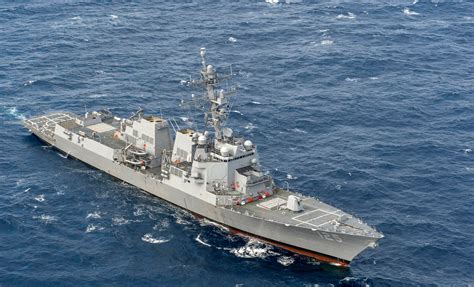
Over decades, the United States has procured thousands of Tomahawks, sustaining a deep inventory capable of supporting prolonged operations. The distributed nature of launch platforms complicates adversary targeting and enables layered strike packages. From submarines operating covertly to destroyers positioned in international waters, the system’s adaptability reinforces its role as a first-day-of-conflict instrument.
As Operation Epic Fury continues to unfold, further disclosures may clarify the scale and effectiveness of Tomahawk employment. For now, available reporting indicates that sea-launched cruise missiles formed a significant component of the opening strike architecture. Their deployment highlights the continued relevance of long-range precision weapons in shaping escalation pathways and operational tempo in the Middle East’s evolving security landscape.