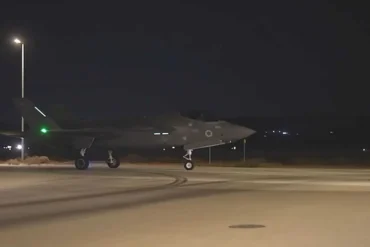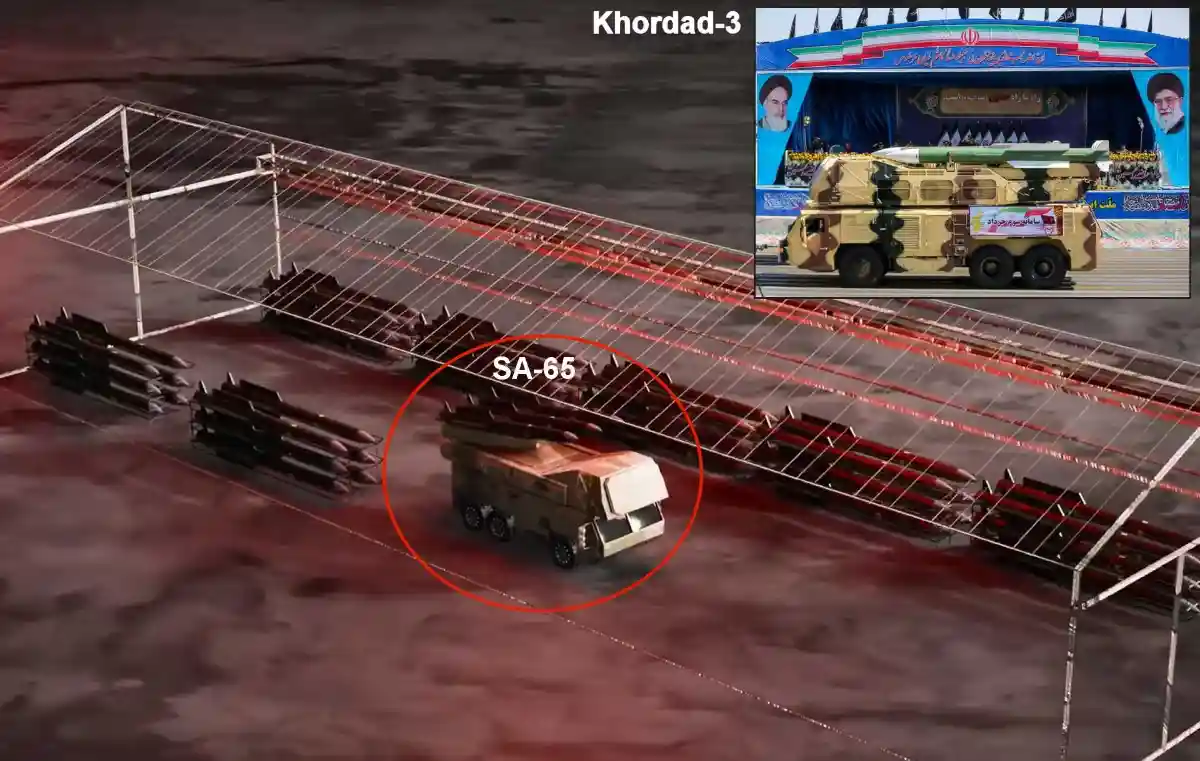
Israel’s ongoing aerial campaign against Iranian military infrastructure intensified on February 28, 2026, as the Israeli Air Force (IAF) confirmed the destruction of what it described as an advanced “SA-65” surface-to-air missile system in western Iran. Subsequent technical analysis by independent defense observers identified the targeted platform as the Khordad-3 medium-range air defense system, one of the most capable domestically developed components within Iran’s layered air defense architecture.
The strike occurred in the Kermanshah region, a strategically critical defensive corridor shielding western approaches into Iran’s interior. This area protects missile facilities, logistics hubs, air bases, and command infrastructure that underpin Tehran’s regional deterrence posture. By targeting a mid-tier air defense battery in this sector, Israel appears to have executed a deliberate suppression-of-enemy-air-defenses (SEAD) operation designed to fracture Iran’s defensive density rather than conduct a symbolic strike.
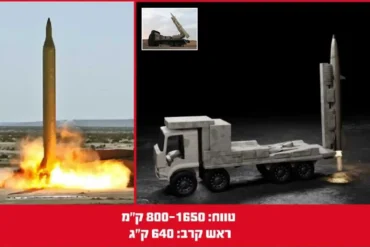
The Israeli Air Force released operational 3D footage showing the destruction of a transporter-erector-launcher system supported by a radar vehicle. Although officially labeled “SA-65,” no NATO-recognized designation corresponds to that name. Analysts from Army Recognition and other defense monitoring groups concluded that the configuration displayed aligns closely with the Sevom Khordad (Khordad-3) platform, based on launcher geometry and radar structure.
⭕️The IDF completed a broad strike on strategic defense systems of the Iranian regime.
The IDF struck multiple strategic aerial defense systems, including an advanced SA-65 system in the Kermanshah area of western Iran. pic.twitter.com/p3UI3aB50y
— Israel Defense Forces (@IDF) February 28, 2026
Strategic Importance of the Kermanshah Air Defense Belt
Western Iran serves as a defensive shield linking Iraqi airspace to central Iranian military zones. Any hostile aircraft or stand-off munition entering from the west must penetrate multiple overlapping engagement envelopes before reaching high-value targets deeper inland. Medium-range systems such as the Khordad-3 form the connective tissue between long-range strategic interceptors and short-range point-defense assets.
This layered doctrine is central to Iran’s air defense philosophy. Rather than relying solely on a handful of long-range systems, Tehran disperses engagement nodes across multiple tiers. The Khordad-3 bridges the engagement gap between systems like the Bavar-373 long-range air defense system and shorter-range assets such as Tor-M1 units and domestically produced equivalents. Removing one such battery reduces redundancy and weakens the integrity of the defensive grid.
Neutralizing a battery in Kermanshah directly impacts western sector resilience. It may create a localized vulnerability where aircraft, cruise missiles, or unmanned platforms can exploit reduced interception probability. In modern air warfare, even a temporary thinning of defensive coverage can enable follow-on operations with higher survivability rates.
Technical Profile of the Khordad-3 Air Defense System
The Khordad-3 is part of Iran’s indigenous Raad family of surface-to-air missile systems. Designed for medium-range engagements, it is assessed to employ the Sayyad-2 or Taer-2B interceptor missile, with estimated engagement ranges between 50 and 75 kilometers and altitude ceilings approaching 25 to 30 kilometers.
Its most visually distinctive feature is the three-canister vertical launch configuration, mounted on a tactical chassis. This configuration differs significantly from Russian-origin Buk systems, which typically carry four exposed rail-mounted missiles, and from S-300 variants, which use quad-canister launch modules of larger diameter.
Supporting the launcher is a mobile radar vehicle equipped with a phased-array antenna. Phased-array radar technology enables electronic beam steering without mechanical rotation, allowing rapid tracking of multiple targets simultaneously. This capability enhances engagement efficiency against maneuvering aircraft, cruise missiles flying at low altitude, and unmanned aerial vehicles.
The Khordad-3 gained international prominence in June 2019 when Iranian forces used it to shoot down a U.S. Navy RQ-4A Global Hawk high-altitude surveillance drone over the Strait of Hormuz. That engagement demonstrated the system’s ability to strike targets operating at significant altitude and range, elevating its profile within Iran’s defense inventory.
Why the “SA-65” Label Matters
The Israeli reference to “SA-65” carries analytical significance. NATO assigns structured reporting names to Soviet and Russian surface-to-air systems, including designations such as SA-6, SA-10, SA-17, and SA-21. No documented NATO reporting name corresponds to SA-65, suggesting that the label may reflect an internal Israeli intelligence classification rather than a recognized international nomenclature.
Accurate identification is more than semantic precision. Defense assessments, regional force posture calculations, and escalation analysis all depend on correctly identifying the system destroyed. If the target was indeed a Khordad-3 battery, the operational impact is notably more consequential than the loss of a short-range or legacy platform.
Precision in technical classification ensures that strategic evaluations remain grounded in verified system capabilities rather than ambiguous labeling. In high-intensity regional conflicts, clarity shapes perception, and perception shapes deterrence.
Operational Implications for Operation Epic Fury
The destruction of a Khordad-3 battery aligns with a systematic SEAD campaign rather than a one-off strike. Suppressing medium-range systems is often a prerequisite for deeper aerial penetration. These systems defend against aircraft operating below the altitude envelope of long-range interceptors while extending protection beyond the reach of short-range defenses.
Eliminating a mid-tier engagement node reduces layered overlap and complicates Iran’s ability to respond rapidly to coordinated incursions. It may allow Israeli stand-off precision munitions, loitering drones, or even manned strike aircraft to operate with reduced interception risk.
From an operational planning perspective, degrading radar coverage is as significant as destroying missile launchers. Air defense networks rely on sensor integration and fire-control data links. Disrupting even one node can degrade situational awareness across adjacent sectors, forcing reliance on backup systems and increasing response latency.
Broader Regional Security Consequences
Iran’s air defense strategy is designed to deter technologically advanced air forces by raising attrition risks. Layered engagement zones create uncertainty for attackers and complicate mission planning. Each battery represents both a physical defensive asset and a psychological deterrent.
The loss of a Khordad-3 battery signals that Israel retains the capability to penetrate contested airspace and neutralize key defensive systems despite Iran’s investment in indigenous modernization. Should additional medium-range systems be destroyed, cumulative degradation could significantly alter aerial access dynamics across western Iran.
Regional observers will closely monitor satellite imagery, battle damage assessments, and further official disclosures to determine whether this strike represents an isolated tactical success or the opening phase of a broader campaign aimed at dismantling Iran’s integrated air defense network.
The strategic balance in the Middle East increasingly hinges on air superiority and missile defense resilience. In this evolving contest, each destroyed radar array or launcher is not merely a tactical statistic but a shift in the calculus of deterrence and escalation.