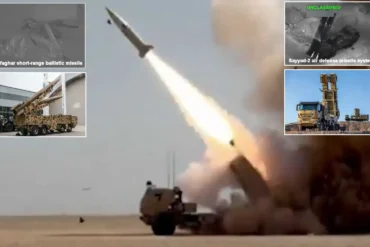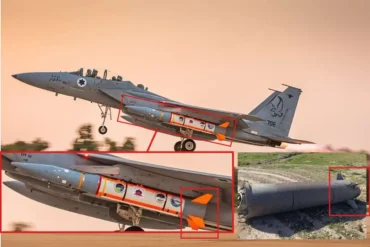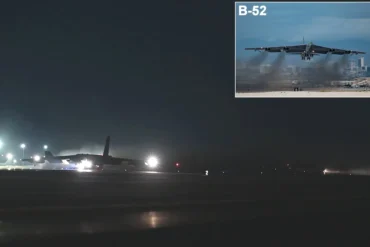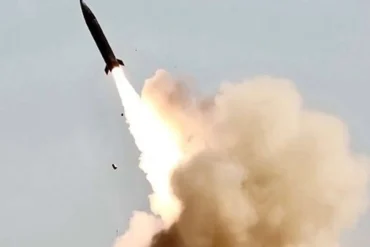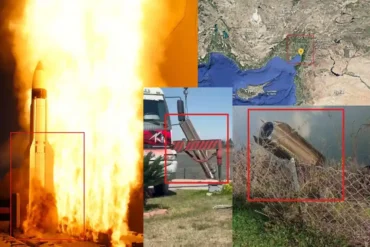
The Israeli Air Force (IAF) has destroyed an Iranian Shahab-3 medium-range ballistic missile (MRBM) during the ongoing multinational offensive known as Operation Lions Roar, marking a significant tactical and strategic development in the escalating confrontation between Israel and Iran. Imagery and technical renderings released by the IAF indicate that the targeted system belonged to the Shahab-3 family, a core component of Iran’s long-range strike capability and a central pillar of Tehran’s regional deterrence doctrine.
The strike occurred amid an intensified air campaign launched on February 28, 2026, when Israeli Prime Minister Benjamin Netanyahu publicly confirmed coordinated operations with the United States against strategic Iranian targets. The stated objective was to dismantle what Israeli leadership described as an existential threat tied to Iran’s missile forces and suspected nuclear weapons ambitions. Within hours of the announcement, defensive measures were elevated across Israeli territory as regional missile alert levels surged.
The destruction of a Shahab-3 class ballistic missile represents more than the elimination of a single launcher or airframe. It signals a focused effort to degrade Iran’s capacity to project power across distances ranging from 1,000 to 2,000 kilometers, a range envelope that places all of Israel and multiple U.S. regional bases within reach.
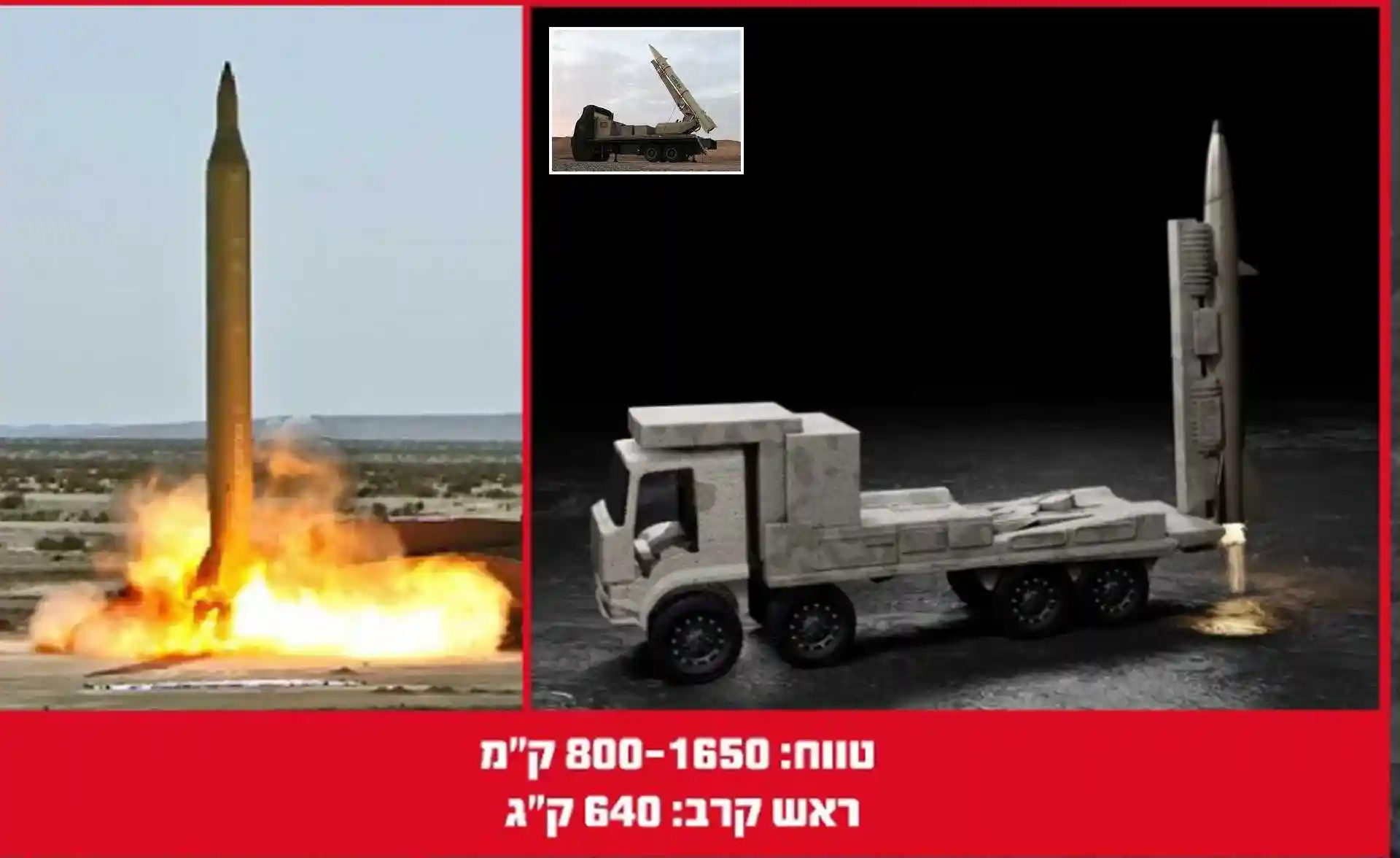
According to imagery released by the Israeli Air Force, the targeted missile displayed characteristics consistent with the Shahab-3 configuration. The 3D render depicts a slender cylindrical fuselage, a conical reentry vehicle, and deployment atop a six-axle transporter erector launcher (TEL). Performance data visible in the graphic suggests a range between 800 and 1,650 kilometers and a warhead mass of approximately 640 kilograms. These specifications align closely with later Shahab-3 variants and the extended-range Ghadr derivative, which evolved through structural refinements and improved propulsion efficiency.
Shahab-3: Backbone of Iran’s Long-Range Strike Capability
The Shahab-3 ballistic missile has formed the foundation of Iran’s medium-range missile inventory since its operational introduction in the early 2000s. Derived from the North Korean Nodong platform, the system underwent progressive indigenous modifications, resulting in enhanced range, improved guidance packages, and optimized reentry vehicle designs.
Early iterations were assessed to deliver heavier payloads to distances of roughly 1,300 kilometers. Over time, Iranian engineers achieved range extensions exceeding 1,600 kilometers by reducing payload weight and refining fuel efficiency. A 640-kilogram warhead configuration fits squarely within these performance envelopes, allowing full coverage of Israeli territory from launch sites deep within Iran’s interior.
Unlike solid-fueled missiles, the Shahab-3 relies on liquid propulsion, a characteristic that confers both advantages and vulnerabilities. Liquid-fueled systems can support substantial payload mass but require fueling prior to launch. This fueling process creates observable preparation windows that can be detected via surveillance assets, satellites, or airborne reconnaissance. By striking the missile before launch, Israeli forces exploited precisely this vulnerability.
Operational Context of Operation Lions Roar
Operation Lions Roar unfolded against a backdrop of rapidly intensifying hostilities. Israeli officials framed the operation as a preemptive effort to prevent Iran from consolidating advanced missile and nuclear capabilities. U.S. forces reportedly contributed precision strike assets, reinforcing a joint operational posture aimed at dismantling key nodes within Iran’s missile infrastructure.
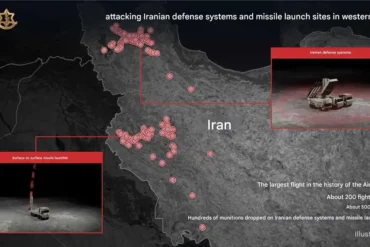
The Israeli Air Force stated through official channels that the Israel Defense Forces “continue to strike the missile array and air defense systems” associated with Iranian forces. The campaign appears structured around two synchronized objectives: suppressing Iranian air defense networks to ensure sustained aerial freedom of action, and systematically reducing ballistic missile launch capacity.
This dual-track strategy is critical. Ballistic missile forces do not operate in isolation; they depend on mobile launchers, secure communication links, and layered air defense coverage to survive and execute retaliatory salvos. Neutralizing a Shahab-3 system therefore contributes to broader degradation of Iran’s strategic strike architecture.
Technical Assessment and System Identification
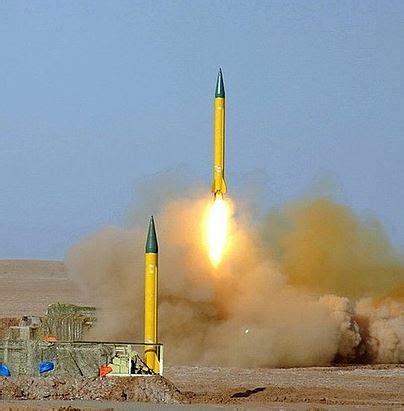
Defense analysts examining the Israeli-released render noted distinguishing features separating the Shahab-3 from other Iranian MRBMs. The missile’s diameter appears narrower than that of the Khorramshahr system, which is derived from the Musudan lineage and typically mounted on heavier multi-axle platforms. The six-axle launcher depicted is historically associated with Shahab-3 deployments.
The conical reentry vehicle design visible in the rendering further supports identification within the Shahab-3 family. Later Ghadr variants incorporated aerodynamic refinements aimed at improving accuracy and survivability during atmospheric reentry. Although precise guidance accuracy figures remain classified, estimates place circular error probable (CEP) in the range sufficient to threaten military installations and infrastructure targets.
The elimination of a single MRBM does not dismantle an entire missile force. However, attrition accumulates. Each destroyed launcher reduces Iran’s capacity to conduct coordinated saturation attacks designed to overwhelm missile defense systems such as Arrow and David’s Sling, which form Israel’s upper-tier defensive shield against ballistic threats.
Strategic Implications for Regional Deterrence
Iran’s missile program functions as a primary instrument of deterrence. Unlike conventional air forces constrained by airspace denial and interception risk, ballistic missiles offer rapid, long-distance strike capability with minimal warning time. A Shahab-3 launched from central Iran can reach Israeli targets within minutes, compressing decision cycles and complicating defensive coordination.
By targeting missile arrays preemptively, Israel shifts from reactive defense toward proactive neutralization. This strategy seeks not merely to intercept incoming threats but to dismantle the launch infrastructure itself. The destruction of Shahab-3 class systems narrows Tehran’s retaliatory bandwidth and constrains its ability to mount large-scale missile salvos.
At the same time, such operations elevate escalation dynamics. Ballistic missile forces are deeply integrated into Iran’s strategic identity and military planning. Sustained attrition may compel Tehran to rely more heavily on solid-fueled systems such as the Sejjil, which offer reduced launch preparation times and enhanced survivability. Solid propellants eliminate lengthy fueling windows, making pre-launch detection more challenging.
Air Superiority and Suppression of Iranian Defenses
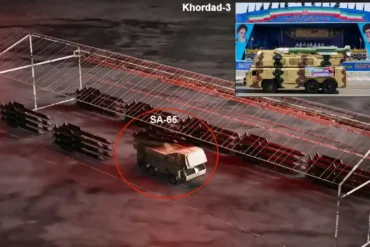
The success of strikes against missile infrastructure hinges on air superiority. Reports indicate that Israeli aircraft simultaneously targeted Iranian surface-to-air missile (SAM) systems, including legacy platforms comparable to the SA-6 family. Suppression of enemy air defenses (SEAD) operations reduce the risk envelope for strike aircraft and increase the probability of repeated sorties against high-value targets.
The integration of precision-guided munitions, electronic warfare capabilities, and real-time intelligence forms the operational backbone of this campaign. Striking mobile launchers requires rapid detection-to-engagement cycles. Intelligence fusion from satellites, airborne sensors, and potentially cyber reconnaissance likely contributed to identifying the Shahab-3 unit before it could disperse or conceal itself.
Broader Military and Geopolitical Impact
The destruction of a Shahab-3 ballistic missile under Operation Lions Roar underscores the evolving character of modern high-intensity conflict. Rather than focusing solely on battlefield engagements, contemporary operations prioritize deep-strike capabilities aimed at strategic infrastructure. Missile forces, air defense nodes, and command centers become primary targets in efforts to paralyze adversary response mechanisms.
For Israel, reducing the inventory of Iranian MRBMs directly enhances national security by lowering the probability of coordinated missile barrages. For Iran, the loss reinforces the vulnerability inherent in liquid-fueled systems and dispersed launcher networks under persistent surveillance pressure.
The long-term consequences will depend on the scale of sustained strikes, Iran’s production resilience, and the survivability of its dispersed missile units. If attrition continues, Tehran may accelerate investment in survivable solid-fuel systems and underground launch complexes to preserve deterrent credibility.
Operation Lions Roar thus represents more than a discrete tactical engagement. It signals a deliberate campaign to reshape the strategic balance in the Middle East by systematically eroding one of Iran’s most consequential military instruments: its medium-range ballistic missile force.