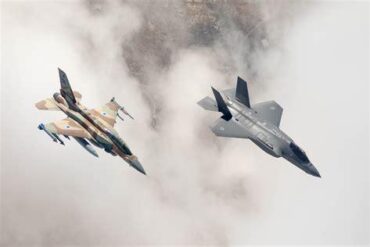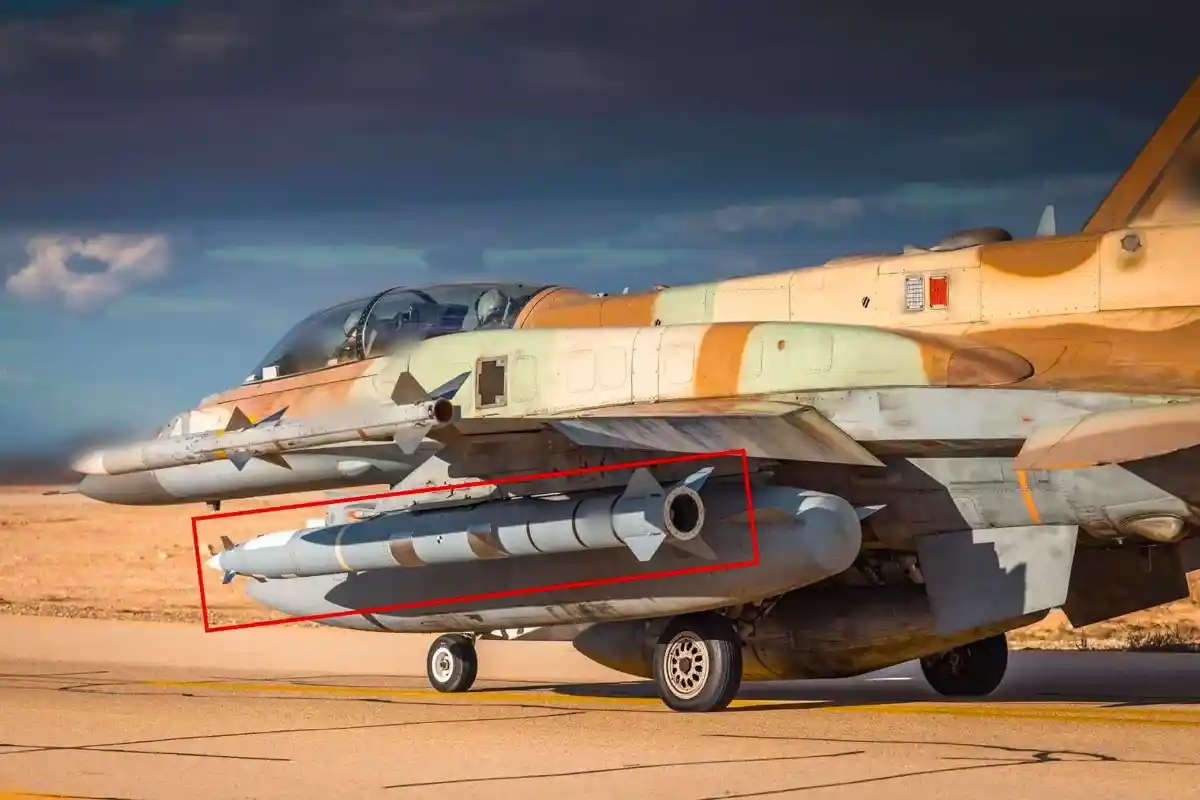
Israel has released striking new imagery of its F-16I Sufa fighter jets armed with RAMPAGE stand-off missiles as part of Operation Lion’s Roar, offering a rare, detailed look at how the Israeli Air Force is executing long-range precision strikes against Iranian targets. The photographs, published through official military channels, do more than document a sortie; they illuminate the operational logic, strike doctrine, and strategic messaging embedded within Israel’s evolving air campaign.
The images show a twin-seat F-16I taxiing in full combat configuration, its airframe visibly optimized for extended-range penetration into heavily defended airspace. The aircraft carries RAMPAGE air-launched missiles on its inboard pylons, AIM-120-class beyond-visual-range air-to-air missiles on the outer stations for self-defense, and three external 600-gallon fuel tanks, in addition to its conformal fuel tanks mounted along the fuselage spine. This configuration signals a mission profile designed for depth, endurance, and survivability against a sophisticated state adversary.
By deliberately revealing the loadout, Israel underscores how it balances range, payload, and defensive capability when operating in contested airspace. The configuration reflects careful planning for operations that may require long ingress routes, flexible timing, and the ability to respond to aerial threats during both entry and withdrawal phases.
The F-16I Sufa: Israel’s Long-Range Strike Workhorse
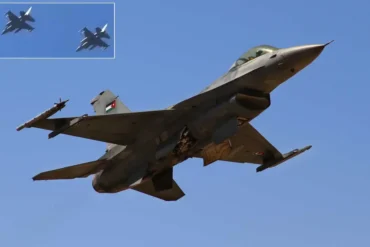
The F-16I Sufa is a highly customized variant of the F-16D Block 52+, purpose-built for Israel’s strategic requirements. Unlike standard models, the Sufa incorporates conformal fuel tanks (CFTs) that hug the fuselage, dramatically increasing combat radius without sacrificing underwing hardpoints needed for weapons. This feature alone transforms the aircraft from a tactical fighter into a true deep-strike platform.
The two-seat cockpit configuration is not incidental. Complex, long-range strike missions against layered air defenses demand intense workload management. The pilot focuses on flight operations, navigation, and threat reaction, while the weapon systems officer manages sensors, targeting, data links, and electronic warfare coordination. In dense threat environments, that division of labor can be decisive.
The Sufa’s avionics suite includes an advanced multi-mode radar capable of all-weather targeting, Israeli-developed electronic warfare systems designed to counter modern surface-to-air missile networks, secure communications links, and mission computers tailored to integrate domestically developed weapons like RAMPAGE. When paired with three external 600-gallon tanks—as shown in the released images—the aircraft gains the endurance necessary for missions reaching deep into Iranian territory, potentially allowing flexible routing to avoid known air-defense concentrations.
RAMPAGE Missile: High-Speed Stand-Off Precision
At the heart of this configuration is the RAMPAGE air-launched missile, a weapon that blends artillery rocket heritage with precision-guided strike capability. Developed from a guided artillery rocket family, RAMPAGE offers a stand-off engagement range typically estimated in the 150–250 kilometer class, depending on launch altitude and speed. This range allows the launching aircraft to remain outside many medium-range surface-to-air missile engagement envelopes.
The missile carries an approximately 150-kilogram multi-purpose warhead, suitable for hardened targets. Its guidance system combines inertial navigation with satellite updates, incorporating anti-jamming measures to maintain accuracy in electronically contested environments. Rather than cruising at subsonic speeds like many traditional air-to-surface missiles, RAMPAGE follows a high-speed, quasi-ballistic trajectory. That flight profile compresses enemy reaction time and complicates interception.
The weapon is particularly effective against fixed, high-value targets such as radar installations, command posts, ammunition depots, and airfield infrastructure. A steep terminal dive angle enhances penetration against reinforced structures. When launched from altitude at high speed, the missile’s energy at impact can significantly increase destructive effect against hardened nodes within an air-defense network.
Operational Design: Balancing Reach, Risk, and Resilience
The loadout displayed during Operation Lion’s Roar reveals more than technical capability; it reflects operational philosophy. Modern air campaigns against state adversaries require layered thinking. Aircraft must survive not only ground-based missile threats but also potential fighter interception, electronic warfare, and long-distance navigation challenges.
The presence of live beyond-visual-range air-to-air missiles on the F-16I suggests that mission planners anticipate potential encounters with hostile aircraft. Even when employing stand-off munitions, strike fighters cannot assume uncontested skies. The ability to defend themselves during ingress or egress preserves mission integrity and increases survivability.
Extended fuel capacity plays a dual role. It allows the aircraft to approach targets along indirect routes designed to minimize exposure to known radar coverage. It also provides loiter time, enabling coordination with other strike packages or suppression assets. In a complex, multi-wave operation, timing can be as critical as firepower. The Sufa’s fuel configuration supports flexibility rather than a single, rigid strike window.
Operation Lion’s Roar and the Broader Strategic Context
Operation Lion’s Roar represents a significant phase in the ongoing Israeli–U.S. campaign targeting Iranian military infrastructure. Official statements indicate strikes against components of Iran’s air-defense systems, ballistic missile infrastructure, and command-and-control networks. Publicizing the F-16I configuration serves a strategic communication purpose: it demonstrates that Israel retains the capacity for repeated, long-range precision strikes using both advanced and upgraded legacy platforms.
Rather than relying solely on stealth aircraft or next-generation systems, Israel is showcasing the continued relevance of highly modified fourth-generation fighters equipped with advanced stand-off munitions. This approach suggests a doctrine emphasizing sustainability and depth—leveraging a broad fleet capable of sustained operational tempo rather than concentrating capability in a limited number of high-end assets.
The choice to publish the images on official channels, including Farsi-language outlets, amplifies the message directly to Iranian audiences. It signals that critical assets can be engaged from outside the most heavily defended zones and that Israeli strike planning integrates range, precision, and survivability in a cohesive package.
Airpower in Contested Environments: Lessons from the Sufa Configuration
The revealed configuration illustrates a broader evolution in air warfare. Modern conflicts between technologically capable states increasingly hinge on stand-off precision rather than close-range penetration. By launching weapons from distances beyond dense missile envelopes, air forces seek to degrade enemy defenses incrementally before risking deeper exposure.
The F-16I Sufa armed with RAMPAGE missiles embodies this approach. It combines extended range, high-speed precision weapons, electronic countermeasures, and self-defense capabilities in a single sortie profile. This layered survivability reduces dependence on any one system. Even without stealth shaping, careful routing, electronic warfare support, and stand-off range collectively reduce risk.
In addition, the integration of domestic weapon systems such as RAMPAGE reflects strategic autonomy. The ability to produce and field indigenous stand-off munitions ensures operational continuity even under potential supply constraints. That factor can be decisive in prolonged campaigns where munition expenditure rates are high.
Strategic Signaling Through Transparency
Releasing detailed imagery during active operations is itself a calculated act. It reinforces deterrence by making capability visible. At the same time, it shapes international perception by emphasizing precision, planning, and technological sophistication rather than indiscriminate force.
The F-16I Sufa armed with RAMPAGE missiles becomes both a weapon system and a symbol. It represents an operational choice: to strike from distance, to prioritize survivability, and to apply pressure against strategic infrastructure while managing escalation risks. In a region marked by volatility, such signaling carries weight beyond the immediate tactical effect.
The imagery from Operation Lion’s Roar ultimately provides a rare window into how Israel configures its aircraft for deep, contested operations. The combination of extended-range fuel systems, stand-off precision missiles, and self-defense armament underscores a doctrine focused on sustained reach and calculated exposure. As regional tensions persist, the Sufa-RAMPAGE pairing stands as a clear demonstration of how modernized fourth-generation fighters remain central to high-intensity, state-on-state air campaigns.