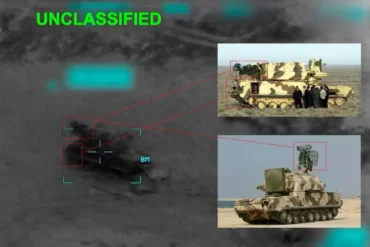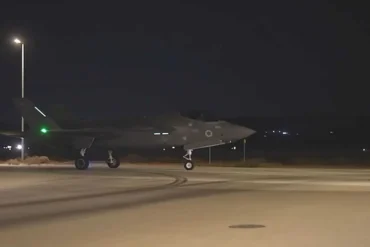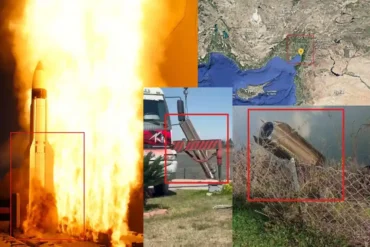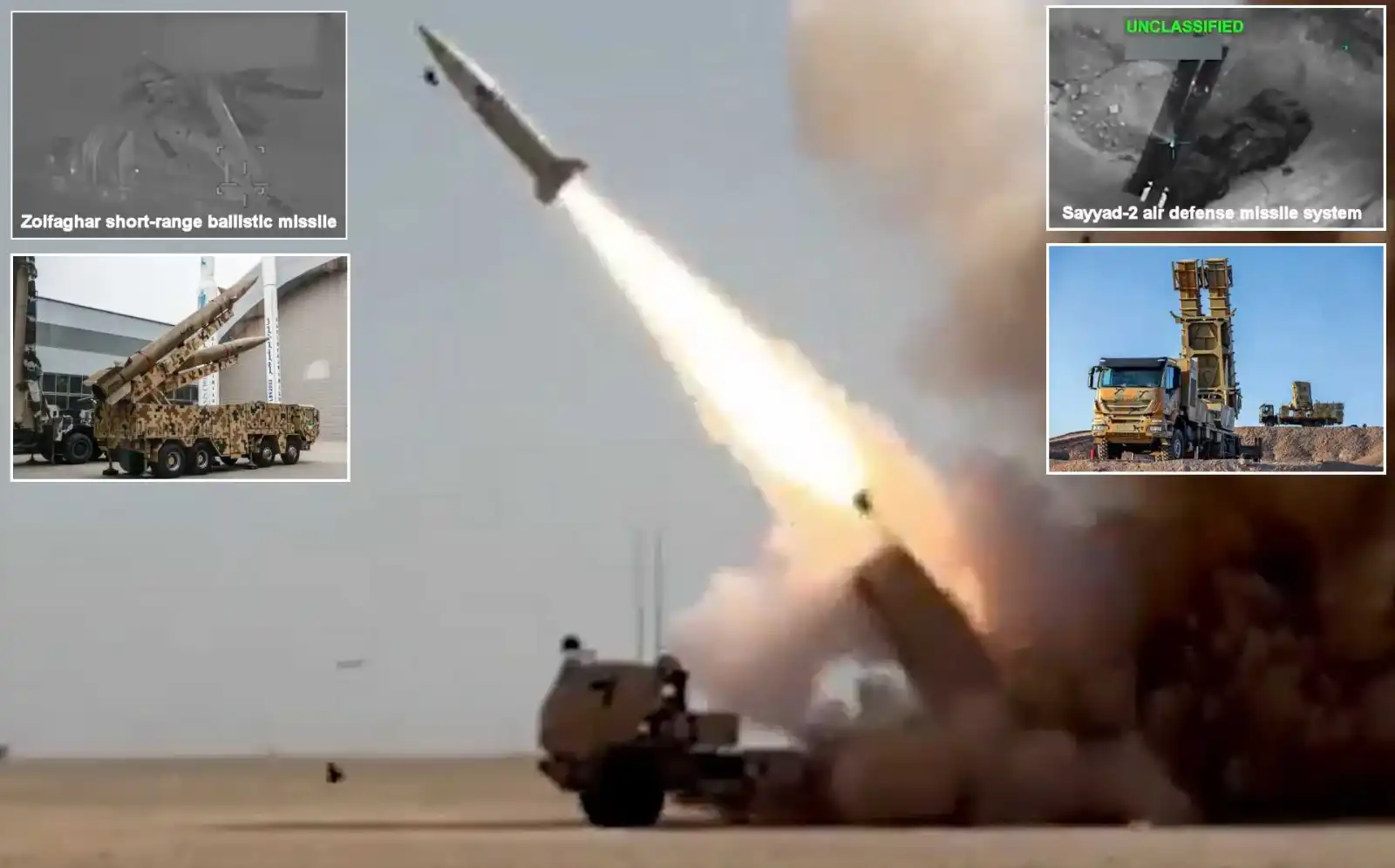
The United States has executed a high-precision deep strike that destroyed an Iranian Zolfaghar short-range ballistic missile and key components of a Sayyad-2 air defense system, marking one of the most strategically significant land-based missile engagements in the current campaign against Tehran’s strategic infrastructure. Footage released by U.S. Central Command on February 28, 2026, confirms that the strike was carried out using an Army Tactical Missile System (ATACMS) launched from an M142 HIMARS platform under the framework of Operation Epic Fury.
The engagement represents more than a tactical success. It signals a deliberate and coordinated effort to dismantle Iran’s mobile missile deterrent architecture by targeting both offensive strike assets and their protective air defense umbrella in a single synchronized blow. In modern warfare, eliminating the spear is powerful. Destroying both the spear and the shield reshapes the entire battlefield geometry.
Precision Deep Strike: ATACMS Launched from HIMARS
U.S. forces employed a long-range ATACMS ballistic missile, likely a unitary high-explosive variant such as the M57 or M57E1. These missiles carry a 500-pound-class warhead and can strike targets up to 300 kilometers away with remarkable accuracy thanks to integrated inertial navigation and GPS guidance systems. The launch platform, the wheeled M142 High Mobility Artillery Rocket System (HIMARS), enables rapid deployment and immediate repositioning after firing, significantly reducing vulnerability to counter-strikes.
The video evidence shows a direct, high-impact detonation consistent with a precision strike on a mobile ballistic missile platform. Analysts identify the destroyed asset as a Zolfaghar short-range ballistic missile, mounted on a transporter-erector-launcher (TEL). The secondary explosions and visible fragmentation suggest catastrophic destruction of both missile hardware and nearby support equipment.
The Zolfaghar Missile: Core of Iran’s Mobile Deterrence
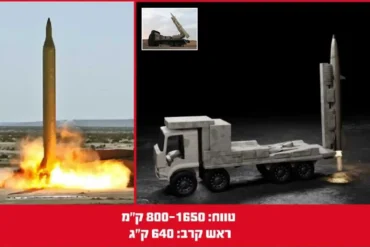
The Zolfaghar ballistic missile is a development within the Fateh-110 family and represents a central pillar of Iran’s regional strike doctrine. Solid-fueled and road-mobile, it has an estimated operational range of approximately 700 kilometers and can deliver a payload of roughly 500 kilograms. Terminal guidance enhancements provide improved accuracy over earlier variants, making it suitable for targeting military installations, logistics hubs, air bases, and strategic infrastructure throughout the region.
Mobility is its defining advantage. Road-mobile ballistic missiles complicate detection and preemptive targeting because they can disperse, relocate, and conceal within civilian or rugged terrain. Destroying such a system before launch requires highly refined intelligence coordination. The strike implies effective integration of satellite surveillance, airborne intelligence, surveillance, and reconnaissance (ISR) assets, and real-time targeting networks shared between U.S. and Israeli forces.
Neutralizing a Zolfaghar launcher does more than remove a single missile from inventory. It interrupts launch cycles, degrades crew readiness, and disrupts command-and-control processes that underpin Iran’s retaliatory strike planning.
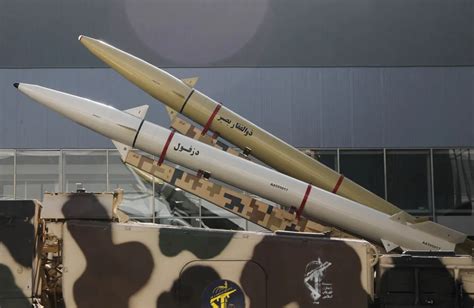
Sayyad-2 Air Defense System: Dismantling the Shield
Equally significant is the destruction of components from the Sayyad-2 surface-to-air missile system, reportedly positioned near the ballistic missile asset. The Sayyad-2 is integrated into Iran’s Talash air defense network and provides medium-to-long-range engagement capability against aircraft and cruise missiles. Depending on configuration, its engagement range is estimated between 75 and 120 kilometers.
Iran’s defensive doctrine relies on layered air defense systems to protect high-value targets such as ballistic missile units and nuclear facilities. By striking both the offensive launcher and its air defense coverage in the same operation, U.S. forces effectively thinned the density of Iran’s local defensive network.
This approach reduces the risk to follow-on operations. Removing air defense coverage opens corridors for additional missile strikes, long-range fires, or potential air operations. The method demonstrates integrated targeting rather than isolated destruction.
Operation Epic Fury: Integrated U.S.-Israeli Campaign
Operation Epic Fury reflects a joint operational framework designed to degrade Iran’s nuclear infrastructure and missile forces systematically. The campaign emphasizes targeting strategic enablers rather than symbolic objectives. Missile launchers, radar arrays, storage facilities, and supporting air defenses form interconnected nodes in Iran’s deterrence architecture. Disrupting those nodes weakens the entire structure.
The strike also highlights deep operational coordination between Washington and Jerusalem. Israel has long prioritized neutralizing Iran’s missile capabilities, while the United States provides expanded reach through advanced precision fires and broader intelligence assets. The successful elimination of a mobile Zolfaghar system indicates intelligence fusion at a high level of sophistication.
Strategic Implications of Land-Based Ballistic Precision Fires
The use of ground-launched ATACMS instead of manned aircraft underscores a strategic calculus focused on minimizing exposure to contested airspace. Iran’s integrated air defense network, though uneven in capability, presents credible threats to traditional air operations. Land-based ballistic precision fires allow deep engagement without placing pilots at risk.
This approach aligns with the U.S. Army’s Multi-Domain Operations doctrine, which emphasizes long-range precision fires as essential to shaping contested environments. HIMARS-equipped units can produce strategic-level effects once associated primarily with airpower. The distinction between land-based and air-based strike capability continues to blur.
Operationally, HIMARS offers mobility and survivability. Mounted on a wheeled 6×6 chassis, the launcher can rapidly relocate after firing. This “shoot-and-scoot” capacity complicates enemy targeting and enhances survivability in high-intensity conflict scenarios.
Combat Relevance of ATACMS in Transition to Precision Strike Missile
The strike also reaffirms the continued relevance of ATACMS as the United States transitions toward the next-generation Precision Strike Missile (PrSM), which is expected to extend engagement ranges beyond 500 kilometers. While PrSM will eventually expand reach and capacity, ATACMS remains fully capable of delivering decisive operational effects in current theaters.
Destroying both a mobile ballistic missile launcher and associated air defense components demonstrates that existing inventories retain substantial strategic utility. This real-world employment validates years of doctrinal emphasis on long-range precision fires and joint targeting integration.
Reshaping Iran’s Retaliatory Capacity
The broader strategic consequence lies in cumulative degradation. Iran’s missile doctrine depends heavily on survivable, mobile systems capable of rapid launch under layered air defense coverage. Each destroyed launcher reduces not just hardware but operational confidence. Each dismantled air defense node creates vulnerability in protective coverage.
If subsequent strikes follow similar patterns—targeting launchers, radars, command nodes, and logistical support infrastructure—the aggregate effect could significantly diminish Iran’s ability to conduct coordinated retaliatory ballistic missile operations across the region.
Operation Epic Fury appears structured not as a single dramatic event but as a methodical campaign of attrition against strategic enablers. The confirmed ATACMS strike illustrates how land-based precision fires now function as central instruments of deterrence and coercive capability.
In the evolving dynamics of modern warfare, the battlefield is no longer defined solely by aircraft dominance or naval power projection. A mobile launcher on a truck, guided by satellite-linked targeting data, can reshape regional security equations in seconds. The destruction of a Zolfaghar ballistic missile and its Sayyad-2 defensive shield is not merely an isolated strike—it is a demonstration of integrated, multi-domain precision warfare in action.