The United Arab Emirates Armed Forces successfully intercepted and destroyed a coordinated wave of Iranian missiles and drones on March 3, 2026, preventing the projectiles from striking critical infrastructure across the country. The interception marked one of the most significant demonstrations of the UAE’s layered air and missile defense architecture, highlighting the country’s ability to detect, track, and neutralize complex aerial threats within seconds.
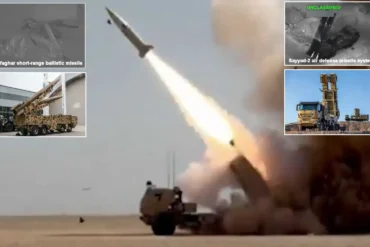
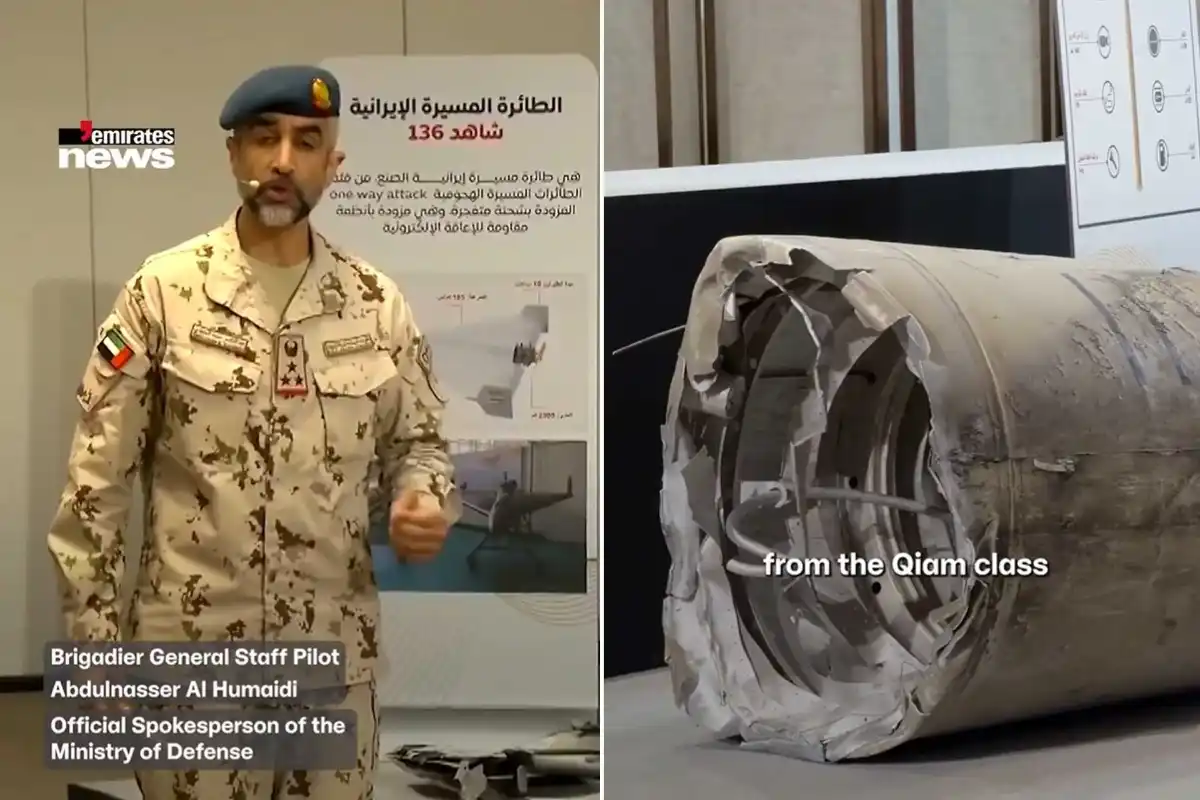
Officials from the UAE Ministry of Defense confirmed that air defense units engaged multiple incoming targets during the attack, including at least one Qiam-class short-range ballistic missile. The missile, part of Iran’s expanding arsenal of regional strike weapons, represents a serious threat due to its range, payload capacity, and high-speed terminal phase. Emirati defensive systems responded rapidly, intercepting the threats in flight before they could reach populated areas or strategic installations.
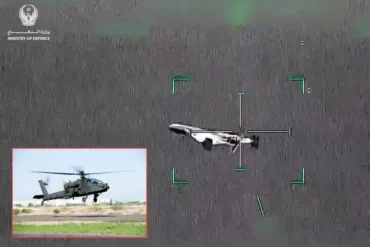
According to Emirati authorities, the attempted strike combined ballistic missiles and unmanned aerial systems, a tactic increasingly used in modern warfare to overwhelm defensive networks. By mixing drones with missiles, attackers attempt to saturate radar tracking and interceptor capacity. The UAE’s successful response demonstrated the resilience of its integrated defensive network and underscored years of investment in multi-layered air defense systems designed to counter simultaneous aerial threats.
Inside the UAE’s Integrated Air Defense Shield
The UAE has spent more than a decade building one of the most advanced air and missile defense networks in the Middle East, combining technologies from the United States, Europe, Israel, and domestic defense industries. This layered structure ensures that incoming threats can be intercepted at multiple stages of their flight path, dramatically increasing the probability of a successful interception.
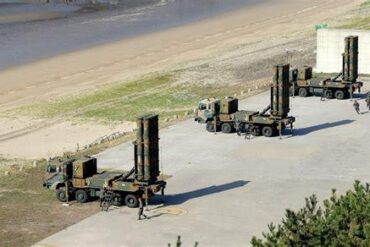
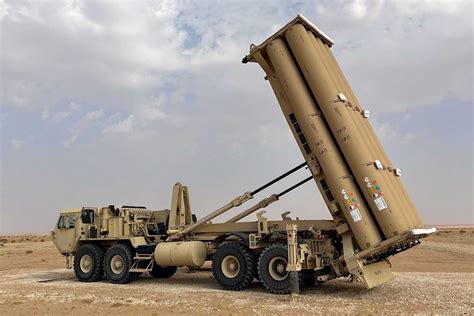
At the top of the defensive architecture sits the Terminal High Altitude Area Defense (THAAD) system. The UAE became the first foreign country to deploy THAAD after signing a defense contract valued at approximately $3.5 billion. THAAD is specifically designed to intercept short- and medium-range ballistic missiles during the terminal phase of flight, often at altitudes exceeding 150 kilometers.
Unlike traditional missile defenses that rely on explosive warheads, THAAD uses hit-to-kill kinetic interceptors. These interceptors destroy incoming missiles through sheer kinetic energy, colliding with the warhead at extremely high velocity. The precision required for this type of interception is extraordinary, as the system must calculate the exact trajectory and impact point within seconds of detection.
Patriot Missile Systems Form the Mid-Tier Defense Layer
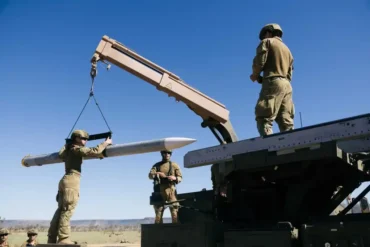
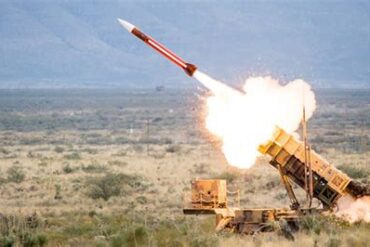
Beneath the high-altitude protection provided by THAAD, the UAE operates advanced versions of the MIM-104 Patriot missile defense system. These batteries form the mid-tier interception layer, offering additional engagement opportunities if a ballistic missile penetrates the upper defensive zone.
The Patriot systems deployed by the UAE are equipped with PAC-3 interceptors, one of the most advanced variants of the missile. These interceptors are specifically designed to counter tactical ballistic missiles, cruise missiles, and hostile aircraft, giving commanders a versatile tool for defending both military installations and civilian infrastructure.
Patriot systems are capable of rapidly calculating the trajectory of incoming threats and launching interceptors within seconds. In scenarios involving ballistic missiles, the system attempts to destroy the warhead before it can descend toward its target. By creating overlapping defensive layers with THAAD, the UAE ensures that any incoming missile must survive multiple interception attempts before reaching the ground.
This redundancy dramatically increases defensive success rates, particularly against complex attack profiles involving simultaneous missile launches.
Short-Range Systems Counter Drones and Low-Flying Threats
Modern missile defense networks cannot rely solely on high-altitude interceptors. The growing use of unmanned aerial vehicles and low-flying cruise missiles requires specialized systems capable of detecting and destroying smaller, slower targets operating close to the ground.
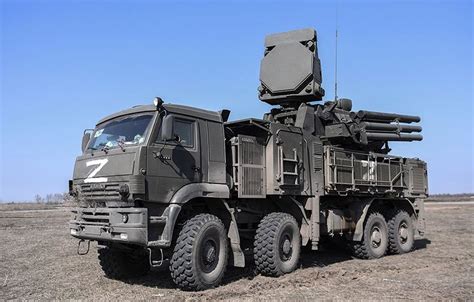
To address this challenge, the UAE employs several short- and medium-range air defense platforms. Among the most notable is the Pantsir-S1, a Russian-made air defense system that combines rapid-fire 30 mm cannons with short-range surface-to-air missiles. This hybrid design allows it to engage drones, helicopters, and low-flying aircraft at extremely short notice.
The UAE also operates the Barak-8 surface-to-air missile system, developed by Israel Aerospace Industries in partnership with India. Barak-8 provides a medium-range interception capability, allowing it to engage aircraft, cruise missiles, and anti-ship missiles at ranges exceeding 70 kilometers, depending on the variant.
These systems create a defensive bubble around sensitive locations such as energy infrastructure, military bases, and densely populated urban centers, ensuring that smaller aerial threats are intercepted before they can reach their targets.
SkyKnight: The UAE’s Emerging Counter-Drone Weapon
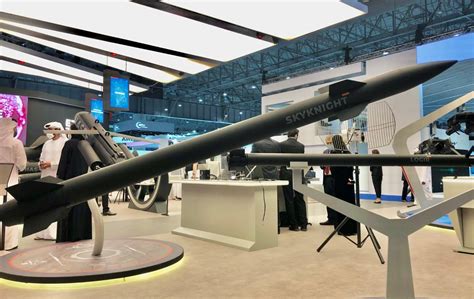
In response to the global surge in drone warfare, the UAE has also invested in domestically developed solutions. One of the most notable additions to its air defense network is the SkyKnight interceptor system, developed by the UAE-based EDGE Group in cooperation with international partners.
SkyKnight is designed to counter rockets, artillery shells, and unmanned aerial vehicles, forming a protective shield around critical installations. Unlike large ballistic missile interceptors, which are expensive and optimized for high-altitude engagements, SkyKnight provides a cost-effective solution for defeating smaller threats at close range.
The system operates within a tightly integrated command-and-control environment, linking radar sensors, interceptor launchers, and battlefield management software. This integration allows operators to detect, classify, and neutralize incoming threats with minimal response time.
Such networked defense architectures represent the future of modern air defense, where information sharing between sensors and interceptors dramatically increases the speed and accuracy of defensive responses.
The Iranian Qiam Ballistic Missile Explained
Among the most dangerous weapons involved in the March 2026 attack was the Qiam-1 ballistic missile, a short-range missile developed by Iran and derived from the Scud missile family. First revealed publicly around 2010, the Qiam represents a significant evolution of earlier Iranian missile designs.
The missile measures approximately 11.5 meters in length and has an estimated launch weight of about six tons. It is powered by a single-stage liquid-fueled rocket engine, allowing it to deliver a warhead weighing up to 750 kilograms across distances of roughly 700 to 800 kilometers.
This range allows the Qiam to strike targets across much of the Arabian Gulf region when launched from Iranian territory.
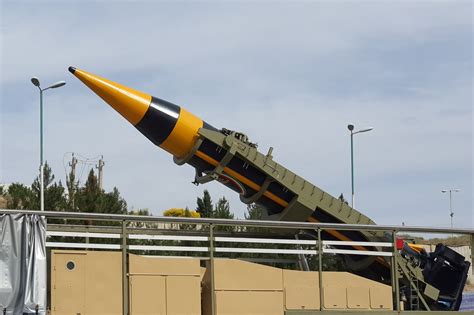
One of the Qiam missile’s most distinctive features is its finless design. Traditional Scud-type missiles rely on stabilizing fins at their base to maintain aerodynamic stability. Iranian engineers removed these fins, a modification that may reduce radar visibility while also improving aerodynamic efficiency.
Some variants of the Qiam are believed to incorporate separable warheads, which detach during the terminal phase of flight. This feature complicates interception because missile defense systems must track and destroy a smaller, faster-moving object rather than the entire missile body.
Guidance is primarily provided by inertial navigation systems, although newer versions are believed to include improved guidance packages that enhance accuracy. Estimates of the missile’s circular error probable—a measure of targeting precision—range from approximately 100 to 500 meters, depending on the variant and operational conditions.
Why Intercepting Ballistic Missiles Is Technically Difficult
Intercepting a ballistic missile such as the Qiam requires an extraordinary level of technological coordination. After launch, ballistic missiles travel at extremely high velocities, often exceeding several kilometers per second as they descend toward their targets.
Defensive systems must perform several complex tasks almost simultaneously. First, radar sensors must detect the launch and determine the missile’s trajectory. Next, command systems calculate the projected impact point and determine whether interception is necessary. Finally, interceptor missiles must be launched and guided toward the target within a very narrow time window.
Each step involves sophisticated computing, high-speed data transmission, and precise coordination between radar stations, command centers, and interceptor batteries.
The UAE’s successful interception indicates that its air defense network operates with high levels of readiness, training, and integration, allowing operators to respond instantly to emerging threats.
Missile and Drone Warfare Reshaping the Middle East
The attempted strike also highlights a broader transformation in regional military dynamics. Missile and drone technologies have become central components of strategic competition in the Middle East.
Iran possesses one of the largest ballistic missile arsenals in the region, and its military doctrine increasingly emphasizes the use of combined missile and drone attacks. By launching multiple types of weapons simultaneously, attackers attempt to overwhelm defensive systems through sheer volume and complexity.
This strategy, sometimes referred to as saturation attack, forces defenders to rely on layered interception systems capable of engaging threats at different altitudes and ranges.
The UAE’s response demonstrated how such defenses can neutralize even complex attack profiles. By integrating high-altitude interceptors, mid-range missile systems, and short-range drone defenses, the country has built a defensive shield capable of protecting its most critical infrastructure.
The successful interception therefore carries strategic significance beyond the immediate event. It reinforces the role of integrated missile defense networks as a cornerstone of modern national security, particularly in regions where missile technology continues to proliferate.