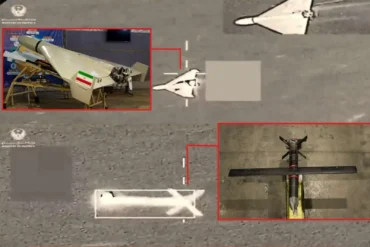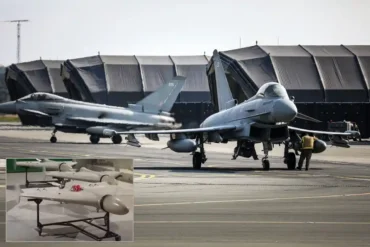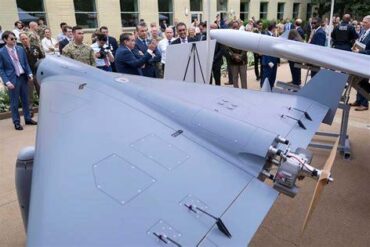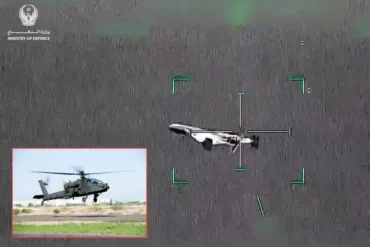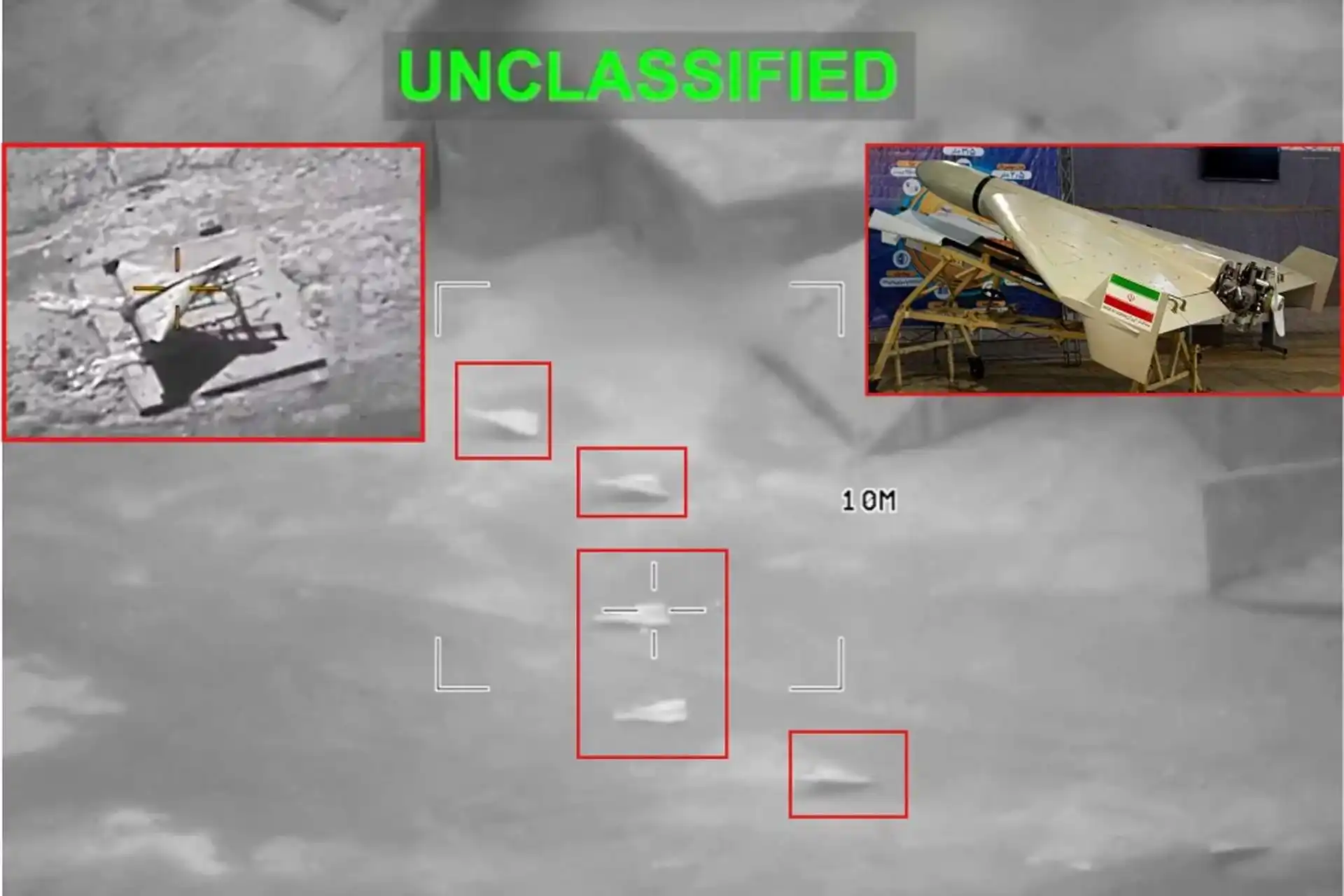
The United States has intensified its counter-drone operations in the Middle East, executing a series of precision airstrikes that destroyed Iranian Shahed-136 loitering munition launch sites moments before the drones could be launched. Combat footage released by U.S. Central Command (CENTCOM) on March 3, 2026, reveals the rapid and targeted destruction of staging areas where multiple Iranian drones had been prepared for imminent deployment. The operation demonstrates how modern intelligence networks and precision weapons can neutralize threats before they enter the airspace, eliminating entire strike packages in a single attack.
The video evidence highlights the evolving nature of preemptive warfare against unmanned systems. Iranian forces had reportedly positioned several Shahed-136 kamikaze drones on portable launch racks, aligning them for rapid deployment. Seconds later, U.S. Air Force precision munitions struck the location with devastating accuracy, destroying the drones along with their launch equipment. By targeting the systems in their launch configuration, U.S. forces removed the threat before the weapons could reach operational altitude or begin their programmed attack routes.
Such actions illustrate a deliberate shift in Western military doctrine toward pre-launch interdiction. Instead of relying solely on air defenses to intercept drones after takeoff, the United States increasingly prioritizes locating and destroying the infrastructure and staging points that enable mass drone launches.
The Iranian regime’s killer drones have been a menace in the Middle East for years. These drones are no longer a tolerable risk. pic.twitter.com/76yhDKI6OW
— U.S. Central Command (@CENTCOM) March 3, 2026
The Rising Threat of the Shahed-136 Loitering Munition
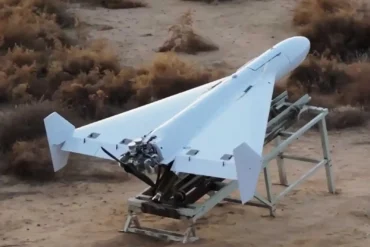
The Shahed-136, designed and manufactured by Iran’s defense industry, has become one of the most recognizable loitering munitions in modern warfare. Characterized by its distinctive delta-wing design, the drone functions as a one-way attack system that loiters over an area before striking a designated target. Powered by a small piston engine and launched using a rocket-assisted rail system, the drone can be deployed rapidly from truck-mounted launch platforms.
What makes the system particularly dangerous is its combination of range, simplicity, and cost efficiency. Depending on configuration, the Shahed-136 can travel over 1,000 kilometers, enabling strikes against distant military bases, energy facilities, or urban infrastructure. Because it uses relatively simple components and commercially available electronics, the drone can be produced in large numbers and deployed in swarms designed to overwhelm air defenses.
The drone’s operational concept is straightforward but effective. Instead of relying on a small number of expensive missiles, operators launch multiple low-cost drones simultaneously, forcing defenders to choose between expending costly interceptors or allowing some weapons to penetrate the defense network.
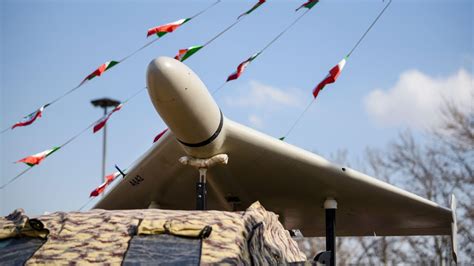
Inside the CENTCOM Operation
The footage released by CENTCOM provides a rare operational glimpse into how U.S. intelligence and strike systems integrate in real time. Surveillance assets first identified Iranian drone teams preparing launch equipment at a remote site. Once analysts confirmed the presence of armed drones ready for immediate deployment, targeting data was transmitted to nearby U.S. strike aircraft.
Moments later, precision-guided munitions struck the staging area with pinpoint accuracy. The video shows the drones positioned side by side on launch rails, indicating that a salvo launch was likely imminent. The strike destroyed the drones, their support equipment, and the launch vehicles before the operators could initiate the firing sequence.
The timing is particularly important. Intervening while the drones were in active launch configuration suggests that the United States was responding to a credible and immediate operational threat, rather than conducting a symbolic or infrastructure-focused attack. By striking at that precise moment, the operation prevented a coordinated drone assault that could have targeted regional bases, shipping lanes, or critical infrastructure.
Why Pre-Launch Strikes Matter in Counter-Drone Warfare
Destroying drones on the ground represents a strategically efficient method of defense. Once airborne, loitering munitions must be intercepted individually using air defense systems such as surface-to-air missiles, electronic warfare, or directed-energy systems. These defensive measures can become extremely costly, particularly when confronting large drone swarms.
Preemptive strikes reverse that equation.
A single precision weapon can eliminate:
- Multiple armed drones
- Launch rails and transport vehicles
- Ground crews and command equipment
- Stockpiled munitions awaiting launch
From a military economics perspective, this tactic dramatically reduces defensive costs while increasing operational effectiveness. Instead of expending dozens of interceptor missiles against incoming drones, commanders can neutralize the entire threat package with one carefully timed strike.
Iran’s Distributed Drone Launch Networks
The presence of multiple drones staged at a single site also reinforces intelligence assessments regarding Iran’s distributed drone strategy. Rather than relying on large permanent bases, Iran and its affiliated groups operate mobile launch networks that can be repositioned rapidly across remote terrain.
These networks typically involve:
- Truck-mounted launch rails
- Portable fuel and maintenance equipment
- Small mobile command teams
- Pre-positioned drone stockpiles
Because the systems are highly mobile and relatively compact, they can be hidden in deserts, mountainous regions, or civilian infrastructure zones. This mobility complicates surveillance efforts and allows operators to relocate launch sites within hours, reducing their exposure to retaliatory strikes.
The Role of Persistent ISR Surveillance
Striking mobile drone launchers before takeoff requires a robust intelligence, surveillance, and reconnaissance (ISR) network. The success of the CENTCOM operation strongly suggests that U.S. forces maintained continuous observation of Iranian drone units before the strike occurred.
Modern ISR architecture often combines several layers of sensors:
- High-altitude surveillance drones
- Military reconnaissance satellites
- Electronic signals monitoring systems
- Manned aircraft equipped with advanced sensors
Together, these systems create a persistent surveillance web capable of detecting unusual activity such as vehicle movement, radar emissions, or launch preparations. Once a potential threat is identified, analysts confirm the target and transmit coordinates to strike platforms.
This level of situational awareness allows the United States to intervene at the most vulnerable moment, when the drones are fully exposed during launch preparation.
Strategic Impact on Iran’s Layered Strike Doctrine
Iran’s regional strike strategy increasingly relies on layered attacks combining ballistic missiles, cruise missiles, and loitering munitions. Each layer serves a distinct purpose: ballistic missiles deliver high-speed strikes, cruise missiles provide precision at lower altitude, and drones create saturation that complicates defensive responses.
Removing the drone component of this attack architecture significantly reduces the effectiveness of coordinated strikes. Without large drone salvos, air defense systems can focus more effectively on intercepting high-value missile threats.
By targeting drone launch infrastructure before launch, U.S. forces disrupt:
- Strike synchronization
- Saturation tactics
- Multi-vector attack planning
This approach weakens the overall effectiveness of Iran’s broader asymmetric strike strategy.
Strategic Messaging Through Combat Footage
Releasing combat footage is rarely accidental. In this case, the CENTCOM video serves as both operational documentation and strategic signaling. By publicly demonstrating the ability to identify and destroy drone launch sites before takeoff, the United States communicates a clear message: mobile drone networks are not immune to detection.
This form of messaging plays a role in deterrence psychology. Operators planning drone attacks must now consider the possibility that their launch preparations could be observed in real time and destroyed before they even begin.
The Future of Counter-Drone Warfare in the Middle East
As loitering munitions become central to modern conflict, counter-drone strategies will continue to evolve. The Shahed-136 has proven that inexpensive drones can threaten advanced militaries and critical infrastructure across large geographic areas. In response, the United States and its allies are expanding a layered defense strategy that includes detection, interception, and preemptive strike capabilities.
Future operations will likely focus on a broader range of targets supporting drone warfare, including:
- Drone storage depots
- Command and control facilities
- Logistics and supply routes
- Manufacturing infrastructure
Such actions aim to disrupt the entire drone ecosystem, rather than simply intercepting individual weapons.
The CENTCOM strike footage represents more than a tactical success. It illustrates a broader transformation in modern warfare: the race between inexpensive autonomous weapons and the intelligence networks designed to stop them before they ever leave the ground.